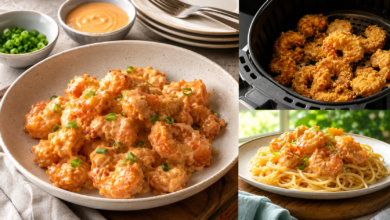
Cajun Shrimp Pasta: The Complete Guide to Every Version — Creamy, No-Cream, Chili’s Copycat, and Lighter
390 Calories, 38g Protein: The Cajun Shrimp Pasta That Doesn't Punish You for Eating It

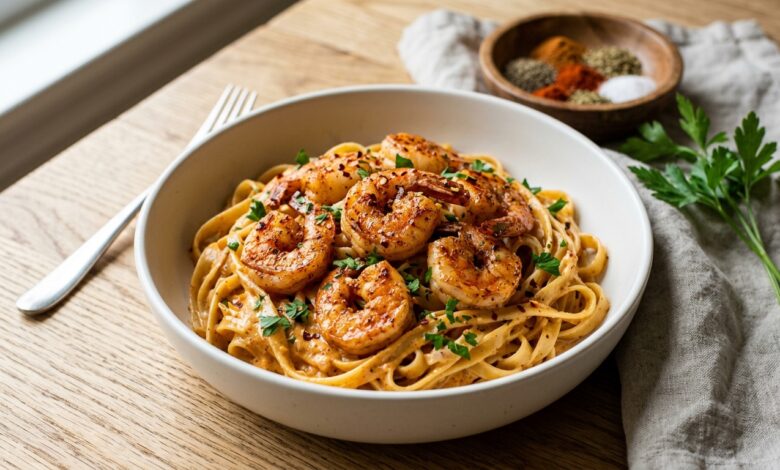
Most Cajun shrimp pasta recipes online fall into one of two traps: they’re either so heavy with cream and butter that the Cajun seasoning becomes a background note rather than the driving flavor, or they cut the richness so aggressively in the name of “lightness” that the dish loses the character that makes it worth making. Getting this recipe right is a balance problem and the solution comes from understanding what Cajun seasoning actually does to a sauce, and how cream, pasta water, and fat interact to build the right base.
What Makes Cajun Seasoning Work in a Pasta Dish
Cajun seasoning is not a single spice — it’s a blend, and the specific composition matters more in pasta than it does in a dry rub, where heat and caramelization compensate for formula variation. In a cream sauce or oil-based pasta sauce, the seasoning must carry the dish almost entirely on its own flavor.
A well-built Cajun blend contains: smoked paprika (body and color), garlic powder (savory base), onion powder (background sweetness), cayenne (heat), dried oregano (herbaceous note), dried thyme (earthiness), black pepper (sharp heat distinct from cayenne), and salt. Some blends add celery seed, which is historically authentic to Louisiana cooking, or white pepper for a different heat profile.
Cajun seasoning must bloom in fat before the liquid components are added. Adding it directly to cream or pasta water dilutes the aromatic volatile compounds before they can fully develop.
Homemade Cajun seasoning blend (makes ~6 tbsp — store in airtight jar):
- 2 tbsp smoked paprika
- 1 tbsp garlic powder
- 1 tbsp onion powder
- 1 tsp cayenne pepper (adjust to heat preference)
- 1 tsp dried oregano
- 1 tsp dried thyme
- 1 tsp black pepper
- 1 tsp fine sea salt
- ½ tsp white pepper
- ½ tsp celery seed (optional but authentic)
This blend is superior to most store-bought versions because you control the salt and cayenne levels.
Creamy Cajun Shrimp Pasta: Ingredients
This is the full-version recipe — built for maximum flavor and texture. Serves 2–3.
For the shrimp:
- 400g (14 oz) large raw shrimp (26/30 count), peeled and deveined, tails on or off
- 1.5 tbsp Cajun seasoning (homemade blend above or store-bought)
- 1 tbsp olive oil
- 1 tbsp unsalted butter
For the pasta:
- 300g (10.5 oz) dry fettuccine or linguine (pappardelle also works well — see note below)
- Generously salted boiling water
For the Cajun cream sauce:
- 2 tbsp unsalted butter
- 4 garlic cloves, minced
- 1 small red bell pepper, thinly sliced
- 1 small yellow bell pepper, thinly sliced
- ½ small white onion, finely diced
- 1 tbsp Cajun seasoning (additional)
- ½ cup (120ml) dry white wine or chicken broth
- 1 cup (240ml) heavy cream
- ½ cup (50g) freshly grated Parmesan
- ½ cup reserved pasta water
- Juice of ½ lemon
- Salt and cracked black pepper
- Fresh parsley, chopped (to finish)
Step-by-Step Recipe Method: Creamy Cajun Shrimp Pasta
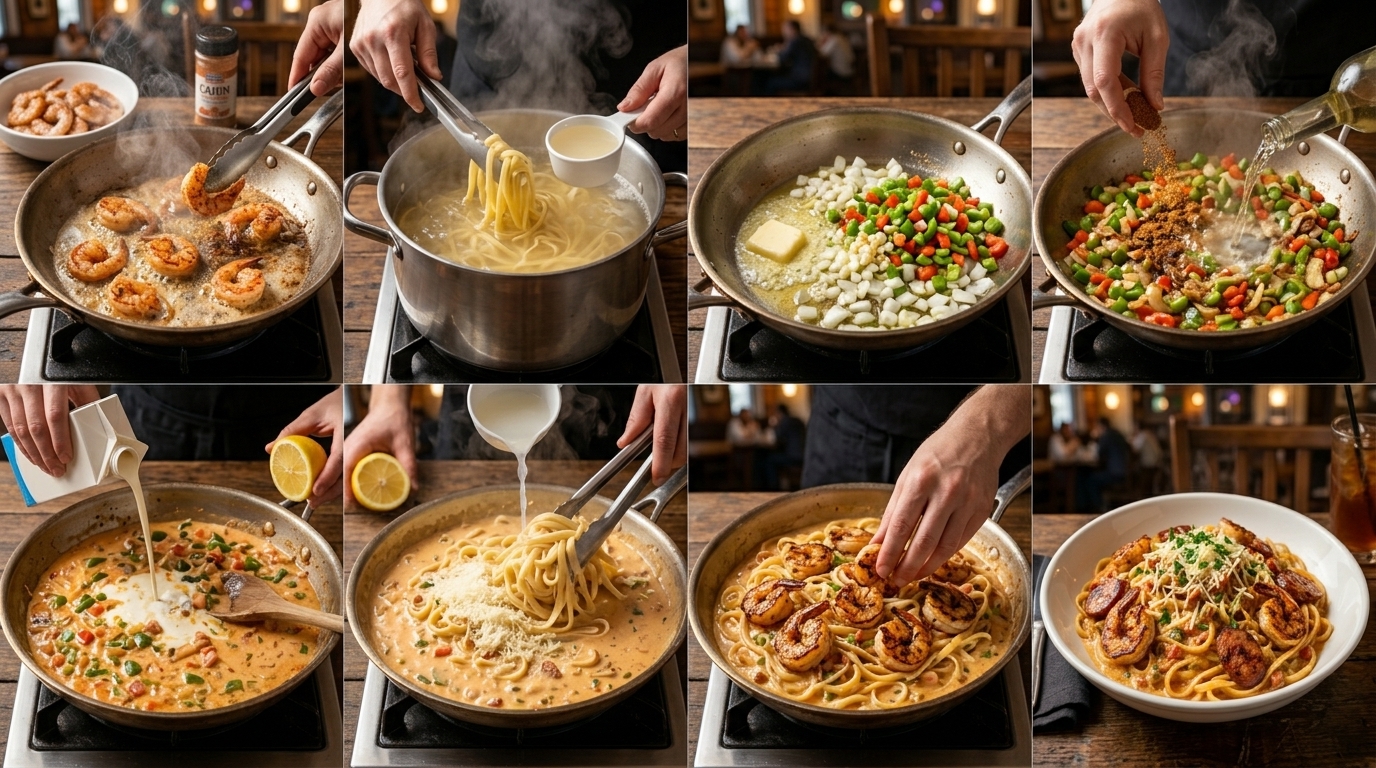
Step 1 — Season and sear the shrimp: Pat shrimp completely dry with paper towels — surface moisture prevents proper searing and dilutes the seasoning. Toss with 1.5 tbsp Cajun seasoning until evenly coated. Heat olive oil and butter in a wide skillet over high heat until the butter foams and subsides. Add shrimp in a single layer. Sear 60–90 seconds per side until just pink and slightly charred at the edges — do not cook through completely. Remove and set aside. The shrimp will finish cooking in the sauce; overcooking here produces rubbery texture in the final dish.
Step 2 — Cook pasta to just under al dente: Bring a large pot of water to a full boil. Salt aggressively — the water should taste pleasantly salty. Cook pasta to 1 minute less than the package’s al dente time. It will finish cooking in the sauce and absorb additional flavor. Before draining, reserve 1 full cup of pasta water. This starchy water is essential for sauce consistency and emulsification — don’t skip it.
Step 3 — Build the sauce base: In the same skillet used for shrimp (don’t clean it — the browned bits are flavor), reduce heat to medium. Add butter. Once melted, add diced onion and cook 2–3 minutes until softened. Add garlic and bell peppers. Cook 3–4 minutes until the peppers soften and begin to caramelize at the edges.
Step 4 — Bloom the Cajun seasoning: Add the additional 1 tbsp of Cajun seasoning directly to the vegetables and fat. Stir constantly for 60–90 seconds — this is the bloom step. You’ll smell the paprika and dried herbs intensify significantly during this short window. Don’t skip this. Add white wine (or broth) and deglaze the pan, scraping up any browned bits from the shrimp sear. Allow the wine to reduce by half, approximately 2 minutes.
Step 5 — Add cream and develop the sauce: Pour in the heavy cream. Stir to combine with the reduced wine base. Bring to a gentle simmer (small bubbles, not a full boil) and cook for 4–5 minutes until the sauce thickens enough to coat the back of a spoon. Add lemon juice and stir through.
Step 6 — Add pasta and cheese: Add the under-cooked drained pasta directly to the sauce. Toss continuously over medium heat for 1–2 minutes as the pasta absorbs the sauce and finishes cooking. Add pasta water in small increments (2–3 tablespoons at a time) to loosen the sauce as needed — the starch in the pasta water helps the cream emulsify into a glossy, coating consistency rather than a thin pool at the bottom of the pan. Add grated Parmesan and toss until melted through.
Step 7 — Return shrimp and finish: Add the seared shrimp back to the pan. Toss gently for 60–90 seconds — just enough to heat them through and coat with sauce. Taste and adjust seasoning: more Cajun blend for heat and depth, more lemon for brightness, more salt if flat. Plate immediately and top with fresh parsley and additional cracked black pepper.
Cajun Shrimp Pasta Sauce: The Science Behind Getting It Right
The sauce in Cajun shrimp pasta fails in one of two ways: it breaks (the cream separates into an oily, grainy mess) or it’s too thin (watery cream that pools rather than coats).
Why cream sauces break: Cream separates when heated too aggressively — the fat globules destabilize and coalesce separately from the water phase. The solution is to never boil the cream at high heat. A steady, moderate simmer (around 85–90°C) reduces and thickens the cream without breaking the emulsion. If the sauce does start to look greasy, add a splash of pasta water and stir vigorously — the starch in the pasta water re-emulsifies the fat and water phases.
Why cream sauces go thin: Too little reduction time before pasta is added, or too much pasta water added too quickly. The sauce should be thick enough to coat a spoon before pasta goes in — it will thin slightly when pasta is added because pasta releases starch and some absorbed water into the sauce. Add pasta water incrementally, not all at once.
Parmesan timing: Add Parmesan off the heat or at the very end of cooking. Parmesan contains proteins that seize and turn grainy when exposed to high temperatures. Adding it to a sauce that’s still at full simmer produces a gritty texture. Lower the heat to medium-low before adding the cheese, and toss until it melts through without boiling.
Lemon acid: The lemon juice at the end does two things — it brightens the flavor of the Cajun seasoning (acid amplifies the perception of capsaicin and other aromatic compounds) and it very slightly destabilizes the cream, which helps the sauce cling more aggressively to the pasta. This is a technique borrowed from French butter sauces — a small amount of acid changes how the sauce coats.
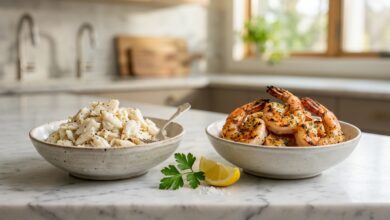
Cajun Shrimp Pasta No Cream: The Oil-Based Version
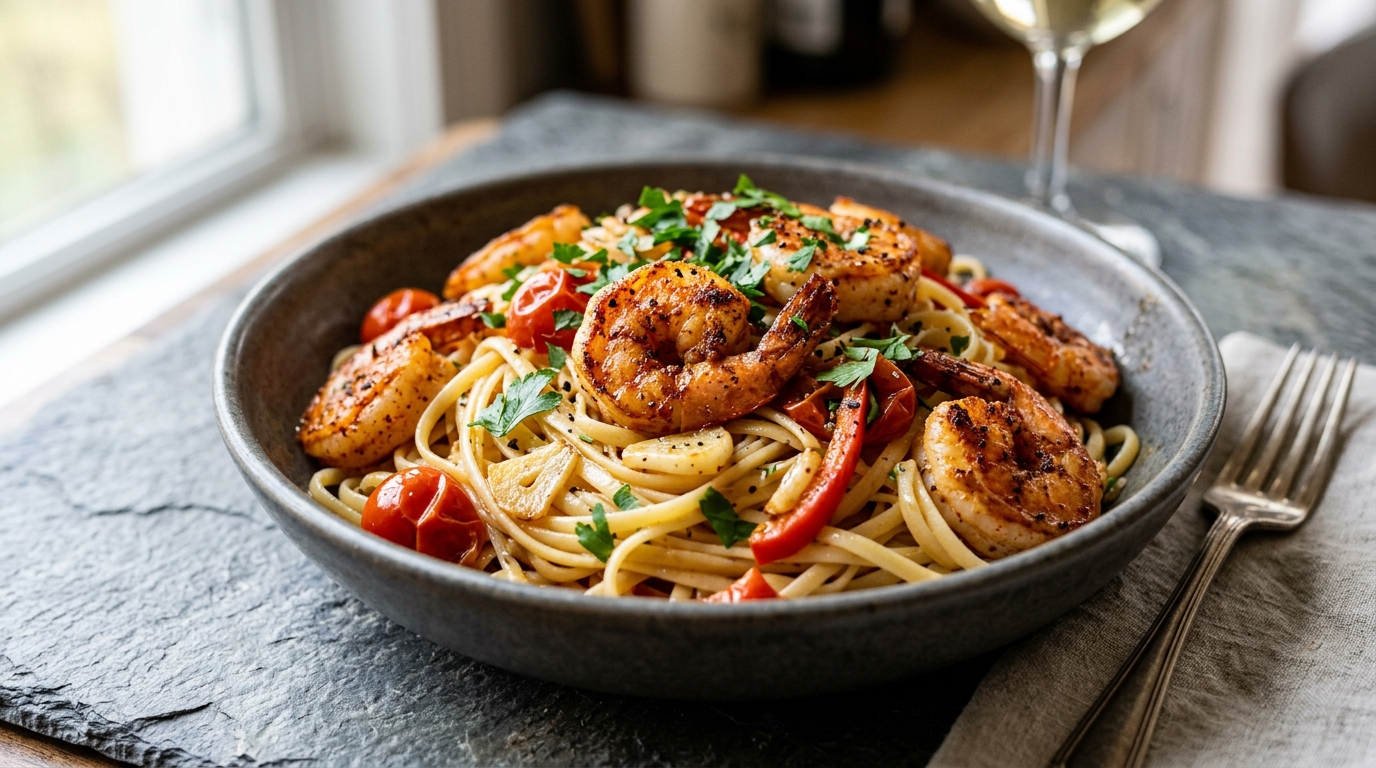
The no-cream version is a fundamentally different dish — lighter, brighter, and more reliant on the quality of the shrimp and seasoning since there’s no dairy richness to round out the edges. It’s also significantly lower in calories and fat.
The sauce base uses pasta water, olive oil, white wine, and a small amount of pasta cooking starch to create an emulsified coating. Think of it as a Cajun-spiced version of aglio e olio — garlic, oil, pasta water, and the starchy pasta itself creating a cohesive, glossy sauce without cream.
Ingredients for the no-cream version (serves 2–3):
- 400g large shrimp, peeled and deveined
- 300g dry linguine or spaghetti
- 3 tbsp good-quality extra virgin olive oil
- 5 garlic cloves, thinly sliced (not minced — sliced garlic behaves differently in oil than minced)
- 1 red bell pepper, thinly sliced
- 1 cup cherry tomatoes, halved
- 1.5–2 tbsp Cajun seasoning
- ½ cup dry white wine
- ¾ cup reserved pasta water
- Juice of 1 lemon
- Fresh parsley, generous amount
- Red pepper flakes (additional heat if desired)
- Salt and cracked black pepper
Method differences from the creamy version:
- Sear shrimp in olive oil rather than butter — the higher smoke point prevents burning at the high heat needed for a proper sear
- After blooming the Cajun seasoning with the garlic and peppers, add cherry tomatoes and cook until they burst, releasing their juice — this natural tomato liquid contributes body and sweetness to the sauce without any dairy
- Add white wine, reduce by half, then add pasta water and bring to a simmer. Toss under-cooked pasta directly into the pan and cook until al dente, adding pasta water as needed to keep a loose, coating sauce
- The finished sauce should look glossy from the emulsified olive oil and pasta starch — similar to a vongole or aglio e olio, where the coating is visible but not thick
This version delivers approximately 420–450 calories per serving with 35g of protein — a more favorable macronutrient profile than the cream version while maintaining the core Cajun flavor.
Cajun Shrimp Pasta Chili’s Copycat: What’s Actually in It
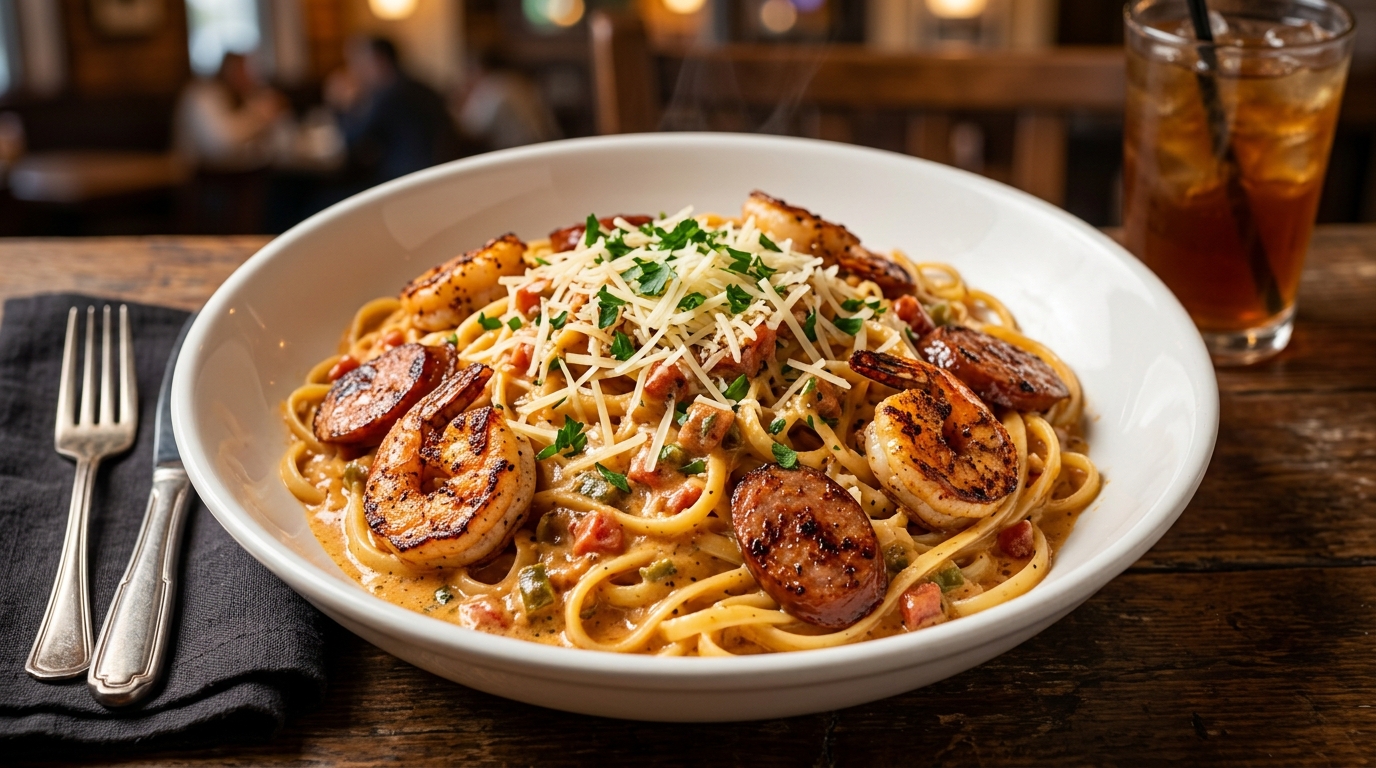
Chili’s Cajun shrimp pasta is one of the chain’s most frequently searched copycat recipes. The dish features linguine, seared Cajun-seasoned shrimp, bell peppers, and a cream sauce with a distinctly smoky, slightly sweet flavor profile that differs from most home versions.
The key differences between Chili’s version and a standard homemade creamy Cajun pasta:
- Andouille sausage or smoked sausage addition: Chili’s version often includes sliced smoked sausage alongside the shrimp, which adds a smokiness that plain Cajun seasoning alone doesn’t fully replicate. To approximate this at home, add 100g of sliced smoked andouille or kielbasa sausage to the skillet before building the sauce — sear until caramelized at the edges, then proceed as normal.
- Rotel-style tomato component: The Chili’s sauce has a slight tomato undertone. A tablespoon of tomato paste bloomed with the Cajun seasoning (added before the wine deglazes the pan) adds this dimension. Alternatively, 3–4 tablespoons of canned diced tomatoes with green chiles (Rotel) added with the cream replicates it closely.
- Heavier cream ratio: The restaurant version is noticeably richer than most home recipes — likely using a 1:1 ratio of cream to other liquid, resulting in a sauce that’s thick enough to hold shape on the plate rather than pooling. For the copycat, increase heavy cream to 1¼ cups and reduce pasta water use.
- Parmesan and pepper jack blend: Rather than pure Parmesan, Chili’s version uses a cheese blend that includes pepper jack, which adds heat and a slightly different melt profile. Adding 2 tablespoons of shredded pepper jack alongside the Parmesan at the sauce-finishing stage replicates this.
Chili’s Cajun Shrimp Pasta copycat — estimated nutrition per serving:
- Calories: ~850–950 kcal (restaurant portion, full cream sauce, with sausage)
- Protein: ~42g
- Fat: ~48g
- Sodium: ~1,400–1,800mg (the most significant health consideration)
Easy Creamy Cajun Shrimp Pasta: 20-Minute Version
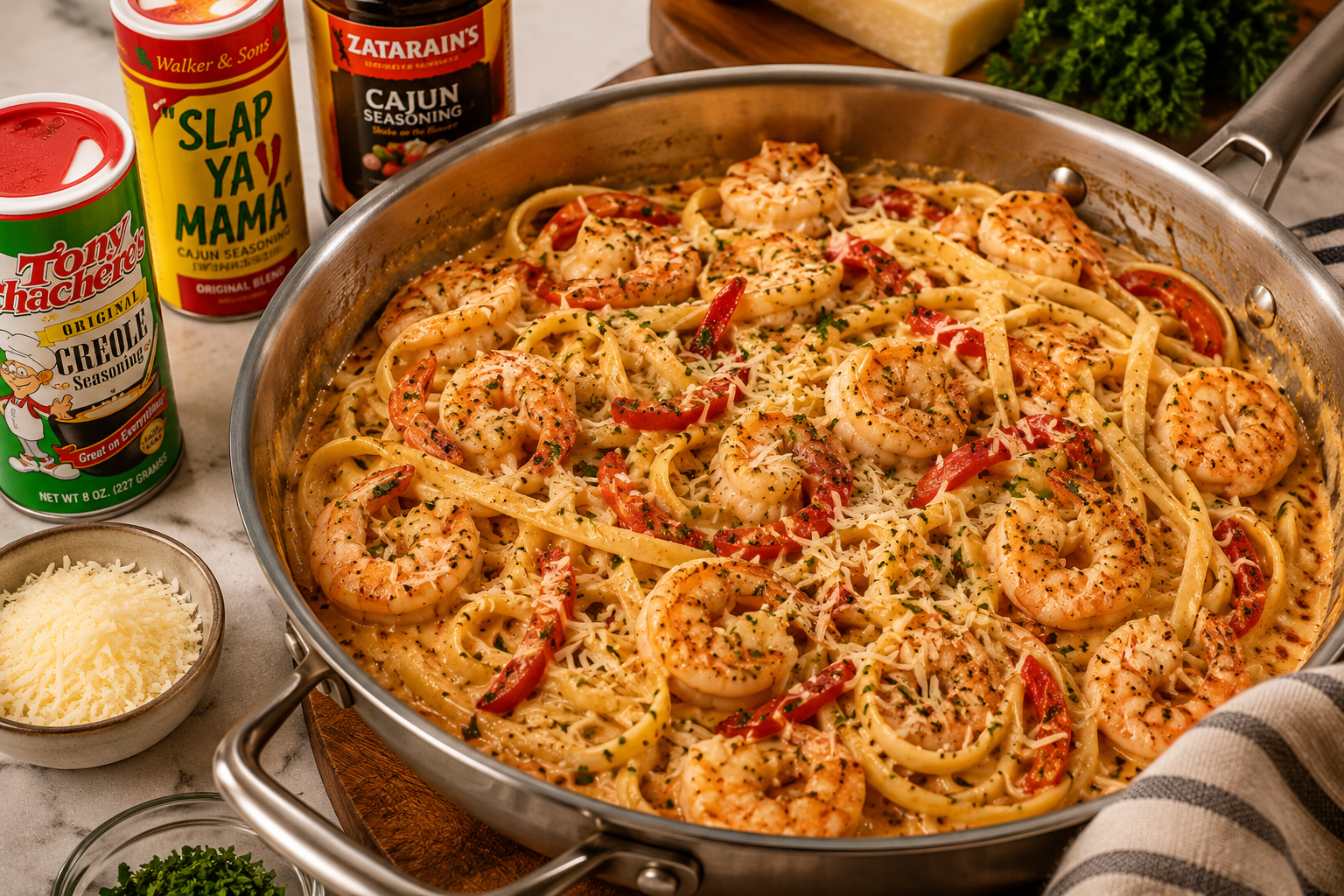
For weeknight cooking where 45 minutes isn’t realistic, this streamlined version uses pre-made Cajun seasoning, pre-cooked frozen shrimp (thawed), and a single-pan technique that reduces cleanup and active time to under 20 minutes.
Shortcuts that don’t sacrifice flavor:
- Use store-bought Cajun seasoning (Tony Chachere’s, Slap Ya Mama, or Zatarain’s are the most flavor-accurate commercial blends)
- Use pre-cooked frozen shrimp thawed under cold water — skip the raw shrimp searing step and simply warm them in the finished sauce for 60–90 seconds
- Use jarred roasted red peppers instead of fresh bell peppers — no chopping or sautéing required, drain and slice directly into the sauce
- Use chicken broth instead of white wine — no need to open a bottle
The 20-minute method:
- Boil pasta per package directions, reserve pasta water, drain
- In a wide pan, bloom Cajun seasoning in butter for 60 seconds
- Add jarred roasted peppers and garlic, sauté 2 minutes
- Add broth, reduce 2 minutes
- Add cream, simmer 4 minutes until slightly thickened
- Add pasta, toss with pasta water until coated and saucy
- Add thawed pre-cooked shrimp, toss 60 seconds, add Parmesan and lemon
- Serve immediately
Tips for the Best Cajun Shrimp Pasta
Dry the shrimp before seasoning. Cajun seasoning sticks to dry shrimp surfaces and blooms properly during searing. Wet shrimp dissolve the spice mixture into surface moisture rather than forming a crust, and the steam prevents proper Maillard browning. Dry means genuinely dry — press firmly with paper towels, then season.
Season the shrimp, not just the sauce. Coating the shrimp directly in Cajun seasoning before searing creates two flavor layers in the final dish: the seasoning that’s charred onto the shrimp surface and the seasoning bloomed in the sauce. Both are necessary for the full flavor depth. Only seasoning the sauce produces a flat result where the shrimp taste separate from the dish.
Under-cook the pasta intentionally. Pasta that finishes cooking in the sauce rather than in the water absorbs flavor rather than water. This technique (pasta alla chitarra style) produces a noticeably more flavorful, better-textured final dish than pasta boiled to full doneness and then mixed with sauce.
Bloom the spices in fat every time. Whether it’s the creamy version or the no-cream version, 60–90 seconds of Cajun seasoning in hot butter or olive oil before any liquid is added is non-negotiable for full flavor development. The aromatic volatile compounds in paprika, thyme, and oregano are fat-soluble — they release into fat, not into water or cream.
Reserve more pasta water than you think you need. A full cup is the minimum. You’ll use ½ cup to adjust sauce consistency, and the rest is available insurance if the sauce tightens too much when the pasta cools slightly on the plate.
Use freshly grated Parmesan, not pre-grated. Pre-grated Parmesan contains anti-caking agents (usually cellulose or potato starch) that prevent it from melting smoothly into cream sauces. The result is a slightly grainy texture that fresh-grated Parmesan never produces. A microplane grater produces extremely fine shreds that melt almost instantaneously.
Rest for 2 minutes before serving. Cajun shrimp pasta served directly from the pan is too hot to taste properly — the capsaicin in the cayenne registers differently at extreme temperatures. Two minutes of rest allows the dish to settle to eating temperature, the sauce to thicken slightly, and the full flavor profile to be perceived correctly.
Cajun Shrimp Pasta Calories: Full Breakdown
Version |
Calories Per Serving |
Protein |
Fat |
Carbs |
| Full creamy (cream + Parmesan) | ~720–780 kcal | ~40g | ~32g | ~65g |
| Chili’s copycat (with sausage) | ~850–950 kcal | ~42g | ~48g | ~68g |
| No-cream (olive oil base) | ~420–450 kcal | ~35g | ~12g | ~55g |
| Light/healthy version (below) | ~380–420 kcal | ~38g | ~8g | ~52g |
Nutrition Profile: What You’re Actually Getting
Despite its reputation as an indulgent dish, Cajun shrimp pasta has a favorable protein profile from the shrimp and a useful micronutrient contribution from the bell peppers.
Shrimp contribution per serving (200g cooked):
- Protein: ~48g — one of the highest single-protein contributions of any pasta dish
- Selenium: ~76mcg (~140% DV) — supporting thyroid function and antioxidant defense
- Vitamin B12: ~2.4mcg (~100% DV) — essential for neurological function
- Iodine: significant source from the shellfish
- Omega-3 fatty acids: ~1g (EPA + DHA combined)
Bell pepper contribution:
- Vitamin C: red bell peppers contain ~128mg per 100g — more than oranges by weight
- Beta-carotene: the red and yellow pigments are provitamin A carotenoids with antioxidant properties
- Folate: modest contribution supporting cell division
The main nutritional considerations in the full cream version:
- Saturated fat: heavy cream and butter together contribute approximately 18–22g of saturated fat per serving — the most significant number for people managing cardiovascular risk
- Sodium: Cajun seasoning, Parmesan, and salted cooking water combine for approximately 900–1,200mg per serving — manageable within a day’s budget if other meals are lower in sodium
- Calories from fat: approximately 40–45% of total calories in the creamy version come from fat
Healthy Version: Light Cajun Shrimp Pasta
The healthy version preserves the Cajun flavor profile while restructuring the fat and calorie sources.
Key substitutions:
Replace heavy cream with evaporated skim milk + cream cheese: 1 cup of evaporated skim milk (~200 kcal) plus 2 tbsp light cream cheese (~70 kcal) replaces 1 cup of heavy cream (~820 kcal), saving over 550 calories for the full batch. The evaporated milk provides the body and slight sweetness of cream at a fraction of the fat content. The cream cheese adds richness and prevents the sauce from becoming watery.
Replace half the pasta with zucchini noodles: Spiralized zucchini (zoodles) mixed at a 50:50 ratio with regular fettuccine cuts carbohydrates significantly while adding volume, fiber, and nutrients. The zoodles don’t need pre-cooking — add them directly to the sauce with the pasta for the last 60 seconds.
Reduce butter to 1 tbsp total: The bloom step still works with 1 tablespoon of butter (versus the 3 tablespoons in the standard recipe) if you add 1 teaspoon of olive oil alongside. This maintains the fat needed for fat-soluble spice blooming at 60% less butter.
Skip the Parmesan or use nutritional yeast: 2 tablespoons of nutritional yeast adds a nutty, cheese-like umami at 45 calories (vs. 196 calories for 50g of Parmesan) with additional B vitamins. It doesn’t melt in the same way but integrates into the sauce as a flavor booster.
Estimated light version per serving (3 portions from the batch):
- Calories: ~390 kcal
- Protein: ~38g
- Fat: ~8g
- Saturated Fat: ~2.5g
- Carbohydrates: ~48g
- Sodium: ~680mg (using low-sodium Cajun blend and unsalted butter)
At 390 calories with 38g of protein, this version qualifies as a high-protein, moderate-calorie dinner without compromising the identifying characteristics of the dish — the spiced shrimp, the coated pasta, the bell pepper sweetness, and the garlic-cream flavor base are all present.
Frequently Asked Questions
What pasta is best for Cajun shrimp pasta? Fettuccine and linguine are the best choices — wide, flat ribbons that carry cream sauce evenly across their full surface. Pappardelle (even wider) works well with large shrimp. Tube pastas like penne or rigatoni are less effective for cream-based Cajun pasta because the sauce pools inside the tube rather than coating the exterior in each bite.
Can I make Cajun shrimp pasta without cream? Yes — and the result is a genuinely excellent dish, not a compromise. The no-cream version uses olive oil, pasta water, white wine, and burst cherry tomatoes to build a glossy, coating sauce. The flavor is brighter and lighter, the calories are roughly 40% lower, and the Cajun seasoning actually comes through more cleanly without the dairy richness masking the spice profile.
What is in Chili’s Cajun shrimp pasta? Chili’s version features linguine, Cajun-seasoned shrimp, bell peppers, smoked sausage, and a cream sauce with a slight tomato component. The distinguishing factors compared to standard homemade versions are the smoked sausage (andouille), a Rotel-style tomato element in the sauce, and a cheese blend that includes pepper jack alongside Parmesan. The restaurant version runs approximately 850–950 calories per serving with around 1,400–1,800mg of sodium.
Why is my Cajun shrimp pasta sauce too thin? Three likely causes: the cream wasn’t reduced sufficiently before pasta was added (it should coat the back of a spoon before pasta goes in), too much pasta water was added at once (add incrementally), or the pasta was already fully cooked before going into the sauce (under-cook by 1 minute so it finishes absorbing in the sauce rather than releasing starch into the water). All three issues are solved in the method above.
Why does my Cajun shrimp pasta taste bland? The Cajun seasoning wasn’t bloomed in fat before liquid was added. This is the most common flavor failure in this dish. The aromatic compounds in paprika, thyme, and oregano are fat-soluble — they need 60–90 seconds in hot butter or oil to fully release. A second likely cause is under-salted pasta water — the pasta itself will taste flat if not properly seasoned during boiling, regardless of how good the sauce is.
Can I use frozen shrimp for Cajun shrimp pasta? Yes thaw under cold running water for 5–7 minutes, pat very dry, then proceed with the recipe as normal. Frozen raw shrimp produces a result indistinguishable from fresh for this preparation. Avoid pre-cooked frozen shrimp for the searing step they can’t take high heat without turning rubbery. If using pre-cooked shrimp, season them, skip the searing, and add them to the finished sauce for the last 60–90 seconds only.
How do I make Cajun shrimp pasta less spicy? Reduce the cayenne in the Cajun blend to ¼ teaspoon (or eliminate it entirely) and use smoked paprika as the primary heat-adjacent flavor. The dish will still taste distinctly Cajun — the garlic, thyme, oregano, and smoked paprika carry the flavor identity — without the capsaicin heat. Adding a slightly higher cream ratio also mellows perceived heat, as dairy fat binds capsaicin molecules.
What do you serve with Cajun shrimp pasta? Crusty bread or garlic bread for sauce-dipping, a simple green salad with lemon vinaigrette (the acidity balances the richness), or steamed broccoli and roasted asparagus. Avoid starchy sides — the pasta is already the carbohydrate base. A crisp, dry white wine (Pinot Grigio, Vermentino, or a dry Riesling) pairs well with the spice and cream.
Conclusion
Cajun shrimp pasta rewards understanding over recipe-following. The three decisions that determine whether the dish is genuinely excellent or merely acceptable are: drying and seasoning the shrimp before searing, blooming the spice blend in fat before any liquid is added, and finishing the pasta in the sauce rather than in the water. Everything else — the specific cream ratio, the pasta shape, whether to include bell peppers or sausage — is preference and context.
The no-cream version is not a lesser version of the creamy original — it’s a different, lighter dish that lets the Cajun seasoning and shrimp carry the flavor without dairy support. For weeknight eating or calorie-conscious cooking, it’s often the better choice. The Chili’s copycat adds smoked sausage and a tomato element that the standard recipe doesn’t include, which explains the flavor difference that restaurant-goers notice.
The healthy version at approximately 390 calories and 38g of protein using evaporated skim milk, light cream cheese, and zucchini noodles alongside regular pasta is the version worth building into a regular rotation.