Bang Bang Shrimp in 2026: Origin, Bonefish Copycat, Pasta Version, Air Fryer Method, and Real Calories
Why Bang Bang Shrimp Tastes So Addictive — The Flavor Science Behind America's Favorite Shrimp Dish

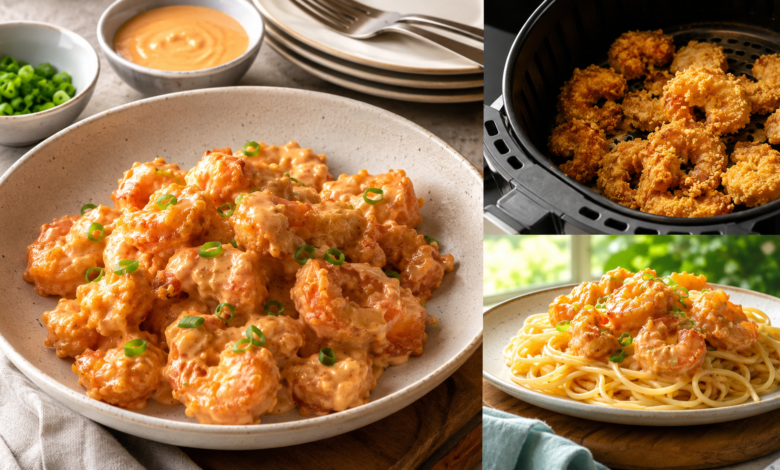
Bang bang shrimp has been one of the most Googled shrimp recipes in the United States for over a decade — and for good reason. It sits at the intersection of approachable technique, bold flavor, and the kind of textural contrast that makes a dish genuinely addictive. Crispy fried shrimp tossed in a sweet-spicy-creamy sauce sounds simple, but the balance of those three elements is what most homemade versions either overshoot or undershoot.
What Is Bang Bang Shrimp?
Bang bang shrimp is a dish of small, crispy fried shrimp coated in a creamy, sweet-heat sauce made primarily from mayonnaise, sweet chili sauce, and sriracha. The shrimp are typically breaded in a light cornstarch or seasoned flour coating, deep-fried until golden and crisp, then tossed in the sauce just before serving.
The dish is served as an appetizer in most restaurant contexts — plated on a bed of shredded cabbage or mixed greens, often garnished with green onions and sesame seeds. In home cooking contexts it appears as both an appetizer and a main course, and the pasta version (which extends the dish substantially) has become a popular weeknight dinner format.
What distinguishes bang bang shrimp from other fried shrimp dishes is specifically the sauce. The mayonnaise-sweet chili-sriracha combination creates a sauce that is simultaneously creamy, sweet, spicy, and tangy — four distinct flavor notes in a single coating. Most fried shrimp dishes offer one or two of these simultaneously; the bang bang sauce stacks all four, which is why the flavor registers more intensely than the ingredient list suggests.
Bang Bang Shrimp Origin: Where Did It Come From?
Why is it called bang bang shrimp? The name and the dish in its current form originated at Bonefish Grill, a casual upscale seafood chain founded in St. Petersburg, Florida in 2000. The dish appeared on their menu in the early 2000s and became the restaurant’s signature item — the most-ordered appetizer in the chain’s history by significant margin.
The “bang bang” name is widely believed to be a reference to the flavor impact — “bang bang” as an intensifier suggesting double-hit flavor (sweet and spicy simultaneously). This interpretation aligns with how the sauce actually functions: two distinct heat and sweetness notes that register separately and together.
What country is bang bang shrimp from? The dish as known in American restaurants is a creation of American casual dining cuisine, invented at Bonefish Grill in Florida. However, the sauce draws direct inspiration from Asian condiment traditions — specifically sweet Thai chili sauce (nam jim kai) and Chinese-American spicy mayo preparations. The sweet chili sauce component has deep roots in Thai cuisine, where it serves as both a dipping sauce and a glaze. Sriracha itself is a Thai-American product, developed in California by Huy Fong Foods in 1980 based on a Vietnamese-Thai sauce tradition.
So the honest origin answer is: the dish is American in its assembled form, but the sauce is an Asian-American fusion concept built on specifically Thai and Vietnamese flavor traditions. This makes it a distinctly contemporary American creation — the kind of dish that could only have been invented in the fusion-friendly American casual dining environment of the early 2000s.
Bonefish Grill’s role: The chain has never disclosed the exact sauce formula, which has driven an enormous volume of copycat recipe development over the past two decades. The homemade versions that most closely replicate the original consistently use Kewpie Japanese mayonnaise rather than American mayo, Mae Ploy or Maesri brand sweet chili sauce rather than generic versions, and a specific ratio that keeps the sauce creamy rather than thin or sticky.
What Does Bang Bang Shrimp Taste Like?
The eating experience of bang bang shrimp has four simultaneous registers that appear in sequence:
Crunch first: The cornstarch-fried shrimp shell provides an immediate light, crispy exterior that contrasts the tender shrimp inside. This textural moment is brief — the sauce coating softens the breading slightly over time, which is why the dish is best eaten immediately after tossing.
Sweetness and creaminess: The mayonnaise and sweet chili sauce create a coating that reads initially as sweet and rich. The creaminess of the mayo rounds the flavor and prevents the dish from tasting sharp or acidic.
Heat follows: The sriracha and sometimes chili flakes arrive about 2–3 seconds after the initial sweetness — the capsaicin in sriracha activates more slowly than the sugar in sweet chili sauce. This delay is part of what makes the flavor interesting: it doesn’t hit all at once.
Tang at the finish: The acidity in sriracha (vinegar-based) and sometimes a squeeze of lime leave a light tangy note at the back of the palate that prevents the sweetness and creaminess from becoming cloying.
The shrimp itself contributes its natural brininess and sweetness, which integrates with the sauce rather than competing with it. This is why small to medium shrimp work better than large shrimp for this dish — smaller shrimp have a higher surface area to meat ratio, so each bite has more sauce contact relative to protein mass.
Bang Bang Shrimp Sauce: The Formula and the Chemistry
The sauce is the dish. Getting the ratio right matters more than any other single variable.
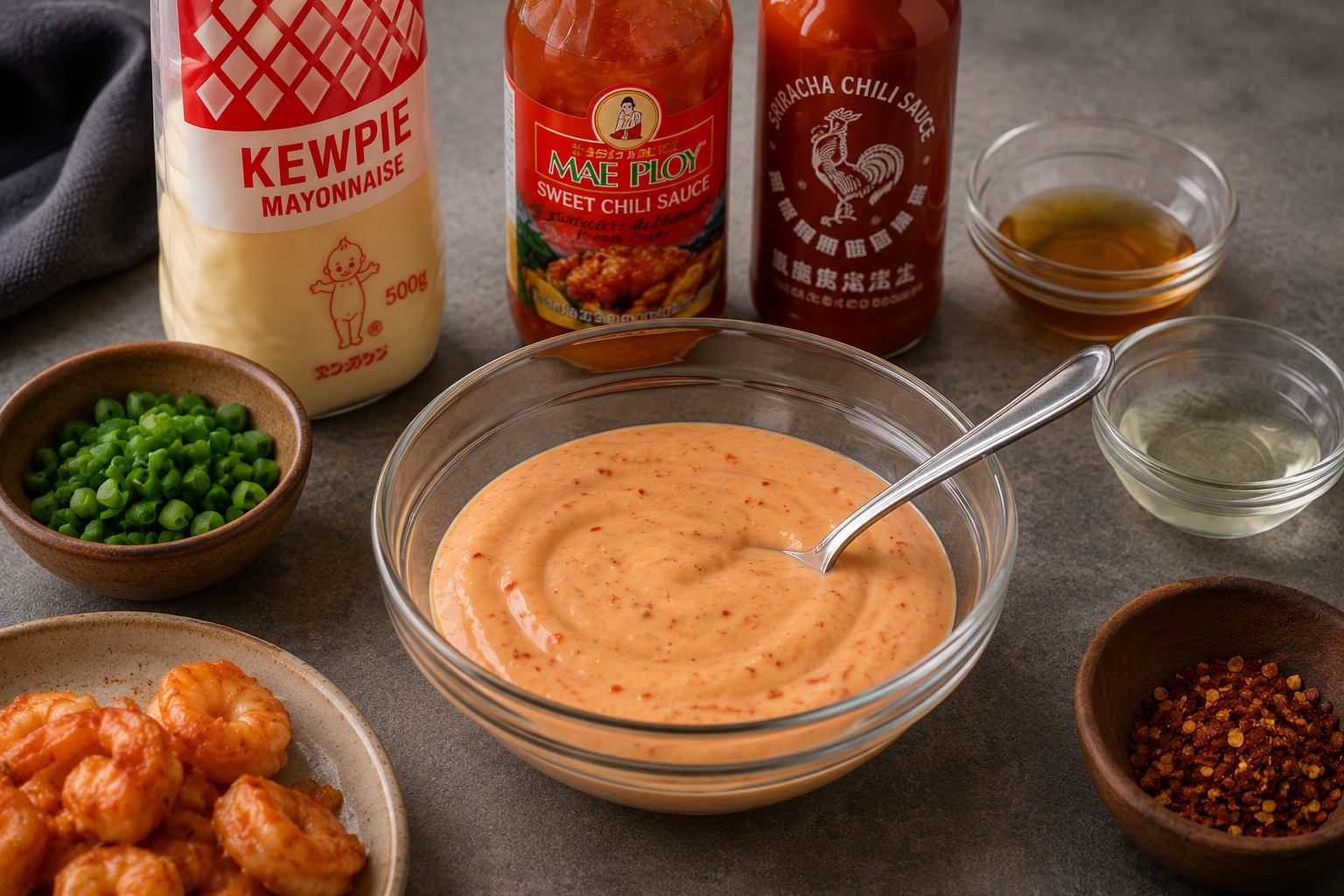
Standard bang bang sauce ratio:
- 3 tbsp Japanese mayonnaise (Kewpie) — the base, providing creaminess and umami from MSG and egg yolk richness
- 2 tbsp sweet Thai chili sauce (Mae Ploy or Maesri preferred) — sweetness, mild heat, and body
- 1–2 tsp sriracha — direct heat and tang (adjust to preference)
- Optional: ½ tsp rice vinegar — adds brightness if the sauce tastes flat
- Optional: ½ tsp sesame oil — adds nuttiness and aroma depth
Why Kewpie over regular mayonnaise: Kewpie uses only egg yolks (not whole eggs), rice vinegar (not distilled), and contains added MSG. The higher yolk-to-white ratio creates a richer, more emulsified base with better cling to the fried shrimp coating. The rice vinegar adds a slightly sweeter acidity than distilled white vinegar. Regular American mayonnaise produces an acceptable but noticeably less complex sauce — the flavor reads flatter.
Why sauce brand matters for sweet chili: Different brands of sweet chili sauce vary significantly in sweetness, heat, and viscosity. Mae Ploy has a medium thickness and balanced sweet-heat profile. Heinz sweet chili sauce is considerably sweeter with less heat. Using the wrong brand shifts the sauce profile enough to change the dish character. Mae Ploy or Maesri are the closest to the Bonefish Grill flavor in most blind taste comparisons.
Sauce consistency: The sauce should be thick enough to coat each shrimp individually without pooling at the bottom of the bowl. If the sauce is too thin, the shrimp sits in a puddle rather than being coated — add more Kewpie. If it’s too thick and pasty, add a few drops of rice vinegar or water. The right consistency is similar to a thick vinaigrette — it pours slowly and coats a spoon.
Make-ahead note: The bang bang sauce keeps refrigerated for up to 2 weeks and actually improves after 24 hours as the flavors meld. Making it the day before is recommended when possible.
Bang Bang Shrimp Ingredients: The Complete List
Serves 2–3 as appetizer, 2 as main
For the shrimp:
- 450g (1 lb) medium raw shrimp (41/50 count), peeled and deveined, tails on or off
- ½ cup (60g) cornstarch
- ¼ cup (30g) all-purpose flour
- ½ tsp garlic powder
- ½ tsp smoked paprika
- ¼ tsp cayenne
- ½ tsp fine sea salt
- ¼ tsp black pepper
- 1 large egg, beaten
- 2 tbsp buttermilk (or regular milk)
- Neutral frying oil (vegetable, canola, or peanut) — approximately 3 cups
For the bang bang sauce:
- 3 tbsp Kewpie mayonnaise
- 2 tbsp sweet Thai chili sauce (Mae Ploy or Maesri)
- 1–2 tsp sriracha (to heat preference)
- ½ tsp rice vinegar
- ½ tsp sesame oil
For serving:
- 2 cups shredded napa cabbage or mixed greens
- 2 green onions, thinly sliced
- 1 tsp sesame seeds (toasted)
- Lime wedges
- Fresh cilantro (optional)
Why medium shrimp (41/50) specifically: Medium shrimp have the optimal surface-area-to-meat ratio for this dish. The cornstarch coating covers each shrimp with a meaningful amount of sauce per bite. Large shrimp have too much interior protein relative to surface coating — the sauce-to-shrimp balance in each bite tilts toward plain shrimp. Small shrimp can become overcooked in the time it takes the coating to crisp.
Step-by-Step Recipe Method: Bang Bang Shrimp
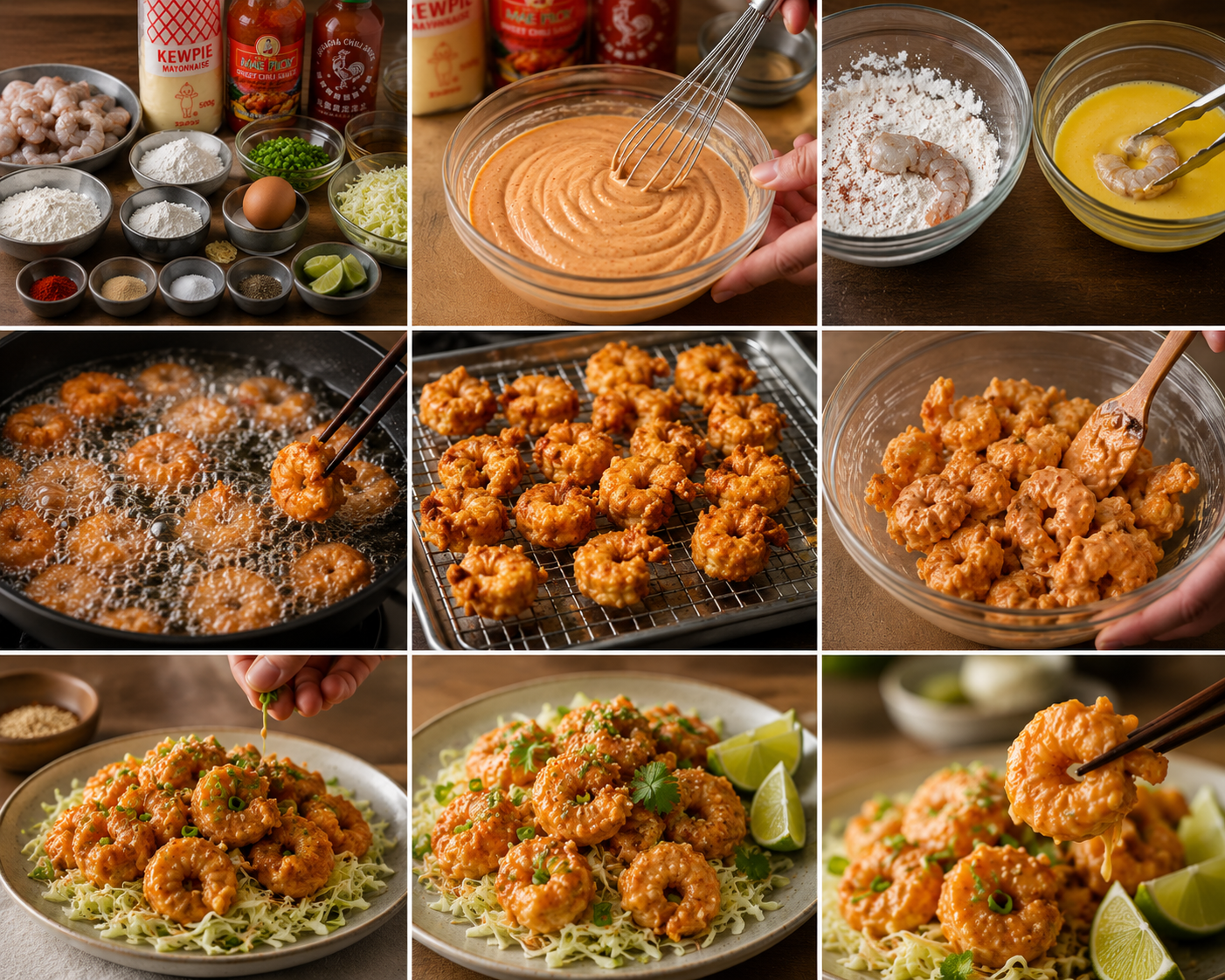
Step 1 — Make the sauce first: Combine Kewpie mayo, sweet chili sauce, sriracha, rice vinegar, and sesame oil in a bowl. Whisk until smooth. Taste — it should be sweet, creamy, with a clear heat finish. Adjust sriracha up or down. Set aside (or refrigerate if making ahead).
Step 2 — Prepare the shrimp: Pat shrimp completely dry with paper towels — this is essential. Surface moisture prevents the cornstarch coating from adhering properly and causes oil to splatter aggressively during frying. Season shrimp lightly with salt before coating.
Step 3 — Set up the coating station: In a bowl, whisk together cornstarch, flour, garlic powder, smoked paprika, cayenne, salt, and black pepper. In a separate bowl, beat the egg with buttermilk. Dip each shrimp in the egg wash, let excess drip off, then toss in the cornstarch mixture until evenly coated. Shake off excess coating — a thin, even coat fries crisper than a thick, uneven one.
Step 4 — Heat oil and fry: Heat oil in a deep heavy-bottomed skillet or pot to 180°C (355°F). Use a thermometer — temperature accuracy matters for this recipe. At the correct temperature, a coating test piece sizzles aggressively and browns within 60 seconds. Fry shrimp in batches of 8–10, never crowding the pan. Each batch takes 2–3 minutes — flip once at the 90-second mark. The coating should be golden-amber, not pale yellow (undercooked) or brown (overcooked). Drain on a wire rack.
Step 5 — Toss in sauce immediately: Add all fried shrimp to a large bowl. Pour the sauce over and toss gently until every shrimp is evenly coated. Work quickly — the longer the hot shrimp sit in the sauce before serving, the more the coating softens. Serve within 3–5 minutes of tossing.
Step 6 — Plate and serve: Arrange shredded cabbage on a plate or in a shallow bowl. Place sauced shrimp over the cabbage. Scatter green onions, sesame seeds, and cilantro. Add lime wedges on the side — a squeeze of lime over the dish immediately before eating brightens the sauce considerably.
Bang Bang Shrimp Bonefish Grill: What Makes the Original Different
The Bonefish Grill version differs from most homemade versions in three specific ways that are worth replicating:
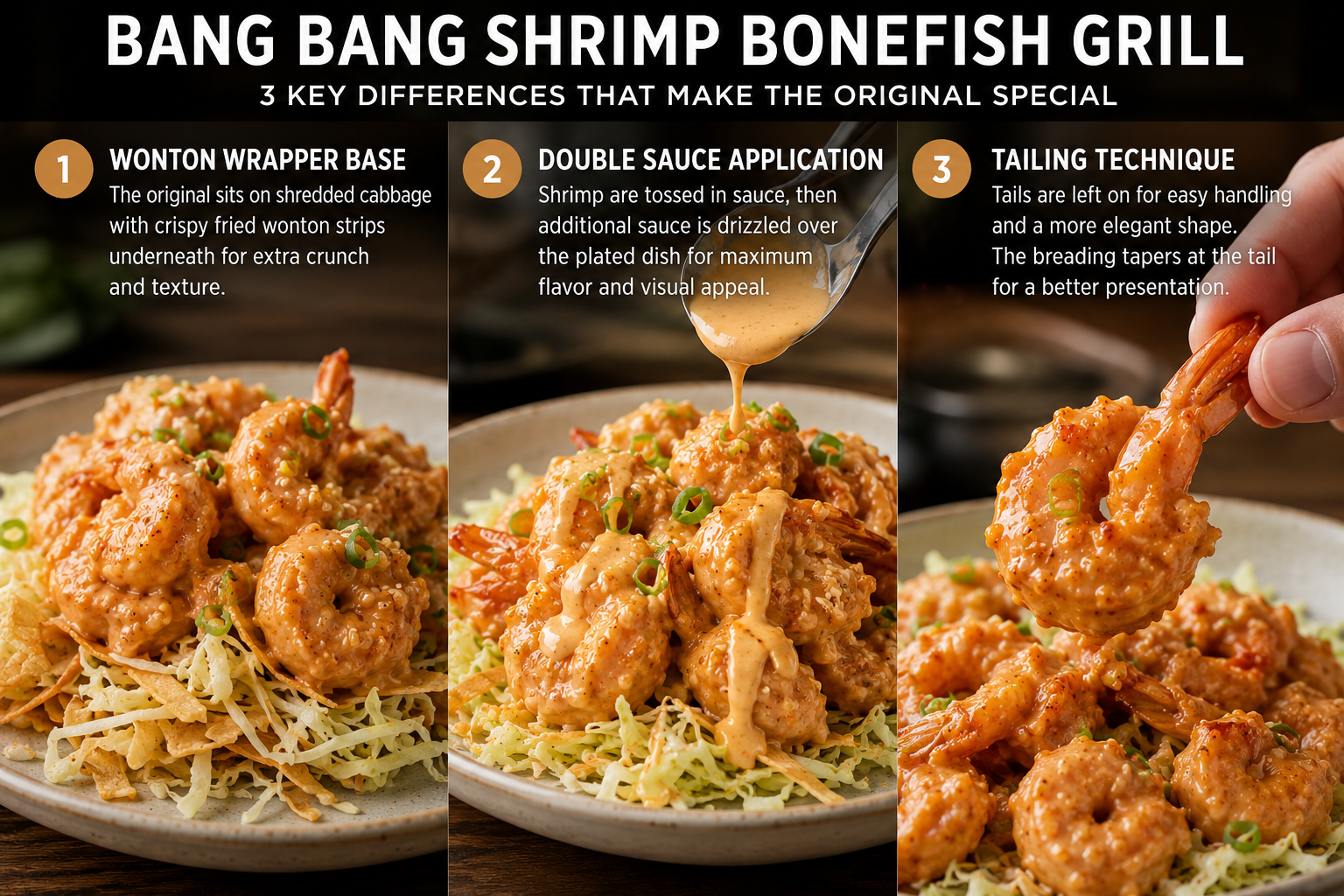
- Wonton wrapper base: The original Bonefish presentation places the shrimp on a bed of shredded cabbage with some versions including crispy fried wonton strips underneath for additional crunch. This adds textural variety to the base that plain cabbage doesn’t provide.
- Double sauce application: In the restaurant version, the shrimp is tossed in a smaller amount of sauce in the kitchen, and additional sauce is drizzled over the plated dish. This two-layer approach ensures sauce on every shrimp while also providing visible sauce for presentation. Home cooks who coat everything in one step often either under-sauce or over-sauce.
- Tailing technique: Bonefish leaves the tails on and the tail shell provides a natural handle for picking up each shrimp — practical for an appetizer format. More importantly, the tail shell’s presence changes how the breading terminates at the back of the shrimp, creating a more tapered, elegant shape versus the blunt end of a tailless shrimp.
Bang Bang Shrimp Pasta: The Extended Version
The pasta version transforms the appetizer into a complete dinner and is the most popular bang bang shrimp format for weeknight home cooking. The sauce-to-pasta ratio requires adjustment from the standard shrimp-only preparation.
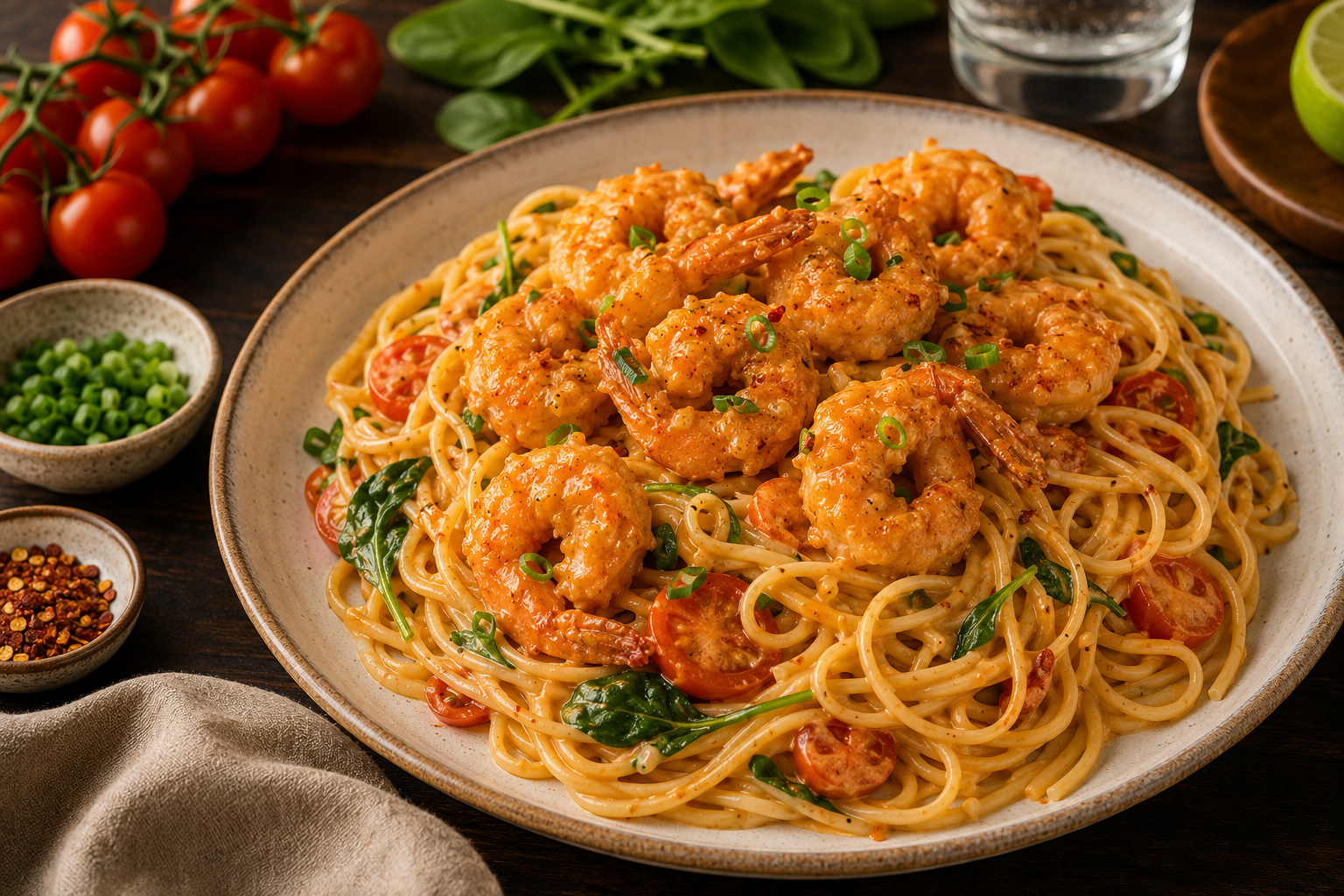
Additional ingredients for pasta (serves 3–4):
- 300g (10.5 oz) linguine or spaghetti
- ½ cup reserved pasta water
- 1 tbsp butter
- Additional sauce: double the standard recipe (6 tbsp Kewpie, 4 tbsp sweet chili, 2 tsp sriracha)
- 1 cup cherry tomatoes, halved
- 2 garlic cloves, minced
- Baby spinach or arugula (optional)
Method adjustment for pasta: Cook linguine to just under al dente. In the pan used for any sautéed vegetables, melt butter over medium heat, add minced garlic and cherry tomatoes, cook 2 minutes. Add the double-batch sauce and a splash of pasta water — the starchy water thins the sauce to a pasta-coating consistency without diluting the flavor. Toss drained pasta in the sauce until evenly coated. Plate pasta, place bang bang shrimp (fried and tossed in the standard portion of sauce) on top. Do not mix the shrimp through the pasta — keep them on top to preserve the crunch.
Estimated calories for pasta version: ~720–780 kcal per serving (3 servings from the batch), with approximately 38g protein.
Bang Bang Shrimp Not Fried: The Baked and Air Fryer Versions
The no-fry version is the second most searched bang bang shrimp preparation, driven by people who want the flavor without the oil.
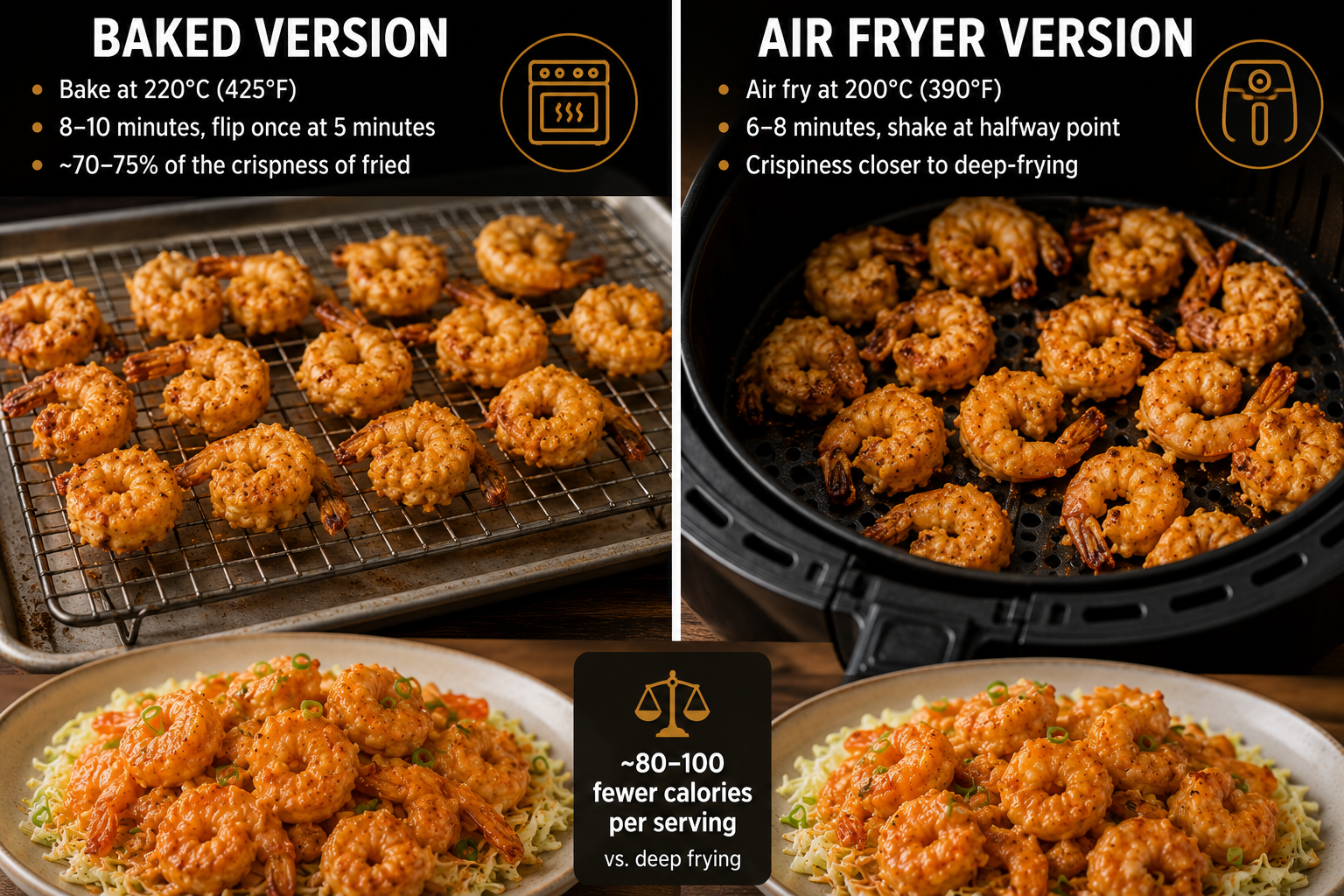
Baked version:
- Coat shrimp in the same cornstarch-flour mixture
- Place on a wire rack over a baking sheet (not a flat sheet — the rack allows heat circulation underneath)
- Spray generously with neutral oil spray
- Bake at 220°C (425°F) for 8–10 minutes, flipping once at 5 minutes
- The coating will crisp, particularly at the edges — approximately 70–75% of the crispness of the fried version
- Toss in sauce immediately after baking
Air fryer version (best non-fry result):
- Coat shrimp identically to the fried version
- Spray air fryer basket and shrimp with oil
- Air fry at 200°C (390°F) for 6–8 minutes, shaking at the halfway point
- The circulating hot air produces crispness noticeably closer to deep-frying than oven baking
- Calorie saving vs. deep frying: approximately 80–100 calories per serving from reduced oil absorption
The flavor difference between fried and air-fried is minimal — the sauce is so dominant that the slight difference in coating crispness is hard to detect once the shrimp is sauced. For most practical purposes, the air fryer version delivers the dish’s flavor experience at lower calorie cost.
Bang Bang Shrimp Calories: Full Breakdown
Version |
Calories Per Serving |
Protein |
Fat |
Carbs |
| Deep fried (standard, as appetizer) | ~380–420 kcal | ~28g | ~18g | ~28g |
| Air fryer (same sauce) | ~290–320 kcal | ~28g | ~10g | ~26g |
| Baked (same sauce) | ~280–310 kcal | ~27g | ~9g | ~25g |
| Pasta version (with pasta) | ~720–780 kcal | ~38g | ~22g | ~82g |
Per-component breakdown for standard fried version (2 servings):
Component |
Calories |
| 450g shrimp (cooked) | ~445 kcal |
| Cornstarch + flour coating | ~120 kcal |
| Oil absorbed during frying (~2 tsp per serving) | ~80 kcal |
| Bang bang sauce (full batch) | ~200 kcal |
| Cabbage, garnishes | ~15 kcal |
| Total (2 servings) | ~860 kcal / ~430 per serving |
The dominant calorie source is the sauce — primarily the Kewpie mayo and sweet chili sauce. A tablespoon of Kewpie contains approximately 90 calories; 3 tablespoons contributes 270 calories to the full batch. This is where the healthy version modifications concentrate.
Nutrition Profile
Beneath the sauce, the shrimp in this dish are a lean, high-protein food with meaningful micronutrients:
- Protein: ~28g per serving from the shrimp — complete amino acid profile, high leucine content for muscle protein synthesis
- Selenium: ~57mcg per serving (~100% DV) — thyroid and antioxidant function
- Iodine: significant contribution from the shrimp — thyroid hormone production
- Vitamin B12: ~1.8mcg per serving (~75% DV) — neurological function
- Omega-3: ~0.75g EPA+DHA per serving — anti-inflammatory
The main nutritional considerations are saturated fat (from the Kewpie mayo base — approximately 3g per serving) and sodium — sweet chili sauce and sriracha together contribute approximately 400–500mg of sodium per serving. For people managing blood pressure, using reduced-sodium sweet chili sauce and limiting extra salt in the coating reduces this meaningfully.
Healthy Version: Light Bang Bang Shrimp
The healthy version restructures the sauce and the cooking method without losing the flavor identity.
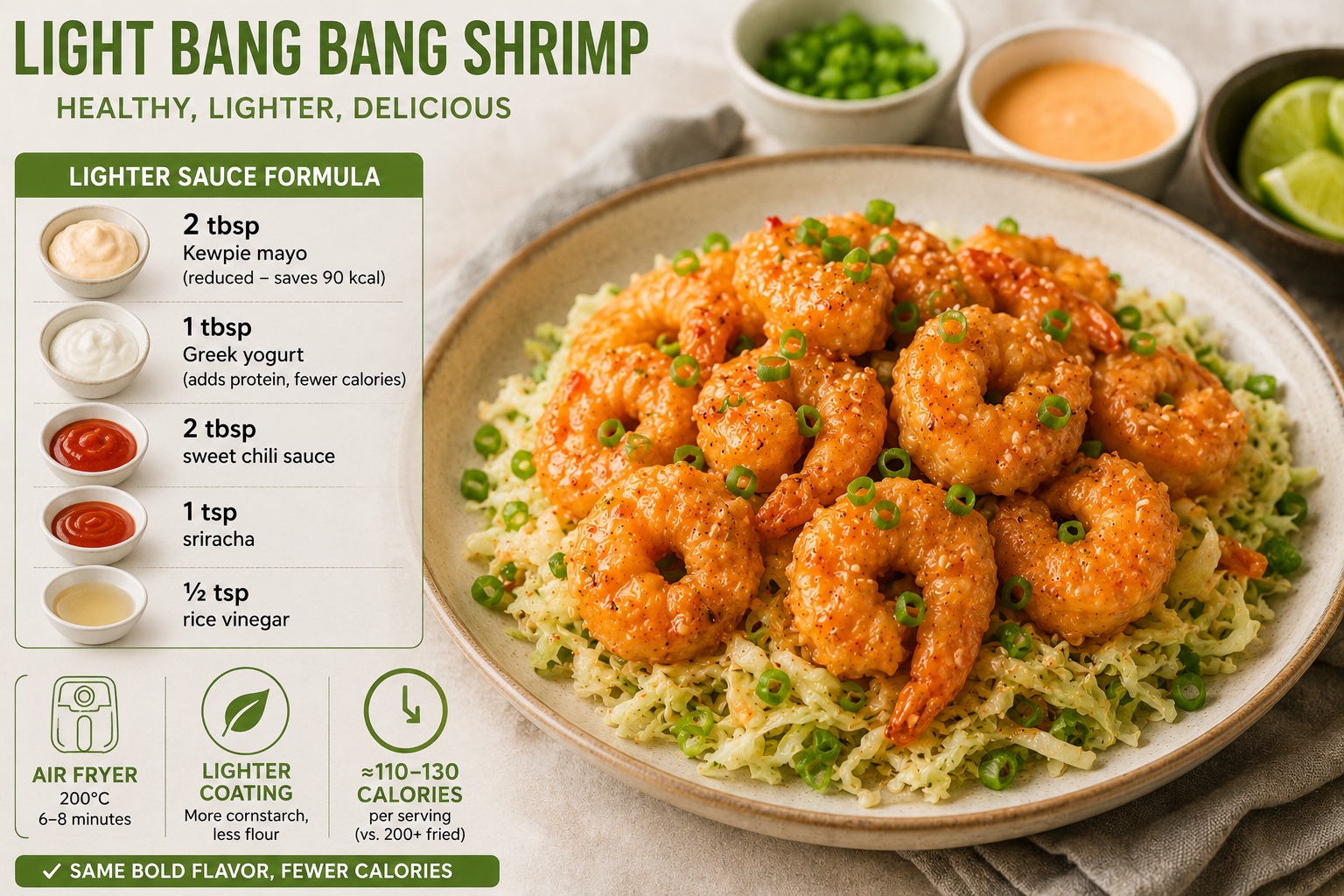
Lighter sauce formula:
- 2 tbsp Kewpie mayo (reduced from 3 tbsp — saves 90 kcal for the batch)
- 1 tbsp Greek yogurt (adds protein, replaces one-third of the mayo volume at 10 kcal vs. 90 kcal)
- 2 tbsp sweet chili sauce (same)
- 1 tsp sriracha (same)
- ½ tsp rice vinegar (same)
This modification saves approximately 80 calories per batch without noticeably changing the flavor — the Greek yogurt contributes its own mild tang that integrates naturally into the sauce profile.
Cooking method: Air fryer at 200°C for 6–8 minutes rather than deep frying.
Lighter coating: Replace half the all-purpose flour with additional cornstarch. Pure cornstarch coating absorbs slightly less oil than flour-based coatings and produces a similar crunch profile. This saves approximately 30–40 calories per serving from reduced oil absorption.
Estimated healthy version: ~240–260 kcal per serving (as appetizer portion), with approximately 27g protein — a favorable macronutrient ratio for a satisfying appetizer at under 260 calories.
Frequently Asked Questions
What is bang bang shrimp? Bang bang shrimp is crispy fried shrimp coated in a creamy sweet-spicy sauce made from Japanese mayo, sweet Thai chili sauce, and sriracha. It originated at Bonefish Grill restaurant in Florida in the early 2000s and has become one of the most replicated restaurant shrimp recipes in American home cooking.
Why is it called bang bang shrimp? The name is believed to reference the double-impact flavor — “bang bang” as an intensifier for the simultaneous sweet and spicy notes in the sauce. Bonefish Grill coined the name and the dish. There is no confirmed official etymology from the restaurant.
What country is bang bang shrimp from? The dish was created in the United States (specifically at Bonefish Grill in Florida), but the sauce draws from Thai and Vietnamese flavor traditions — sweet Thai chili sauce (nam jim kai) and sriracha, both with Southeast Asian roots. It’s an American casual dining dish with Asian-American sauce DNA.
What does bang bang shrimp taste like? The flavor progression goes: crispy exterior → sweet and creamy → delayed spicy heat → tangy finish. The four registers — crunch, sweetness, heat, and tang — arrive in sequence rather than all at once, which is what makes the eating experience more complex than a simple description suggests.
Is bang bang shrimp the same as Bonefish Grill’s version? The homemade version closely approximates the original when using Kewpie mayo and Mae Ploy sweet chili sauce. Key differences in the restaurant version: a double-sauce application (inside and drizzled on top), wonton strips as part of the presentation base, and tails-on shrimp for the appetizer format.
Can I make bang bang shrimp without frying? Yes — the air fryer version is the closest to the fried original in texture, using the same coating but no oil submersion. Baked versions work well too but produce approximately 70–75% of the fried crispness. In both cases, toss in sauce immediately after cooking and serve within 5 minutes.
How do I keep bang bang shrimp crispy? The main enemies of crispness are moisture and time. Dry the shrimp completely before coating, drain on a wire rack not paper towels, toss in sauce immediately before serving (not in advance), and eat within 5 minutes of tossing. The sauce inevitably softens the coating over time — this dish is not designed to hold.
What should I serve with bang bang shrimp? As an appetizer: shredded cabbage or mixed greens base, wonton strips, lime wedges. As a main course: steamed jasmine rice, the pasta version, or Asian-style cucumber salad. For drinks: cold lager, sparkling water with citrus, or a dry Riesling — all cut through the sauce richness.
Conclusion
Bang bang shrimp earns its enduring popularity because the sauce formula is genuinely clever — sweet, creamy, spicy, and tangy in a single coating that complements rather than overwhelms the shrimp underneath. The dish originated at Bonefish Grill in Florida in the early 2000s as an American creation drawing on Thai and Vietnamese condiment traditions, and the homemade version has become one of the most replicated restaurant recipes in American home cooking.
Gettrimping it right comes down to three decisions: using Kewpie mayo rather than regular mayo, using a quality sweet Thai chili sauce (Mae Ploy or Maesri), and serving the dish within five minutes of tossing in the sauce. The crunch is temporary by design — eating it fresh is part of the format.
The air fryer version at 290–320 calories per serving delivers the full flavor experience at roughly 25–30% fewer calories than the deep-fried original, making it the most practical choice for regular home cooking. The pasta extension turns the appetizer into a complete dinner at around 750 calories with 38g of protein — a satisfying weeknight meal that uses the same sauce and shrimp preparation with minimal additional effort.
The sauce keeps in the refrigerator for two weeks. Make a double batch and you’re ten minutes away from the dish on any weeknight.