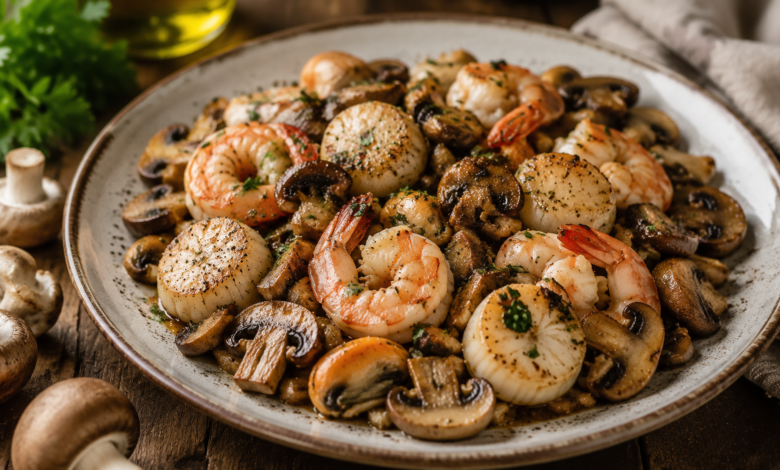
“Seafood mushroom” means two different things depending on where you encounter the phrase. A small white clustered mushroom with a genuinely briny, shellfish-like taste. Other times, it refers to the broader culinary pairing of seafood and mushrooms together in a dish: seafood stuffed mushrooms, seafood mushroom pasta, or a seafood mushroom soup.
What Is a Seafood Mushroom?
A mushroom labeled “seafood mushroom” at the grocery store is typically a cultivated variety with a mild, earthy, slightly sweet flavor that develops a subtle hint of lobster or shrimp once cooked. They are crunchy when eaten raw and grow noticeably chewier the longer they cook, which makes them well suited to quick sautés rather than long braises.
These are sold fresh, usually in small clustered packages, and are most commonly found at international or Asian grocery stores rather than mainstream supermarkets. The name is a marketing and descriptive label tied to flavor, not a formal botanical classification — which is part of why information about them online is inconsistent.
Are Seafood Mushrooms the Same as Enoki Mushrooms?
No, though they are frequently confused because both are sold in small, pale, clustered forms. Enoki mushrooms have long, thin stems with tiny caps and a crisp, almost crunchy bite even after cooking. Commercially labeled seafood mushrooms tend to have a slightly different cluster shape and a more pronounced savory, shellfish-adjacent flavor that enoki does not carry. If a recipe specifically calls for seafood mushrooms and you only have enoki on hand, the dish will still work, but the flavor profile shifts toward more neutral and less briny.
The Wild Lobster Mushroom: A Different Story Entirely
Separately, there is a wild fungus called the lobster mushroom (Hypomyces lactifluorum), which is not technically a mushroom on its own — it is a parasitic fungus that grows on top of certain Russula and Lactarius mushrooms, transforming their color to a deep orange-red and altering their flavor and aroma to genuinely resemble cooked shellfish. Unlike commercially labeled seafood mushrooms, lobster mushrooms grow exclusively in the wild and are not commercially cultivated, which means they show up mainly at specialty markets or through foraging, often at a price comparable to actual lobster.
There is also a wild mushroom known as the shrimp Russula or crab brittlegill (Russula xerampelina), notable for smelling distinctly of boiled crab or shrimp due to naturally occurring trimethylamine compounds — the same chemical family responsible for the characteristic smell of fresh seafood.
Which Mushroom Tastes Like Shrimp?
If you are specifically chasing a shrimp-like flavor, the shrimp Russula is the most direct match by name and chemistry, carrying a genuine shellfish aroma even before cooking. Lobster mushrooms lean closer to crab or lobster specifically. Commercially available seafood mushrooms offer a milder version of this same idea — convenient and consistent, but less intensely briny than their wild counterparts.
Can You Eat Seafood Mushrooms Raw?
Commercially sold seafood mushrooms can be eaten raw in small quantities, similar to how you might eat raw button or enoki mushrooms in a salad — they have a crunchy texture in their uncooked state. That said, most culinary guidance favors cooking mushrooms generally, since heat breaks down certain compounds and improves both digestibility and flavor development. Wild lobster mushrooms and shrimp Russula should always be cooked, not eaten raw, as is standard practice with foraged wild fungi.
Do Mushrooms Go With Seafood? The Pairing Logic Explained
Why This Combination Works on a Flavor-Chemistry Level
Mushrooms and seafood share a significant overlap in glutamate content — the naturally occurring compound responsible for umami, the deep savory taste found in foods like parmesan, soy sauce, and cured meats. Shellfish, in particular, carries high natural umami, and so do many mushroom varieties, especially shiitake, cremini, and porcini. Pairing the two does not create competing flavors; it reinforces and deepens the same flavor category from two different ingredient sources.
This is the technical reason a seafood mushroom pasta or a crab-stuffed mushroom tastes more complex than either ingredient alone — you are stacking umami compounds rather than introducing an entirely new flavor note.
A Contrarian Note on Texture
Most recipe content treats mushrooms and seafood as automatically compatible without addressing texture conflicts. In practice, watery mushroom varieties like standard white button mushrooms can release excess liquid during cooking, diluting a delicate cream-based seafood sauce. Firmer varieties — cremini, shiitake, oyster, or the seafood mushroom variety itself — hold their structure better and do not waterlog a sauce the way softer mushrooms can. This is a detail experienced cooks adjust for but rarely explain outright.
Step-by-Step Seafood Stuffed Mushroom Recipe
Ingredients (Serves 6 as an appetizer)
- 18 large cremini or white button mushrooms, stems removed
- 8 oz lump crab meat or chopped cooked shrimp
- 4 oz cream cheese, softened
- 2 tbsp grated parmesan, plus extra for topping
- 2 cloves garlic, minced
- 2 tbsp fresh chives or green onion, chopped
- 1 tbsp lemon juice
- ½ tsp Old Bay or seafood seasoning
- ¼ tsp smoked paprika
- Salt and pepper to taste
- 1 tbsp olive oil for brushing
Method
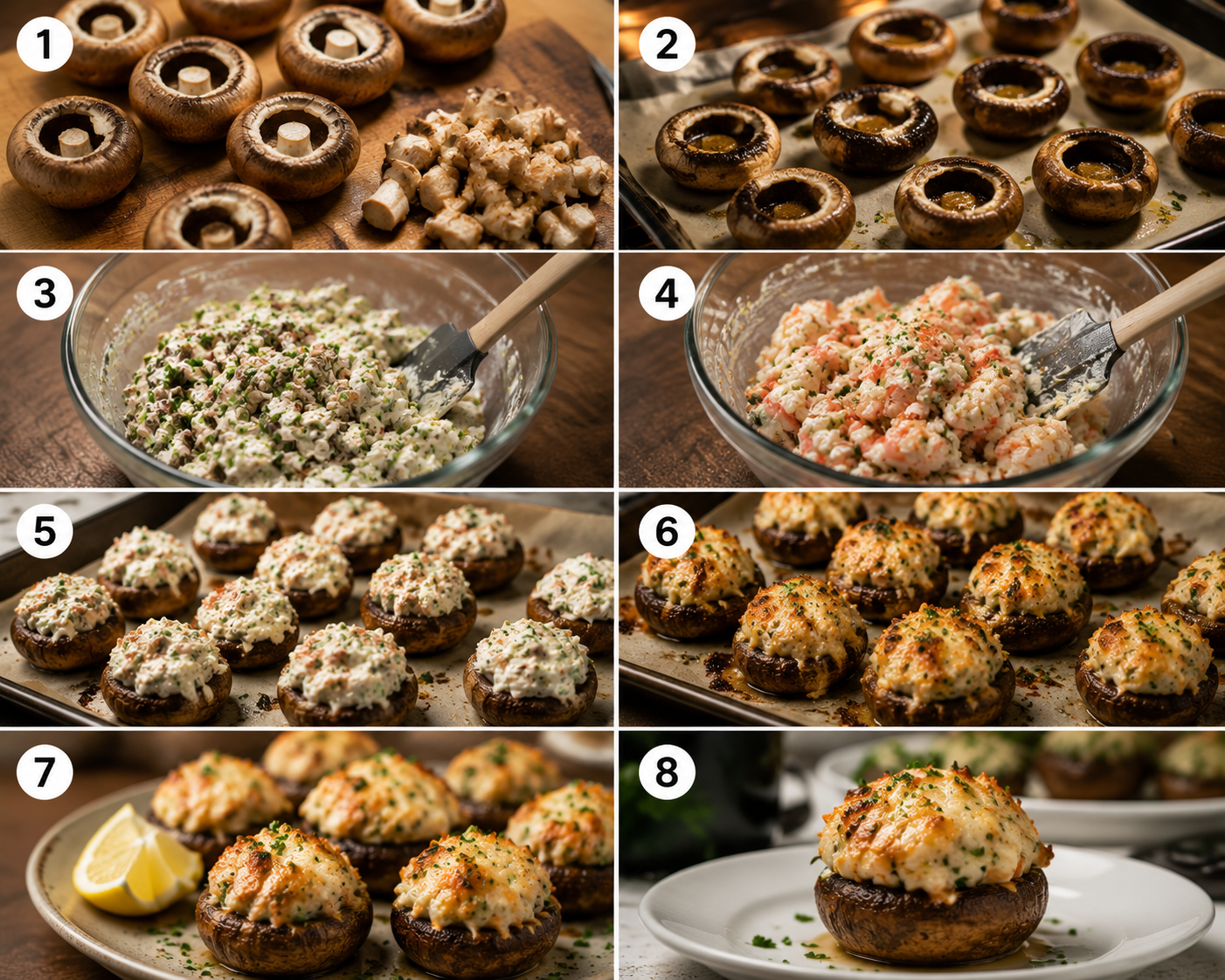
- Prep the mushrooms. Preheat oven to 400°F (205°C). Gently remove the stems from each mushroom cap, reserving them. Finely chop a third of the reserved stems for the filling; discard or save the rest for stock.
- Pre-bake the caps. Brush mushroom caps with olive oil and arrange cavity-side up on a lined baking sheet. Bake 8–10 minutes to release excess moisture before filling — skipping this step is the most common reason stuffed mushrooms turn watery on the plate.
- Build the filling. While caps bake, mix cream cheese, parmesan, garlic, chopped mushroom stems, chives, lemon juice, seasoning, and paprika until well combined.
- Fold in the seafood. Gently fold in crab meat or shrimp, keeping pieces intact rather than mashing them into the mixture.
- Fill the caps. Remove pre-baked mushrooms from the oven and drain any released liquid from the baking sheet. Spoon filling generously into each cap.
- Final bake. Return to the oven and bake 12–15 minutes until the filling is golden at the edges and the mushrooms are fully tender.
- Rest and serve. Let rest 3–4 minutes before serving — the filling continues to set slightly as it cools.
Calories per 2 stuffed mushrooms: approximately 110–140 kcal, depending on whether crab or shrimp is used and how generously the cheese filling is applied.
Seafood Mushroom Soup: A Quick Method
Ingredients (Serves 4)
- 1 lb mixed seafood (shrimp, scallops, or white fish), cut into bite-sized pieces
- 8 oz mushrooms (cremini, shiitake, or seafood mushroom variety), sliced
- 1 small onion, diced
- 2 cloves garlic, minced
- 4 cups seafood or chicken stock
- 1 cup heavy cream or coconut milk (for a dairy-free version)
- 2 tbsp butter or olive oil
- 1 bay leaf
- Salt, white pepper, and fresh thyme to taste
Method
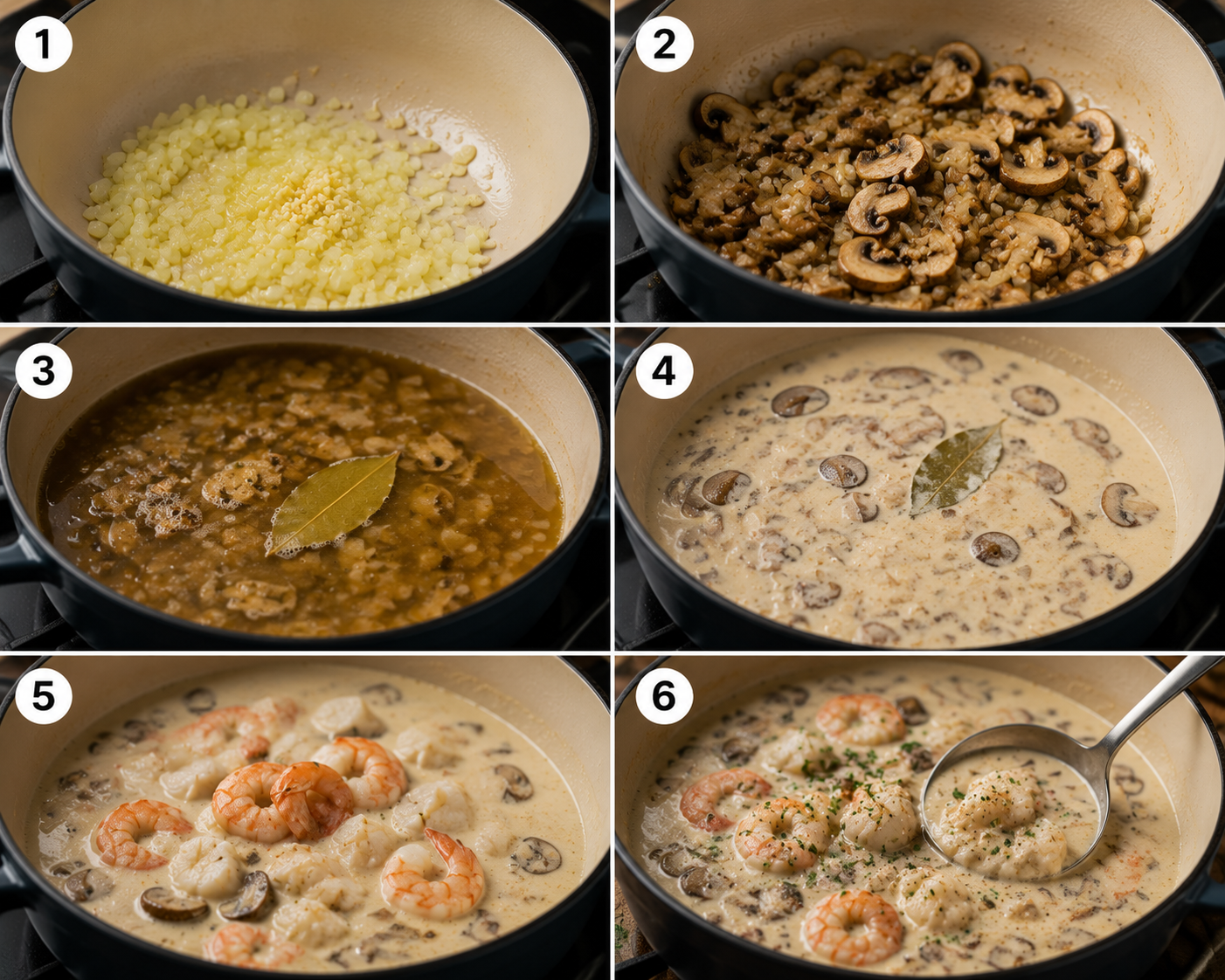
- Sauté onion and garlic in butter until translucent, about 3 minutes.
- Add mushrooms and cook until they release their moisture and begin to brown, roughly 5–6 minutes.
- Pour in stock and add bay leaf. Simmer 10 minutes to build flavor.
- Stir in cream and bring back to a gentle simmer.
- Add seafood and cook just until opaque and cooked through — typically 3–5 minutes depending on the seafood used.
- Season with salt, white pepper, and fresh thyme. Remove bay leaf before serving.
Calories per serving (with cream): approximately 320–360 kcal. Substituting coconut milk shifts the fat profile but keeps a similar calorie range.
Tips for Cooking Seafood and Mushrooms Together
- Pre-cook mushrooms separately when liquid matters. For cream sauces or stuffed preparations, sautéing or pre-baking mushrooms first removes excess water that would otherwise dilute the dish.
- Match the mushroom’s firmness to the seafood’s delicacy. Firm mushrooms (shiitake, cremini, seafood mushroom variety) pair best with delicate seafood like scallops or crab, since neither overwhelms the other’s texture.
- Don’t skip the acid. A splash of lemon juice or white wine cuts through the natural richness of both mushrooms and seafood, which can otherwise read as heavy or one-note together.
- Season seafood and mushrooms separately before combining. Mushrooms absorb seasoning differently than seafood does. Season each component as it cooks individually, then taste again once combined, rather than relying on one seasoning pass at the end.
- If using wild lobster mushrooms or shrimp Russula, cook in plenty of fat. Both wild varieties benefit from a generous amount of butter or oil during sautéing, which helps soften their naturally firmer wild texture and carry their seafood-like aroma into the dish.
Seafood Mushroom Substitute Options
If a recipe calls for the specific seafood mushroom variety and you cannot source it, reasonable substitutes include:
- Oyster mushrooms: Mild flavor with a soft, meaty texture; commonly used as a seafood substitute in plant-based cooking
- Shiitake: Stronger, more savory flavor; works well in soups and stir-fries where a bolder mushroom presence is welcome
- Cremini: Neutral and widely available; a safe default substitute in stuffed mushroom recipes
- King oyster mushrooms: Firmer texture, holds up well in dishes where seafood mushrooms are prized for their bite
None of these will replicate the specific shellfish-adjacent flavor note of true seafood mushrooms, but each works structurally and texturally in most recipes calling for them.
Is Seafood Mushroom Healthy? A Nutrition Breakdown
Mushroom Nutrition (Per 1 Cup Cooked, Approximate)
Nutrient |
Amount |
| Calories | 28–35 kcal |
| Protein | 2–3 g |
| Fiber | 1–2 g |
| Vitamin D | Varies (higher in UV-exposed varieties) |
| Potassium | 300–400 mg |
| B Vitamins | Riboflavin, niacin, pantothenic acid present |
Mushrooms broadly are low-calorie, fiber-containing foods with notable amounts of B vitamins and potassium. Combined with lean seafood, a seafood-and-mushroom dish tends to deliver strong nutritional value relative to its calorie count — the main variable, as always, is what else gets added (cream, cheese, butter) around the core ingredients.
Seafood Mushroom Benefits Beyond Basic Nutrition
Mushrooms contain beta-glucans, a type of fiber studied for potential immune-supporting properties, along with antioxidant compounds that vary by species. When paired with seafood’s lean protein and omega-3 content, the combination delivers a meal that is nutritionally efficient — meaningful protein and micronutrients without an excessive calorie load, assuming the preparation method does not load on excess fat.
Healthy Version: Lighter Seafood Stuffed Mushrooms
Ingredient Swaps
Standard |
Healthy Swap |
| Full-fat cream cheese | Light cream cheese or Greek yogurt blended with a touch of parmesan |
| Crab or shrimp with mayo binder | Plain crab/shrimp with lemon and herbs only, no mayo |
| Buttered breadcrumb topping | Skip topping or use a light dusting of panko, baked dry |
Method (Lighter Version)
- Follow the same pre-baking step to remove mushroom moisture.
- Mix light cream cheese or Greek yogurt with parmesan, garlic, lemon juice, and herbs — skip any added butter or mayo.
- Fold in crab or shrimp gently.
- Fill caps and bake as directed, watching closely in the final few minutes since lighter fillings can dry out slightly faster than full-fat versions.
Calories per 2 mushrooms (lighter version): approximately 70–90 kcal, roughly a third fewer calories than the standard recipe while keeping the core flavor intact.
Frequently Asked Questions
What is a seafood mushroom? A cultivated mushroom variety with a mild, earthy flavor that develops a subtle hint of shrimp or lobster when cooked. It is distinct from the wild lobster mushroom and shrimp Russula, which are separate species with stronger seafood-like characteristics.
Is seafood mushroom healthy? Yes. Mushrooms in general are low in calories, contain fiber, B vitamins, and potassium, and pair well nutritionally with lean seafood protein.
Which mushroom tastes like shrimp? The shrimp Russula (Russula xerampelina) is named specifically for its shellfish-like aroma and is the closest match by both name and chemical composition. Commercially sold seafood mushrooms offer a milder version of a similar flavor idea.
Can you eat seafood mushrooms raw? Commercially sold seafood mushrooms can typically be eaten raw in small amounts, similar to other mild cultivated mushrooms. Wild lobster mushrooms and shrimp Russula should always be cooked before eating.
Do mushrooms go with seafood? Yes, and the pairing has a flavor-chemistry basis — both ingredients carry high natural umami, so combining them deepens rather than competes for flavor.
How long do you boil mushrooms in a seafood boil? Whole or halved mushrooms added to a seafood boil typically need 8–10 minutes in the boiling liquid, added around the same time as potatoes since they benefit from a longer cook to absorb the seasoned broth.
Are seafood mushrooms the same as enoki? No. They are often confused due to similar pale, clustered appearance, but seafood mushrooms have a more pronounced savory, shellfish-adjacent flavor, while enoki stays crisp and mild even after cooking.
What is a good seafood mushroom substitute? Oyster, shiitake, cremini, or king oyster mushrooms all work structurally in recipes calling for seafood mushrooms, though none fully replicate the specific shellfish-like flavor note.
Conclusion
The phrase “seafood mushroom” covers more ground than most people realize — a specific cultivated mushroom variety, a family of wild fungi genuinely chemically linked to shellfish aroma, and an entire category of dishes built around pairing mushrooms with seafood for their shared umami depth. Once that distinction is clear, the cooking side becomes straightforward: pre-cook mushrooms to manage moisture, season components separately, lean on acid to balance richness, and match firmer mushroom varieties with more delicate seafood.
Nutritionally, the pairing holds up well on its own — lean protein from seafood, fiber and B vitamins from mushrooms — and the calorie load shifts entirely based on what surrounds the two core ingredients. Whether you are stuffing mushrooms with crab, building a creamy seafood mushroom soup, or simply curious about the actual mushroom variety behind the name, the combination earns its popularity honestly: two ingredients that genuinely make each other taste better.