Red Lobster Bar Harbor Lobster Bake: Price, Calories, Nutrition Facts & Menu Status

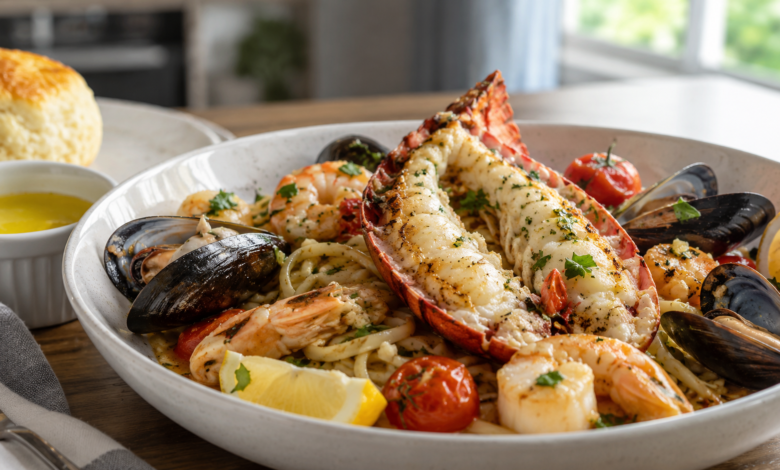
The Bar Harbor Lobster Bake is one of those Red Lobster dishes that people search for specifically by name — not “lobster pasta” or “seafood feast,” but the exact dish. That kind of brand loyalty is rare on a chain restaurant menu, and it usually means the dish has been around long enough to build a following, while also raising a real question: with so many Red Lobster menu changes over the past couple of years, is the Bar Harbor Lobster Bake still around?
What Is a Lobster Bake, Originally?
The New England Tradition Behind the Name
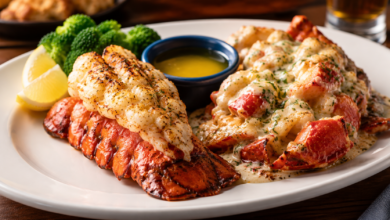
Before any restaurant chain put it on a menu, a lobster bake was a coastal Maine cooking method — lobster, clams, mussels, corn, and potatoes layered together and steamed, traditionally over hot rocks and seaweed on a beach, sometimes finished in a large covered pot instead. The name refers to the cooking process, not a specific recipe, which is why versions vary so much from one place to another along the Maine coast.
Restaurants borrowed the concept and the name decades ago, swapping the beach-fire method for a stovetop or steam-kettle version that recreates the flavor without the logistics of an actual beach bake. Red Lobster’s Bar Harbor Lobster Bake is a chain-restaurant interpretation of that tradition, built for consistency across hundreds of locations rather than authenticity to any one coastal town’s exact method.
Why Bar Harbor Specifically
Bar Harbor, Maine, is closely tied to the lobster bake tradition in the public imagination — it is a well-known coastal tourist town with a long history of seafood shacks and lobster pound restaurants. Naming the dish after the town borrows that association even though Red Lobster’s version is prepared in a commercial kitchen, not steamed over rockweed on an actual shoreline.
What Is in Red Lobster’s Bar Harbor Lobster Bake?
The Actual Ingredients
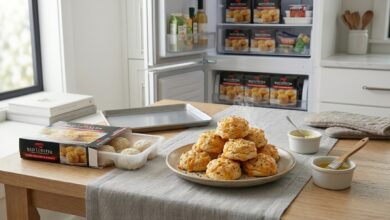
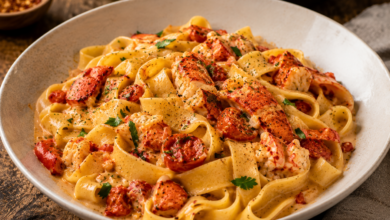
Based on Red Lobster’s own menu description, the dish includes petite Maine lobster tails, shrimp, bay scallops, mussels, and fresh tomatoes, served over linguine in a garlic and white wine broth. It comes with Cheddar Bay Biscuits on the side when ordered as a meal.
This is a brothy, pasta-forward seafood dish rather than the corn-and-potato beach-bake format some people expect from the name. If you are picturing a steamed pot with corn on the cob and red potatoes, that is the more traditional regional version — Red Lobster’s take leans into linguine and a wine-based broth instead.
Red Lobster Bar Harbor Lobster Bake Price
Pricing sits in the $30–$37 range depending on location, with some sources citing figures closer to $36.99 for the individual entrée. As with most Red Lobster signature dishes, expect regional variation — coastal and metro locations often run higher than suburban or inland ones.
Did Red Lobster Discontinue the Bar Harbor Lobster Bake?
As of mid-2026, no — the dish remains listed among Red Lobster’s current signature feasts on their published menu. It is worth noting that Red Lobster went through significant menu restructuring following its 2024 bankruptcy filing, which led to real confusion online about which dishes survived. Some discontinued items were brought back, others were cut permanently, and availability can vary by individual location even when a dish is technically still on the national menu. If a specific location shows the item unavailable, that typically reflects a local sourcing or menu customization issue rather than a chain-wide discontinuation.
Bar Harbor Lobster Bake Calories: What the Numbers Actually Show
Conflicting Figures Worth Knowing About
This is a case where being transparent matters more than picking one number and presenting it as fact. Calorie figures circulating for this dish vary by source — some list it close to 1,020 calories for the individual portion, while estimates from similar Red Lobster seafood-and-pasta dishes in this price and ingredient range commonly land between 1,000 and 1,300 calories depending on portion size and broth richness.
Red Lobster’s own published nutrition document is the authoritative source for exact figures, and that number can shift when the chain updates its menu or recipe formulation. If you are tracking calories precisely — for medical reasons or strict macro tracking — checking the current official PDF nutrition guide directly before ordering is the more reliable approach than relying on any single third-party estimate, including the ranges mentioned here.
Why the Calorie Count Runs High Regardless of Exact Figure
Three elements drive the total regardless of which precise number applies:
- Linguine pasta as the base contributes a substantial carbohydrate load
- Garlic and white wine broth often includes butter or oil as an emulsifier, adding fat calories that are easy to underestimate
- Multiple proteins (lobster, shrimp, scallops, mussels) stack lean protein but the broth and pasta carry more of the caloric weight than the seafood itself
This mirrors a pattern seen across most Red Lobster pasta-based seafood dishes — the seafood is genuinely lean, but the dish’s overall calorie count is shaped by what surrounds it.
How to Recreate a Bar Harbor-Style Lobster Bake at Home
Ingredients (Serves 4)
- 4 lobster tails (4–5 oz each), thawed if frozen
- 1 lb large shrimp, peeled and deveined
- ½ lb bay scallops
- 1 lb mussels, scrubbed and debearded
- 1 lb linguine
- 2 cups cherry tomatoes, halved
- 6 cloves garlic, thinly sliced
- 1 cup dry white wine (Sauvignon Blanc or Pinot Grigio work well)
- 2 cups seafood or chicken stock
- 4 tbsp butter
- 3 tbsp olive oil
- 2 tbsp fresh parsley, chopped
- Salt and red pepper flakes to taste
- Lemon wedges for serving
Step-by-Step Method
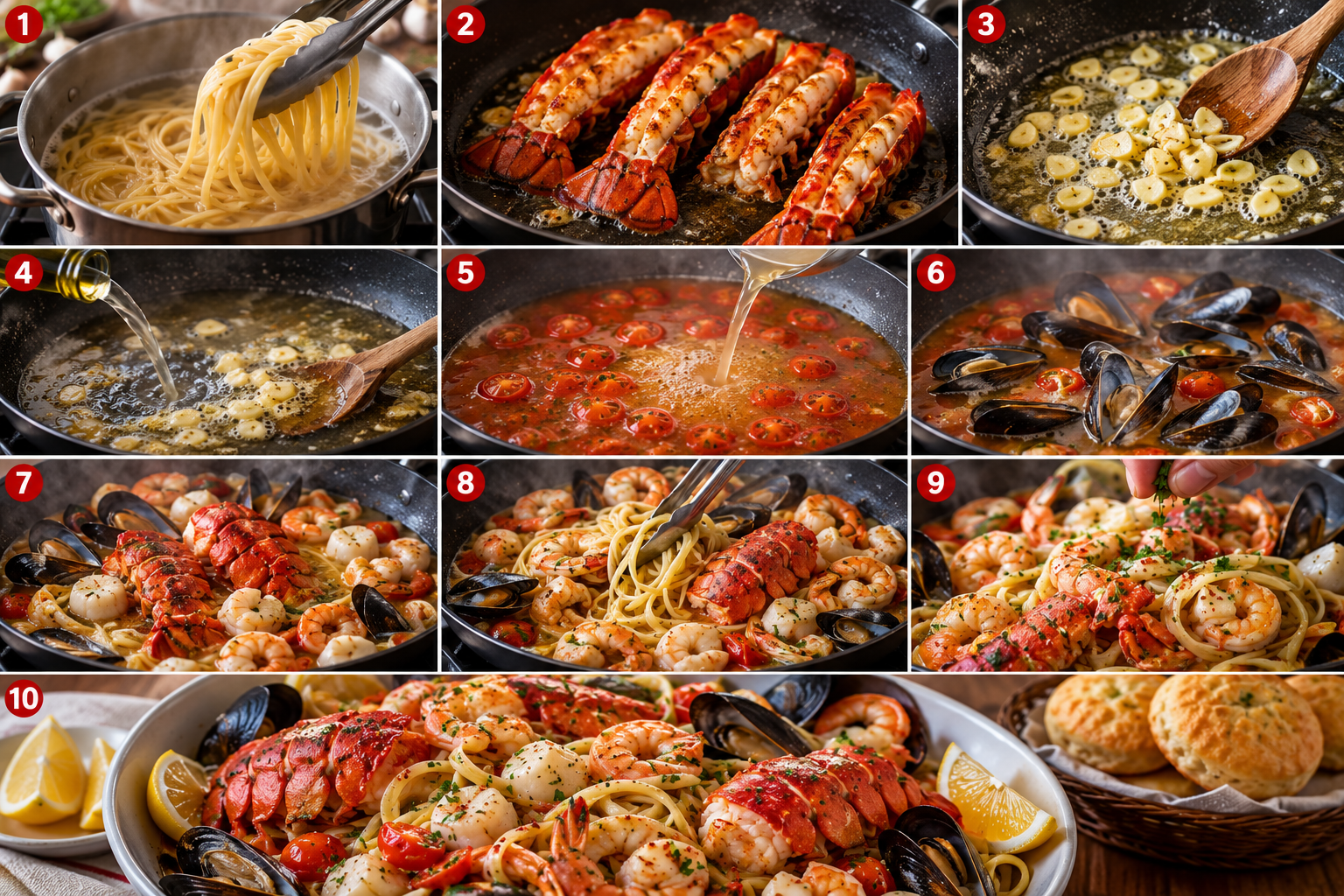
- Cook the linguine. Boil in salted water until just shy of al dente. Drain and reserve 1 cup of pasta water.
- Sear the lobster tails. Split the tails lengthwise through the shell. Heat olive oil in a large, deep skillet over medium-high heat. Sear lobster meat-side down for 2–3 minutes until just beginning to turn opaque. Remove and set aside — they will finish cooking later in the broth.
- Build the broth base. In the same pan, melt butter and add garlic. Sauté 30–45 seconds, stirring constantly so it doesn’t brown.
- Add wine. Pour in the white wine, scraping up any browned bits from the pan. Let it simmer 2–3 minutes to cook off the harsh alcohol edge.
- Add stock and tomatoes. Pour in stock and add cherry tomatoes. Simmer gently for 4–5 minutes until tomatoes soften slightly.
- Steam the mussels. Add mussels to the simmering broth, cover, and cook 4–5 minutes until they open. Discard any that remain closed after cooking.
- Add the remaining seafood. Return the lobster to the pan along with shrimp and scallops. Cover and cook 3–4 minutes, just until shrimp turn pink and scallops are opaque through the center.
- Combine with pasta. Add the drained linguine directly into the broth, tossing to coat. Use reserved pasta water to loosen the sauce if needed.
- Finish and serve. Stir in parsley and a pinch of red pepper flakes. Divide among bowls, making sure each portion gets a fair share of lobster, shrimp, scallops, and mussels. Serve with lemon wedges and warm biscuits on the side.
Calories per serving (homemade, divided by 4): approximately 620–700 kcal — meaningfully lower than restaurant estimates, largely because home portions of butter and oil tend to be more controlled than commercial kitchen recipes built for richness and consistency at scale.
Tips for Getting This Dish Right
- Don’t overcook the scallops. Bay scallops go from tender to rubbery within about 60 seconds of overcooking. Pull them the moment they turn opaque — they will continue cooking slightly from residual heat.
- Discard unopened mussels. A mussel that stays closed after cooking was likely dead before it went into the pot and should not be eaten. This is a food safety rule, not a quality preference.
- Sear the lobster first, finish it in the broth. Searing develops flavor through the Maillard reaction that simmering alone cannot replicate. Finishing in the broth keeps it from drying out while still building that initial depth.
- Use a wine you’d actually drink. Cooking wine sold specifically for cooking is often lower quality and saltier than a basic drinking-quality white wine. A modest Pinot Grigio or Sauvignon Blanc does far more for the broth.
- Reserve pasta water every time. It is the single easiest way to adjust a brothy pasta sauce’s consistency without watering down the flavor.
Healthy Version: Lighter Bar Harbor-Style Lobster Bake
Swaps That Cut Calories Without Cutting Flavor
Standard |
Healthier Swap |
| Regular linguine | Whole wheat or zucchini noodles |
| 4 tbsp butter | 2 tbsp butter + extra garlic and lemon zest for flavor |
| Full olive oil amount | Reduce to half, rely on wine reduction for body |
| Cream-finished broth (if added) | Skip cream entirely; let tomatoes and wine carry the richness |
Method (Lighter Version)

- Follow the same searing and broth-building steps above, but reduce butter to 2 tablespoons and use only 1.5 tablespoons of olive oil.
- Substitute whole wheat linguine, or swap half the pasta for spiralized zucchini added in the final 2 minutes of cooking.
- Finish with lemon zest and extra parsley instead of any additional fat — the acidity compensates for the reduced richness without anyone noticing a flavor gap.
- Keep portion sizes consistent with the original recipe; the calorie reduction comes from ingredient adjustment, not smaller servings.
Calories per serving (lighter version): approximately 450–520 kcal, while keeping the same seafood-to-broth ratio that makes the dish work.
Nutrition Snapshot: What the Seafood Itself Contributes
Seafood (3 oz cooked) |
Calories |
Protein |
| Lobster meat | 75–85 kcal | 16–17 g |
| Shrimp | 80–90 kcal | 17–18 g |
| Bay scallops | 75–80 kcal | 14–15 g |
| Mussels | 95–100 kcal | 13–14 g |
Every protein in this dish is lean and high in protein relative to calories. The takeaway is consistent with most seafood-pasta dishes: the seafood itself is rarely the calorie problem. Broth richness, butter, oil, and pasta portion size are what move the total significantly.
Frequently Asked Questions
What is a lobster bake? A traditional New England cooking method where lobster, shellfish, corn, and potatoes are steamed together, historically over a beach fire using hot rocks and seaweed. Restaurant versions adapt the concept into a stovetop or kettle-steamed dish.
Did Red Lobster discontinue the Bar Harbor Lobster Bake? No, as of mid-2026 it remains on Red Lobster’s current menu as part of their signature feasts lineup, though individual locations may show it unavailable due to local menu or sourcing variations.
How many calories are in a Bar Harbor Lobster Bake? Reported figures vary by source, with some listing around 1,020 calories for the individual portion. For the most accurate and current number, Red Lobster’s official nutrition guide is the most reliable reference, since figures can shift with recipe updates.
What is in the Red Lobster Bar Harbor Lobster Bake? Petite Maine lobster tails, shrimp, bay scallops, mussels, and fresh tomatoes served over linguine in a garlic and white wine broth, typically accompanied by Cheddar Bay Biscuits.
How much does the Bar Harbor Lobster Bake cost? Pricing generally falls between $30 and $37 depending on location, with some listings closer to $36.99 for the individual portion.
Is the Bar Harbor Lobster Bake healthy? The seafood components are lean and protein-rich. The calorie load comes primarily from the pasta, butter, and oil in the broth rather than the lobster, shrimp, scallops, or mussels themselves. A homemade lighter version can cut total calories by roughly 40–50% while keeping the core flavor.
Can I make a Bar Harbor Lobster Bake without pasta? Yes. Swapping linguine for steamed corn and red potatoes moves the dish closer to the traditional beach-bake format and changes the calorie profile, generally reducing the carbohydrate load while keeping a similarly hearty meal.
Does the Bar Harbor Lobster Bake serve one person or two? It is generally sized for one substantial serving, though the portion is large enough that some diners split it. A family meal version exists separately, sized to serve multiple people.
Conclusion
The Bar Harbor Lobster Bake earns its loyal following honestly — a genuine mix of lobster, shrimp, scallops, and mussels in a garlic white wine broth is a satisfying, restaurant-only kind of dish, and it has survived Red Lobster’s recent menu upheavals largely intact. The price and calorie specifics shift depending on location and source, which is exactly why checking current, location-specific information before ordering matters more than relying on any single number you find online.
Making your own version at home gives you the most control: you decide how rich the broth runs, how much pasta versus seafood lands on the plate, and whether you want the full indulgent version or a lighter one that still delivers the same combination of lobster, shrimp, scallops, and mussels in one bowl. Either way, the technique matters more than exact ingredient quantities — sear the lobster properly, don’t overcook the scallops, and let the wine and garlic build a broth worth eating with a spoon once the pasta is gone.