Lobster Pappardelle Red Lobster: Recipe, Ingredients, Sauce, Calories, And Healthier Options

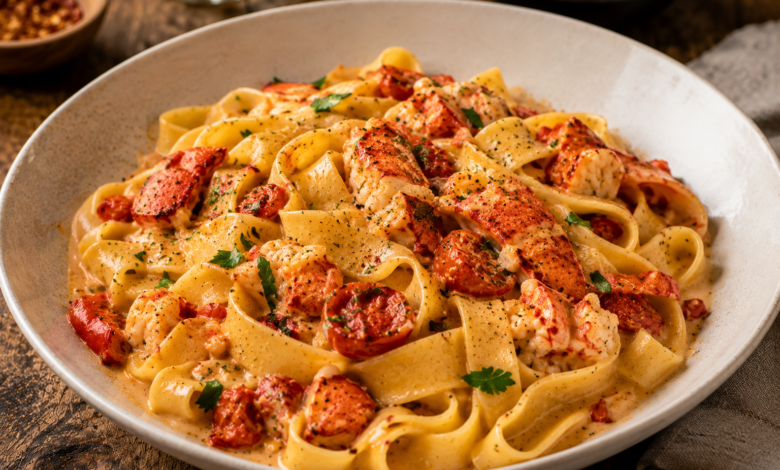
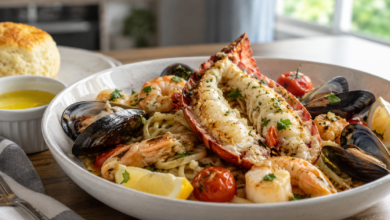
Lobster pappardelle Red Lobster is the kind of seafood pasta people search for when they want something rich, restaurant-style, creamy, and comforting, but still centered around lobster. It is usually understood as a wide-ribbon pasta dish made with lobster meat, a flavorful sauce, and enough richness to feel like a special meal rather than a light weeknight dinner.
The important thing to understand from the start is that lobster pappardelle is not automatically healthy just because it contains seafood. Lobster itself is lean and protein-rich, but the full dish can become high in calories because of pappardelle pasta, butter, cream, oil, cheese, sauce, and portion size. Third-party nutrition listings for Red Lobster’s lobster pappardelle pasta place it around 1,050–1,090 calories per serving, which makes it more of an indulgent restaurant pasta than a low-calorie seafood meal.
What Is Lobster Pappardelle At Red Lobster?
Lobster pappardelle at Red Lobster-style restaurants is best understood as a rich seafood pasta built around wide pappardelle noodles and lobster meat. The pasta is usually paired with a buttery, garlicky, creamy, tomato-based, or blush-style sauce that coats the broad noodles.
Pappardelle is wider than fettuccine, so it holds sauce differently. Instead of disappearing into a thin sauce, it creates a full, silky bite. That is why pappardelle works well with lobster. Lobster has a delicate sweetness, and the wide pasta gives enough body to carry that flavor without needing a huge amount of meat in every bite.
A Red Lobster-inspired lobster pappardelle usually includes some combination of:
Component |
Purpose |
| Pappardelle pasta | Wide noodle base |
| Lobster meat | Main seafood protein |
| Garlic | Aromatic flavor |
| Tomatoes or tomato paste | Sweet acidity and color |
| Cream or butter | Richness |
| Pasta water | Sauce texture |
| Lemon | Brightness |
| Herbs | Fresh finish |
| Asparagus or vegetables | Color and balance |
Where Did Lobster Pappardelle Originate?
Pappardelle comes from Italy, especially Tuscany. It is a broad, flat ribbon pasta traditionally served with rich sauces. Classic Tuscan pappardelle is often paired with hearty meat sauces such as wild boar ragù, mushroom sauces, or slow-cooked ragù-style preparations. Pappardelle is widely described as a wide ribbon pasta from Tuscany.
Lobster pasta, on the other hand, belongs more broadly to coastal Italian and Italian-American cooking. In coastal areas, seafood and pasta naturally meet because both are local staples. Lobster, crab, shrimp, clams, mussels, squid, and fish all appear in different seafood pasta traditions.
So, lobster pappardelle as a restaurant dish is not one ancient Italian recipe with one exact birthplace. It is better understood as a modern seafood-pasta build: Italian wide noodles combined with lobster and a rich restaurant-style sauce.
Why Is It Called Pappardelle?
Pappardelle gets its name from the Italian verb “pappare,” which is commonly explained as meaning “to gobble up.” That name fits because pappardelle is a broad, satisfying pasta that feels hearty on the plate. Pasta references commonly connect pappardelle with “pappare” and describe it as a wide ribbon pasta.
Here is a simple comparison:
Pasta |
Shape |
Best Sauce Style |
| Linguine | Long and narrow | Light seafood, oil, clam sauce |
| Fettuccine | Medium-wide ribbon | Alfredo, cream, chicken, shrimp |
| Tagliatelle | Ribbon pasta | Ragù, cream, mushroom |
| Pappardelle | Very wide ribbon | Rich sauces, lobster, ragù, tomato cream |
For lobster pappardelle, the wide noodle is useful because lobster meat is delicate. The pasta gives the dish body while the sauce connects everything together.
The mistake is making the sauce too heavy. Pappardelle can carry rich sauce, but lobster can be hidden under too much cream or cheese. The goal is balance, not weight.
Lobster Pappardelle Red Lobster Ingredients
The main lobster pappardelle Red Lobster ingredients are simple, but quality matters. This dish does not need a long ingredient list. It needs the right ingredients used in the right order.
A restaurant-style homemade version usually includes:
Ingredient |
Best Choice |
Why It Matters |
| Pappardelle pasta | Fresh or good dried pappardelle | Holds sauce well |
| Lobster meat | Cooked tail, claw, or knuckle meat | Main flavor |
| Garlic | Fresh minced garlic | Builds aroma |
| Shallot | Finely diced | Sweeter than onion |
| Tomato paste | Small amount | Adds depth |
| Cherry tomatoes | Fresh or lightly cooked | Sweet acidity |
| White wine | Dry wine | Deglazes pan |
| Seafood stock | Lobster or shrimp stock | Deep seafood flavor |
| Heavy cream | Small amount | Makes sauce silky |
| Butter | Used carefully | Adds richness |
| Lemon | Zest or juice | Cuts heaviness |
| Parsley or basil | Fresh | Bright finish |
| Red pepper flakes | Optional | Gentle heat |
| Pasta water | Reserved from boiling | Emulsifies sauce |
Fresh lobster gives the best texture, but frozen cooked lobster meat can work if it is thawed gently and patted dry. Langostino can also work in a budget version, though it is not the same as true lobster.
For pasta, fresh pappardelle gives a soft restaurant-style texture. Dried pappardelle gives more chew and is easier to handle. Both can work.
The vegetable choice depends on the version. Asparagus, spinach, peas, cherry tomatoes, zucchini, and mushrooms can all work, but the vegetables should support the lobster rather than crowd the dish.
Lobster Pappardelle Red Lobster Sauce
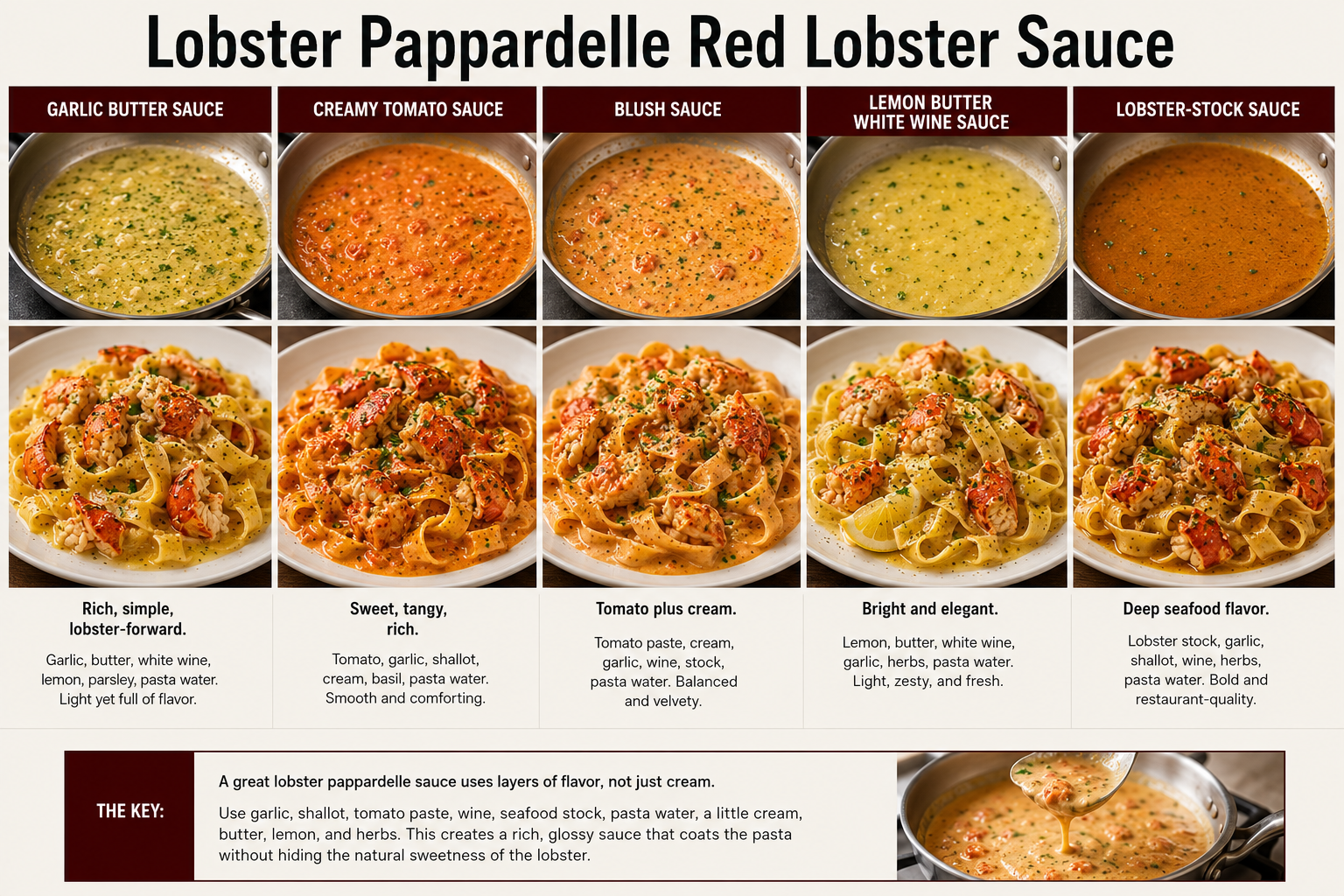
The lobster pappardelle Red Lobster sauce is where the dish becomes restaurant-style. It can move in several directions:
Sauce Style |
Flavor Profile |
| Garlic butter sauce | Rich, simple, lobster-forward |
| Creamy tomato sauce | Sweet, tangy, rich |
| Blush sauce | Tomato plus cream |
| Lemon butter white wine sauce | Bright and elegant |
| Lobster-stock sauce | Deep seafood flavor |
A good lobster pappardelle sauce should be rich enough to coat the pasta but not so heavy that it hides the lobster. This is the most common mistake in copycat seafood pasta. People add too much cream because they think cream equals restaurant flavor. It does not. Too much cream can flatten the sweetness of lobster.
A better sauce uses layers: garlic, shallot, tomato paste, wine, seafood stock, pasta water, a little cream, butter, lemon, and herbs. The pasta water is important because it helps the sauce cling to the pappardelle without becoming greasy.
Lobster Pappardelle Red Lobster Recipe: Restaurant-Style Copycat Method
This lobster pappardelle Red Lobster recipe is designed to taste rich and restaurant-style while still giving you control over the sauce.
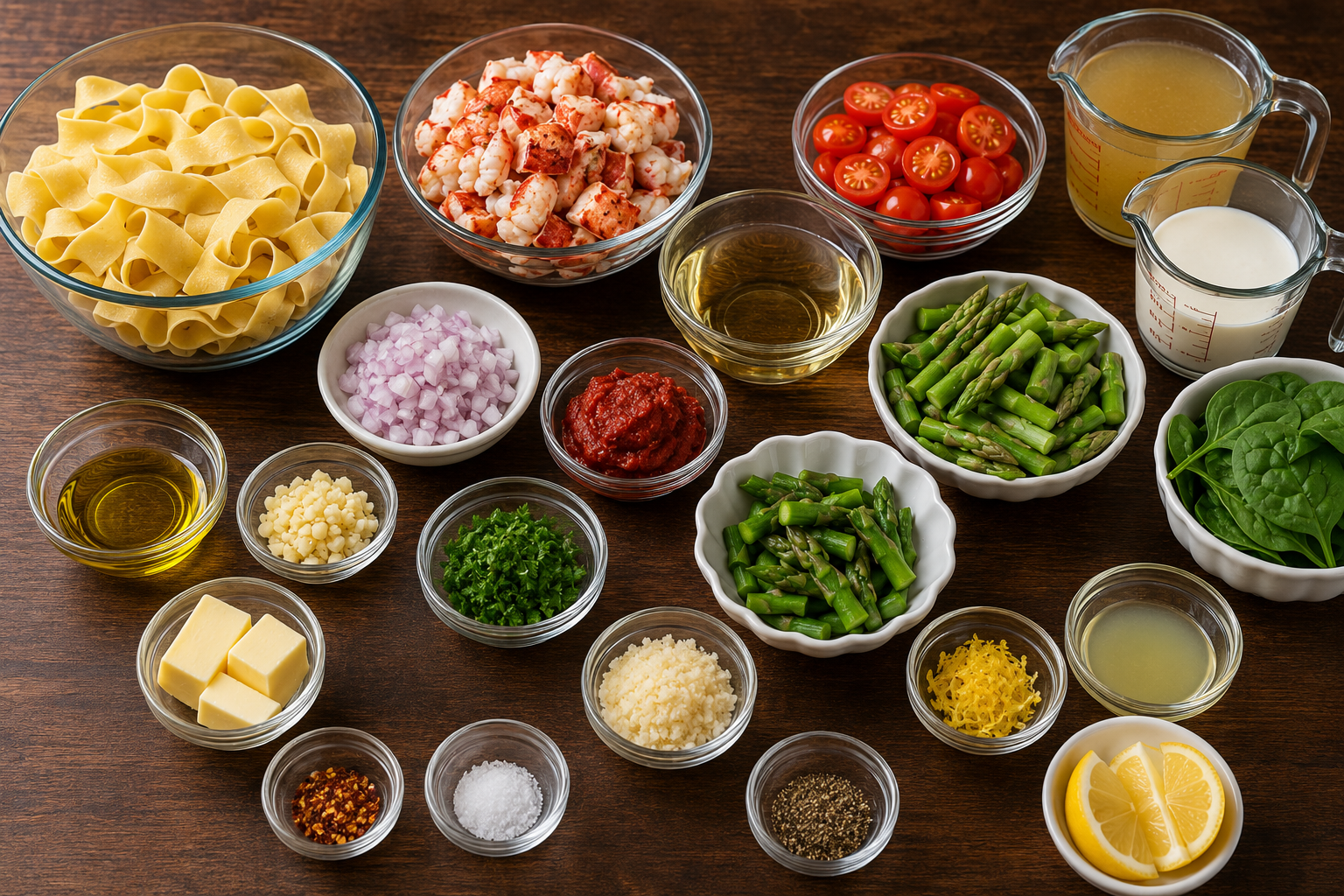
Ingredients For 3–4 Servings
Ingredient |
Amount |
| Pappardelle pasta | 10–12 oz |
| Cooked lobster meat | 10–12 oz |
| Olive oil | 1 tablespoon |
| Butter | 2 tablespoons |
| Shallot, finely diced | 1 medium |
| Garlic, minced | 4 cloves |
| Tomato paste | 1 tablespoon |
| Cherry tomatoes, halved | 1 cup |
| Dry white wine | ½ cup |
| Seafood or lobster stock | ½ cup |
| Heavy cream | ½ cup |
| Reserved pasta water | ½–1 cup |
| Lemon zest | 1 teaspoon |
| Lemon juice | 1 tablespoon |
| Fresh parsley or basil | 2 tablespoons |
| Red pepper flakes | ¼ teaspoon |
| Salt and black pepper | To taste |
| Parmesan | Optional, light amount |
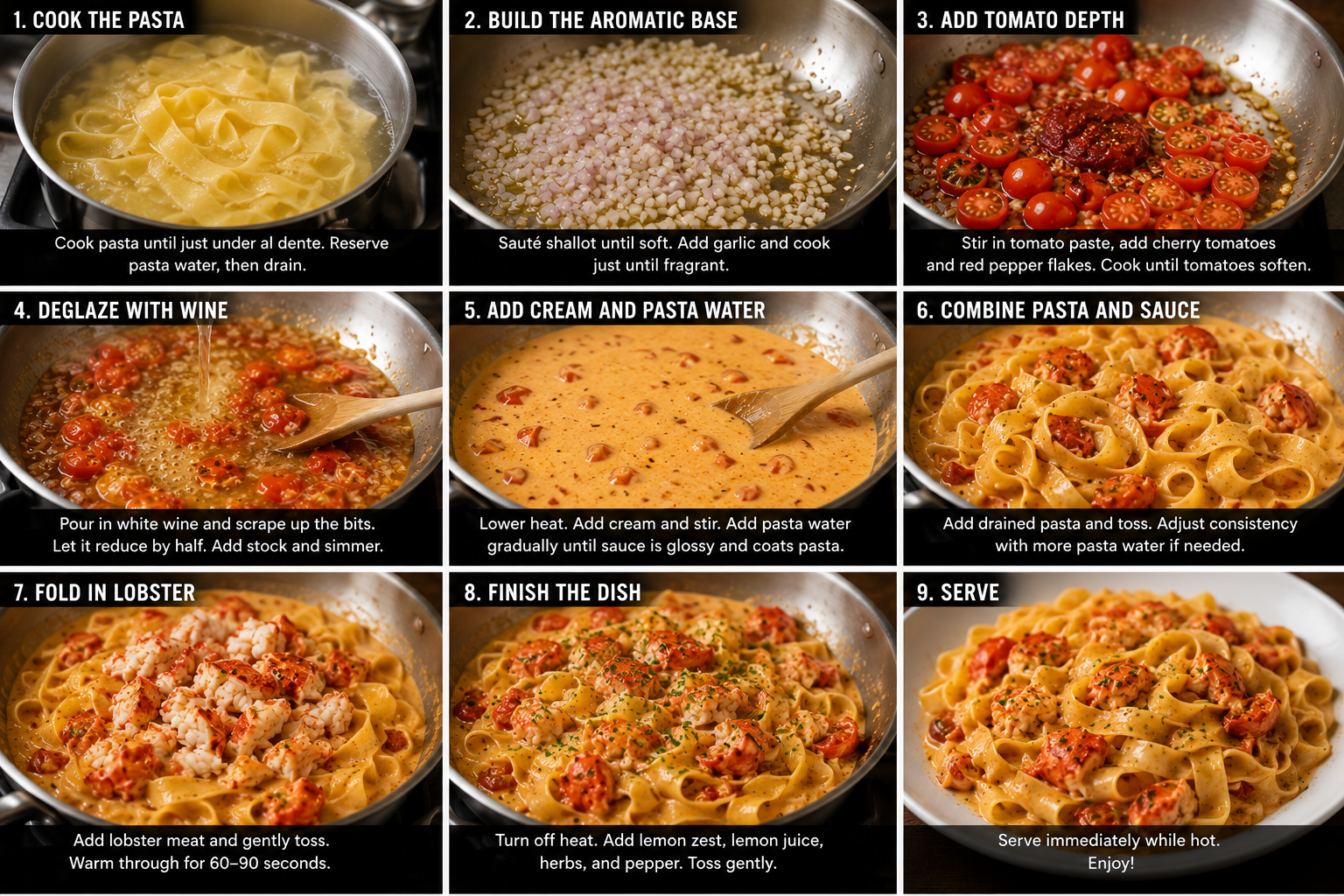
Step 1 — Cook The Pasta
Bring a large pot of salted water to a boil. Cook the pappardelle until just under al dente. Reserve at least 1 cup of pasta water before draining.
Do not overcook pappardelle. Wide noodles become soft quickly, and they will finish in the sauce.
Step 2 — Build The Aromatic Base
Heat olive oil and 1 tablespoon butter in a wide skillet over medium heat. Add shallot and cook until soft. Add garlic and cook for 30–45 seconds.
Do not brown the garlic heavily. Burnt garlic will make the sauce bitter.
Step 3 — Add Tomato Depth
Stir in tomato paste and cook for about 1 minute. Add cherry tomatoes and red pepper flakes. Let the tomatoes soften slightly.
This creates a light tomato base without turning the dish into a heavy red sauce.
Step 4 — Deglaze With Wine
Pour in white wine and scrape the pan. Let it reduce by about half. Add seafood stock and simmer gently.
This step builds flavor without needing too much cream.
Step 5 — Add Cream And Pasta Water
Lower the heat. Add cream and stir. Add drained pappardelle, then splash in pasta water a little at a time until the sauce coats the noodles.
The sauce should look glossy, not thick and sticky.
Step 6 — Fold In Lobster Last
Add lobster meat during the final 60–90 seconds. Toss gently. The lobster only needs to warm through.
This is important. Cooked lobster becomes rubbery if boiled again in sauce.
Step 7 — Finish The Dish
Turn off the heat. Add remaining butter, lemon zest, lemon juice, parsley or basil, and black pepper. Taste before adding more salt.
Serve immediately.
Cooking Technique: How To Keep Lobster Tender
The biggest technical mistake in lobster pappardelle is overcooking the lobster. Lobster meat is already delicate. If it is cooked, chilled, then cooked again too aggressively, it can turn firm, dry, or rubbery.
The best method is simple: make the sauce first, toss the pasta, then add lobster at the end.
Use this timing:
Lobster Type |
When To Add |
| Cooked lobster meat | Final 60–90 seconds |
| Frozen cooked lobster, thawed | Final 90 seconds |
| Raw lobster pieces | Cook separately first |
| Langostino | Final 30–60 seconds |
| Crab substitute | Final 30–60 seconds |
Do not let lobster boil in cream sauce. Gentle heat is enough.
Also avoid cutting lobster too small. Larger pieces feel more luxurious and are less likely to dry out. Small shreds disappear into the sauce and can become tough faster.
A good lobster pappardelle should have visible lobster pieces, glossy pasta, and a sauce that clings without drowning the plate.
Calories In Lobster Pappardelle Red Lobster
The calories in lobster pappardelle can be high. Third-party nutrition listings for Red Lobster Lobster Pappardelle Pasta show about 1,050–1,090 calories per serving, with around 76g fat, 60g carbs, and 45g protein. Some listings also show sodium close to 1,970mg per serving.
Why is it so high?
Calorie Driver |
Why It Adds Up |
| Pappardelle | Large pasta portion |
| Butter | Around 100 calories per tablespoon |
| Cream | Adds fat and calories quickly |
| Oil | Used in sautéing |
| Cheese | Adds fat, sodium, and calories |
| Lobster | Lean, but still contributes calories |
| Restaurant portion | Larger than home serving |
The dish becomes high-calorie because restaurant pasta portions are large and the sauce is rich.
A homemade version can be lower by controlling pasta amount, using less cream, reducing butter, adding vegetables, and using pasta water to build texture.
Nutrition Points: Protein, Fat, Carbs, Sodium, And Portion Size
From a nutrition angle, lobster pappardelle is a mixed dish.
The good part is protein. Lobster gives lean protein and important minerals. Seafood can provide nutrients such as protein, selenium, zinc, iodine, and vitamin B12, depending on the type.
The heavier part is fat. Butter, cream, oil, and cheese increase saturated fat and total calories. That does not make the dish bad, but it does make portion size important.
The carbohydrates come mainly from pappardelle. Pasta is not automatically unhealthy, but a restaurant portion may be larger than what many people need in one sitting.
The sodium can also be high, especially in restaurant versions. Seafood bases, cheese, seasoning, salted butter, and prepared sauces can all raise sodium.
Healthy Version Of Lobster Pappardelle Recipe
A healthy version of lobster pappardelle recipe should not remove everything that makes the dish enjoyable. The better strategy is to keep lobster, keep pappardelle, but reduce the heavy parts.
Use these changes:
| Restaurant-Style Ingredient | Healthier Adjustment |
| Heavy cream | Use half-and-half or pasta water |
| Several tablespoons butter | Use 1 tablespoon butter |
| Large pasta portion | Use 2 oz dry pasta per person |
| Few vegetables | Add asparagus, spinach, tomatoes |
| Heavy cheese | Use light Parmesan or skip |
| Thick sauce | Use olive oil, stock, and pasta water |
A healthier sauce can be made with garlic, shallot, cherry tomatoes, seafood stock, lemon, olive oil, and a small splash of cream. This keeps the sauce bright and lobster-forward.
Add vegetables that make sense with seafood: asparagus, spinach, peas, zucchini, mushrooms, or cherry tomatoes. They add volume and freshness without making the dish feel like diet food.
A healthier lobster pappardelle should still feel special. It should just avoid unnecessary heaviness.
Low-Calorie Option For Lobster Pappardelle
A realistic low calories option for lobster pappardelle can land around 450–650 calories per serving, depending on pasta amount and sauce.
Use this lighter build:
Ingredient |
Amount Per Serving |
| Dry pappardelle | 2 oz |
| Lobster meat | 3–4 oz |
| Olive oil | 1 teaspoon |
| Butter | 1 teaspoon |
| Seafood stock | ¼ cup |
| Light cream or evaporated milk | 2 tablespoons |
| Cherry tomatoes | ½ cup |
| Spinach or asparagus | 1 cup |
| Lemon and herbs | Generous |
The easiest trick is to mix pappardelle with zucchini ribbons. You still get real pasta, but the plate looks fuller and feels lighter.
Another smart move is to use more lobster and vegetables, not more sauce. A small amount of butter at the end gives aroma without turning the whole dish into a heavy cream pasta.
Avoid bottled Alfredo-style sauce if calories matter. It usually makes the dish heavier and less lobster-focused.
Red Lobster-Style Version Vs Homemade Version
Remaining target word count: ~400 words
A Red Lobster-style version is usually richer, larger, and more indulgent. That is part of the restaurant experience. You are paying for a full plate, strong sauce, and comfort-food satisfaction.
A homemade version gives more control. You can use better lobster texture, less cream, less salt, more vegetables, and a more balanced sauce.
Version |
Best Feature |
Main Concern |
| Restaurant-style | Rich and satisfying | High calories and sodium |
| Homemade creamy | Flexible and flavorful | Easy to overdo cream |
| Healthy homemade | Balanced and fresh | Needs careful seasoning |
| Low-calorie | Lighter and controlled | Can feel thin if under-seasoned |
The best middle ground is a homemade version with real pappardelle, visible lobster pieces, garlic, tomato, seafood stock, lemon, and just enough cream or butter to make it feel complete.
Best Side Dishes To Serve With Lobster Pappardelle
Since lobster pappardelle is rich, the side dishes should be fresh and light.
Good options include:
Side Dish |
Why It Works |
| Green salad | Cuts richness |
| Roasted asparagus | Matches lobster |
| Lemon garlic broccolini | Bright and simple |
| Tomato cucumber salad | Fresh acidity |
| Steamed green beans | Light texture |
| Arugula salad | Peppery balance |
Avoid heavy garlic bread, creamy soup, or cheese-heavy sides if calories matter. The pasta is already the main event.
Quick Reference Table: Regular Vs Healthy Vs Low-Calorie Version
Version |
Sauce Style |
Pasta Amount |
Estimated Calories |
Best For |
| Restaurant-style | Creamy, buttery | Large | 1,050–1,090 | Indulgent meal |
| Homemade creamy | Tomato cream | Moderate | 750–950 | Weekend dinner |
| Healthy version | Tomato-garlic stock | Moderate | 600–750 | Balanced meal |
| Low-calorie option | Light stock, lemon, vegetables | 2 oz per serving | 450–650 | Calorie control |
Frequently Asked Questions
What Is Lobster Pappardelle At Red Lobster?
It is a Red Lobster-style seafood pasta made with wide pappardelle noodles, lobster meat, and a rich sauce. The sauce may be garlic-butter, creamy tomato, blush-style, or seafood-stock based depending on the version.
Where Did Lobster Pappardelle Originate?
Pappardelle originated in Italy, especially Tuscany. Lobster pappardelle as a restaurant dish is more modern and combines Italian-style wide pasta with coastal seafood pasta ideas.
Why Is It Called Pappardelle?
The name pappardelle is commonly linked to the Italian word pappare, meaning “to gobble up.” The pasta is wide, flat, and hearty.
What Are Lobster Pappardelle Red Lobster Ingredients?
Common ingredients include pappardelle pasta, lobster meat, garlic, shallot, tomato paste, cherry tomatoes, white wine, seafood stock, cream, butter, lemon, herbs, and pasta water.
What Is Lobster Pappardelle Red Lobster Sauce Made Of?
A Red Lobster-style sauce is usually built from garlic, butter, cream, tomato, wine, seafood stock, pasta water, lemon, and herbs. Some versions are creamier, while others are more tomato-garlic based.
How Many Calories Are In Lobster Pappardelle Red Lobster?
Third-party nutrition listings show Red Lobster Lobster Pappardelle Pasta at about 1,050–1,090 calories per serving, with about 76g fat, 60g carbs, and 45g protein.
Can I Make Lobster Pappardelle At Home?
Yes. Cook pappardelle, build a garlic-tomato-cream or lemon-butter sauce, toss the pasta, and add cooked lobster at the end so it stays tender.
What Pasta Can I Use Instead Of Pappardelle?
Tagliatelle, fettuccine, mafaldine, linguine, or fresh egg noodles can work. Fettuccine is the easiest substitute.
Is Lobster Pappardelle Healthy?
It can be part of a balanced diet, but the restaurant-style version is high in calories and fat. A healthier version uses less cream, less butter, more vegetables, and controlled pasta portions.
How Can I Make A Low-Calorie Lobster Pappardelle?
Use 2 oz dry pasta per serving, 3–4 oz lobster, less butter, light cream or pasta water, extra vegetables, lemon, herbs, and seafood stock.
Can I Use Frozen Lobster Meat?
Yes. Thaw it gently, pat it dry, and add it at the end of cooking. Do not boil it in the sauce.
Why Does Lobster Get Rubbery In Pasta?
Lobster gets rubbery when overcooked. Since most lobster meat is already cooked, it should only be warmed gently during the final minute.
Is Lobster Pappardelle Better With Cream Or Tomato Sauce?
Both work. Cream gives richness, while tomato adds acidity and balance. A light tomato-cream sauce is often the best middle ground.
Can I Use Shrimp Instead Of Lobster?
Yes. Shrimp works well and is more affordable. Cook shrimp separately, then add it back at the end so it stays tender.
Conclusion
Lobster pappardelle is a rich seafood pasta built around wide ribbon noodles, tender lobster, and a sauce that should be flavorful but not overpowering. Pappardelle comes from the Italian wide-pasta tradition, while lobster pappardelle itself is more of a modern seafood-pasta dish than one fixed historical recipe.
The restaurant-style version can be high in calories, mainly because of pasta portion, butter, cream, oil, and sauce. A homemade version gives you better control. Keep the lobster tender, use pasta water wisely, balance richness with lemon and herbs, and choose a portion that fits your goal.