How Long Do Red Lobster Biscuits Last in the Fridge? Bacteria Risk & Storage Guide

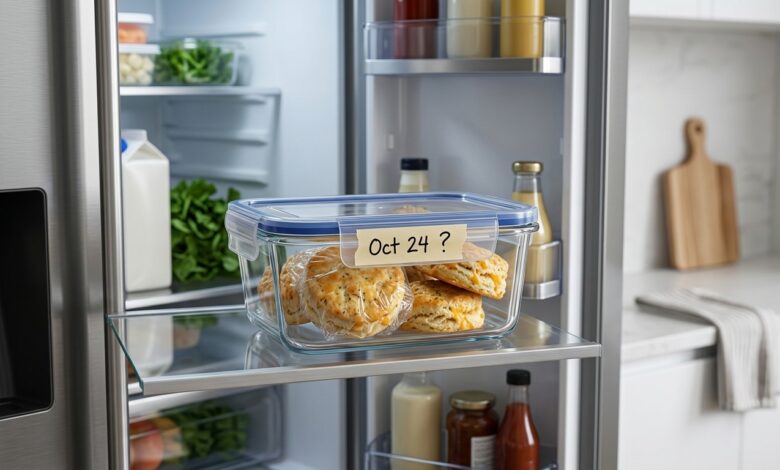
Cheddar Bay Biscuits rarely survive a meal uneaten, but when they do a to-go box from dinner, a double batch made at home, leftovers from a holiday gathering the question that follows is almost always the same: how long do Red Lobster biscuits actually last in the fridge before they go bad?
How Long Do Red Lobster Biscuits Last in the Fridge?
Refrigerated Red Lobster biscuits whether from the restaurant or baked at home from the frozen retail version typically stay fresh and safe to eat for 4 to 5 days when stored properly in an airtight container or wrapped tightly. This is shorter than the 5–7 day window commonly cited for plain, dairy-free biscuits, and the reason comes down to the cheddar cheese content.
Why Cheese Content Shortens the Window
Cheese-containing baked goods are more perishable than plain bread or biscuits because dairy introduces additional moisture and protein that bacteria can use as a food source. Plain biscuits made with just flour, fat, and leavening can sometimes stretch toward a week in the refrigerator. Cheddar Bay Biscuits, with cheese baked directly into the dough and a butter-based seasoning brushed on top, sit closer to the shorter end of that range — a detail most general “how long do biscuits last” articles never address because they are not written with a cheese-based biscuit specifically in mind.
How Long Do Red Lobster Biscuits Last in the Fridge After Baking From Frozen?
If you baked the frozen retail biscuits at home rather than bringing home restaurant leftovers, the same 4–5 day window applies once they are fully cooled and refrigerated. The baking process itself does not extend shelf life beyond what any freshly baked cheddar biscuit would get — what matters from that point forward is how quickly you cool and store them, not whether they started as frozen dough or were made from scratch.
Important distinction: This timeline is for already-baked biscuits. The unbaked frozen dough sitting in your freezer follows an entirely different and much longer timeline, covered further down.
How Long Does Red Lobster Last in the Fridge? Biscuits vs. Other Menu Items
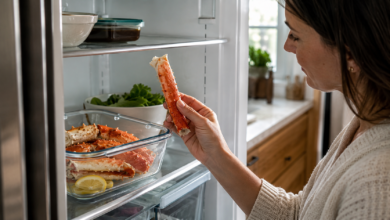
This is a related search that often gets conflated with biscuit storage specifically, so it is worth separating out. Cooked seafood dishes from Red Lobster — pasta entrées, shrimp, crab legs, or anything in a cream sauce — generally last only 3–4 days refrigerated, shorter than the biscuit timeline, because seafood is more perishable than baked bread products. If you brought home a full to-go order, treat the seafood and the biscuits as separate timelines: eat or freeze the seafood portion first, since it has the shorter safe window of the two.
Can You Eat 2-Week-Old Biscuits?
This question comes up often enough to deserve a direct answer: no, not if they have been sitting in the refrigerator the entire time. Two weeks significantly exceeds the safe refrigerated window for any cheese-containing baked good, and the risk is not just staleness — it is genuine bacterial growth that may not be visible or detectable by smell alone. Mold growth on baked goods is also not limited to the visible spot; mold can send microscopic roots throughout a soft, moist item like a biscuit, which is why cutting off a moldy section is not considered a safe practice for soft baked goods the way it sometimes is for hard cheese.
The exception: biscuits that were properly frozen (not refrigerated) at the two-week mark are a different story entirely, since freezing halts bacterial growth almost completely. A frozen biscuit at two weeks is generally still fine; a refrigerated one at two weeks should be discarded.
What Is the Best Way to Store Red Lobster Biscuits?
Step-by-Step Storage Method
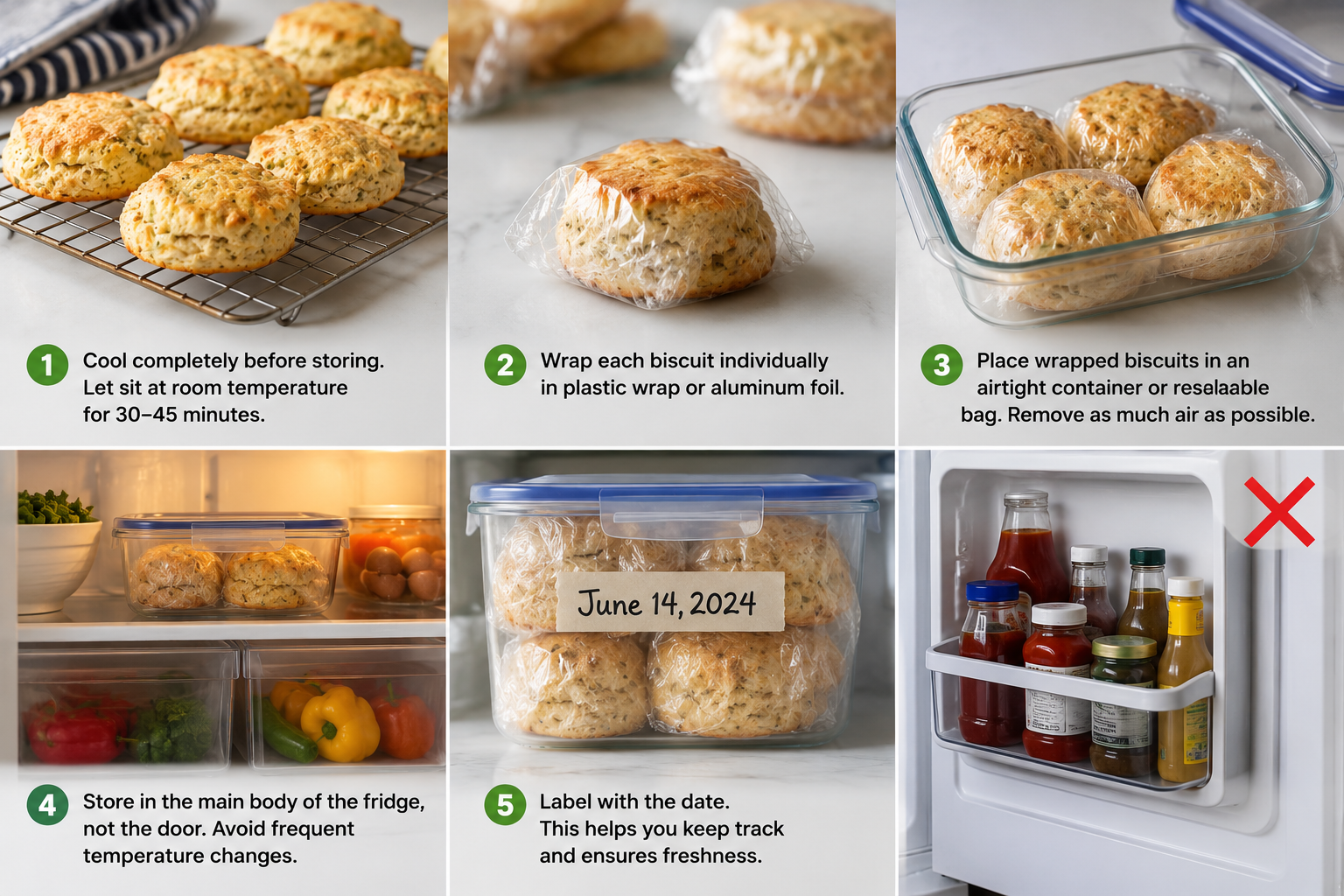
- Cool completely before storing. Never place warm biscuits directly into a sealed container — trapped heat creates condensation, and that excess moisture accelerates spoilage and promotes mold growth. Let biscuits sit at room temperature for 30–45 minutes after baking or after bringing them home from the restaurant.
- Wrap individually first. Wrap each biscuit in plastic wrap or aluminum foil before placing them together in a larger container. This extra layer slows moisture loss and keeps biscuits from drying out faster than necessary.
- Use an airtight container as the outer layer. Place the individually wrapped biscuits into a sealed, airtight container or a resealable freezer bag with as much air pressed out as possible.
- Store in the main body of the fridge, not the door. Refrigerator doors experience more frequent temperature swings every time the door opens, which can shorten shelf life compared to the more stable temperature in the main compartment.
- Label with the date. This sounds unnecessary until the third time you find an unlabeled container and have to guess. Writing the date directly on the container or a piece of tape removes the guesswork entirely.
A Detail Most Storage Guides Miss
The garlic herb butter brushed onto Cheddar Bay Biscuits adds a second perishable element beyond the cheese in the dough itself. Butter does not spoil as quickly as fresh dairy on its own, but the combination of butter, garlic, and moisture sitting on the biscuit’s exterior creates a slightly more favorable environment for bacterial growth than a plain biscuit surface would. Wiping any excess pooled butter off the biscuit before storing — rather than leaving it sitting in a slick layer — modestly helps extend freshness.
Do Red Lobster Biscuits Freeze Well?
Yes, and freezing is genuinely the better choice if you know you will not finish them within the 4–5 day refrigerator window. Already-baked biscuits freeze well for up to 2–3 months without significant quality loss, though the texture softens slightly compared to fresh-baked once thawed.
How to Freeze Already-Baked Biscuits
- Cool completely, following the same cooling step used for refrigeration.
- Wrap each biscuit individually in plastic wrap or foil.
- Place wrapped biscuits into a freezer-safe bag or container, removing as much air as possible.
- Label with the date — frozen items lose the obvious visual cues of spoilage that refrigerated food shows, so tracking time becomes more important, not less.
Thawing and Reheating From Frozen
Thaw frozen baked biscuits in the refrigerator for a few hours, or reheat directly from frozen in a 350°F oven for 12–15 minutes, wrapped loosely in foil to prevent the exterior from drying out before the center warms through.
How Long Do Cheddar Bay Biscuits Take to Cook?
From the Frozen Retail Box
Standard frozen Cheddar Bay Biscuits bake at 350°F for 20–25 minutes from frozen, until golden brown on top. The included garlic herb seasoning gets mixed with melted butter and brushed on immediately after baking, while the biscuits are still hot.
From the Dry Mix
If using the Cheddar Bay Biscuit dry mix rather than pre-shaped frozen dough, baking time is shorter — typically 12–15 minutes at 425°F, since the dough is freshly mixed rather than starting from a frozen state.
From Frozen Dough You Made and Froze Yourself
Homemade biscuit dough that you shaped and froze yourself generally needs a few extra minutes compared to a fresh-baked batch — add roughly 3–5 minutes to your usual bake time when going directly from freezer to oven without thawing first.
Signs Your Refrigerated Biscuits Have Gone Bad
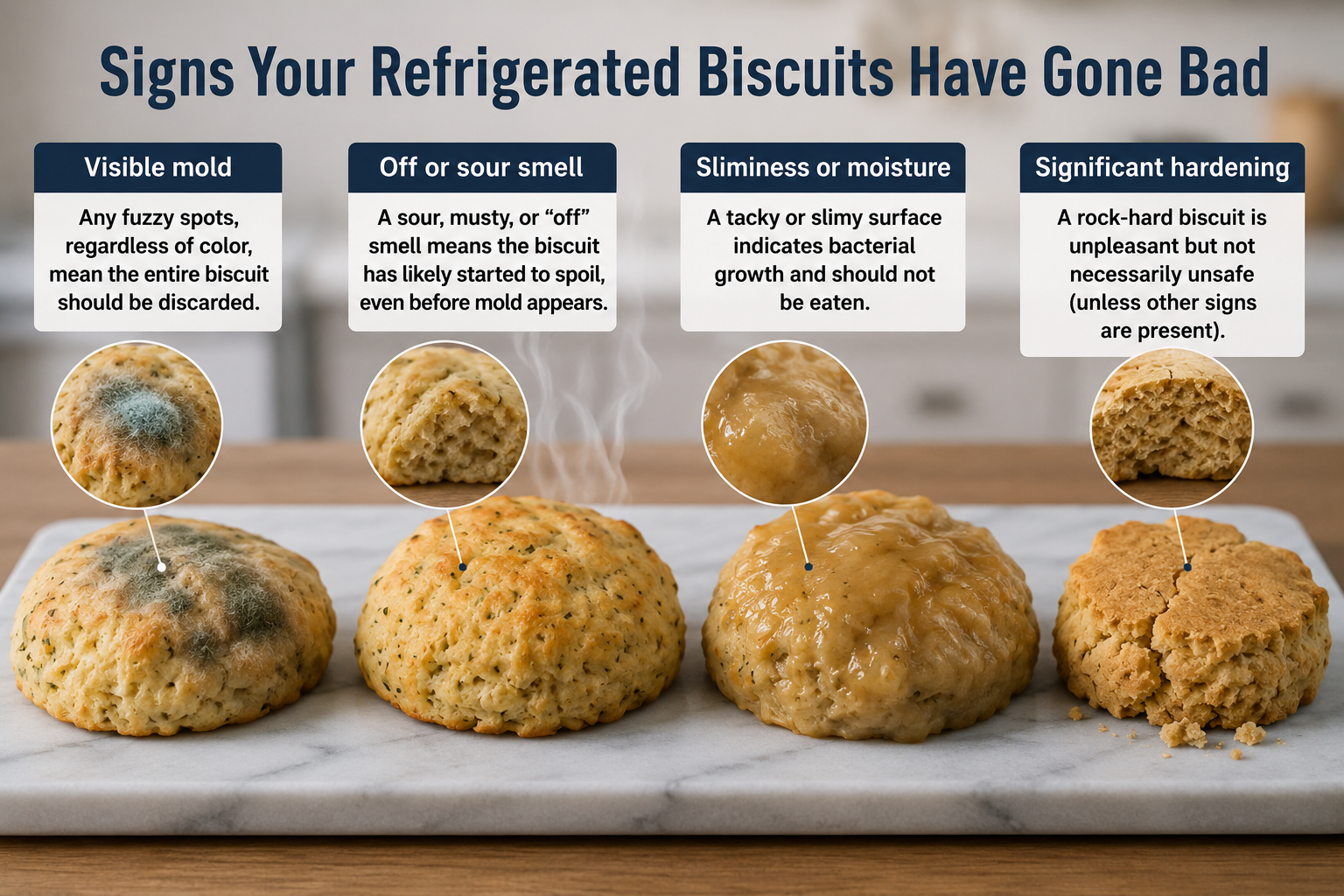
Beyond the calendar, your senses are the more reliable check:
- Visible mold: Any fuzzy spots, regardless of color, mean the entire biscuit should be discarded, not just the visible spot.
- Off or sour smell: A biscuit that smells sour, musty, or simply “off” compared to its normal cheesy, buttery aroma has likely started to spoil, even before visible mold appears.
- Sliminess or unusual moisture: A tacky or slimy surface texture is a sign of bacterial growth and should not be eaten regardless of how it smells.
- Significant hardening: This one is more about quality than safety — a rock-hard biscuit is unpleasant but not necessarily unsafe, unlike the signs above.
Why Bacteria Grow Faster on Cheese-Based Biscuits
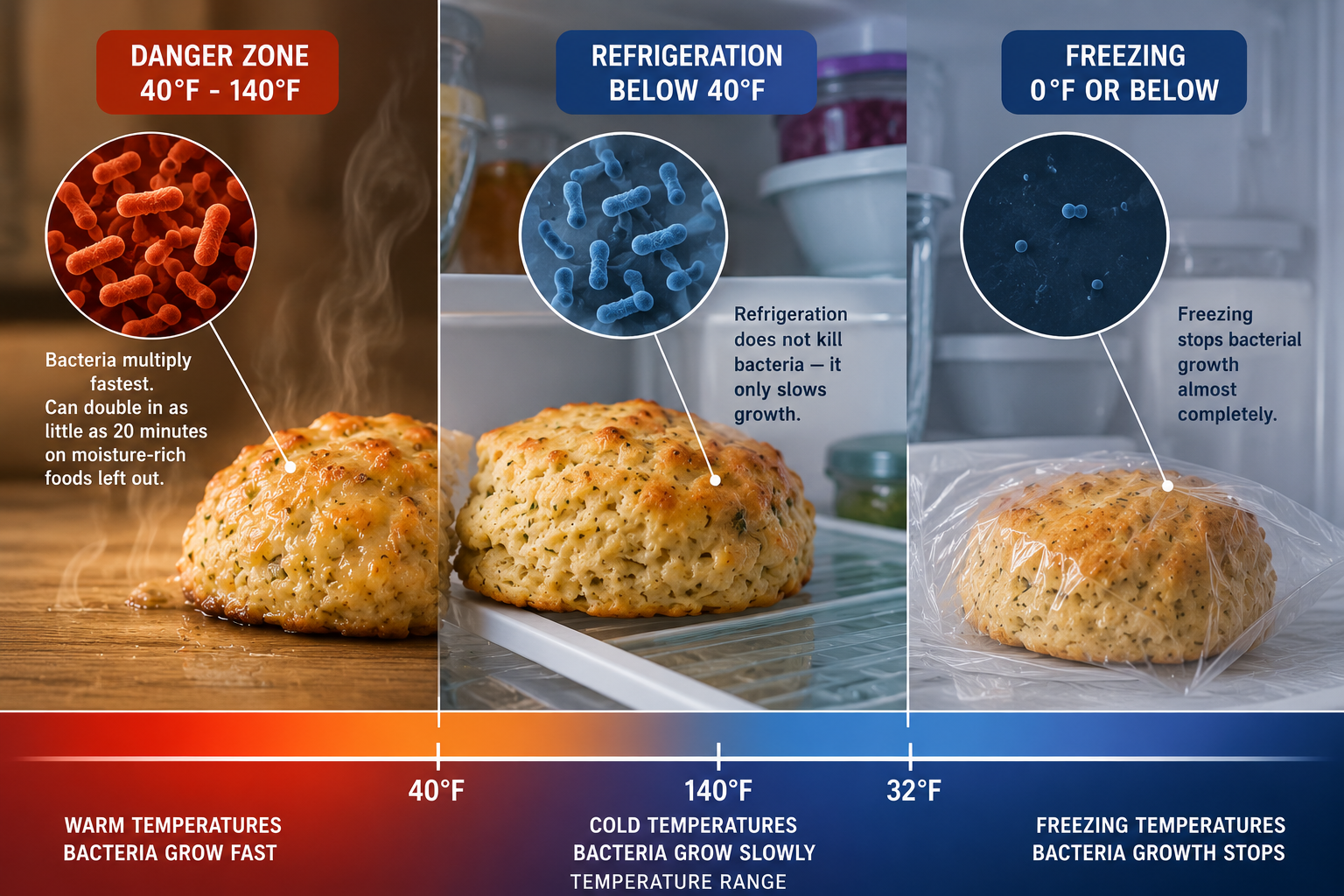
Food safety experts refer to 40°F to 140°F as the “danger zone” — the temperature range where bacteria multiply fastest, sometimes doubling in number in as little as 20 minutes on a moisture-rich food left sitting out. A cheese-and-butter biscuit cooling on the counter for more than two hours sits squarely in that risk window, which is exactly why the cooling step before refrigeration should not stretch much beyond 30–45 minutes.
Refrigeration below 40°F does not kill bacteria — it simply slows growth down to a near-crawl. That is the entire reason refrigerated biscuits eventually do go bad rather than staying safe indefinitely: the bacteria are still present and slowly multiplying the whole time, just at a fraction of the speed they would at room temperature. Freezing goes a step further, dropping the temperature low enough that bacterial growth essentially stops, which is why frozen biscuits hold up so much longer than refrigerated ones.
Nutrition Note: Does Storage Time Affect Calories or Nutrition?
Storage time does not meaningfully change a biscuit’s calorie count or macronutrient content while it remains safe to eat — the nutrition listed on the package or restaurant menu stays accurate throughout the safe storage window. What does change is moisture content and texture, which affects how the biscuit feels in the mouth, not its nutritional value. Once a biscuit crosses into spoilage territory, however, it is no longer a nutrition question at all — it becomes a food safety one, and the right move is disposal rather than evaluation.
For reference, a single Cheddar Bay Biscuit, fresh and properly stored, runs approximately 150–180 calories with 380–450 mg of sodium, primarily from the cheese in the dough and the seasoned butter topping.
Frequently Asked Questions
How long do Red Lobster biscuits last in the fridge? Approximately 4 to 5 days when stored in an airtight container, shorter than plain biscuits due to the cheddar cheese baked into the dough.
How long can I keep Red Lobster biscuits in the refrigerator? 4 to 5 days is the safe window for quality and food safety. Beyond that, freezing is the better storage choice if you are not finishing them soon.
Do Red Lobster biscuits freeze well? Yes. Already-baked biscuits freeze well for up to 2 to 3 months with only a modest texture change upon thawing.
Can you eat 2-week-old biscuits? Not if refrigerated the entire time — this exceeds the safe window for a cheese-containing baked good. A biscuit frozen for two weeks, however, is generally still fine to eat.
What is the best way to store Red Lobster biscuits? Cool completely, wrap individually in plastic wrap or foil, then place in an airtight container or sealed bag in the main body of the refrigerator, away from the door.
How long do Cheddar Bay biscuits take to cook? Frozen retail biscuits bake at 350°F for 20–25 minutes. The dry mix version bakes faster, at 425°F for 12–15 minutes, since it starts as fresh dough rather than frozen.
How long does Red Lobster last in the fridge overall? It depends on the item. Biscuits last 4–5 days; cooked seafood dishes are more perishable and generally last only 3–4 days. Treat them as separate timelines if storing a full to-go order.
Conclusion
Red Lobster biscuits last roughly 4 to 5 days in the refrigerator when stored properly, a shorter window than plain biscuits because of the cheddar cheese baked into the dough and the buttery seasoning brushed on top. That detail is the entire reason generic biscuit storage advice does not quite fit this specific product, and it is worth keeping in mind any time you bring home leftovers or bake a double batch from the freezer aisle.
If you are not going to finish a batch within that window, freezing is the better move rather than letting them sit in the fridge until they cross into questionable territory. Properly wrapped and labeled, frozen biscuits hold their quality for months rather than days, and a 350°F oven brings them back close to their original texture in well under 20 minutes. When in doubt, trust your senses over the calendar — smell and texture will tell you what a storage date alone cannot.