Shrimp Has More Protein — So Why Does Crab Leave You Fuller?
Is Crab Meat More Filling Than Shrimp? The Real Comparison Across Nutrition, Flavor, and Cooking

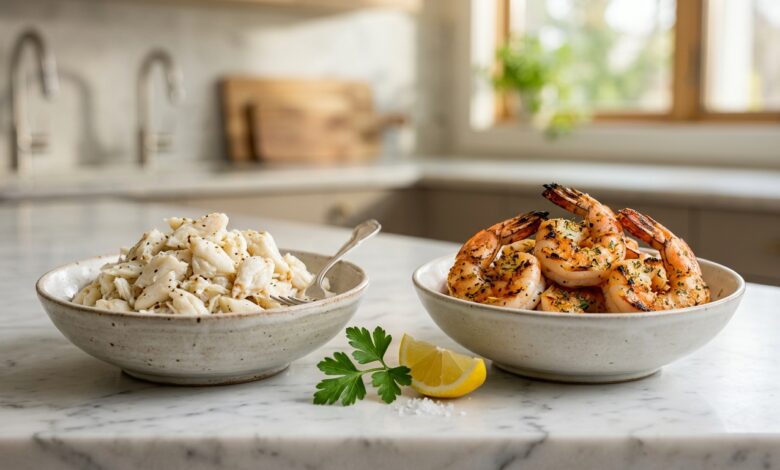
Crab and shrimp are nutritionally close enough that the difference in filling power is real but narrower than most people expect. Understanding why requires looking at both from angles most seafood articles don’t bother with.
The Satiety Answer First: Crab vs. Shrimp
Per 100g of cooked edible meat, here’s the head-to-head:
Nutrient |
Crab Meat (cooked) |
Shrimp (cooked) |
| Calories | ~90 kcal | ~99 kcal |
| Protein | 19–21g | 24–25g |
| Total Fat | 1–1.5g | 0.9–1.2g |
| Carbohydrates | 0g | 0g |
| Zinc | ~4.5mg (~41% DV) | ~1.5mg (~14% DV) |
| Selenium | ~36mcg (~65% DV) | ~38mcg (~70% DV) |
| Vitamin B12 | ~9mcg (~375% DV) | ~1.2mcg (~50% DV) |
| Omega-3 (EPA+DHA) | ~0.4g | ~0.5g |
| Cholesterol | ~78mg | ~189mg |
The satiety verdict: Shrimp has a slight protein edge at 24–25g per 100g versus crab’s 19–21g. Since protein is the most satiating macronutrient — it triggers satiety hormones (GLP-1, PYY, CCK) more effectively than fat or carbohydrates — a gram-for-gram comparison favors shrimp marginally.
Crab is typically eaten in larger volume per serving because the shell-to-meat ratio means people handle and consume more total product. A standard Dungeness crab serving yields roughly 150–180g of edible meat. A typical shrimp portion at a restaurant is 100–140g. When portion sizes are equalized, crab meat is slightly less filling per gram but often consumed in larger total quantity, making real-world satiety roughly equivalent between the two.
The genuine differentiator is zinc content. Crab has nearly three times the zinc of shrimp. Zinc plays a direct role in appetite regulation — it supports leptin function (the satiety hormone), and zinc deficiency is associated with increased appetite and reduced satiety signaling. This is an underappreciated reason why crab, despite slightly lower protein per 100g, often produces a more satisfied post-meal feeling than the numbers alone predict.
Is Shrimp a Meat? Is Shrimp Considered Meat or Fish?
This question generates genuine confusion, partly because it has a biological answer, a culinary answer, and a religious/dietary answer — and they don’t always agree.
Biologically: Shrimp are crustaceans — invertebrate arthropods classified under the subphylum Crustacea. They are neither fish (vertebrates with gills and fins) nor mammals. In the strict biological taxonomy, shrimp are as different from fish as they are from chicken.
Culinarily: Shrimp is classified as seafood, which is a culinary category that includes fish, shellfish, and other marine animals. It is not classified as “meat” in culinary standards that define meat as the flesh of land animals (beef, pork, lamb, poultry). However, in everyday American English usage, “meat” is often used loosely to mean any animal protein — so “shrimp meat” is a common and technically acceptable informal usage.
Dietary and religious contexts: In many religious dietary frameworks (kosher, halal, Catholic abstinence traditions), shrimp and crab are treated distinctly from “meat.” In kosher law, shrimp and crab are not permissible at all. In Catholic Friday abstinence traditions, seafood including shrimp is permitted while “meat” (meaning land animal flesh) is not. These frameworks reflect their own definitions rather than biological taxonomy.
Practical answer for most cooking contexts: Shrimp is seafood, not meat in the culinary sense. Crab is also seafood. Both are animal proteins and nutritionally behave like high-quality lean proteins — closer to chicken breast or white fish than to red meat in terms of fat content and amino acid profile.
What Is the Difference Between Shrimp and Crab Meat? Real or Seafood?
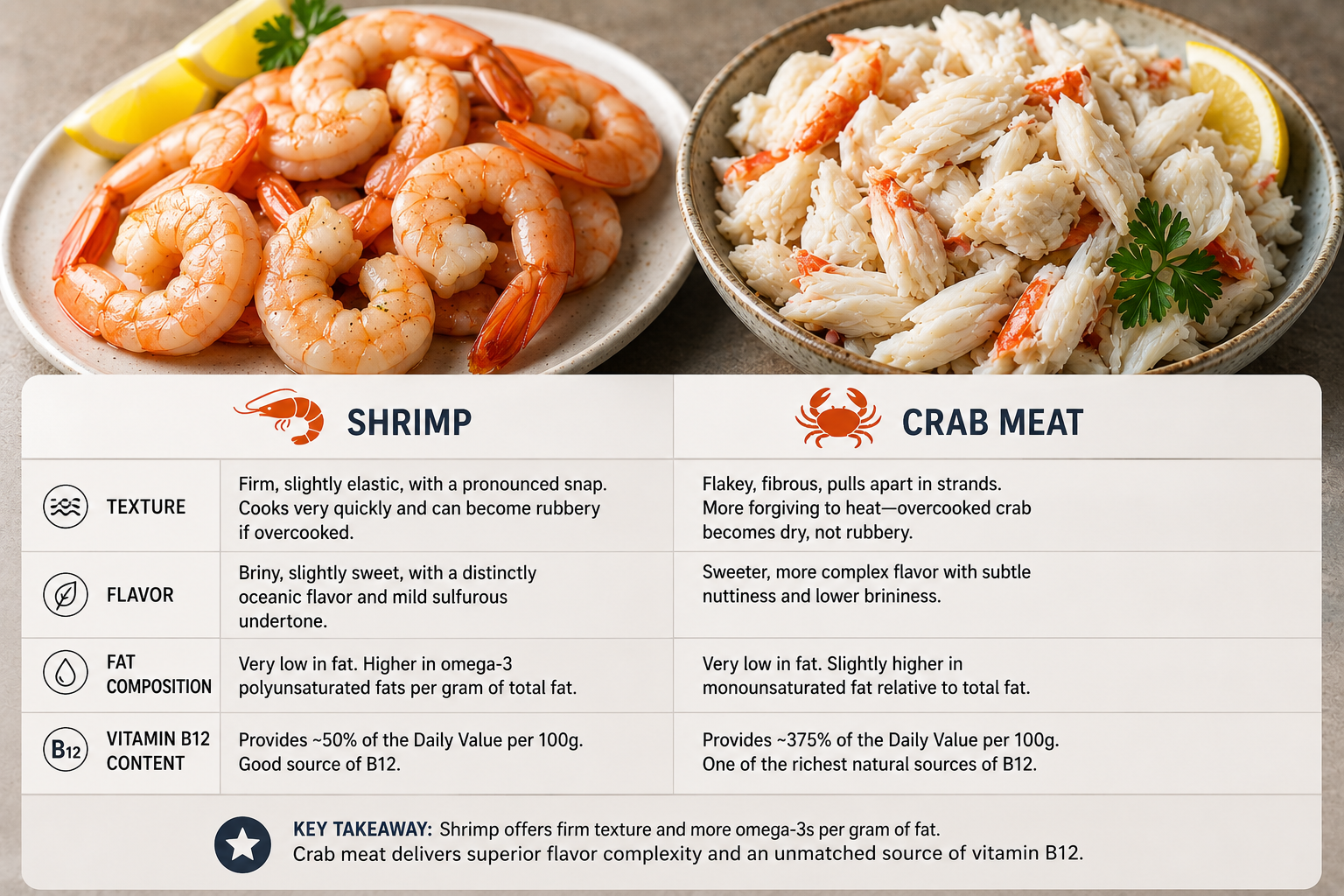
The question of whether they’re “real meats or seafoods” is addressed above, but the practical differences in the protein itself are worth understanding for cooking purposes.
Texture: Shrimp muscle is firm, slightly elastic, and has a pronounced snap when properly cooked. It’s a short-fiber protein that cooks very quickly and becomes rubbery rapidly when over-exposed to heat. Crab meat has a flakey, fibrous texture — it pulls apart in strands rather than cutting cleanly. Crab is more forgiving to heat than shrimp; overcooked crab becomes dry and tight, but it doesn’t develop the rubber-band quality that overcooked shrimp does.
Flavor: Shrimp has a briny, slightly sweet, distinctly oceanic flavor with a mild sulfurous undertone that becomes more pronounced when overcooked. Crab meat — particularly Dungeness, blue crab, and king crab — has a sweeter, more complex flavor with a subtle nuttiness and lower brininess than shrimp. The sweetness in crab comes from free amino acids (glycine and alanine) that are present at higher concentrations in crab tissue than in shrimp.
Fat composition: Both are very low in total fat, but crab contains slightly more monounsaturated fat relative to its total fat content, while shrimp has a higher proportion of omega-3 polyunsaturated fats per gram of total fat. For a strictly omega-3-focused diet, shrimp delivers marginally better EPA+DHA per 100g.
B12 content — crab’s major advantage: Crab’s vitamin B12 content is extraordinary — approximately 375% of the daily recommended intake per 100g. Shrimp provides a meaningful 50% DV, which is good for any food, but crab is one of the richest natural B12 sources in the human diet. B12 supports neurological function, red blood cell formation, and DNA synthesis — and deficiency is more common than most people realize, particularly in older adults and those who eat limited animal protein.
Pink Shrimp vs. Brown Shrimp: Size, Flavor, and the Difference That Matters
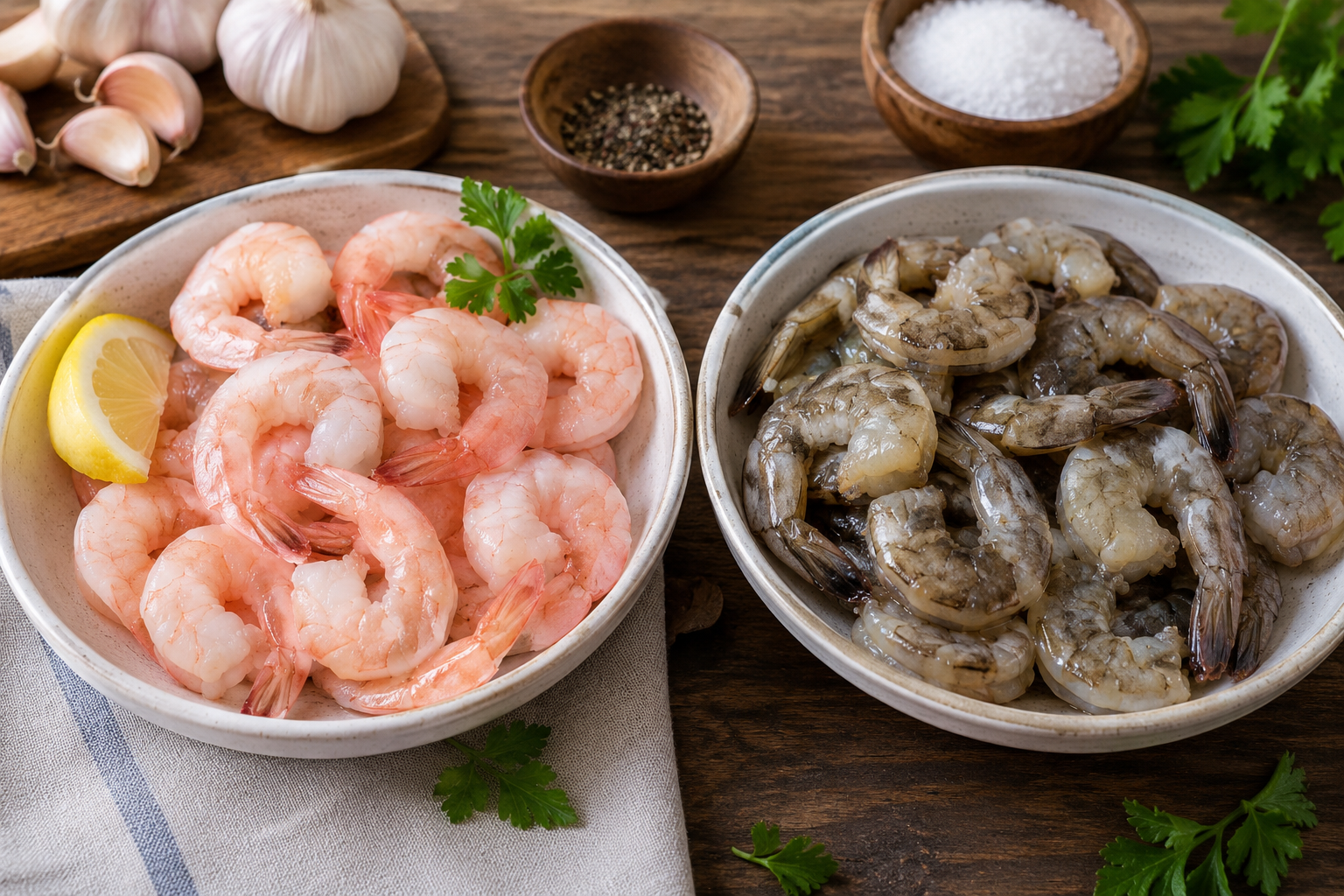
Most grocery stores don’t distinguish between shrimp species clearly, but the species actually matters more than the size label when it comes to flavor.
Pink shrimp (Penaeus duorarum): Found primarily in the Gulf of Mexico and along the southeastern Atlantic coast. These are mild, slightly sweet shrimp with a relatively delicate flavor and tender texture. Pink shrimp are the variety most associated with classic American shrimp cocktail — the clean, neutral sweetness pairs well with cocktail sauce without competing. They range from small to large and are available year-round commercially.
Brown shrimp (Penaeus aztecus): Also from the Gulf of Mexico, but more abundant than pink shrimp in commercial harvest volumes. Brown shrimp have a stronger, more assertive iodine-forward flavor — some people describe it as more “shrimpy” or briny compared to pink shrimp. They also have a slightly firmer texture. Brown shrimp are often preferred for dishes with bold seasonings (Cajun preparations, spicy stir-fries, heavily sauced pasta) where their flavor holds its own better than the milder pink variety. They tend to be moderately sized — rarely colossal — and are widely available at lower price points than pink.
The practical choice: if you’re making shrimp cocktail or a delicate preparation where shrimp flavor is the primary note, pink shrimp performs better. For spiced, sauced, or high-heat preparations like Cajun pasta, grilled skewers, or shrimp tacos, brown shrimp’s assertive flavor is an advantage.
Why Does Shrimp Have a Spicy or Iodine Flavor?
This question comes up frequently, particularly from people who’ve eaten shrimp that tasted “chemical” or unexpectedly sharp. The flavor compounds involved are specific and worth understanding.
Iodine flavor: The mild iodine character in shrimp (and many shellfish) comes from iodine-containing compounds naturally present in marine organisms. Shrimp accumulate iodine from their diet — primarily algae and small marine organisms. Fresh, properly handled shrimp should have a mild, pleasant brininess with only a faint iodine note. Pronounced iodine flavor is a sign of either a specific shrimp species (brown shrimp tends more iodine-forward), slightly aging shrimp, or in some cases over-salting during processing.
The “spicy” perception: Shrimp doesn’t contain capsaicin or any compound biologically classified as spicy. What some people perceive as spiciness is the interaction of trimethylamine (TMA) — the compound responsible for “fishiness” — with the trigeminal nerve, which registers both chemical irritants and temperature. In mildly aging shrimp, elevated TMA levels can create a faint burning or peppery sensation at the back of the palate.
Ammonia notes: Overcooked shrimp or shrimp past optimal freshness can develop an ammonia-adjacent sharp note as proteins begin to break down. This is distinct from normal shrimp flavor and indicates the shrimp should not be eaten.
Why Is Shrimp Considered More Valuable Than Fish?
Economically and culinarily, shrimp commands higher prices than most fish per pound — and there are real structural reasons behind this.
Yield ratio: A whole fish has substantial non-edible weight — bones, head, skin, internal organs — that a processed fillet doesn’t. But shrimp’s peeled, deveined yield from whole-weight is also only about 50–60% for shell-on product and 60–70% for headless shell-on. The processing cost per pound of edible protein is consequently higher than for many fish fillets.
Perishability: Shrimp deteriorates faster than most fish — the high water activity and rapid enzymatic breakdown of shrimp tissue means it has a narrower processing and distribution window. This drives both quality control costs and price.
Consumer demand vs. supply dynamics: Shrimp is the most consumed seafood in the United States by volume — more than tuna and salmon combined. This sustained demand consistently pulls prices above most fish categories. The market premium for shrimp reflects appetite, not necessarily nutritional superiority over fish.
Cold-water vs. warm-water price variation: Cold-water shrimp (Alaskan spot prawns, Gulf pink shrimp) command the highest prices. Warm-water farmed shrimp from Ecuador, Southeast Asia, and India — which represent the majority of the American shrimp supply — are considerably cheaper. The quality and sustainability credentials vary significantly between these sources.
Can You Substitute Crab Meat for Shrimp in Recipes Like Casseroles?
Yes — and in many preparations, crab actually improves the dish over shrimp. The substitution logic works as follows:
Where crab substitutes well:
- Casseroles, dips, and baked dishes where the protein is embedded in a sauce or cheese base — crab’s flakey texture distributes evenly through a casserole and absorbs surrounding flavors well
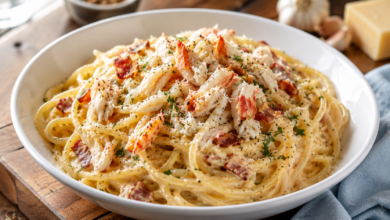
- Pasta dishes where shrimp would be the sauce protein — crab meat folded through a cream sauce or butter sauce produces excellent results
- Stuffed preparations (stuffed peppers, stuffed mushrooms, stuffed pasta) where crab’s texture holds better than shrimp under extended oven time
- Cold preparations like salads, slaws, and remoulade dishes — crab’s texture holds up better than shrimp when not re-warmed
Where the substitution requires adjustment:
- Stir-fries and high-heat sautés designed around shrimp’s quick-sear capacity — crab meat added to a wok-style dish breaks apart under the tossing motion and loses its texture identity. Better to add crab at the end of cooking rather than through the high-heat phase.
- Dishes where the shrimp shell or whole shrimp presentation is part of the dish — this is format-dependent, not ingredient-dependent
Portion adjustment: Since crab meat is slightly less protein-dense than shrimp per 100g, increase the crab quantity by approximately 10–15% to maintain the same protein contribution in the recipe.
Recipe: Shrimp and Crab Meat Casserole
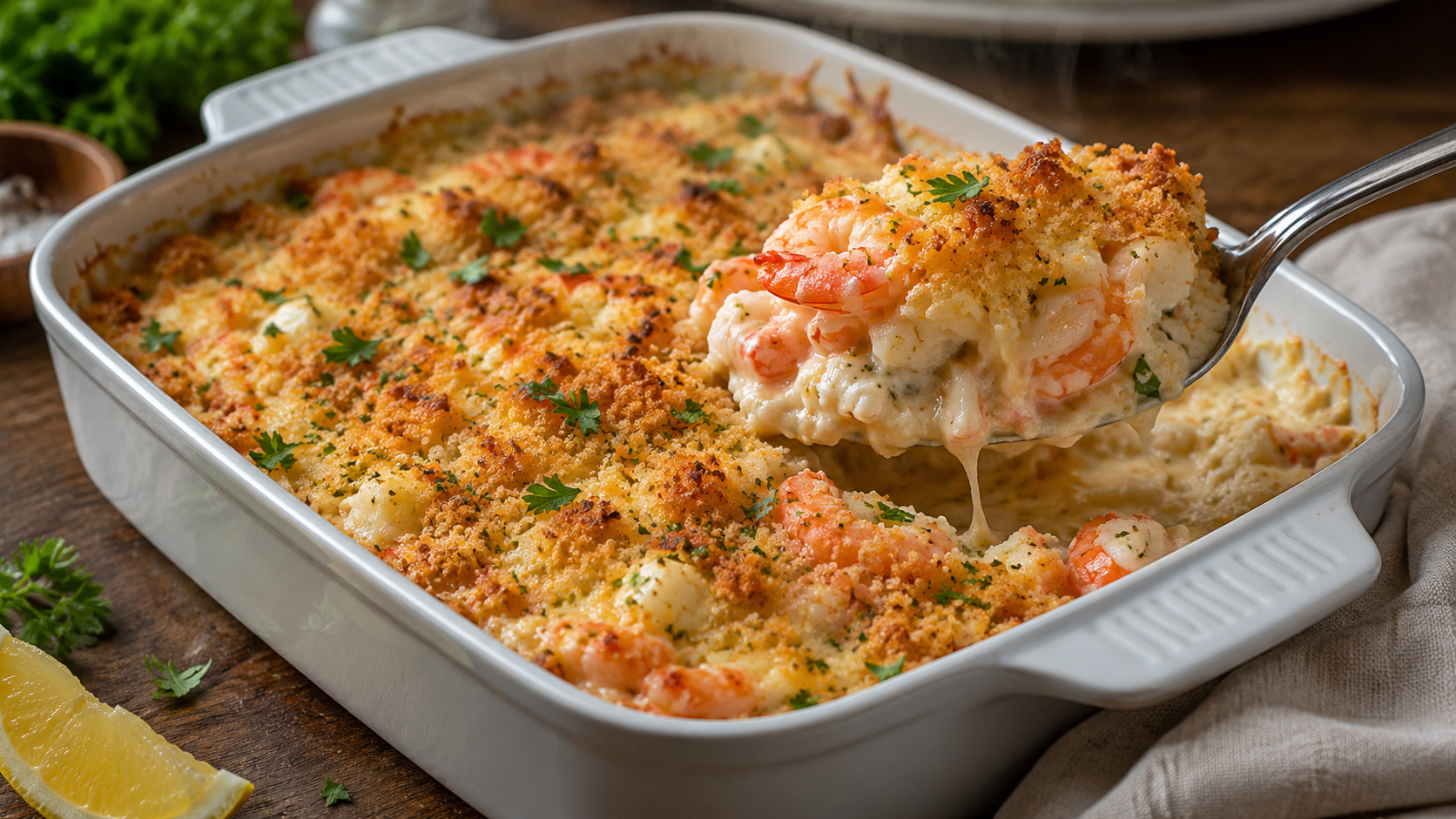
This recipe combines both proteins in a single dish — useful because the two proteins behave differently in an oven environment and complement each other in flavor and texture.
Serves 4 | Protein per serving: ~38g | Calories: ~420 kcal
Ingredients
- 300g large raw shrimp (26/30 count), peeled and deveined
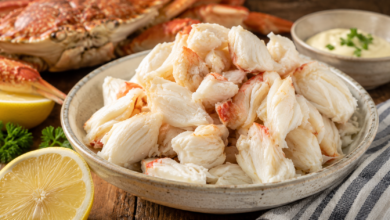
- 250g fresh or canned crab meat, drained and picked through for shell fragments
- 1 cup (225g) low-fat cream cheese, softened
- ½ cup (120ml) low-fat sour cream or Greek yogurt
- ½ cup (50g) shredded sharp cheddar or Gruyère
- ½ cup diced celery (2 stalks)
- ¼ cup diced red bell pepper
- 3 garlic cloves, minced
- 2 tbsp fresh chives, chopped
- 1 tbsp lemon juice + 1 tsp lemon zest
- 1 tsp Old Bay seasoning
- ½ tsp smoked paprika
- ½ tsp black pepper
- ¼ tsp cayenne
- Salt to taste
- ½ cup panko breadcrumbs (for topping)
- 1 tbsp olive oil (for breadcrumb topping)
- Fresh parsley to finish
Step-by-Step Method
Step 1 — Prep the shrimp: Pat shrimp dry and season lightly with Old Bay and smoked paprika. Set aside. Do not pre-cook — raw shrimp goes into the casserole and finishes in the oven, preventing overcooking from double heat exposure.
Step 2 — Build the base: In a large mixing bowl, combine softened cream cheese and sour cream (or Greek yogurt) until smooth. Add garlic, celery, red bell pepper, chives, lemon juice, lemon zest, Old Bay, paprika, black pepper, and cayenne. Mix until uniform. This is the binding base for both proteins.
Step 3 — Fold in the proteins: Gently fold crab meat through the cream cheese base first — it’s more fragile than shrimp and needs to be distributed without breaking the flake structure too much. Then fold the seasoned raw shrimp through, ensuring even distribution. The shrimp should be roughly one piece per serving bite — don’t break them up.
Step 4 — Transfer and top: Pour the mixture into a greased 9×13 inch (23×33 cm) baking dish. Spread evenly. Mix panko breadcrumbs with 1 tbsp olive oil and a pinch of smoked paprika. Scatter evenly over the top. Scatter shredded cheese over the breadcrumbs.
Step 5 — Bake: Preheat oven to 190°C (375°F). Bake uncovered for 22–26 minutes until the top is golden-brown, the edges are bubbling, and the shrimp are pink and cooked through. An internal temperature of 63°C (145°F) at the center confirms the shrimp are done.
Step 6 — Rest and serve: Allow to rest 5 minutes before serving. This lets the casserole set slightly and prevents the proteins from being too hot to taste properly. Finish with fresh parsley and additional lemon juice if desired.
Tips
- Don’t use imitation crab (surimi) for this recipe. Imitation crab is made from processed white fish (usually pollock) shaped and flavored to resemble crab. It has a significantly different texture, lower protein content, and higher carbohydrate content than real crab meat. The flavor also breaks down in the oven in a way that real crab doesn’t.
- Fresh lump crab > canned crab. Fresh lump or jumbo lump crab has a cleaner flavor and better texture. If using canned, choose canned in water (not brine) and rinse lightly before adding.
- Greek yogurt over sour cream for the binding base reduces saturated fat and increases protein by approximately 4g per serving without meaningfully changing flavor.
- Breadcrumb topping is structural, not decorative. It absorbs surface moisture from the casserole during baking and prevents the top from becoming watery. Don’t skip it.
Calories Breakdown
| Component | Approx. Calories (Full Batch / 4 servings) |
| 300g shrimp | ~297 kcal |
| 250g crab meat | ~225 kcal |
| Low-fat cream cheese (225g) | ~540 kcal |
| Greek yogurt ½ cup | ~65 kcal |
| Cheddar cheese ½ cup | ~220 kcal |
| Vegetables + aromatics | ~60 kcal |
| Panko + olive oil | ~200 kcal |
| Total batch | ~1,607 kcal |
| Per serving (÷4) | ~402 kcal |
Healthy version: Replace cream cheese with blended low-fat cottage cheese (same volume, saves ~200 kcal batch-wide), use reduced-fat cheese, and reduce panko to 3 tbsp. Estimated healthy version: ~340 kcal per serving with ~40g protein.
Is It Healthier to Eat Small Fish or Shrimp vs. Large Fish or Crabs?
This is a nuanced question that touches mercury accumulation, omega-3 concentration, and overall micronutrient balance.
Mercury and the size-longevity relationship: Large, long-lived predatory fish (swordfish, shark, king mackerel, bigeye tuna) accumulate methylmercury over their lifespans — the mercury concentrates through the food chain in a process called biomagnification. Shrimp, small fish (sardines, anchovies, herring), and crab all sit lower on the food chain with shorter lifespans and consequently carry far lower mercury loads.
The FDA’s most current guidance consistently places shrimp and crab among the “best choices” for frequent consumption (2–3 servings per week) due to their low mercury content. Large predatory fish are categorized as “avoid” or “limit” for pregnant women, nursing mothers, and young children.
Omega-3 content by category:
- Small oily fish (sardines, herring, mackerel): highest omega-3 per serving — 1.5–3g EPA+DHA per 100g
- Salmon (medium-large, farmed or wild): 1.5–2.5g EPA+DHA per 100g
- Shrimp: ~0.5g EPA+DHA per 100g
- Crab: ~0.4g EPA+DHA per 100g
- Large white fish (cod, halibut): ~0.2–0.3g EPA+DHA per 100g
How to Make Cooked Shrimp More Firm and Less Rubbery Without Losing Juiciness
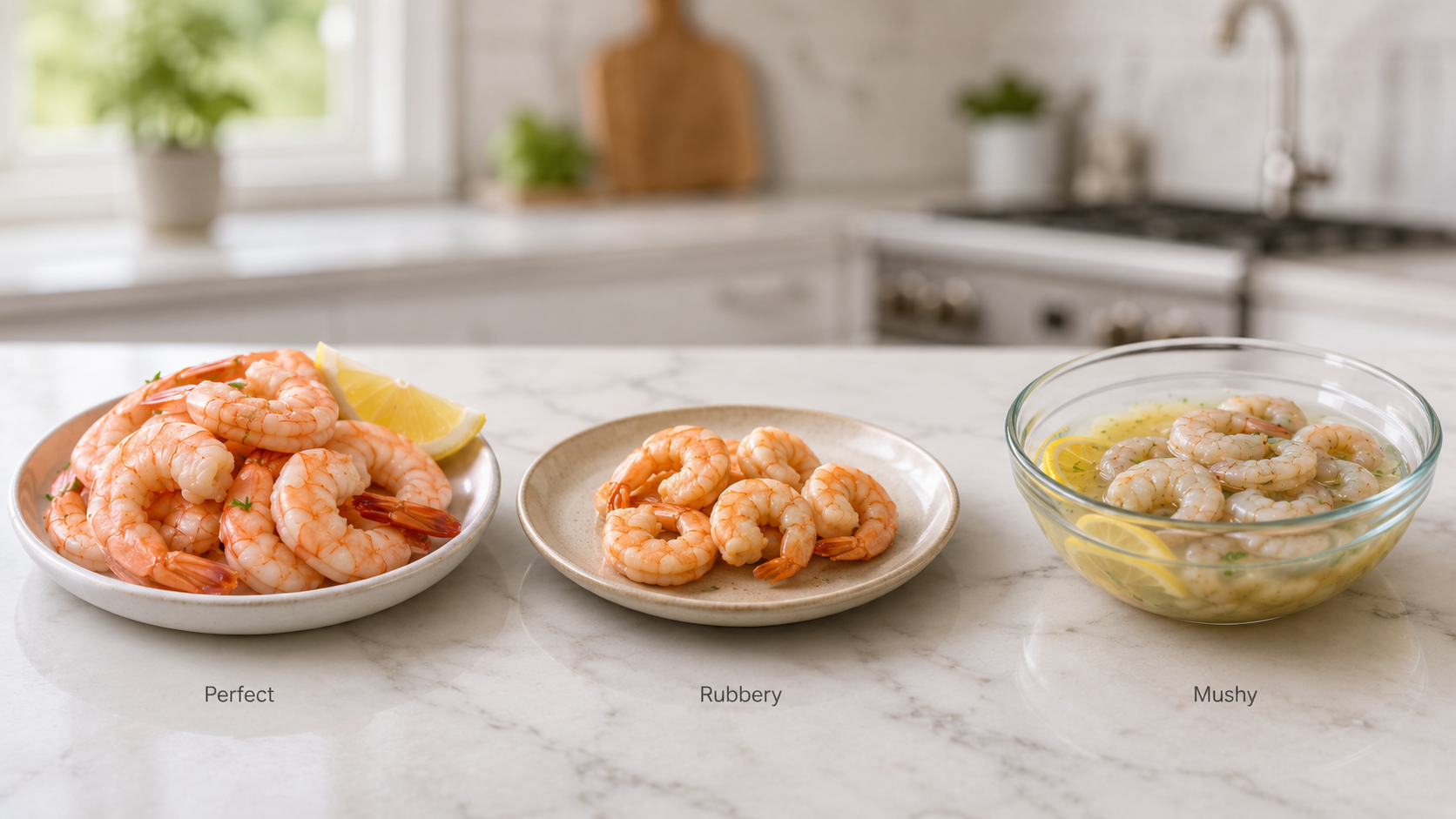
Rubbery shrimp and mushy shrimp are both texture failures — and they have different causes, requiring different fixes.
Rubbery shrimp: Always caused by overcooking. Shrimp muscle proteins (primarily myosin) denature rapidly above 60°C and contract tightly, squeezing moisture out of the muscle fibers. The result is a dense, springy texture that resists chewing. The solution is not a technique — it’s timing. Use the C-shape visual cue: the moment shrimp curves into a loose C, it’s done. Remove immediately. An ice bath stops carryover cooking.
Mushy shrimp: Has two distinct causes. First, shrimp previously frozen in sodium tripolyphosphate (a common commercial additive used in “wet-packed” shrimp to retain moisture and weight) can have an artificially softened texture that becomes mushy when cooked. Look for “chemical-free” or “dry-packed” shrimp on packaging. Second, shrimp that has been marinated in acid (lemon juice, vinegar, citrus) for too long begins to denature from acid exposure — the proteins start to “cook” chemically, producing a mushy texture before heat is ever applied. Acid marinades should be applied for a maximum of 15–20 minutes before cooking, not hours.
How to improve firmness while retaining juiciness — specific techniques:
- Dry-brine before cooking: Toss shrimp with ¼ tsp of fine salt per 450g and let rest uncovered in the refrigerator for 15–30 minutes before cooking. The salt draws a small amount of surface moisture out, then the shrimp reabsorbs it along with the salt. This increases the seasoning depth and slightly firms the muscle protein structure before heat application — producing a crisper exterior and more cohesive interior texture.
- Baking soda treatment (velveting technique from Chinese cooking): Toss shrimp with ¼ tsp of baking soda per 450g, along with the dry brine, for the same 15–30 minute period. Baking soda raises the pH of the shrimp’s surface slightly, which interferes with the protein cross-linking that causes rubbery texture. The result is shrimp that stays tender and slightly bouncy even at temperatures slightly above optimal doneness — it’s more forgiving. This is the technique used in Chinese restaurant-style stir-fry shrimp, which maintains an almost snappy, juicy texture under high wok heat.
- High heat, short time: Shrimp cooked quickly at high heat develops a slightly firm exterior crust (Maillard browning) while the interior stays just-cooked and juicy. Shrimp cooked at low to moderate heat for longer periods achieves the same internal temperature but without the exterior contrast — the texture reads as uniformly soft rather than having the slight resistance of a properly seared exterior. High heat is always preferable for textural quality.
- Ice bath after boiling: For any boiled shrimp application, the ice bath isn’t optional if you care about texture. The 30–90 seconds of carryover cooking that continues after removal from boiling water is enough to take properly cooked shrimp into overcooked territory. The ice bath arrests this immediately and firms the exterior of the shrimp slightly as it cools, producing a cleaner, more cohesive bite.
Frequently Asked Questions
Is crab meat more filling than shrimp? Per gram of protein, shrimp is marginally more filling because it contains slightly more protein per 100g (24–25g vs. 19–21g for crab). However, crab’s higher zinc content supports leptin — the satiety hormone — which can produce a stronger post-meal fullness signal. In real eating portions, both are highly satiating high-protein foods and the practical difference is minimal for most people.
Is shrimp considered meat or seafood? Biologically, shrimp is neither fish nor mammal — it’s a crustacean. Culinarily, it’s classified as seafood, not meat (which typically refers to land animal flesh). In everyday usage, “shrimp meat” is an acceptable informal description. In religious dietary contexts, shrimp is treated differently from both meat and fish depending on the tradition.
Can I substitute crab for shrimp in a casserole? Yes — crab actually works particularly well in casserole formats because its flakey texture distributes evenly through baked dishes and absorbs surrounding flavors better than shrimp. Increase quantity by 10–15% since crab has slightly less protein per 100g than shrimp.
Why does my shrimp have a spicy or sharp flavor? A sharp or iodine-forward flavor usually indicates brown shrimp species (naturally more iodine-forward) or shrimp that’s slightly past peak freshness. Truly fresh shrimp should taste mildly sweet and briny. A peppery or burning sensation at the back of the palate is caused by elevated trimethylamine (TMA) from partial spoilage — a freshness indicator worth taking seriously.
What’s the difference between pink and brown shrimp? Pink shrimp (Penaeus duorarum) are milder, sweeter, and more delicate — better for cocktail presentations and light preparations. Brown shrimp (Penaeus aztecus) have a stronger, more assertive iodine-forward flavor and firmer texture, making them better suited for bold, spiced, or heavily sauced recipes.
How do I fix mushy shrimp texture? If shrimp is mushy before cooking, the likely cause is wet-packing additives (sodium tripolyphosphate) — buy “dry-packed” or “chemical-free” shrimp. If mushy after cooking, over-marinating in acid is the likely cause — limit acid marinades to 15–20 minutes maximum. For firmer texture, dry-brine with salt or use the baking soda velveting technique (¼ tsp per 450g, 15–30 min rest) before cooking.
Is shrimp or crab better for weight loss? Both are excellent — low in calories, high in protein, virtually zero fat. Shrimp provides slightly more protein per 100g, which gives it a minor satiety edge on a strict gram-per-gram comparison. Crab’s zinc content supports appetite-regulating hormones. Prepared simply (boiled, steamed, grilled without heavy sauces), either protein is among the best choices for weight management.
Why is shrimp more expensive than most fish? Higher processing costs, faster perishability, sustained consumer demand (shrimp is the most consumed seafood in the US), and the significant price premium for wild-caught versus farmed varieties all contribute. The price gap between warm-water farmed shrimp and cold-water wild-caught shrimp is substantial — quality, sustainability, and flavor differ meaningfully between the two.
Conclusion
Crab meat is not meaningfully more filling than shrimp — but it’s not less filling either. The marginal protein advantage of shrimp (24–25g vs. 19–21g per 100g) is offset by crab’s zinc content, which directly supports leptin function and post-meal satiety signaling. In real-world eating contexts, both are among the most satiating low-calorie proteins available from any food category.
The more practically useful comparison is this: shrimp excels in speed-of-cooking applications where high heat and precise timing produce the best result, while crab meat handles sustained heat environments (casseroles, baked dishes) with greater tolerance. Pink shrimp performs in delicate preparations; brown shrimp holds its own in bold, spiced recipes. Crab’s extraordinary B12 content (375% DV per 100g) makes it nutritionally exceptional beyond just protein — a distinction that straight calorie-comparison tables consistently undervalue.
For the rubbery shrimp problem — which is the most common cooking failure with this ingredient — the baking soda velveting technique is the single most effective fix. Combined with high-heat cooking and an immediate ice bath for boiled preparations, it produces a firm, juicy texture that most home cooks assume requires restaurant equipment to achieve.