The Secret Step Japanese Restaurants Use for the Crunchiest Shrimp Roll You’ve Ever Had
Crunchy Shrimp Roll: The Complete 2026 Guide to Making It Right, Every Time

What Is a Crunchy Shrimp Roll? What’s Actually In It?
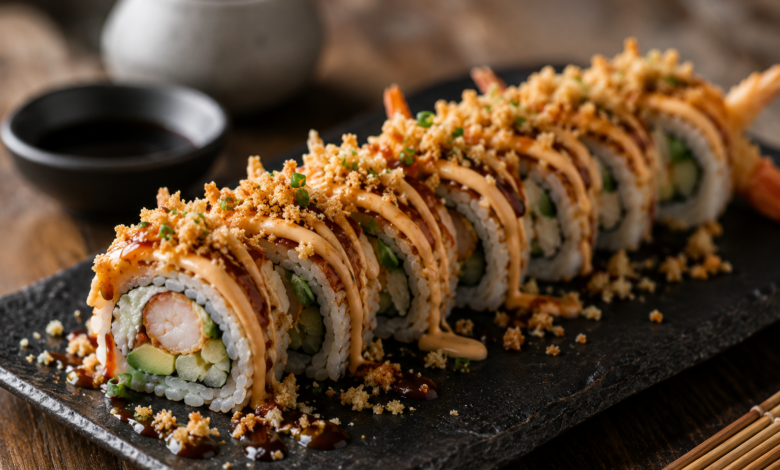
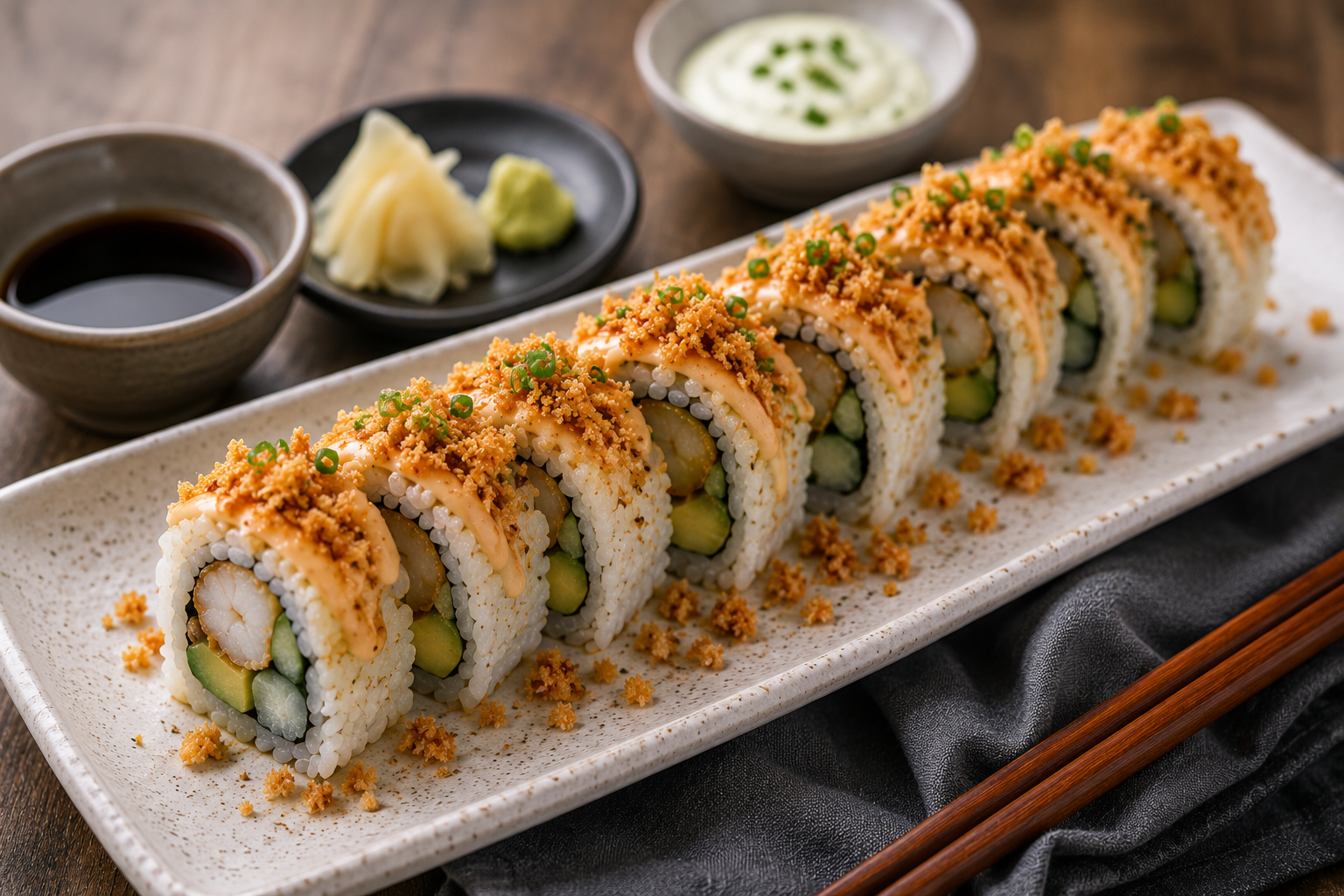
The crunchy shrimp roll is a Japanese-American maki roll (sushi roll) typically made inside-out — meaning the rice is on the outside of the nori (seaweed) sheet rather than the inside. This style is called uramaki in Japanese. The term “crunchy” refers specifically to the textural element that distinguishes this roll from a standard shrimp roll: either a fried or battered shrimp inside, a crunchy topping on the outside, or both.
Standard crunchy shrimp roll contents:
- Sushi rice (short-grain Japanese rice seasoned with rice vinegar, sugar, and salt) — forms the outer layer in the inside-out format
- Nori (dried, toasted seaweed sheet) — the inner wrapper that holds the filling together
- Shrimp — either tempura-fried whole shrimp, panko-crusted shrimp, or crunchy baked shrimp depending on the restaurant
- Avocado — adds creaminess and healthy fat that balances the fried element
- Cucumber — adds crunch and fresh contrast to the richness of the shrimp and sauce
- Cream cheese (in some versions, particularly American-style rolls) — adds richness
- Crunchy topping — typically panko breadcrumbs toasted in oil, or tempura flakes (tenkasu), scattered over the outside of the rice
- Sauce — most commonly spicy mayo (Japanese mayo + sriracha), eel sauce (sweet soy reduction), or both drizzled over the top
The “crunch” therefore comes from two places simultaneously in the best versions: the fried shrimp interior and the crispy topping exterior.
Crunchy Roll vs. Crunchy Shrimp Roll: The Distinction
These two terms are often used interchangeably but they refer to slightly different things in most sushi restaurant menus.
A crunchy roll is a broader category — it refers to any roll with a crunchy topping (panko or tempura flakes) on the exterior, regardless of the filling. A crunchy roll could contain spicy tuna, crab, salmon, or various combinations. The defining characteristic is the crispy outside, not the protein inside.
A crunchy shrimp roll specifically contains shrimp as the primary protein — and in most restaurant preparations, that shrimp is tempura-fried. The crunchy topping on the outside is a standard addition to this roll but is technically part of the “crunchy” name’s original reference to the fried shrimp.
Crunchy Shrimp Tempura Roll: The Technique Behind the Shrimp
The shrimp tempura inside the roll is the most technically demanding component. Getting it right changes the entire character of the finished roll.
Why tempura shrimp stays crunchier than panko-crusted shrimp inside a roll:
Standard panko breading absorbs moisture from the surrounding rice and fillings within 15–20 minutes of assembly — the roll becomes soggy from the inside out. Tempura batter, made with ice-cold water and minimal gluten development, creates a thinner, crispier shell with less surface area for moisture absorption. A properly made tempura batter also has a slightly lacy, irregular surface — this is not a flaw, it’s how tempura achieves crispness by maximizing the air pockets in the coating.
Tempura batter formula (for 8–10 shrimp):
- ½ cup (60g) all-purpose flour
- ¼ cup (30g) cornstarch (increases crispness by reducing gluten formation)
- ¾ cup (180ml) ice-cold sparkling water (the carbonation creates bubbles that produce a lighter, crispier batter)
- 1 egg yolk
- Pinch of fine sea salt
Shrimp prep for tempura: Peel and devein shrimp, leaving the tail on for handling. Make 3–4 shallow cuts across the belly of each shrimp perpendicular to the length — this releases the tension in the muscle and prevents the shrimp from curling into a ball during frying. Straighten each shrimp gently and hold the shape while lowering into the oil. This produces straight tempura shrimp that rolls properly inside the maki.
Crunchy Shrimp Roll Ingredients: The Complete List
Makes 2 rolls (approximately 16 pieces) | Serves 2
For the sushi rice:
- 1.5 cups (300g) short-grain Japanese rice (Koshihikari or Calrose variety)
- 1.75 cups (420ml) water
- 3 tbsp rice vinegar
- 1.5 tbsp sugar
- 1 tsp fine sea salt
For the tempura shrimp:
- 8–10 large raw shrimp (26/30 count), peeled, deveined, tails on
- Tempura batter (recipe above)
- Neutral oil for frying (vegetable, canola, or rice bran) — approximately 3–4 cups
- Fine sea salt for immediate post-fry seasoning
For the roll filling:
- 2 sheets nori (full-size, 19×21cm)
- 1 ripe avocado, sliced into thin strips
- ½ English cucumber, seeded and cut into thin matchsticks
- Optional: 2 tbsp cream cheese (softened, for a richer American-style version)
For the crunchy topping:
- ½ cup panko breadcrumbs
- 1 tbsp neutral oil
- Pinch of salt
For the spicy mayo sauce:
- 3 tbsp Japanese mayonnaise (Kewpie brand — not regular mayo, the flavor profile is different)
- 1–1.5 tsp sriracha (adjust to heat preference)
- ½ tsp sesame oil
- 1 tsp lemon juice
For the eel sauce (drizzle):
- 3 tbsp soy sauce
- 3 tbsp mirin
- 1.5 tbsp sugar
- Simmer together 5–7 minutes until slightly thickened and syrupy
Equipment needed:
- Bamboo sushi rolling mat (makisu)
- Plastic wrap (to cover the mat — prevents rice sticking)
- Sharp knife
- Rice paddle or wooden spoon
Step-by-Step Recipe Method: Crunchy Shrimp Roll
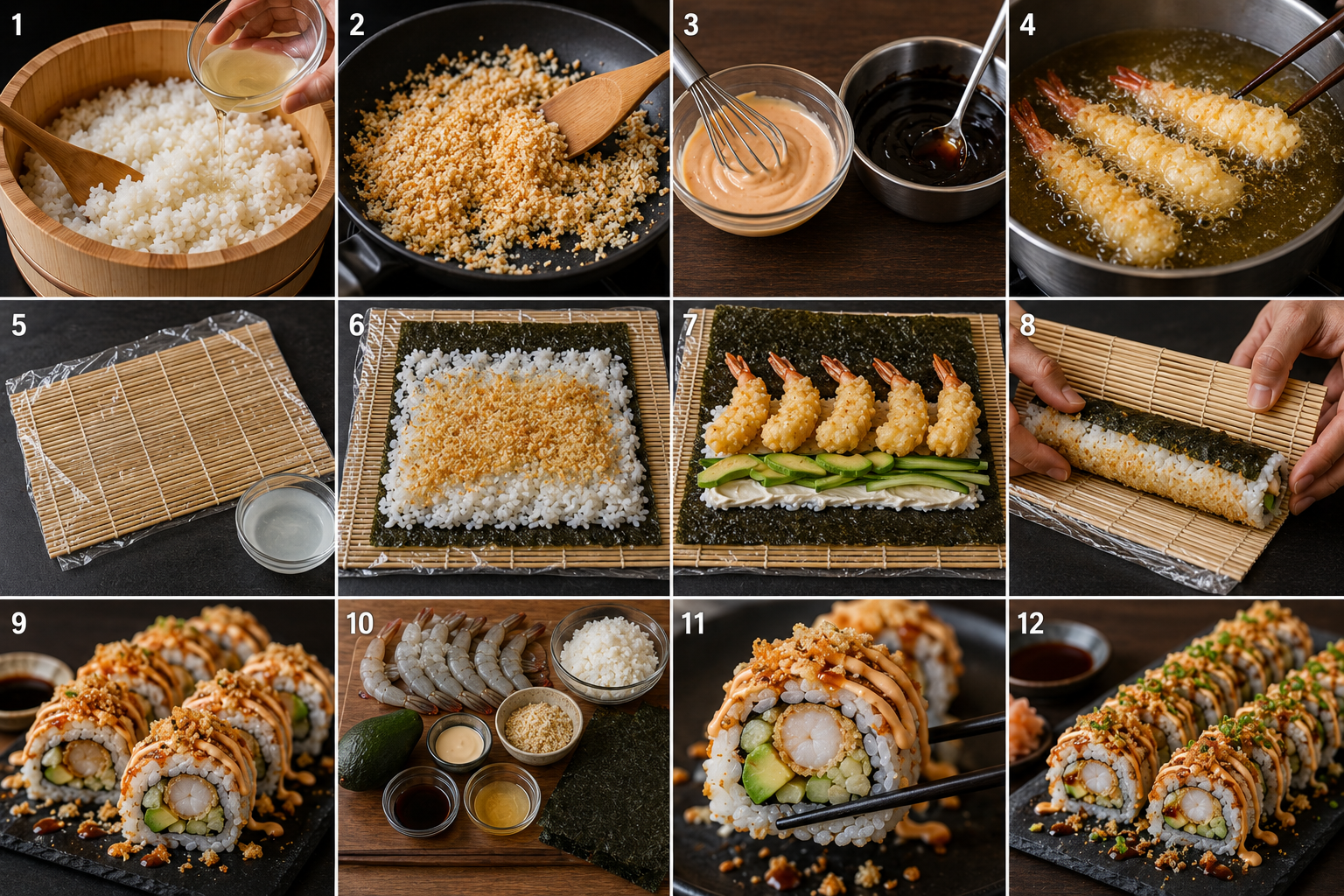
Step 1 — Cook and season sushi rice: Rinse the rice under cold water until the water runs clear — approximately 4–5 rinses. This removes excess surface starch that makes the rice gummy. Cook in a rice cooker or pot using the measured water. While rice cooks, heat rice vinegar, sugar, and salt together until sugar dissolves. When rice is done, transfer to a wide shallow bowl (a wooden bowl or hangiri is traditional — it absorbs excess moisture) and pour the vinegar mixture over while gently folding with a rice paddle. Fan the rice while folding to cool quickly. Sushi rice should be body-temperature when rolling — not hot (which makes nori soggy) and not cold (which breaks apart).
Step 2 — Make the crunchy topping: Heat 1 tbsp of neutral oil in a dry skillet over medium heat. Add panko breadcrumbs and stir continuously until golden-brown and fragrant — approximately 3–4 minutes. Remove immediately and spread on a paper towel to cool. Season with a pinch of salt. These toasted panko crumbs are scattered over the outside of the rice once the roll is assembled.
Step 3 — Make the spicy mayo and eel sauce: Combine Kewpie mayo, sriracha, sesame oil, and lemon juice in a small bowl. Whisk until smooth. For the eel sauce, combine soy sauce, mirin, and sugar in a small saucepan over medium heat. Simmer 5–7 minutes, stirring occasionally, until it reduces to a slightly syrupy consistency that coats a spoon. Both sauces can be made ahead and refrigerated.
Step 4 — Fry the tempura shrimp: Heat oil in a deep heavy-bottomed pot or wok to 175°C (350°F). Prepare tempura batter in a bowl over ice. Pat shrimp completely dry — surface moisture causes splattering and prevents batter adhesion. Make belly cuts and straighten each shrimp as described. Dip each shrimp into the tempura batter, letting excess drip briefly, then lower into the hot oil away from you to prevent oil splashing toward you. Fry 2–3 shrimp at a time — overcrowding drops the oil temperature and produces greasy, soggy tempura. Fry 2–2.5 minutes until the batter is light golden and crisp. Drain on a wire rack (not paper towel), season immediately with fine sea salt. Use within 20 minutes for best crispness inside the roll.
Step 5 — Set up your rolling station: Place the bamboo mat on a flat surface and cover completely with plastic wrap — this prevents rice from sticking to the mat and makes cleanup straightforward. Fill a small bowl with water mixed with a splash of rice vinegar — use this to wet your hands before handling rice, which prevents sticking.
Step 6 — Assemble the inside-out roll: Place one nori sheet shiny-side down on the plastic-wrapped mat. Wet your hands. Take approximately ¾ cup of seasoned sushi rice and spread it evenly across the nori in a thin, uniform layer — extend to the edges on three sides, leaving a 1cm strip at the far edge. Press gently but don’t compress the rice heavily; it should feel light and slightly sticky. Scatter half of the toasted panko over the rice surface.
Carefully flip the nori sheet so the rice side is now face-down on the mat (rice on the mat, nori facing up). The panko crumbs will be between the rice and the mat — they’ll adhere to the outer rice layer during rolling.
Step 7 — Add the filling: Lay 3–4 tempura shrimp in a horizontal line across the center of the nori, tails pointing in the same direction. Add avocado strips and cucumber matchsticks alongside the shrimp. If using cream cheese, place a thin smear along the nori before adding the shrimp.
Step 8 — Roll: Lift the near edge of the mat and roll it over the filling firmly but without squeezing. The nori edge should meet the far end of the nori sheet. Continue rolling forward, applying even, gentle pressure. The roll should feel firm and uniform — not loose (which means the filling will fall out when cut) and not compressed so tightly that rice squeezes out the ends. The panko exterior is now the outer layer.
Step 9 — Cut and plate: Use a very sharp knife — a dull knife compresses and tears the roll rather than cutting cleanly. Wet the blade lightly before each cut. Cut the roll in half, then each half into 4 pieces (8 pieces per roll). Arrange cut-side up to show the cross-section. Drizzle spicy mayo over the top in a back-and-forth pattern. Add a drizzle of eel sauce over that. Scatter a few additional toasted panko crumbs over the plated rolls for extra crunch.
Tips: How to Make Shrimp Crunchy Like Chinese Restaurants
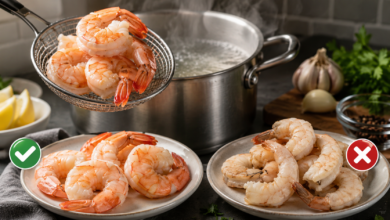
The baking soda technique: Chinese restaurant-style crunchy shrimp uses a preparation step that most home recipes don’t include. Toss raw peeled shrimp with ¼ tsp baking soda and ¼ tsp salt per 450g, then refrigerate for 15–30 minutes before battering. Baking soda raises the surface pH slightly, which interferes with the protein cross-linking that causes tough texture and promotes a more open, crispy exterior during frying. This produces shrimp with a noticeably crispier coating and a snappy, juicy interior — the characteristic texture of Chinese-restaurant fried shrimp that’s difficult to replicate without this step.
Temperature of the batter: Batter must be ice-cold. The temperature contrast between cold batter and hot oil creates a steam flash that pushes the batter outward as it sets — this is what creates the light, airy, irregular surface of proper tempura. Warm batter doesn’t produce this effect and results in a dense, doughy coating.
Oil temperature management: 175°C is the target — measure with a thermometer, don’t guess. Below 165°C, the batter absorbs oil before it crisps (greasy result). Above 185°C, the outside browns before the shrimp inside cooks through (raw interior). Fry small batches to maintain temperature.
Wire rack drainage: Always drain fried shrimp on a wire rack over a tray, never on paper towels. Paper towels trap steam underneath the shrimp and soften the bottom of the batter. Wire rack allows airflow on all sides and maintains crispness for longer.
Rolling technique: When pressing the roll, apply uniform pressure across the full length of the mat rather than squeezing from the top. Uneven pressure creates rolls with a tight center and loose ends, which fall apart when cut.
Sharp knife for cutting: A sharp knife is not optional for clean cuts. A dull knife compresses the soft rice and filling, destroying the structure of each piece. Wet the blade between cuts to prevent rice from sticking to the blade.
Serve immediately: Crunchy shrimp rolls lose their textural contrast within 30–40 minutes as the moisture from the rice and fillings softens the panko topping and batter coating. Unlike many sushi rolls, the crunchy version does not hold well and should be eaten immediately after assembly.
Spicy Crunchy Shrimp Roll: The Variation
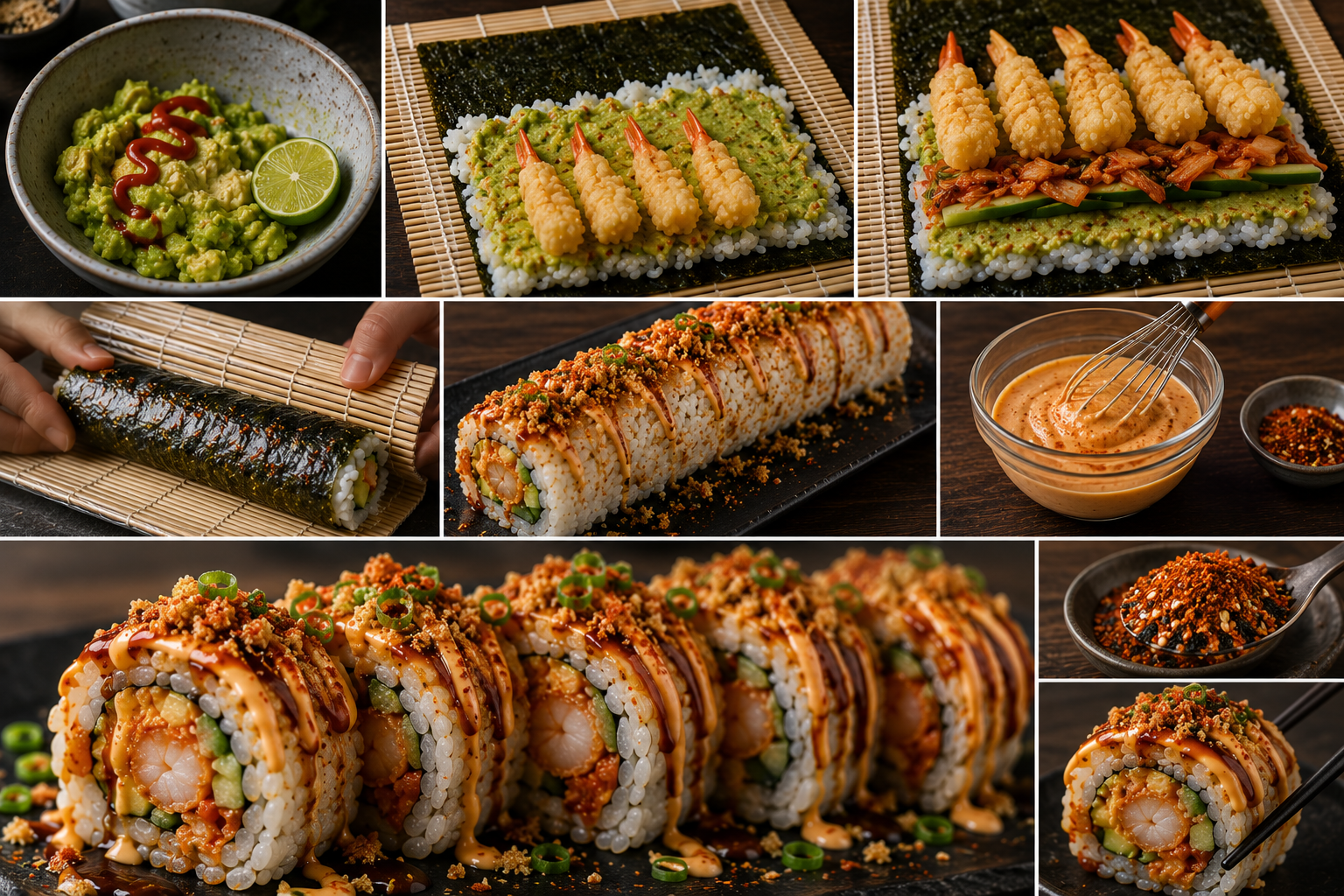
The spicy crunchy shrimp roll adds heat at two points — in the filling and in the sauce — rather than just in the drizzle. This layering of spice creates a more sustained heat through the whole roll rather than just on the surface.
For the spicy filling: Mix ½ tsp sriracha into the avocado (or replace avocado with spicy avocado made by mashing ¼ avocado with sriracha, lime juice, and salt into a rough paste). Spread this inside the nori before adding the shrimp.
For extra heat in the sauce: Increase sriracha to 2 tsp in the spicy mayo, and add ½ tsp of togarashi (Japanese seven-spice blend) over the finished roll. Togarashi contains ground chili, orange peel, sesame, ginger, and nori — it adds complexity to the heat rather than just amplifying it.
Kimchi variation: Some American-style versions add a small amount of finely chopped kimchi inside the roll alongside the shrimp. The fermented cabbage adds heat, sourness, and umami that complements both the fried shrimp and the sweet eel sauce drizzle.
What Goes With Crunchy Shrimp Rolls
The crunchy shrimp roll is rich — fried shrimp, avocado, creamy sauce, and rice create a meal that benefits from contrast in the accompaniments rather than more richness.
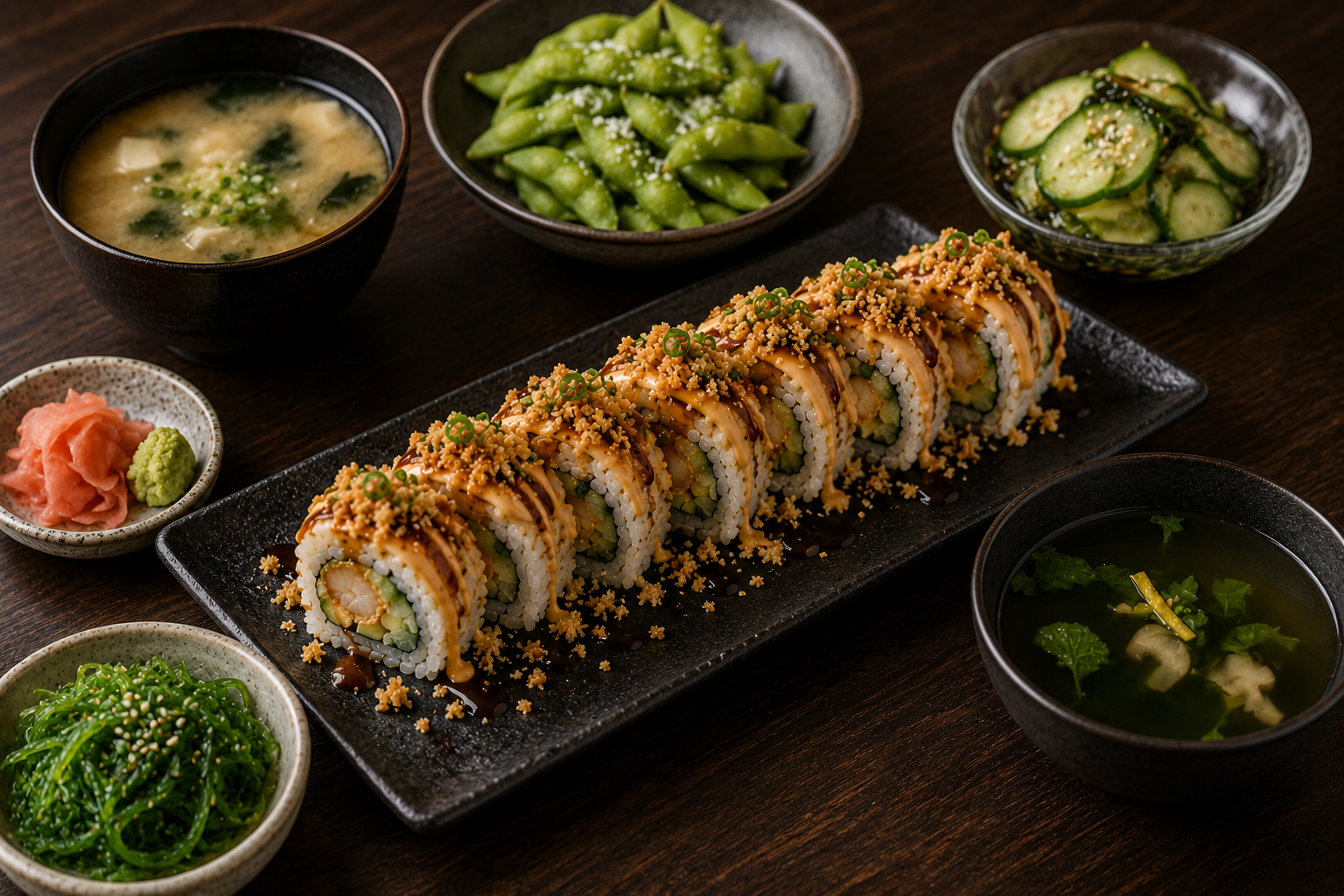
Best pairings:
- Miso soup — light, savory, warm contrast to the cool roll. Classic Japanese restaurant pairing for a reason.
- Edamame with sea salt — earthy, protein-rich, requires no preparation beyond salting. Palate-cleansing between bites.
- Cucumber sunomono salad — thinly sliced cucumber in sweetened rice vinegar dressing. The acidity refreshes the palate after the richness of the roll.
- Pickled ginger (gari) — traditionally served alongside sushi specifically to cleanse the palate between different rolls. The mild acidity and ginger spice reset flavor perception.
- Seaweed salad — mineral-forward, slightly slimy texture that contrasts the crispy roll in an interesting way. Standard Japanese-American accompaniment.
- Light clear soup (suimono) — a more refined alternative to miso soup, made with dashi broth and simple garnishes.
Drinks: Dry sparkling water with yuzu, Japanese green tea (particularly gyokuro), cold Sapporo or Kirin lager, or dry sake. All provide refreshing contrast without competing with the roll’s complex flavor.
What Sauce Comes With Shrimp Rolls?
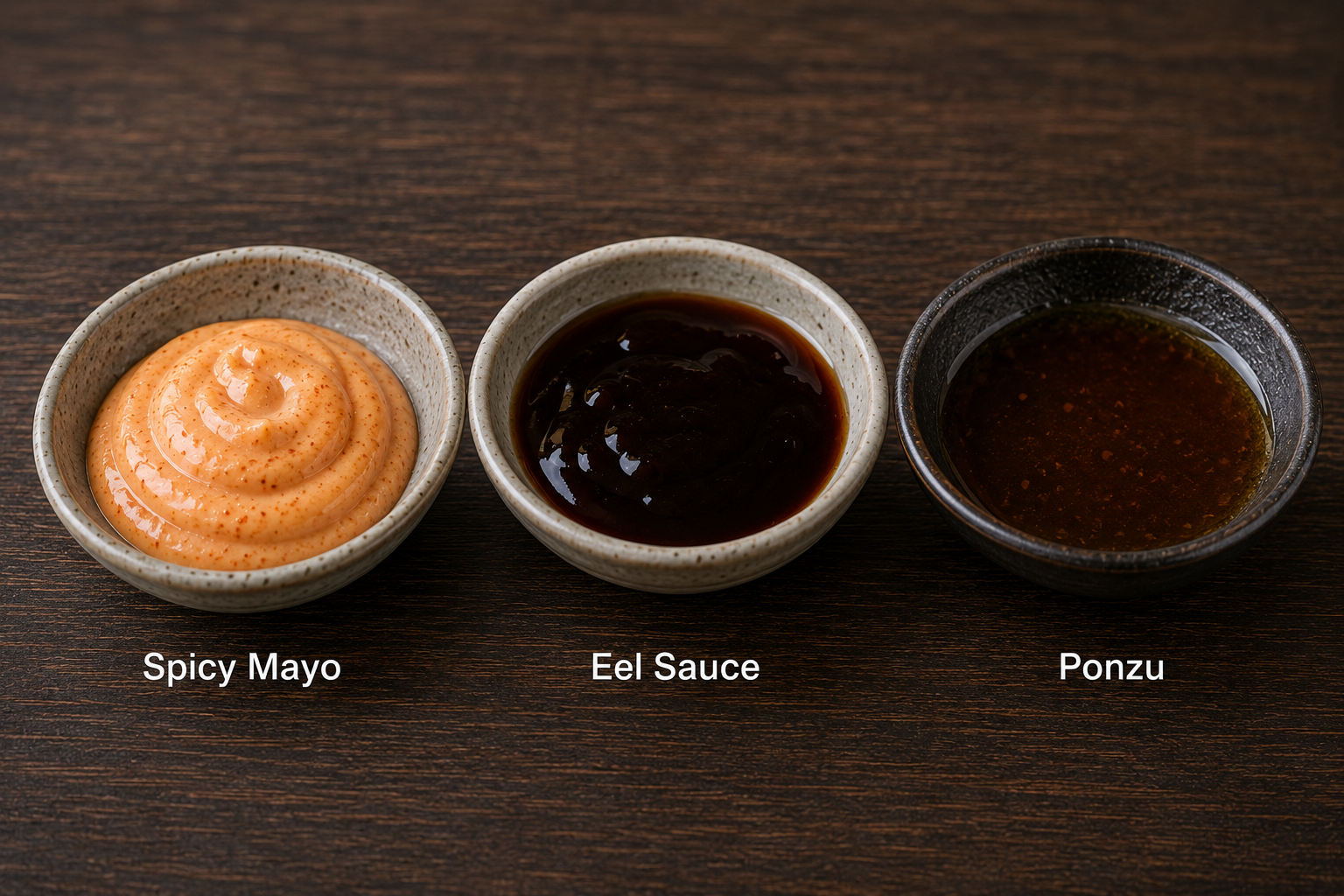
The two standard sauces for crunchy shrimp rolls each serve a different flavor function:
Spicy mayo: A combination of Japanese mayonnaise (Kewpie) and sriracha, sometimes with sesame oil and lemon. Kewpie mayo differs from American mayo in that it uses only egg yolks (not whole eggs) and rice vinegar rather than distilled vinegar, producing a richer, tangier, slightly umami-forward base. The sriracha adds heat and garlic. This sauce is drizzled in a zigzag pattern over the finished roll.
Eel sauce (unagi sauce): A sweet, savory reduction of soy sauce, mirin, and sugar. Despite the name, modern commercial eel sauce doesn’t necessarily contain eel — it’s the same sauce traditionally brushed over grilled eel (unagi), but produced independently as a finishing condiment. The sweet-salty profile adds depth and caramelized complexity that the spicy mayo doesn’t provide.
Ponzu: A citrus-soy dipping sauce (soy sauce + yuzu or lemon juice) is less common as a topping but works well as a side dipping sauce, particularly for the less sauce-tolerant diner.
Crunchy Shrimp Roll Calories: The Full Breakdown
Calorie counts for sushi rolls vary significantly depending on rice quantity, sauce amount, and whether the shrimp is fried or not.
Per full roll (8 pieces) of homemade crunchy shrimp roll:
Component |
Calories |
| Sushi rice (¾ cup cooked, seasoned) | ~185 kcal |
| Nori (1 sheet) | ~10 kcal |
| 4 tempura shrimp (fried) | ~260 kcal |
| ½ avocado | ~120 kcal |
| Cucumber | ~8 kcal |
| Toasted panko topping (¼ cup) | ~70 kcal |
| Spicy mayo (1.5 tbsp) | ~90 kcal |
| Eel sauce drizzle (1 tbsp) | ~25 kcal |
| Total per roll (8 pieces) | ~768 kcal |
| Per piece | ~96 kcal |
Restaurant portion estimates: Restaurant crunchy shrimp rolls typically run 400–550 calories for a standard 8-piece roll without additional sauce.
Spicy crunchy shrimp roll: Adding the kimchi or spicy avocado variation adds approximately 30–50 calories per roll.
Is the Crunchy Shrimp Roll Healthy?
The honest answer is: it depends on what you’re comparing it to, and how it’s constructed.
The favorable nutrition picture:
- Shrimp contributes 24–25g of protein per 100g of cooked meat — a lean, complete protein source
- Avocado provides monounsaturated fats (oleic acid) linked to cardiovascular health, plus folate, potassium, and vitamin K
- Nori contains iodine, omega-3 fatty acids, and meaningful amounts of vitamin K2 — a nutrient form not commonly found in many Western foods
- Sushi rice is a refined carbohydrate, but the vinegar seasoning lowers its glycemic impact moderately compared to plain white rice — the acidity slows starch digestion
The nutritional considerations:
- The tempura frying adds 100–150 calories and 8–12g of fat per roll primarily from oil absorption
- Panko topping adds additional refined carbohydrates and fat
- Spicy mayo is calorie-dense at approximately 60 calories per tablespoon
- Soy sauce in eel sauce contributes significant sodium — approximately 300–400mg per tablespoon
Net assessment: A crunchy shrimp roll is a moderate-calorie, high-protein meal component. It’s more nutritionally complete than most people assume for a sushi roll — the shrimp, avocado, nori, and rice together cover protein, healthy fats, carbohydrates, and micronutrients including iodine, selenium, B12, and omega-3s.
Healthy Version: Baked Crunchy Shrimp Roll
The healthy version replaces deep-frying with baking while maintaining as much crunch as possible through panko coating and high oven heat.
Baked crunchy shrimp preparation:
- Coat peeled shrimp in a thin layer of beaten egg white, then press into panko breadcrumbs mixed with smoked paprika, garlic powder, and salt
- Place on a wire rack over a baking sheet (the rack allows heat circulation underneath, preventing the bottom from steaming)
- Spray lightly with neutral oil spray
- Bake at 220°C (425°F) for 8–10 minutes until panko is golden and shrimp are cooked through
The baked version produces about 60–70% of the crunchiness of fried tempura — not identical, but genuinely crispy in its own right. The calorie saving is approximately 100–130 calories per roll compared to the fried version.
Additional healthy modifications:
- Use half the rice per roll (reduces carbohydrate and calorie count by ~90 kcal per roll)
- Replace spicy mayo with a lighter version: 2 tbsp Greek yogurt + 1 tsp sriracha + ½ tsp sesame oil (saves approximately 60 calories per roll with added protein)
- Replace eel sauce with ponzu (citrus-soy) — lower sugar, similar umami, approximately 20 fewer calories per tablespoon
Estimated healthy baked version per roll (8 pieces):
- Calories: ~520 kcal
- Protein: ~28g
- Fat: ~14g
- Carbohydrates: ~58g
Frequently Asked Questions
What is in a crunchy shrimp roll? A crunchy shrimp roll typically contains tempura or panko-fried shrimp, avocado, cucumber, and sushi rice wrapped in nori (seaweed) in an inside-out format. The outside is coated in toasted panko crumbs and topped with spicy mayo and eel sauce. Some versions include cream cheese or spicy avocado.
What is a crunch roll made of? A crunch roll is an inside-out sushi roll with a crunchy topping of toasted panko or tempura flakes on the outside of the rice. The filling varies by restaurant — it can be spicy tuna, crab, salmon, or shrimp. The “crunch” refers to the textural element of the crispy exterior coating rather than a specific protein.
Is crunchy shrimp roll healthy? It’s moderately healthy — the shrimp provides lean protein, avocado adds heart-healthy monounsaturated fats, and nori contributes iodine and vitamin K2. The main calorie concentrations are the tempura frying and the spicy mayo sauce. A full 8-piece roll runs approximately 750–800 calories including sauce. The baked version with lighter sauce is around 520 calories with good protein content.
What goes with crunchy shrimp? Miso soup, edamame, cucumber sunomono (vinegared cucumber salad), pickled ginger, seaweed salad, and clear Japanese soups are the most complementary pairings. Light, acidic, or mineral-forward sides work best to contrast the richness of the fried shrimp and creamy sauce.
What sauce comes with shrimp rolls? The two standard sauces are spicy mayo (Kewpie Japanese mayonnaise + sriracha + sesame oil) and eel sauce (sweet soy reduction of soy sauce, mirin, and sugar). Most restaurant presentations use both, drizzled in alternating zigzag lines. Ponzu (citrus-soy) is a lighter alternative served as a dipping sauce.
How do you make shrimp crunchy like Chinese restaurants? The key technique is the baking soda treatment: toss peeled shrimp with ¼ tsp baking soda per 450g, refrigerate 15–30 minutes before battering. This raises the surface pH and produces a crispier coating. Combined with ice-cold sparkling water batter, 175°C frying oil, and wire rack drainage, this method replicates the snappy-crispy texture of restaurant-quality fried shrimp.
What is a crunchy roll used for? The crunchy roll is primarily a finished sushi dish served as an appetizer or main course. Its textural complexity — crispy exterior, creamy sauce, tender shrimp interior, soft rice — makes it one of the most satisfying sushi roll formats for people who prefer cooked seafood over raw. It’s also commonly served as party food because the individual pieces are self-contained and easy to eat without utensils.
Can I make crunchy shrimp rolls ahead of time? The rice, sauces, and toasted panko can all be prepared ahead. The tempura shrimp should be fried as close to rolling time as possible — ideally within 20 minutes. Assembled rolls lose their textural contrast within 30–40 minutes as moisture from the rice softens the crispy components. For best results, assemble and serve immediately.
What is the difference between a crunchy shrimp roll and a spicy shrimp roll? A crunchy shrimp roll’s defining feature is the textural contrast from fried shrimp and/or crunchy topping. A spicy shrimp roll’s defining feature is heat — typically from sriracha in the mayo or a spiced shrimp mixture. A spicy crunchy shrimp roll combines both: fried shrimp for texture, spicy mayo for heat, and both the crunchy topping and spiced elements present in the same roll.
Conclusion
The crunchy shrimp roll succeeds as a dish because it’s deliberately engineered — every component addresses a different sensory register. Avocado and cucumber provide freshness and crunch that cut through the richness. The dual-sauce combination of spicy mayo and eel sauce layers heat, creaminess, sweetness, and umami in alternating bites. None of this is accidental.
Making it at home well requires understanding the few points where technique genuinely matters: keeping the tempura batter ice-cold, frying at 175°C in small batches, draining on a wire rack, and assembling the roll when the rice is body-temperature (not hot, not cold). The baking soda pre-treatment — borrowed from Chinese restaurant shrimp preparation — is the one insider technique that most home versions skip, and it’s the one that makes the biggest difference in achieving that characteristic snappy crunch.
The calorie picture is real but manageable. At approximately 96 calories per piece and 768 per roll including sauces, a two-roll dinner with miso soup and edamame is a nutritionally complete, satisfying meal around 1,000 calories with 35–40g of protein. The baked version at around 520 calories per roll is a genuinely viable lighter option that doesn’t require giving up the dish’s defining textural character.