Don’t Risk It: How Long Cooked Seafood Actually Lasts in the Fridge (2026 Guide)
How Long Is Cooked Seafood Good in the Fridge: The Complete Safety Guide

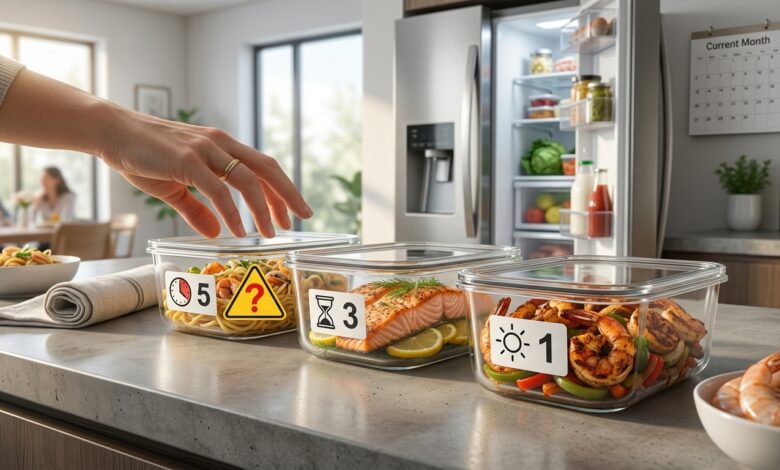
Most people know that seafood doesn’t last as long as chicken or beef in the refrigerator — but when it comes to the actual numbers, there’s consistent confusion. The question isn’t academic. Eating seafood that’s been in the fridge one day too long is one of the fastest routes to genuine foodborne illness, and the symptoms are unpleasant enough that getting this right is worth a few minutes of reading.
The Core Rule and Why Seafood Is Different From Other Proteins
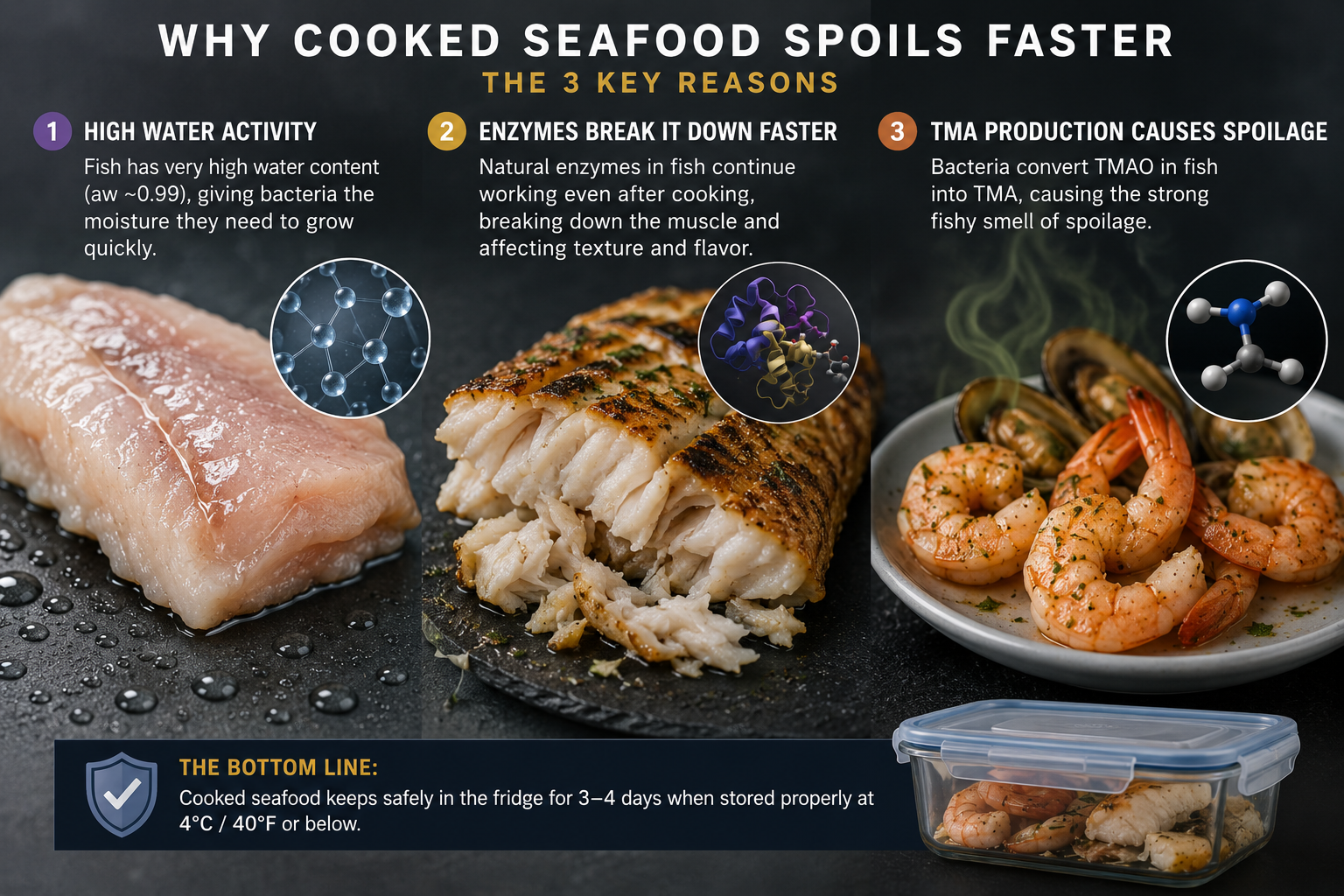
Cooked seafood — fish, shrimp, crab, lobster, scallops, clams, and similar — keeps safely in the refrigerator for 3 to 4 days when stored properly. That is the guidance consistently held by the FDA, USDA Food Safety and Inspection Service, and food safety authorities in the UK, EU, and Australia. It’s not a conservative estimate. It reflects the actual bacterial growth rate in cooked seafood under standard refrigeration conditions (at or below 4°C / 40°F).
Why does seafood spoil faster than poultry or red meat? Several reasons, and understanding them helps you make better decisions than just counting days.
Water activity is higher in fish than in most other proteins. Water activity (aw) is a measure of how much unbound water is available for microbial activity. Raw fish has a water activity of around 0.99 — nearly the maximum possible. Bacteria require free moisture to grow and reproduce, and fish provides it abundantly. Even after cooking, which kills active bacteria, the moist protein matrix remains a highly supportive environment for recontamination and rapid proliferation.
Fish muscle structure breaks down faster than mammalian muscle. Fish live in cold water and have evolved enzymes (proteases and lipases) that function efficiently at low temperatures. These enzymes continue working even after the fish is dead and cooked — they don’t require living cells to degrade tissue. This autolytic (self-digesting) process contributes to faster texture breakdown and off-flavor development at refrigerator temperatures, even in the absence of bacterial contamination.
Trimethylamine (TMA) production accelerates with spoilage. Bacteria present on fish convert trimethylamine oxide (TMAO) — a naturally occurring compound in marine fish — into TMA, which is responsible for the characteristic “fishy” smell of spoiling seafood. This chemical process is a reliable spoilage signal, but its absence doesn’t guarantee freshness, particularly in the early stages.
How Long Is Cooked Seafood Good in the Fridge: Breakdown by Type
Not all cooked seafood stores identically. The general 3–4 day window applies across most types, but there are meaningful differences within that range depending on moisture content, fat level, and cooking method.
Seafood Type |
Fridge Life After Cooking |
Notes |
| Cooked fish fillets (white fish — cod, tilapia, halibut) | 3–4 days | Lean, low fat; spoils cleanly |
| Cooked fatty fish (salmon, mackerel, tuna) | 3 days | Higher fat oxidizes faster; off-flavors develop sooner |
| Cooked shrimp | 3–4 days | Moisture loss can make texture rubbery by day 3 |
| Cooked lobster (in shell) | 3–4 days | Best if shell is kept on until eating |
| Cooked lobster (meat removed) | 2–3 days | Exposed surface area accelerates moisture loss and oxidation |
| Cooked crab (in shell) | 3–5 days | Shell slows moisture loss and oxidation |
| Cooked crab meat (picked) | 3 days | Store submerged in a small amount of cooking liquid if possible |
| Cooked scallops | 3–4 days | Dense texture; reheat gently or quality degrades |
| Cooked mussels/clams | 3–4 days | Store in cooking liquid in a sealed container |
| Cooked squid/octopus | 3–4 days | Tightly seal — absorbs refrigerator odors readily |
| Deep fried fish | 3–4 days (but quality degrades quickly) | Breading softens from moisture; best within 2 days for texture |
| Cooked fish in sauce or stew | 3–4 days | Sauce helps retain moisture; reheat thoroughly |
Fatty fish deserves a separate note. Salmon, mackerel, herring, and sardines contain high concentrations of polyunsaturated fatty acids, including omega-3s. These fats oxidize faster than saturated fats, particularly when exposed to air in the refrigerator. The safety window is the same as lean fish (3–4 days), but the quality window — specifically the flavor — often narrows to 2–3 days before rancid or metallic off-notes become noticeable, especially when the fish is eaten cold rather than reheated.
Is Cooked Seafood Good in the Fridge Overnight?
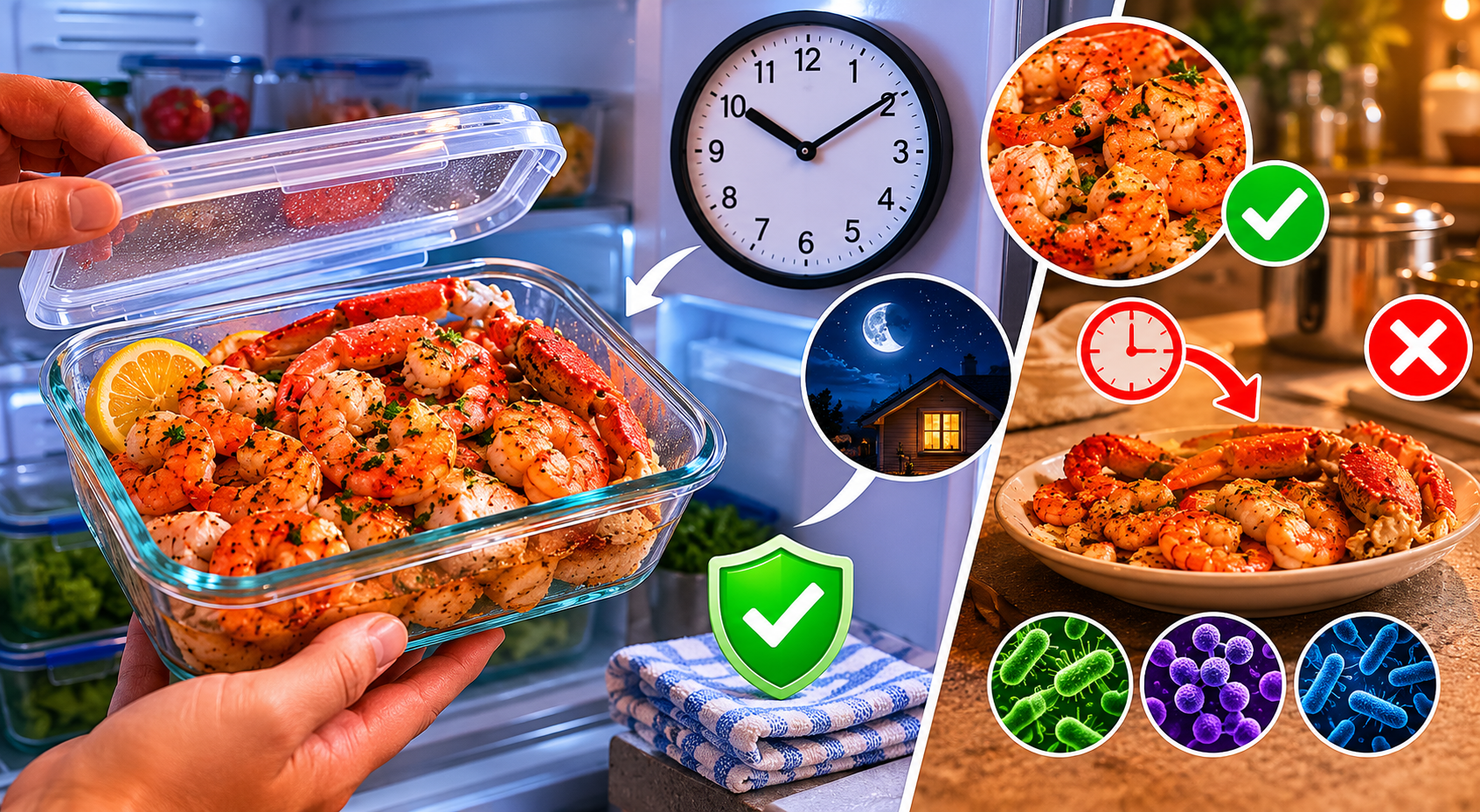
Yes — cooked seafood kept refrigerated overnight is safe to eat the following day, assuming it was handled correctly before refrigeration. “Overnight” represents 8–12 hours of storage, which is well within the 3–4 day safety window.
The condition that actually matters for overnight storage is how quickly the seafood was refrigerated after cooking. The FDA’s “2-hour rule” specifies that cooked food should not sit at room temperature for more than 2 hours before refrigeration — or 1 hour if ambient temperature exceeds 32°C (90°F). Bacterial growth in the “danger zone” between 4°C and 60°C (40°F–140°F) can double cell counts in as little as 20 minutes under optimal conditions for pathogens like Salmonella, Listeria, and Staphylococcus aureus.
If cooked seafood sat on the counter for 3 hours before going into the fridge, the overnight clock started running during that room-temperature exposure window — not when refrigeration began. In that scenario, the seafood would still be “overnight” by time of day, but the bacterial load may have already increased significantly before cooling commenced. This is the variable most people don’t account for when deciding whether leftovers are safe.
Practical overnight storage rules:
- Refrigerate within 2 hours of cooking — 1 hour if it’s a hot day
- Store in a shallow, airtight container so the center cools faster
- Never stack warm seafood under other refrigerator items — heat trapping slows core cooling
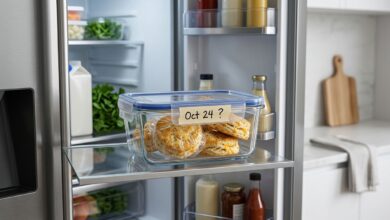
- Label with the date so there’s no guesswork the next day
Raw Fish in the Fridge: The 7-Day Question
The idea that raw fish is safe in the refrigerator for 7 days is incorrect. It’s one of the more persistent food safety misconceptions, possibly because some vacuum-sealed fresh fish packaging lists a “sell-by” date 5–7 days after packaging — but that date refers to when the fish should be sold, not how long it’s safe to eat after opening.
FDA guidelines for raw fish storage:
- Fresh raw fish fillets: 1–2 days in the refrigerator
- Fresh whole fish: 1–2 days
- Smoked fish (commercially packaged, unopened): up to the use-by date on the package, typically 2–3 weeks refrigerated
- Smoked fish (opened): 3–5 days
- Raw shrimp (shell on or off): 1–2 days
- Raw oysters, clams, mussels (live): 3–5 days in a breathable container (never submerged in still water or in an airtight container — they need airflow)
- Raw lobster (live): 1–2 days maximum; best cooked the day of purchase
- Raw scallops: 1–2 days
- Frozen fish (thawed): cook within 1–2 days; do not refreeze after thawing
If you have raw fish that’s been in the refrigerator for 4–5 days, it is not safe to cook and eat regardless of smell. Certain bacteria — including some strains of Listeria monocytogenes — are odor-neutral in their early growth stages. The smell test is a useful secondary check but not a reliable primary safety measure for raw fish. Time and temperature are the reliable variables.
How Long Can Cooked Fish Last Without Refrigeration?
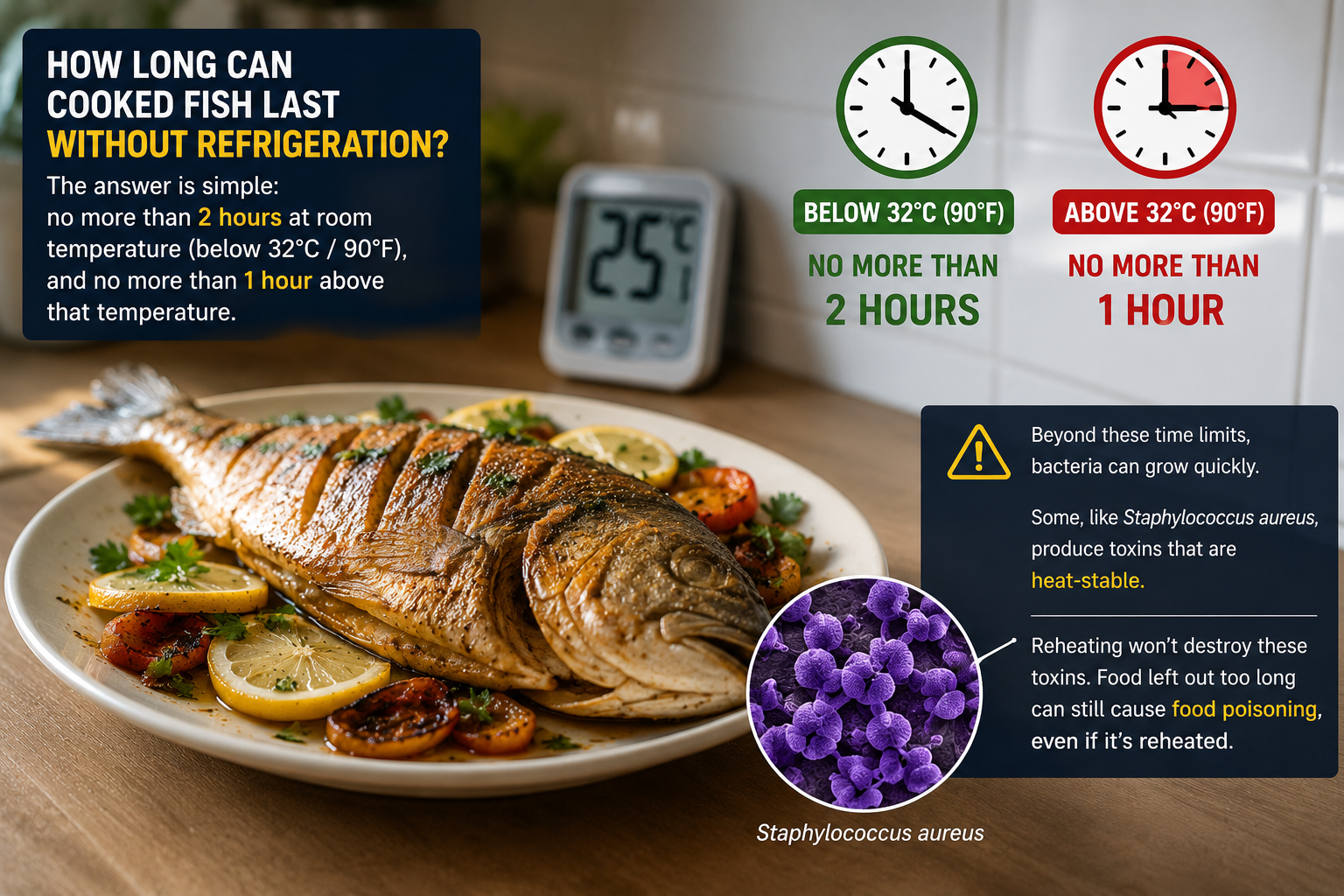
The answer here is more definitive than people want it to be: no more than 2 hours at room temperature (below 32°C / 90°F), and no more than 1 hour above that temperature.
Beyond these thresholds, the risk of bacterial growth — including toxin-producing bacteria like Staphylococcus aureus — climbs rapidly. The critical point about Staph toxins specifically is that they are heat-stable. Reheating food that has been contaminated long enough to produce toxins does not eliminate those toxins, even at temperatures that kill the bacteria themselves. This means that cooked seafood left out for 4 hours, then reheated and eaten, can still cause food poisoning even though the reheating killed the active bacteria — the toxins were produced during the room-temperature exposure period and survived the heat.
Practical contexts where this matters:
- Buffets and outdoor dining: Cooked seafood on a buffet line or a backyard table during summer needs active temperature management — either held hot at above 60°C (140°F) or chilled below 4°C (40°F). Neither “warm” nor “room temperature” is a safe holding zone for longer than 2 hours combined.
- Picnics and packed lunches: Cooked shrimp, crab, or fish in a lunch bag without ice packs reaches ambient temperature within 30–60 minutes. Insulated bags with ice extend the safe window by keeping contents below 4°C, but only if the ice is still actively cooling when the food is consumed.
- Camping or travel without refrigeration: There is no practical way to safely store cooked seafood without refrigeration beyond 2 hours. Dried, smoked, or commercially canned seafood are the appropriate shelf-stable formats.
How Many Days Is Leftover Fried Fish Safe to Eat?
Deep-fried fish follows the same 3–4 day refrigeration guideline as other cooked seafood from a safety standpoint. The safety window and the quality window, however, diverge more sharply here than with most other cooked fish preparations.
Safety: 3–4 days refrigerated. The frying process kills surface and internal bacteria effectively. The concern after frying is recontamination during handling, cooling, and storage — the same concern that applies to any cooked seafood.
Quality: Degrades significantly after day 1. This is the practical reality of deep-fried fish that most food safety guides don’t address. The crispy breading or batter that makes fried fish worth eating absorbs moisture from the fish fillet during refrigeration. Within 24 hours, the coating softens from a crisp exterior to a somewhat leathery or soggy layer, and the texture of the fish itself changes as it continues to steam internally from its own moisture content.
Reheating fried fish effectively:
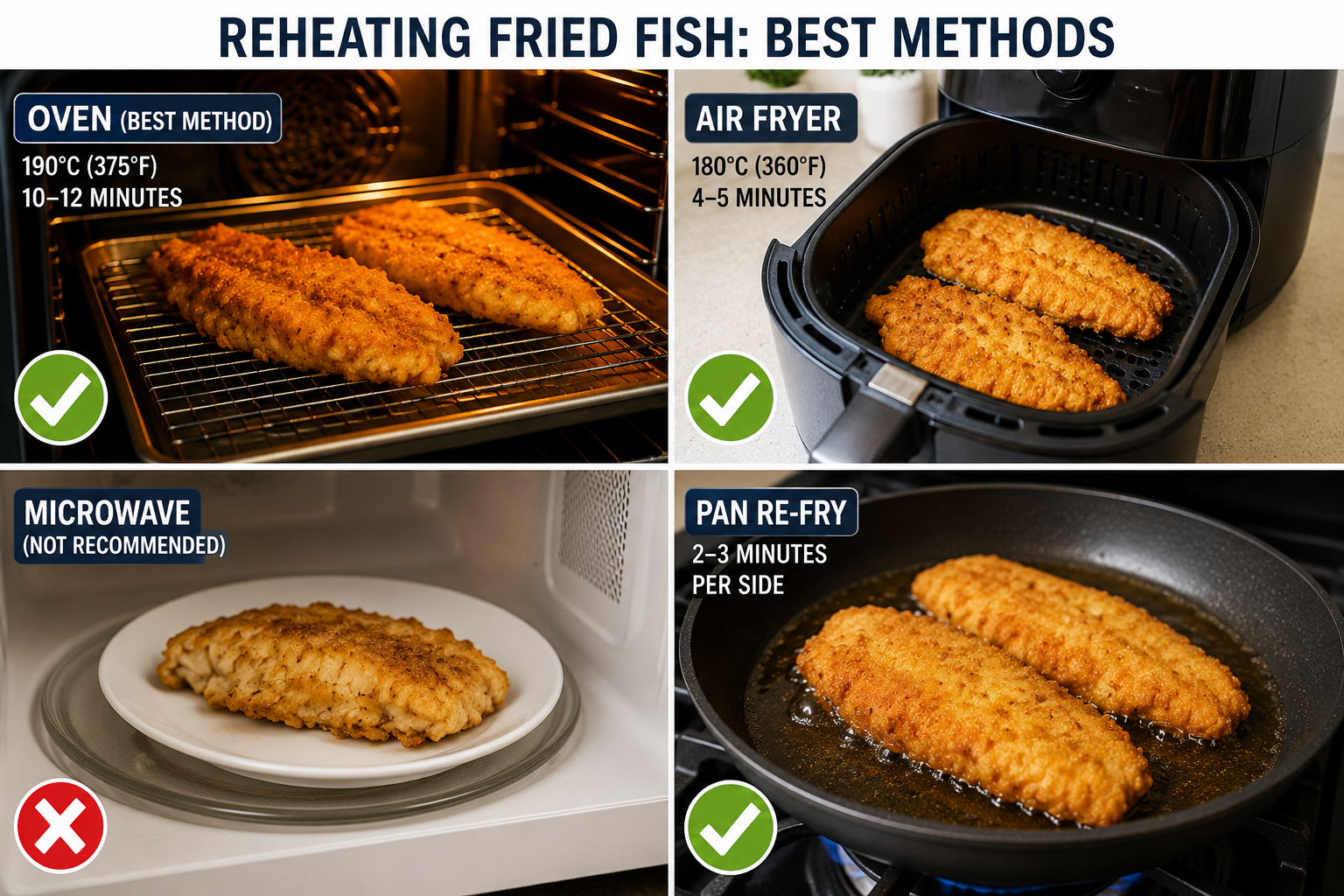
- Oven (best method): Preheat to 190°C (375°F), place fish on a wire rack over a baking sheet (not a flat tray — the rack allows air circulation underneath), and heat for 10–12 minutes. The direct dry heat re-crisps the coating better than any other method.
- Air fryer (excellent for small portions): 180°C (360°F) for 4–5 minutes. This replicates the original frying environment to a degree that an oven can’t fully match.
- Microwave (not recommended): Microwaves heat through steam, which makes the coating softer rather than crispier. The result is edible but texturally far inferior.
- Pan re-fry: A small amount of neutral oil in a hot skillet, 2–3 minutes per side. This restores some exterior crispness but adds additional fat.
Quality judgment by day:
- Day 1 (same day, refrigerated): Still good, coating slightly softer but acceptable
- Day 2: Noticeably softer coating, best reheated via oven or air fryer
- Day 3: Coating substantially softened; fish itself may develop slight fishiness; safe but quality diminished
- Day 4: Safety limit; quality often significantly compromised; discard if any off smell or slimy texture
Can Deep Fried Fish Be Preserved Without Refrigeration?
For short durations — under 2 hours — yes. Beyond that: no, not safely.
This is a question that often comes up in contexts like outdoor events, food trucks without cold storage, or home cooking situations where refrigerator space is limited. The answer is the same regardless of the framing: cooked fish (fried or otherwise) cannot be safely held at room temperature for more than 2 hours without active temperature control.
The frying process itself does not create a “preserved” state that resists bacterial growth after the fact. The hot oil creates a brief surface-sterilization effect during cooking, but once the fried fish cools below 60°C (140°F), it enters the bacterial growth danger zone. The oil coating and breading do not prevent microbial recontamination or slow bacterial proliferation at room temperature.
Historical preservation methods that some people conflate with modern fried fish include:
- Escabeche (pickled fried fish): A Spanish, Latin American, and Filipino preparation where fried fish is submerged in a vinegar-acid marinade with aromatics immediately after frying. The acid (pH below 4.6) inhibits most bacterial growth. When properly acidified, escabeche can be stored refrigerated for up to 5–7 days. The acid, not the frying, is the preservation mechanism.
- Traditional fish smoking: Hot or cold smoking combined with salt creates conditions that extend shelf life significantly compared to plain cooked fish. Smoked fish is a fundamentally different product from fried fish, and its preservation depends on salt concentration, water activity reduction, and smoke compounds — not heat alone.
- Canned fish: The canning process achieves sterilization through sustained high-temperature pressure cooking. This is industrial preservation and not replicable in home kitchens with any degree of food safety reliability.
None of these methods apply to standard deep-fried fish. If you’re in a situation where refrigeration isn’t available, the correct answer is to cook only what will be eaten within 2 hours.
How to Tell if Cooked Seafood Has Gone Bad
Even within the 3–4 day window, individual storage conditions, container quality, and refrigerator temperature variation can affect safety. These sensory indicators reliably signal that cooked seafood has crossed the line regardless of how many days have passed:
Smell: A strong, sour, or distinctly “off” ammonia-like odor is the most reliable spoilage indicator. Cooked fish should smell mild and clean, or faintly like the sea. A pungent, sharp, or sulphuric smell indicates active bacterial decomposition and the food should be discarded immediately. Note: some spoilage bacteria are odor-neutral early in their growth cycle — the absence of smell does not confirm safety, but the presence of a bad smell definitively confirms spoilage.
Texture: Cooked fish should be firm to the touch. Slimy, mushy, or excessively wet surfaces indicate bacterial breakdown of muscle proteins. This is especially apparent in shrimp, which become slick rather than slightly tacky when spoiled.
Color: Discoloration — grey, brown, or yellowish hues in areas that were previously white, pink, or orange — indicates protein degradation or fat oxidation. Some color change is normal over 2–3 days (particularly in fatty fish), but pronounced discoloration warrants discarding.
Taste: If smell and texture seem borderline, a small taste will confirm. Spoiled seafood has a distinctly sour or “off” flavor that is immediately noticeable. Spit it out and discard the remainder.
When in doubt, throw it out is not empty advice. The economic cost of discarding leftover seafood is always lower than the physical cost of foodborne illness, which in the case of shellfish-related pathogens like Vibrio vulnificus can be medically serious, particularly for immunocompromised individuals.
Storing Cooked Seafood Correctly: Practical Rules That Extend Quality
The 3–4 day guideline assumes correct storage. These practices keep cooked seafood at the upper end of that window:
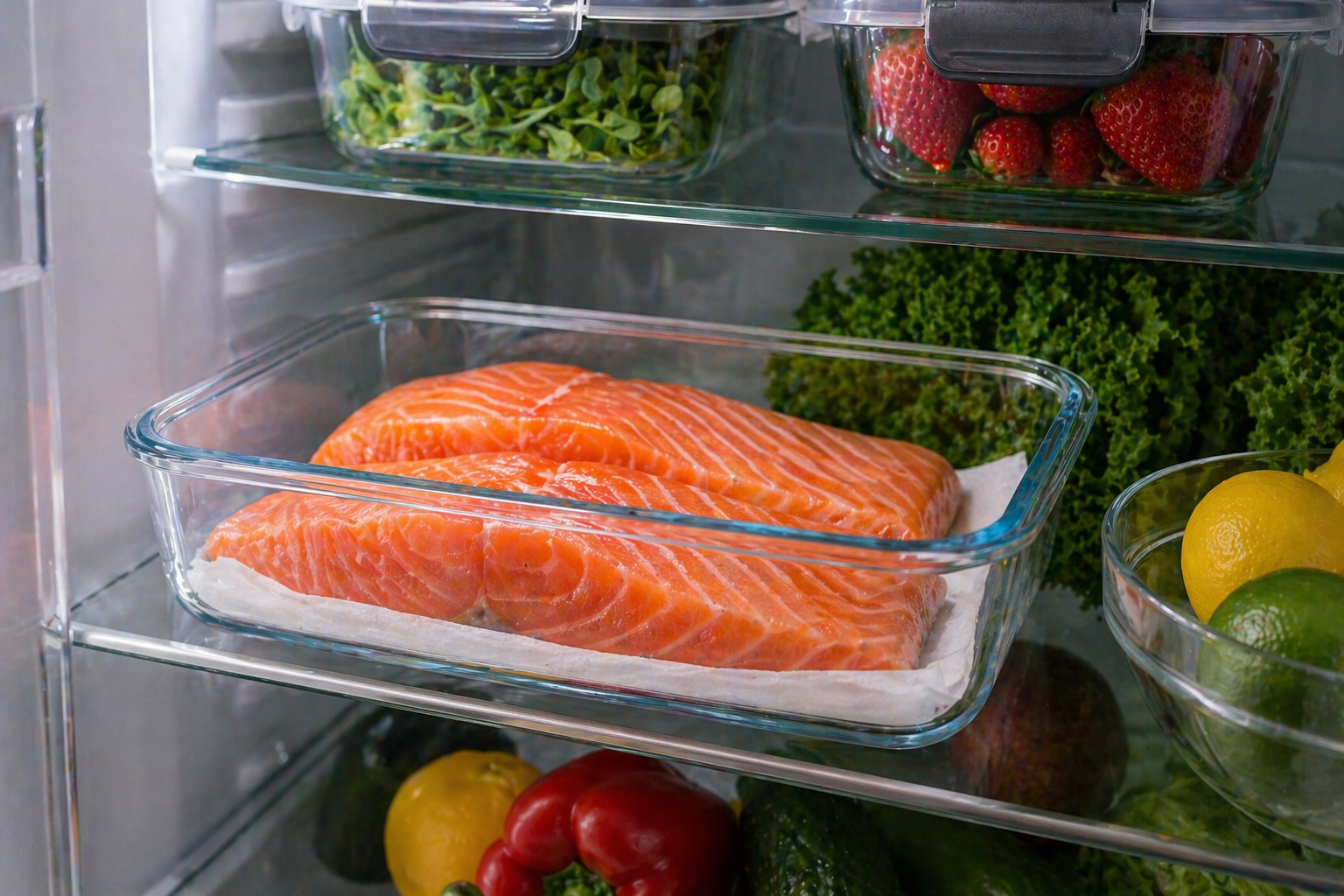
Airtight containers are non-negotiable. Exposed cooked seafood in the refrigerator does three things: absorbs other food odors, dries out on exposed surfaces, and cross-contaminates other items if raw seafood is stored nearby. An airtight container with a proper lid addresses all three.
Shallow containers cool faster. A deep container of cooked seafood takes considerably longer to reach refrigerator temperature in the center than a shallow one. The longer the core stays warm, the more bacterial growth occurs before safe storage temperature is reached. Use shallow containers (2–3 inch depth maximum) or divide large batches into multiple smaller containers.
Keep refrigerator temperature at or below 4°C (40°F). This is worth verifying with an inexpensive refrigerator thermometer. Many household refrigerators run warmer than their dial settings indicate, particularly in summer or when the door is opened frequently. A refrigerator holding at 6–7°C instead of 4°C meaningfully shortens safe storage duration.
Store on lower shelves, away from the door. The coldest, most stable temperature zone in most refrigerators is the lower central area away from the door. The door compartments experience the most temperature fluctuation during opening and closing.
Don’t store raw and cooked seafood near each other. Raw seafood carries a higher bacterial load than cooked. Cross-contamination through dripping or proximity can reintroduce pathogens to cooked food that was otherwise safe.
Frequently Asked Questions
How long is cooked seafood good in the fridge? Cooked seafood is safe to eat for 3 to 4 days when refrigerated at or below 4°C (40°F) in an airtight container. This applies to cooked fish fillets, shrimp, lobster, crab, scallops, and shellfish. Quality — particularly texture and flavor — often begins to decline before the 4-day mark, especially for fatty fish and fried preparations.
Is it safe to eat cooked fish left in the fridge overnight? Yes — cooked seafood refrigerated overnight (8–12 hours) is well within the 3–4 day safe storage window, provided it was refrigerated within 2 hours of cooking. The key variable is how quickly it was cooled after cooking, not how long overnight storage lasted.
How long can raw fish stay in the fridge safely? Raw fish fillets and whole fish should be used within 1–2 days of refrigeration. The 7-day figure sometimes seen on vacuum-sealed packages refers to the sell-by date from the point of packaging under controlled conditions, not the safe storage window after the package is opened or the fish is removed from packaging.
How long can cooked fish sit out before it’s unsafe? Cooked fish should not sit at room temperature for more than 2 hours — 1 hour if the environment is above 32°C (90°F). After this threshold, bacterial growth in the danger zone (4°C–60°C) reaches levels that pose real foodborne illness risk, and toxins produced by certain bacteria (particularly Staphylococcus aureus) cannot be eliminated by reheating.
How many days is leftover fried fish safe to eat? Leftover deep-fried fish is safe for up to 3–4 days refrigerated, but quality drops substantially after day 1–2. The coating softens from moisture absorption and the fish itself can develop off-flavors by day 3. From a safety standpoint the 3–4 day window holds; from a quality standpoint, eating within 48 hours and reheating in an oven or air fryer produces the best result.
Can you store fried fish without refrigeration? Not beyond 2 hours at room temperature. The frying process does not create a preserved state — it kills bacteria present during cooking but does not prevent recontamination or growth after the fish cools. Escabeche (acid-pickled fried fish) is a traditional preparation that does extend shelf life significantly, but the preservation comes from the vinegar acidity, not the frying.
What happens if you eat cooked fish that’s been in the fridge for 5 days? Eating cooked fish at the 5-day mark is outside the safe storage window and carries real risk of foodborne illness from bacterial growth. Symptoms of fish-related foodborne illness include nausea, vomiting, diarrhea, and abdominal cramping, typically appearing within 1–24 hours of consumption depending on the pathogen. If the fish smelled fine and you’ve already eaten it, monitor for symptoms and seek medical attention if they develop, particularly if you are elderly, pregnant, immunocompromised, or have underlying health conditions.
How do I know if cooked seafood is still good? The primary indicators: smell (should be mild, not sour, ammonia-like, or strongly “off”), texture (firm, not slimy or mushy), and color (no significant grey, yellow, or brown discoloration). Within the 3–4 day window, these checks are a useful secondary confirmation. Past 4 days, discard regardless of appearance and smell.
Conclusion
Seafood spoils faster than most other proteins because of its high water activity, cold-adapted enzymes, and susceptibility to bacterial recontamination after cooking. The 3–4 day refrigeration window for cooked seafood is not conservative padding — it reflects real bacterial growth dynamics in a moist protein environment at refrigerator temperatures.
The most consequential variables are not how many days have passed but how the seafood was handled before refrigeration. Food that spent 3 hours at room temperature before going into the fridge has a shorter effective safety window than food refrigerated within 30 minutes of cooking. For fried fish specifically, quality degrades faster than safety — the 3–4 day window holds for safety, but eating within 48 hours and reheating properly preserves what made the dish worth saving in the first place.
Raw fish at 7 days in the fridge is not safe regardless of how it smells. Cooked fish outside refrigeration for more than 2 hours is not safe regardless of how it looks. When either of those situations applies, the food should be discarded. The foodborne illness risk from spoiled seafood — particularly shellfish — is real and can be medically serious in vulnerable populations. The sensory checks (smell, texture, color) are useful confirmations within the safe window, but they are not reliable replacements for time and temperature management.