How to Reheat a Seafood Boil — The Complete Guide to Keeping Texture, Flavor, and Food Safety

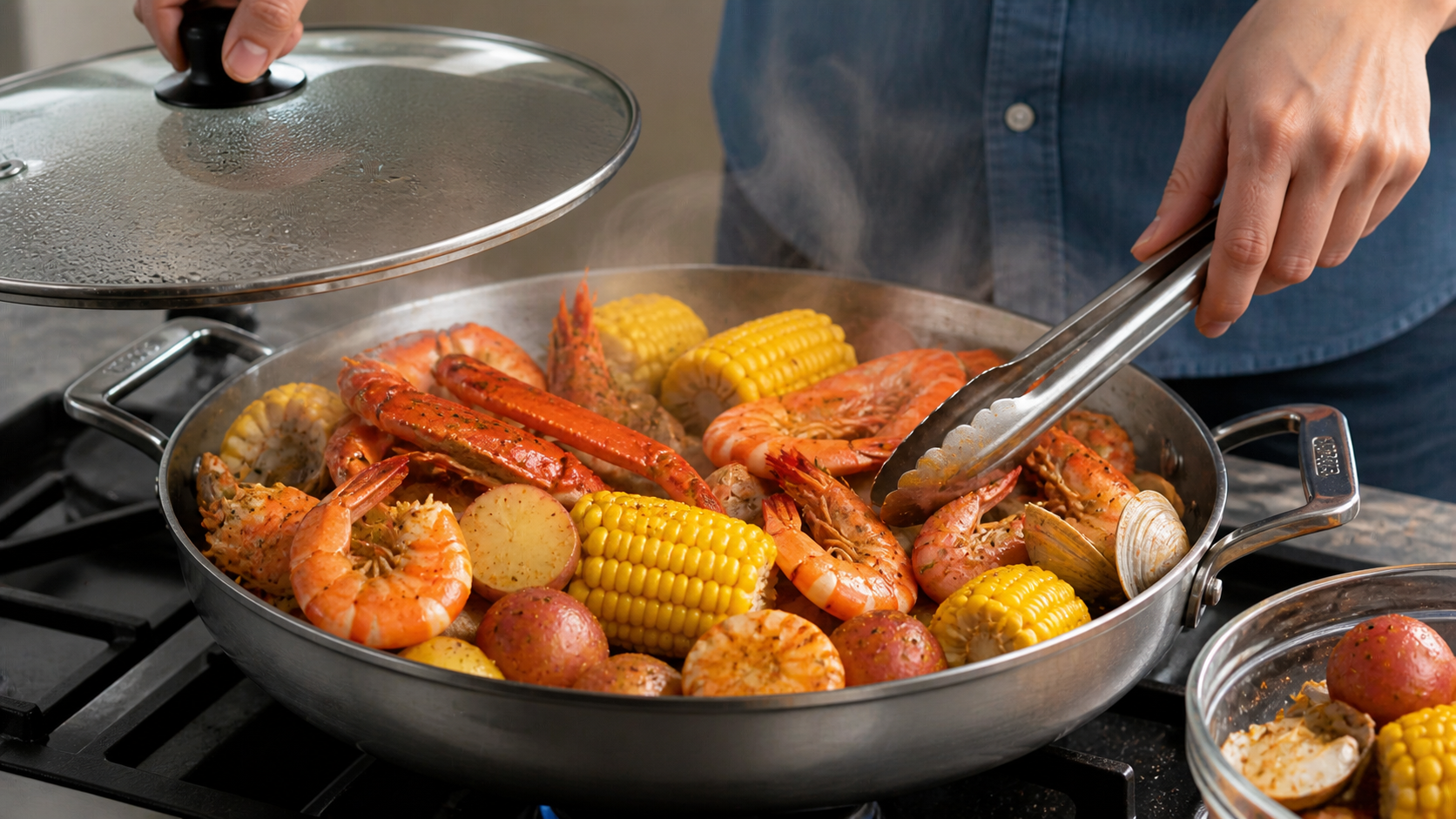
How to Reheat a Seafood Boil — Everything From Temperature Science to Leftover Transformation
Reheating a seafood boil is one of the more technically demanding leftover situations in home cooking — not because it’s complicated, but because the margin for error is genuinely small. The same shrimp, crab, and crawfish that were perfectly tender the first time can turn rubbery in under two minutes of excessive heat. The potatoes and corn that reheated beautifully can make you think the seafood is done when it isn’t.
The good news is that knowing how to reheat a seafood boil correctly comes down to one principle applied across every method: low and slow, with moisture protection. The methods that fail — and the one method that consistently fails regardless of technique — all violate some version of this principle.
This guide covers five reheating methods with exact temperatures and timings, the critical food safety requirements for leftover seafood, why the microwave works when done right and fails when done wrong, the boil-in-bag specific approach, creative ways to repurpose leftovers instead of reheating, and a clear nutrition section on what a reheated boil still delivers.
Why Seafood Reheating Is Different From Reheating Other Proteins
Most people understand intuitively that reheating chicken or beef is forgiving — you can put a piece of roasted chicken back in the oven at 350°F for 20 minutes and it comes out fine. Seafood doesn’t work that way, and understanding why prevents the most common reheating failures.
Protein structure and heat sensitivity: Fish and shellfish proteins denature — unfold and restructure — at significantly lower temperatures than red meat. Collagen in beef and pork converts to gelatin at sustained high heat, keeping braised meats moist even after extended cooking. Shellfish has almost no collagen; its proteins firm and tighten quickly when exposed to heat beyond their initial cooking temperature. A shrimp that was cooked to 145°F and is then reheated to 165°F has essentially been cooked twice — and the second cook produces the rubber-band texture that makes people swear off leftover seafood.
The moisture loss problem: Shellfish flesh is high in moisture — approximately 75–80% water. When reheated in a dry environment (uncovered microwave, dry oven, dry skillet), that moisture evaporates rapidly through the surface. What’s left is a dense, dry protein with none of the sweet, briny juiciness that made the original boil satisfying. Every effective reheating method works by slowing or preventing this moisture escape.
The flavor concentration benefit: Here’s the contrarian angle most guides miss. A seafood boil reheated properly the next day often tastes better than it did fresh. The Cajun spices, butter, garlic, and seasoning liquid that coated every component have been absorbing into the flesh overnight. The capsaicin and fat-soluble flavor compounds in the seasoning have deeper penetration after 12 hours in the refrigerator. Properly reheated, day-two seafood boil frequently outperforms the original in depth of flavor — which is worth protecting with good technique.
Food Safety First — What You Must Know Before Reheating
Seafood is among the highest-risk proteins for foodborne illness, and leftover seafood requires specific handling that differs from most other refrigerated foods.
Storage window: Refrigerate leftovers within 2 hours of cooking. Store in airtight containers — not in the pot, not loosely covered on a plate. Consume within 1–2 days for optimal safety and quality. The USDA allows cooked seafood 3–4 days in the refrigerator, but at the 3–4 day mark, the quality of shellfish has declined significantly even if it’s technically safe.
Reheat once only: Only reheat seafood boil once. Do not reheat, eat partially, refrigerate again, and reheat a second time. Each heat cycle increases bacterial risk and degrades texture further. Portion out only what you plan to eat immediately.
The 165°F requirement for leftovers: While fresh seafood is safe at 145°F, the USDA recommends reheating all previously cooked food to an internal temperature of 165°F (74°C) to eliminate any bacteria that may have grown during refrigeration. Use an instant-read thermometer in the thickest piece of shellfish to confirm this before serving.
Smell and texture check before reheating: Check the seafood boil before reheating. If any component smells off — sharply fishy, sour, ammonia-like — discard it. If shrimp or other shellfish has a slimy or sticky texture, discard it. The best reheating process in the world cannot fix seafood that has already gone bad. Never apply heat in hopes of “cooking off” the problem — contaminated shellfish remains unsafe after reheating.
Do not thaw at room temperature: If the seafood boil was frozen, thaw it in the refrigerator overnight. Never thaw shellfish at room temperature — the temperature danger zone (40–140°F) allows rapid bacterial growth on the thawed outer layers while the center remains frozen.
Method 1 — Stovetop Steaming (Best Overall Method)
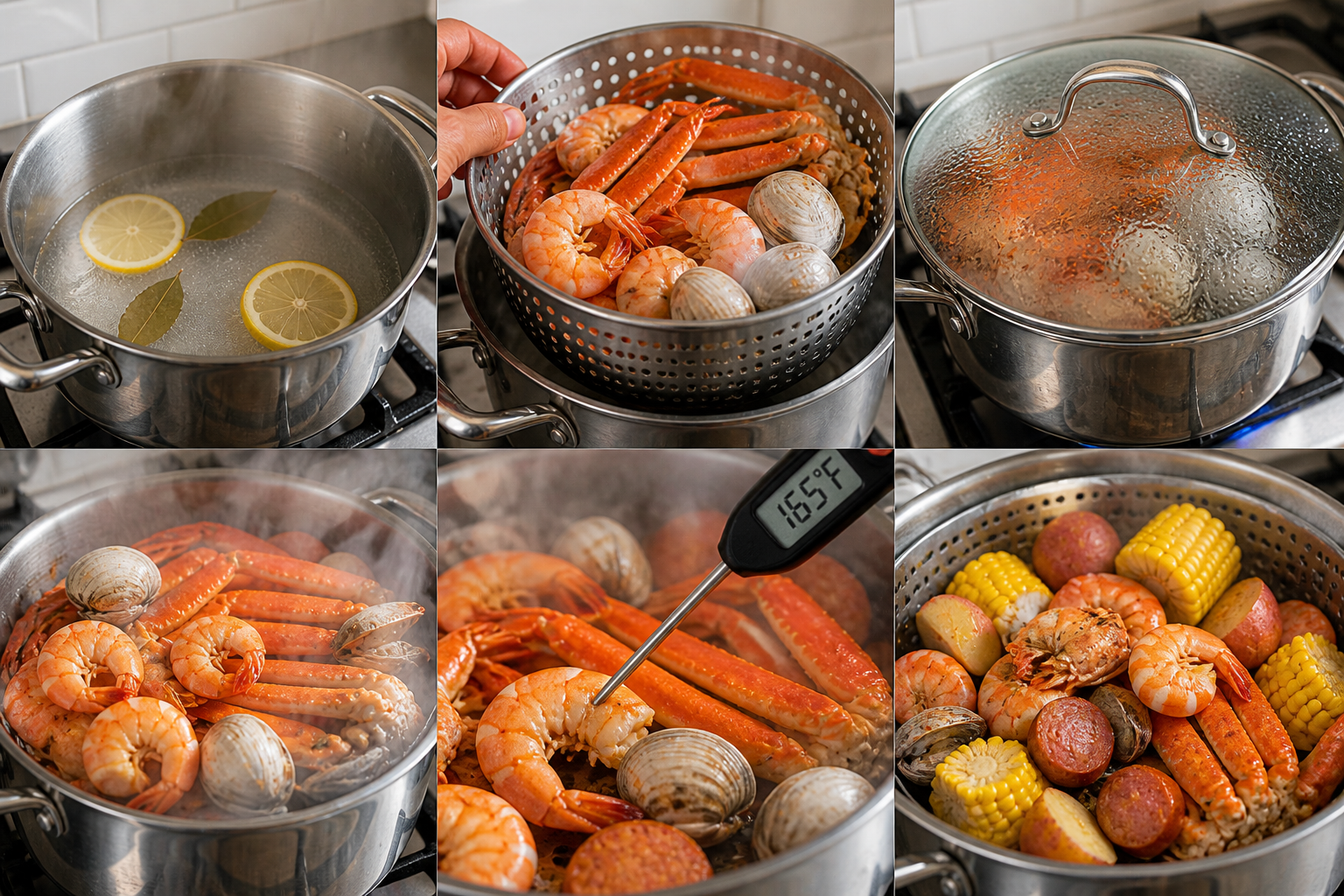
Steaming is the reheating method that most closely approximates how the seafood was originally cooked. Gentle, moist, even heat — with zero direct contact between the shellfish and boiling water that would waterlog the already-cooked proteins.
What you need: A pot, 1–2 inches of water in the bottom, and a steamer basket or metal colander that sits above the water line.
Step-by-step:
- Fill a pot with 1–2 inches of water. Add a squeeze of lemon, a bay leaf, or a tablespoon of the original boil seasoning to the water — this will infuse the steam with flavor rather than plain water vapor.
- Bring water to a simmer — not a rolling boil. Aggressive boiling creates steam that’s too hot and uneven.
- Place shellfish in the steamer basket in a single layer if possible. Don’t stack crab legs three deep and expect even heating — they’ll steam unevenly.
- Cover the pot with a tight-fitting lid. Steam for 5–8 minutes for shrimp and smaller shellfish, 8–12 minutes for crab legs and larger pieces.
- Check internal temperature — 165°F at the thickest point.
- Add corn, potatoes, and sausage to the steamer for the final 3–4 minutes. These components reheat faster than shellfish and don’t benefit from extended steam time.
Why it works: Steam carries heat evenly around every surface of the shellfish simultaneously. Unlike a skillet where the bottom receives direct heat, steaming heats circumferentially. The moisture from the steam replaces what the shellfish surface loses during the process, keeping the protein tender rather than dry.
The seasoning steam upgrade: Add 2 tablespoons of the original boil liquid (if you saved it) to the steaming water rather than plain water. The evaporating seasoned liquid coats the shellfish with a light layer of Cajun spice aroma as it reheats. This single technique recovers more of the original flavor character than any post-reheat seasoning addition.
Method 2 — Oven With Foil (Best for Large Batches)
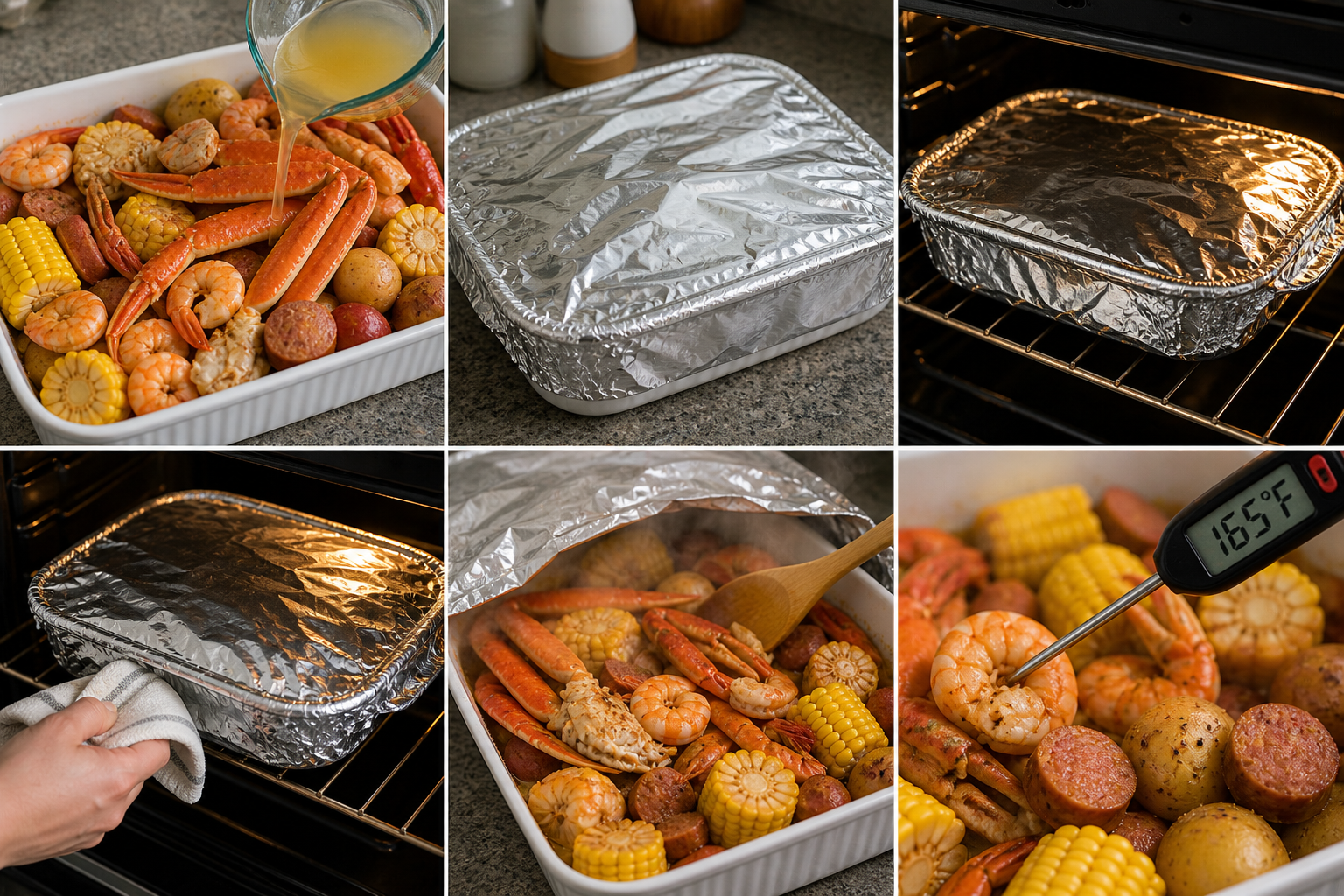
The oven method is the most hands-off approach and works best when you’re reheating a full portion — 2–4 servings — where stovetop steaming would require multiple batches.
Step-by-step:
- Preheat oven to 275–300°F (135–150°C). This is the critical temperature range — higher than 300°F dries out shellfish through the foil and toughens the proteins significantly.
- Transfer the seafood boil into an oven-safe baking dish in an even layer. Don’t pile components on top of each other.
- Add 2–3 tablespoons of liquid — water, seafood broth, the reserved boil liquid, or a mix of butter and water — to the bottom of the dish. This creates steam inside the foil and prevents surface drying.
- Cover very tightly with aluminum foil. Press the foil edges down against the rim of the dish — any steam escape point reduces the effectiveness of the moisture trap.
- Bake for 15–20 minutes. Stir halfway through, recovering with foil immediately.
- Check internal temperature before serving — 165°F at the thickest shellfish piece.
The potato and corn timing issue: Potatoes and corn reheat more slowly than shellfish in the oven. Cut refrigerated potatoes into smaller pieces before oven reheating — quarter them if they were halves originally. This ensures they heat through in the same timeframe as the shellfish rather than lagging behind.
What not to do: Do not preheat the oven to 350°F and above and expect good results with shellfish. At 350°F, the interior of foil-covered shrimp can reach overcooked temperatures before the dish has been in the oven 10 minutes.
Method 3 — Skillet on Stovetop (Fastest, Highest Risk)
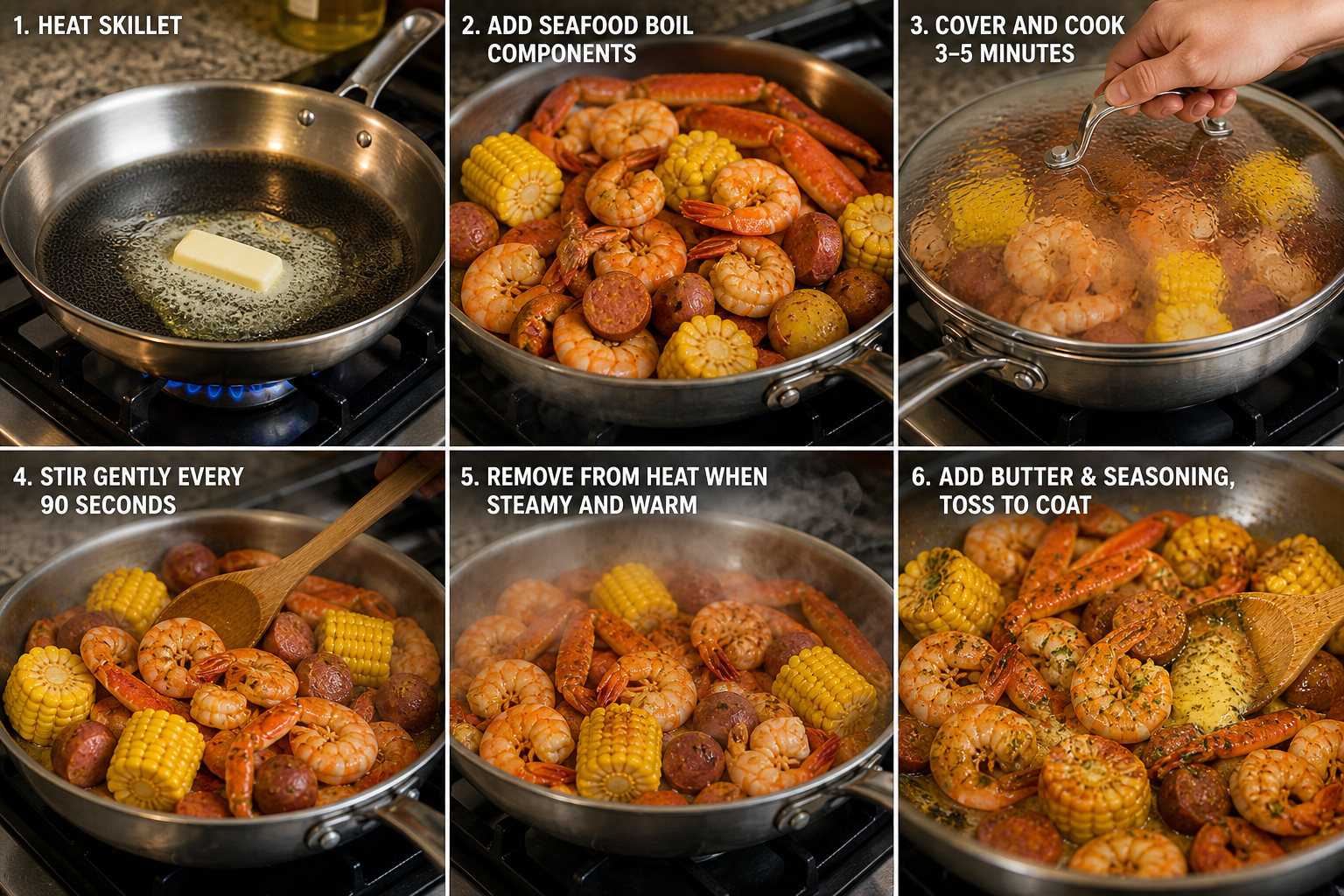
The skillet method is the fastest way to reheat a seafood boil that doesn’t involve the microwave, but it requires the most attention. The direct heat surface means the line between “just reheated” and “overcooked again” is measured in seconds.
Step-by-step:
- Heat a wide, heavy skillet over medium-low heat — not medium, not medium-high. The objective is gradual warming, not searing.
- Add 2 tablespoons of butter or a splash of seafood broth to the pan. This provides the moisture buffer that prevents the shellfish from touching a dry hot surface and cooking on contact.
- Add the seafood boil components to the skillet in a single layer. Do not overcrowd.
- Cover the skillet with a lid. The trapped steam does most of the heating work.
- Cook 3–5 minutes, lifting the lid to gently stir every 90 seconds.
- Once steam is visible and the shellfish feels warm throughout, remove from heat. Carryover heat continues working for 60–90 seconds after the pan is off the burner.
The butter-rebuild technique: This is where the skillet method offers something the other methods don’t. While the boil reheats, you can add 1 tablespoon of fresh butter and a pinch of your Cajun seasoning to the pan and toss to coat — effectively rebuilding the sauce that the original boil had. This works particularly well with shrimp and crawfish, which absorb the rebuildand butter quickly. It’s the difference between reheated leftovers and a genuinely appetizing second meal.
Caution with crab legs: Crab legs in the shell don’t reheat well in a skillet because the shell insulates the meat from the pan heat. Use the steaming method for crab and lobster still in their shells. The skillet method is most effective for shelled shrimp, crawfish tails, and already-extracted crab meat.
Method 4 — Boil-in-Bag Method (Bag-Specific Scenario)
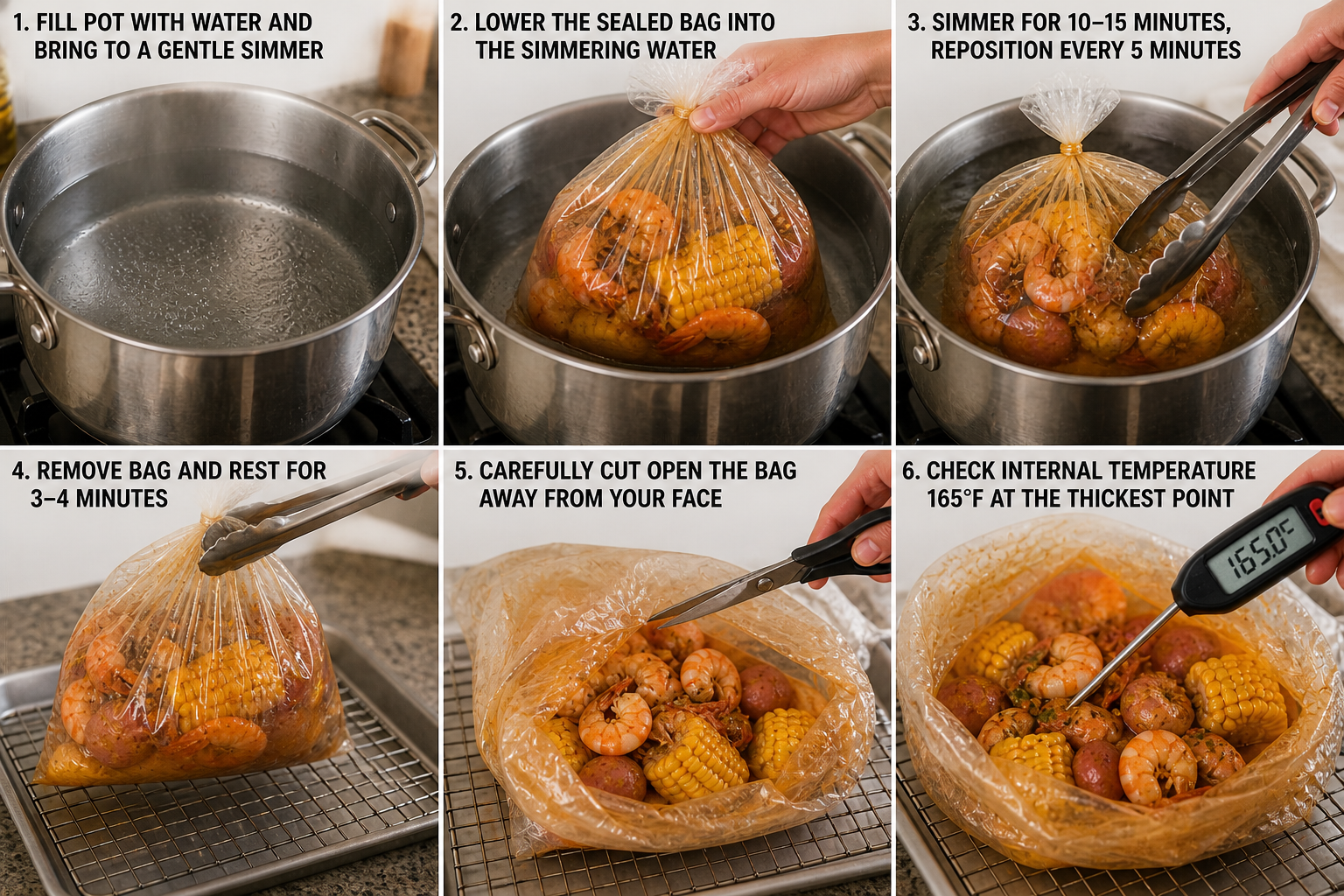
Many restaurant seafood boils arrive in oven or heat-safe bags — this is increasingly common with takeout-style and Cajun restaurant orders. If your leftover is still in the original bag, this method is straightforward.
Step-by-step:
- Fill a large pot with enough water to fully submerge the sealed bag.
- Bring the water to a gentle simmer — medium heat. Not a rolling boil, which creates turbulence that can puncture the bag.
- Carefully lower the sealed bag into the simmering water. Use tongs or a slotted spoon. If the bag floats, weigh it down with a heat-safe plate.
- Simmer for 10–15 minutes. Every 5 minutes, use tongs to gently reposition the bag so heat distributes evenly through all contents.
- Remove the bag with tongs and rest on a cooling rack or plate for 3–4 minutes before opening — the interior contents will be extremely hot.
- Cut open the top of the bag carefully and away from your face — the escaping steam is scalding.
Checking doneness through the bag: Use a thermometer probe through the bag wall at the thickest piece of shellfish. Target 165°F. If the bag is foil-lined, feel through the bag — it should feel uniformly hot with no cool sections.
The bag method limitation: This only works if the bag is certified heat-safe or oven-safe. Do not submerge regular zip-lock bags or thin plastic storage bags in simmering water — they can melt, leach plastic compounds into the food, or split open. If you’ve transferred leftovers into a standard storage bag, use the stovetop steam method or oven method instead.
Method 5 — Microwave (Fastest, Most Volatile)
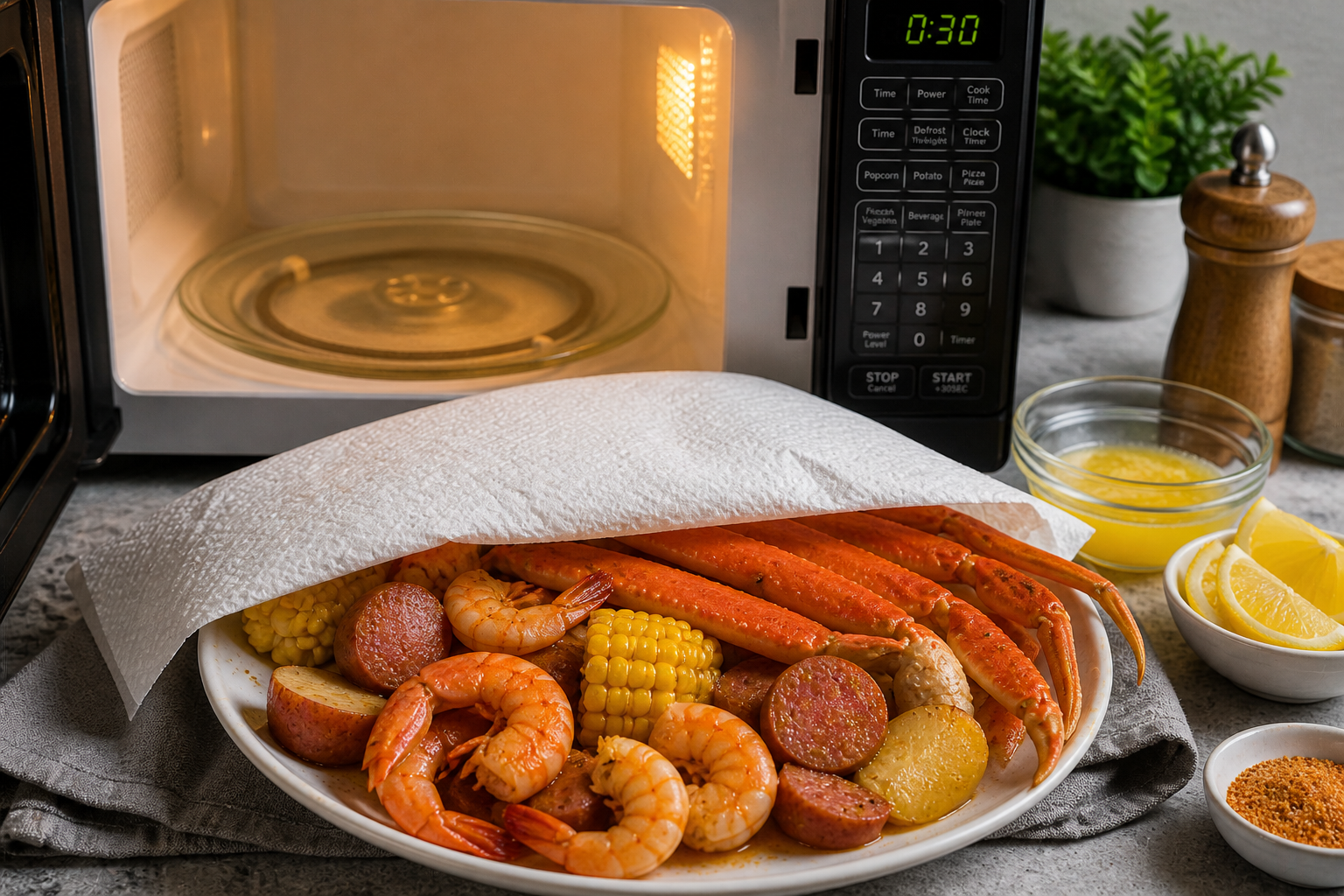
The microwave is the most controversial method for reheating a seafood boil, and the debate is legitimate. Done correctly — low power, short intervals, moisture protection — it produces acceptable results. Done incorrectly — full power, covered bowl, 3 minutes — it produces shellfish with the texture of pencil erasers.
The critical difference from other microwave reheating: Use 50% power, not full power. Most microwaves run at 1,000 watts at full power. At 50%, you’re reheating at 500 watts — slow enough that the exterior of the shellfish doesn’t overheat while the interior catches up. At full power, the exterior of a shrimp reaches overcooked temperature in 30–45 seconds.
Step-by-step:
- Remove seafood from any bags or foil packaging. Do not microwave in non-microwave-safe containers.
- Place non-seafood components first — potatoes, corn, sausage — on a microwave-safe plate in a single layer. Add 1 tablespoon of water or reserved boil liquid to the plate bottom.
- Microwave the vegetables at 50% power for 60 seconds. Remove.
- Add seafood on top of or alongside the vegetables.
- Cover with a damp paper towel — this creates a micro-steam environment that protects surface moisture.
- Microwave at 50% power in 30-second intervals, checking after each interval.
- Total time for a single serving of mixed shellfish: approximately 1.5–2.5 minutes.
- Rest 2 minutes before eating — microwave heating is uneven, and resting allows temperature to equalize throughout.
Why the plate beats the bowl: A plate allows food to spread in a single layer, which heats more evenly than a bowl where food stacks. A bowl is acceptable when a plate isn’t available, but rotate the bowl 90 degrees after each microwave interval.
Transforming Leftovers Instead of Reheating — Three Smart Uses
If the seafood boil has been in the fridge for two days and you’re uncertain whether straightforward reheating will produce the texture you want, transforming it into a different dish often produces better results than reheating it as-is.
-
Seafood Boil Fried Rice
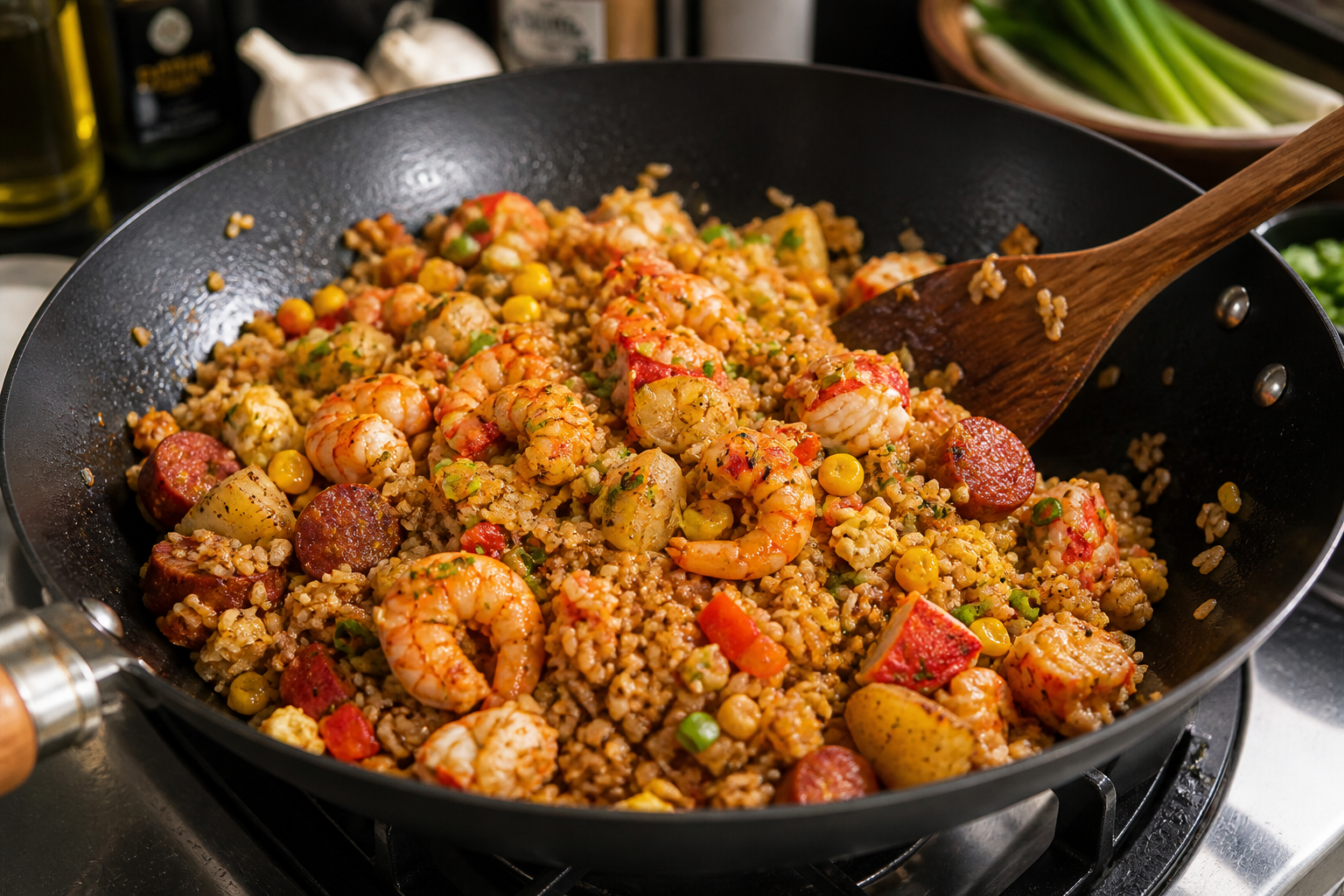
Remove shellfish from shells and dice roughly. Strip corn kernels from cobs. Dice potatoes into small cubes. Stir-fry all components in a hot wok with 2 tablespoons of sesame oil, 3 cloves minced garlic, and cold day-old rice. Add 2 tablespoons soy sauce and 1 tablespoon of the original boil seasoning. Fold in 2 beaten eggs. The high-heat wok cooks the components quickly and the transformation into fried rice makes texture changes from refrigeration irrelevant — slightly firmer shellfish holds up better in fried rice than it does reheated on its own.
-
Seafood Boil Pasta
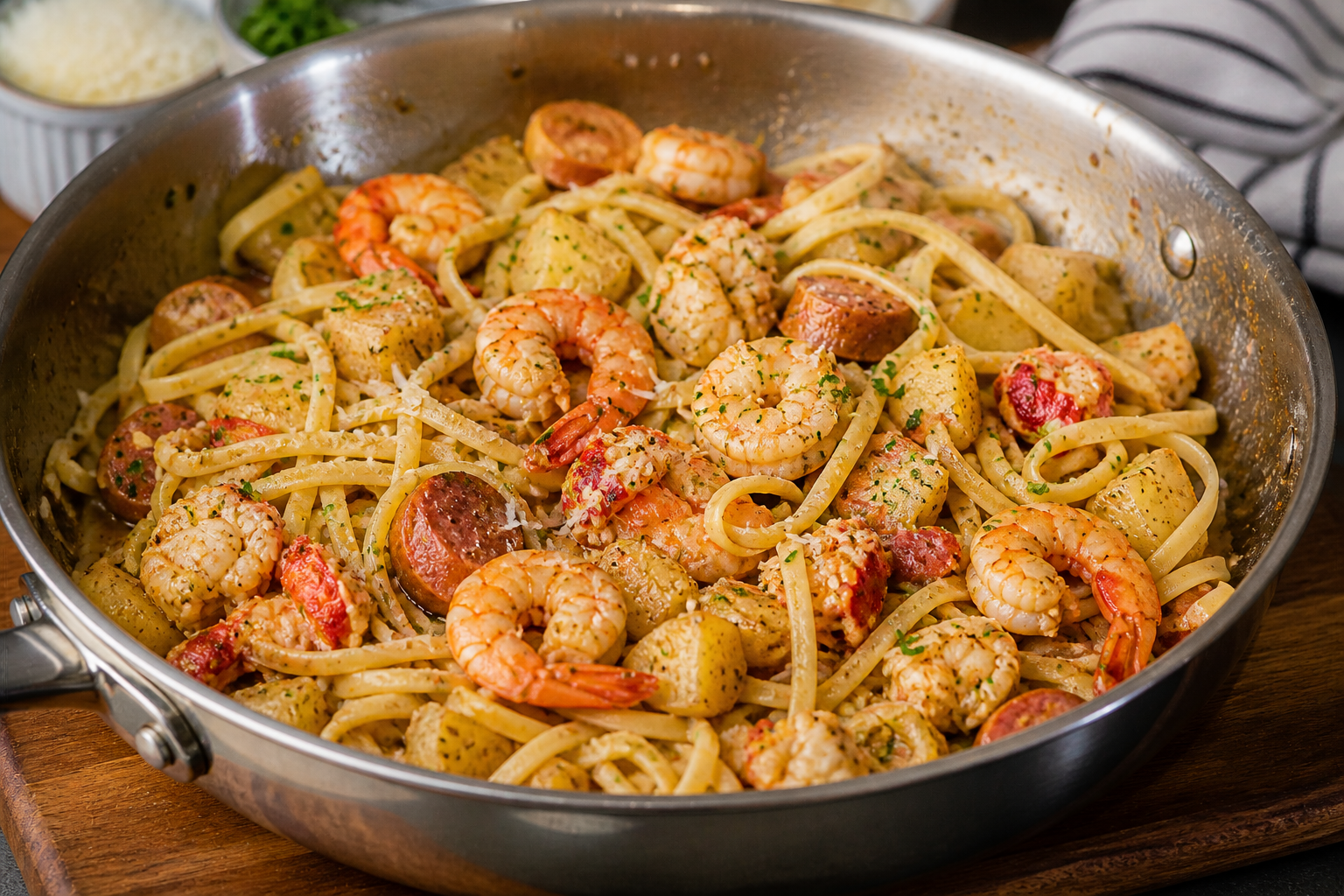
Roughly chop leftover shellfish. Sauté with butter, garlic, and a splash of white wine for 3–4 minutes over medium heat. Toss with cooked linguini or fettuccine and a handful of grated Parmesan. Add the diced leftover potatoes to thicken the sauce. The pasta transformation works because the starch in the pasta absorbs the Cajun seasoning still on the shellfish, distributing the flavors evenly without requiring you to reheat the shellfish to high temperature.
-
Seafood Boil Tacos
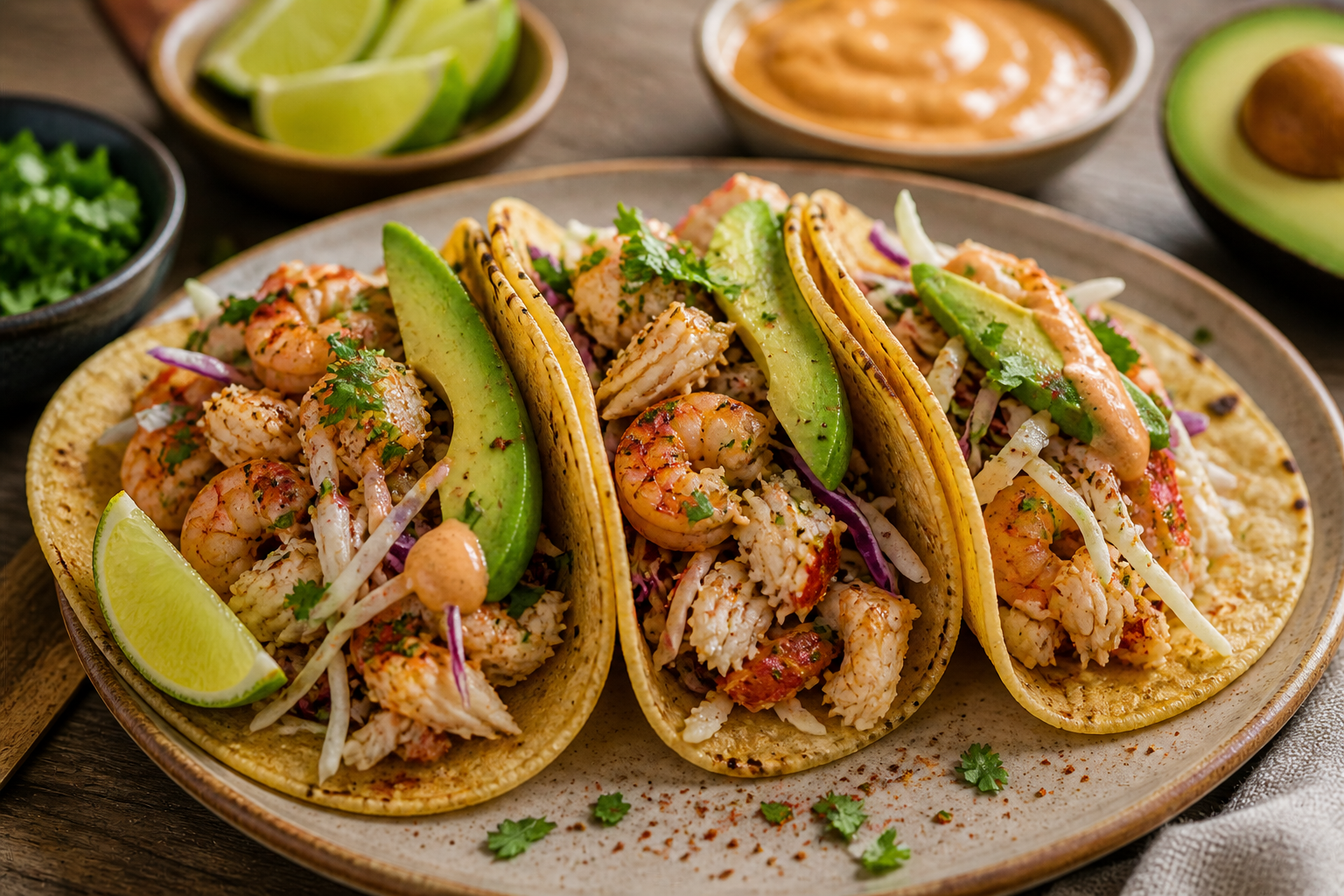
Chop shellfish and warm very briefly in a dry pan just enough to take the chill off — 60 seconds maximum. Serve in warm corn tortillas with a simple cabbage slaw (shredded cabbage, lime juice, salt), sliced avocado, and a drizzle of hot sauce or chipotle crema. The corn tortillas and fresh garnishes carry the meal — the shellfish only needs to be warm, not reheated all the way through, making this the lowest-risk transformation for any shellfish that’s a day or two old.
Nutrition — What a Reheated Seafood Boil Still Delivers
(~350 words remaining)
Reheating seafood does not significantly diminish its nutritional value when done correctly. The concern would be if reheating caused extensive moisture loss (which reduces nutrient concentration slightly) or if the heat exposure broke down heat-sensitive vitamins. In practice, the temperatures and timings used in proper seafood boil reheating are low enough that nutrient loss is minimal.
Per typical 6 oz serving of reheated mixed shellfish (shrimp, crab, crawfish):
Nutrient |
Amount |
Notes |
| Protein | 28–35g | Essentially unchanged after reheating |
| Omega-3 (EPA + DHA) | 200–400mg | Minimal loss through reheating |
| Vitamin B12 | ~2–4mcg | 80–160% DV — heat-stable in shellfish |
| Selenium | ~40–55mcg | ~73–100% DV — highly heat-stable |
| Zinc | ~3–5mg | ~27–45% DV — heat-stable mineral |
| Iodine | ~60–90mcg | Supports thyroid function |
| Sodium | 400–900mg+ | Varies significantly by seasoning |
| Calories | ~180–250 kcal | Before butter addition |
The butter variable: Most reheating methods recommend adding butter during the process. A tablespoon of butter adds approximately 100 calories and 11g of fat — significant when multiplied across a full serving. The butter is worth using for texture and flavor protection, but it’s worth noting that a reheated seafood boil with added butter during reheating may contain meaningfully more calories than the original serving depending on how generously it was applied.
Sodium management: The original boil seasoning was high in sodium. Leftovers carry that sodium load, and any added seasoning during reheating compounds it further. For people managing blood pressure or sodium intake, reheat without adding extra Cajun seasoning — the existing seasoning already on the food is sufficient for flavor.
Frequently Asked Questions About Reheating Seafood Boil
Q: What is the best method to reheat a seafood boil? Stovetop steaming is the best all-around method — it heats evenly, protects moisture through steam contact, and is adaptable to any quantity. The oven foil method is the best for large batches. For speed, the microwave at 50% power with a damp paper towel covering is acceptable for single servings.
Q: Can I reheat a seafood boil in the bag? Yes, if the bag is certified heat-safe or oven-safe. Submerge the sealed bag in gently simmering water (not a rolling boil) for 10–15 minutes, repositioning every 5 minutes for even heat distribution. Do not use this method with regular storage bags or thin plastic — use the stovetop steam or oven method for food stored in standard containers.
Q: How long does leftover seafood boil last in the fridge? 1–2 days for best quality. The USDA guideline for cooked seafood is 3–4 days refrigerated, but the texture and safety margin of shellfish degrades faster than those of land proteins. Eat within 48 hours for the best outcome.
Q: Can I reheat a seafood boil more than once? No. Reheat only the portion you plan to eat immediately. Re-reheating cooked shellfish creates compounding food safety risks and degrades the texture to an unacceptable level. Portion out before reheating and return unused portions to the refrigerator only if they haven’t been reheated.
Q: Why does my reheated shrimp turn rubbery? Almost always because the heat was too high or the time was too long. Shrimp proteins firm rapidly at elevated temperatures — they’ve already been cooked once to doneness. Any additional significant cooking (rather than gentle warming) triggers the rubbery texture. Fix: use the lowest effective heat, add moisture protection, and reduce your reheating time by 30%.
Q: Should I remove shellfish from their shells before reheating? For skillet and microwave methods: yes — shells insulate the meat and cause uneven heating. For steaming and oven methods: shells are fine and actually provide some protection against drying. For crab legs specifically, shells provide enough insulation that the meat inside stays moist even when the exterior is fully hot.
Q: Can I freeze leftover seafood boil and reheat later? Yes, with caveats. Freeze in an airtight container within 2 hours of the original cook. Shellfish freezes for up to 3 months. Thaw overnight in the refrigerator before reheating — never at room temperature. Expect some texture change after freezing; shrimp and crawfish hold up better through freezing than crab, which can become watery after thawing. The seafood boil transformation recipes (fried rice, pasta, tacos) are particularly well-suited for frozen-and-thawed shellfish.
Q: What temperature should reheated seafood boil reach? 165°F (74°C) internal temperature at the thickest piece of shellfish — the USDA’s recommended minimum for reheating all previously cooked foods. This is higher than the original cook temperature of 145°F because the leftover food has been through a refrigeration cycle where slow bacterial growth is possible.
Conclusion — The One Thing That Separates Good Reheated Seafood From Rubbery Leftovers
Learning how to reheat a seafood boil comes down to protecting two things simultaneously: moisture and heat level. Every method that works does so by keeping moisture in contact with the shellfish while keeping the heat low enough not to overcook proteins that are already fully cooked.
Steaming does this through direct vapor contact. The oven foil method does it by trapping steam inside a sealed environment. The skillet method does it with butter and a lid. The microwave does it with a damp paper towel and 50% power. When any of these moisture or heat controls are removed — uncovered microwave at full power, dry oven at 350°F, a hot dry skillet without liquid — the result is predictably tough, dry shellfish.
The nutritional delivery of a properly reheated seafood boil is nearly identical to the original — protein, omega-3s, B12, selenium, and zinc are all heat-stable at the temperatures involved in careful reheating. The caloric addition from butter used during reheating is the main variable to watch for those tracking intake.
And if the shellfish is two days old and you’re not confident about the texture outcome of direct reheating, transform it. Seafood boil fried rice, pasta, and tacos are all superior applications for day-two shellfish than a mediocre reheat — and they’re genuinely satisfying meals in their own right.