Crab Rangoon Nutrition Value: Calories, Carbs, Protein & Healthy Alternatives
Crab Rangoon Nutrition Value: What You Are Actually Eating

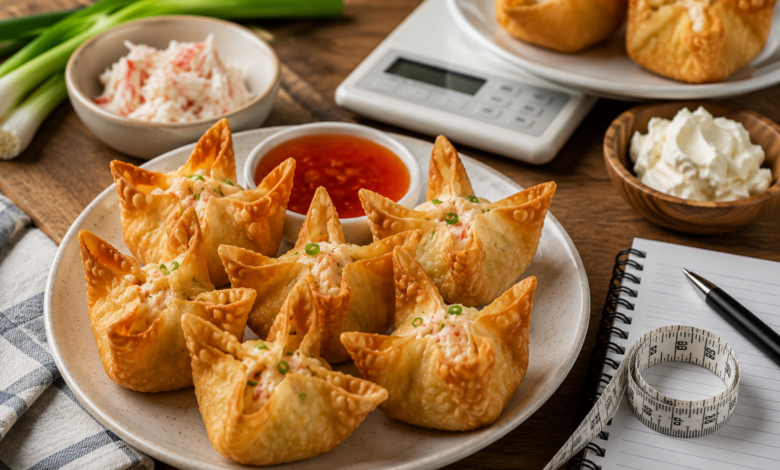
Walk into almost any Chinese-American restaurant and crab rangoon is on the appetizer menu — those crispy, golden-fried wontons stuffed with a cream cheese and crab filling that somehow became one of the most ordered starters in the country. But the moment you start paying attention to what you eat, the question shifts: what is the actual crab rangoon nutrition value, and is this something worth eating regularly or only occasionally?
Full Nutritional Breakdown Per Piece
The numbers below reflect a standard restaurant-style fried crab rangoon, roughly 1 oz (28–30g) per piece:
Nutrient |
Per 1 Piece |
Per 4 Pieces |
Per 8 Pieces |
| Calories | 65–80 kcal | 260–320 kcal | 520–640 kcal |
| Total Fat | 3.5–5 g | 14–20 g | 28–40 g |
| Saturated Fat | 1.5–2.5 g | 6–10 g | 12–20 g |
| Carbohydrates | 6–8 g | 24–32 g | 48–64 g |
| Protein | 2–3 g | 8–12 g | 16–24 g |
| Sodium | 85–110 mg | 340–440 mg | 680–880 mg |
| Cholesterol | 15–20 mg | 60–80 mg | 120–160 mg |
| Sugar | 0.5–1 g | 2–4 g | 4–8 g |
Key takeaway: A 4-piece serving — typical for an appetizer — lands around 280–320 calories with 14–20 grams of fat and 24–32 grams of carbohydrates. Protein stays relatively low at 8–12 grams.
The calorie range varies because restaurant portions differ significantly. A small appetizer piece from a fast-casual spot runs closer to 55–65 calories. A larger, generously stuffed wonton from a full-service restaurant can hit 90–100 calories per piece.
The Difference Between Fried and Baked Crab Rangoon
Frying adds approximately 25–40% more calories compared to baking. A baked version of the same recipe:
- Calories: 45–55 per piece (vs. 65–80 fried)
- Fat: 2–3 g per piece (vs. 3.5–5 g fried)
- Carbohydrates: largely unchanged
- Protein: unchanged
The wonton wrapper contributes most of the carbohydrate content regardless of cooking method. What changes with baking is primarily the absorbed oil — which is where most of the extra fat and calories in the fried version comes from.
What Goes Into Crab Rangoon: Ingredients and Their Nutritional Role
Standard Crab Rangoon Ingredients
Most recipes — whether restaurant or homemade — use a version of this base:
- Wonton wrappers: Thin wheat-flour sheets, each wrapper is 20–25 calories with roughly 4–5g of carbs. The wrapper is the primary carbohydrate source.
- Cream cheese: The dominant filling ingredient. An 8 oz block has about 800 calories, nearly 80g of fat, and minimal carbs. Cream cheese drives the calorie and saturated fat content more than any other ingredient.
- Imitation crab (surimi): This is the reality most restaurants use. Surimi is made from processed white fish (typically pollock) mixed with starch, sugar, and crab flavoring. It adds carbohydrates and sodium, not the lean protein profile of real crab.
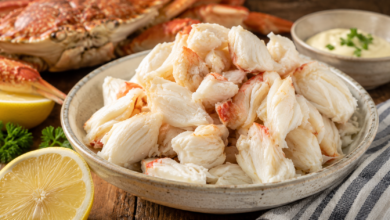
- Real crab meat: Some upscale versions use actual lump or claw crab meat. Real crab is much leaner — about 82 calories per 3 oz with 17g protein — and changes the nutritional profile meaningfully.
- Green onions, garlic powder, Worcestershire: Minor contributors, mostly for flavor.
The nutritional gap between imitation crab and real crab is not trivial. Surimi contains added sugar, modified food starch, and roughly double the carbohydrates per ounce compared to genuine crab meat. If you are watching blood sugar or carb intake, that distinction matters.
Step-by-Step Classic Crab Rangoon Recipe
Ingredients (Makes approximately 24 pieces)
- 24 wonton wrappers (3-inch square)
- 8 oz cream cheese, softened to room temperature
- 6 oz imitation crab or real lump crab meat, finely chopped
- 2 green onions, finely sliced
- 1 tsp Worcestershire sauce
- 1 tsp garlic powder
- ½ tsp onion powder
- Salt and white pepper to taste
- Neutral oil for frying (vegetable, canola, or peanut)
- Small bowl of water (for sealing wontons)
Method
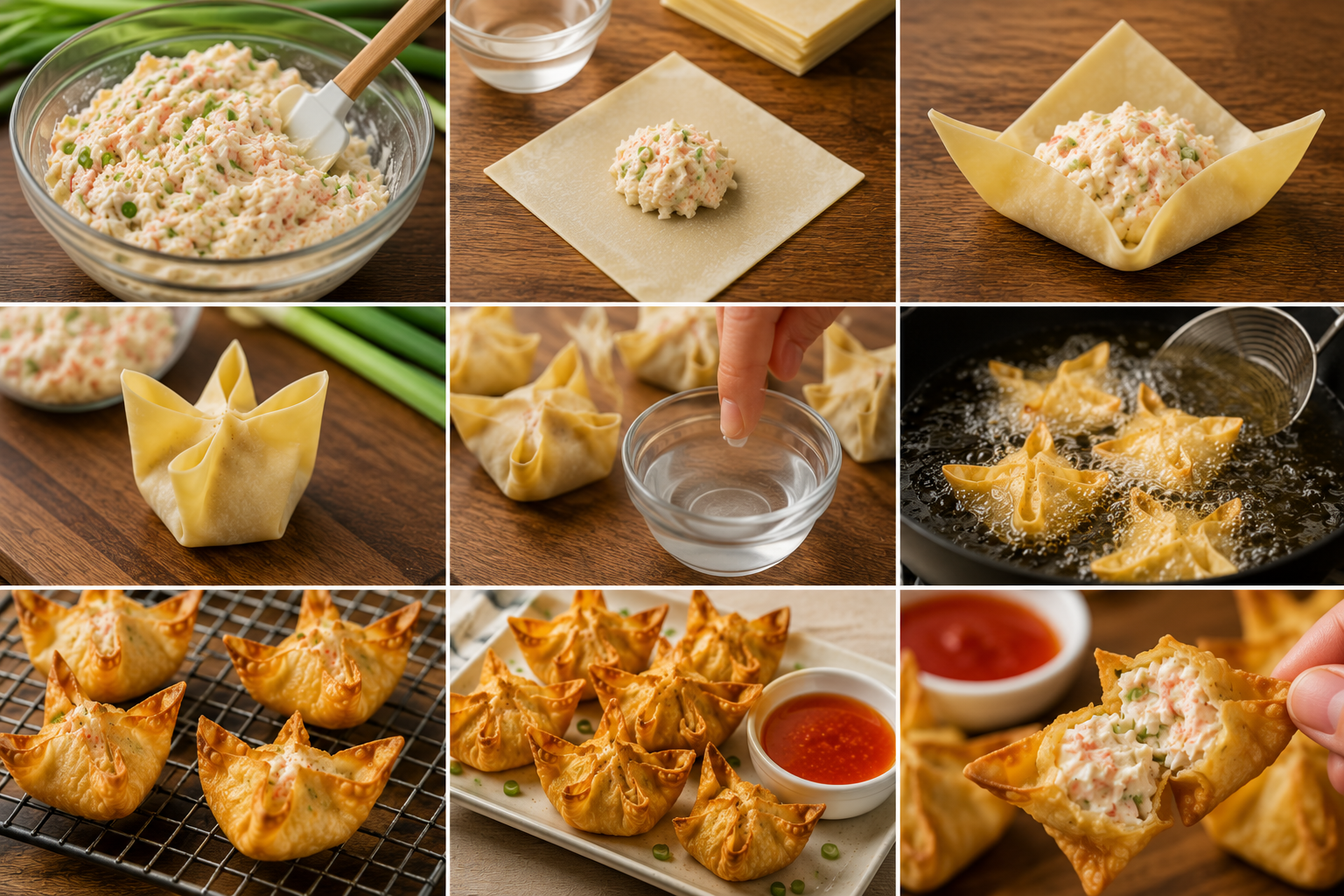
- Make the filling. Beat cream cheese until smooth and lump-free. Fold in crab meat, green onions, Worcestershire, garlic powder, and onion powder. Taste and adjust seasoning. The filling should be slightly salty since the wonton wrapper has no seasoning.
- Fill the wontons. Lay a wonton wrapper on a clean surface. Place 1 teaspoon of filling in the center — do not overfill or the wrapper will burst during frying. Dip your finger in water and run it along all four edges.
- Seal the wontons. Bring two opposite corners together over the filling to form a triangle and press firmly to seal. Then bring the remaining two corners up to meet at the center, pressing all edges closed. Alternatively, gather all four corners together and pinch into a pouch — this is the classic restaurant fold.
- Fry the rangoons. Heat oil in a deep pan or wok to 350°F (175°C). Fry in small batches — 4 to 6 at a time — for 2–3 minutes until golden brown, turning once. Do not crowd the pan; this drops the oil temperature and makes the wrappers greasy rather than crisp.
- Drain. Transfer to a wire rack or paper towel-lined plate immediately. Serve within 10 minutes — the filling softens and the shell loses its crunch quickly after frying.
Sweet and sour sauce, duck sauce, or chili crisp are the natural pairings. Each tablespoon of sweet and sour sauce adds approximately 30–40 calories and 7–9g of carbohydrates, worth accounting for if you are tracking intake.
Crab Rangoon Nutrition in Specific Dietary Contexts
Is Crab Rangoon High in Carbs?
Yes, by most standards. The wonton wrapper is made from refined wheat flour, contributing 6–8 grams of carbohydrates per piece. For a 4-piece serving, that is 24–32 grams of carbs — roughly equivalent to 1.5–2 slices of white bread. The surimi filling adds additional starch. So while crab rangoon is not bread or pasta, it is not low-carb either.
Can a Diabetic Eat Crab Rangoon?
This requires honest context rather than a blanket yes or no. The refined flour wrappers and added sugar in surimi can contribute to blood glucose spikes, especially when eaten in larger portions. The cream cheese filling, being high in fat and very low in sugar, actually blunts the glycemic response to some degree — fat slows digestion and glucose absorption.
For people managing type 2 diabetes, a 2-piece portion at the start of a mixed meal is a very different situation than eating 8 pieces as a standalone snack. The glycemic impact is real but manageable with portion awareness. Baked versions using low-carb wrappers (or no wrappers) reduce the carbohydrate load significantly.
Do crab rangoons spike blood sugar? The refined wrapper does cause a moderate glycemic response. Real crab meat instead of surimi and a baked or air-fried method brings this down.
Can I Eat Crab Rangoon on Keto?
Standard crab rangoon is not keto-compatible. Each piece carries 6–8 grams of net carbs from the wonton wrapper alone. A 4-piece serving hits roughly 25–30g net carbs, which exceeds many people’s daily carb limit on a strict ketogenic protocol.
However, keto-friendly versions exist using cucumber cups, mini bell pepper halves, or homemade parmesan crisps as the vessel instead of wonton wrappers. The filling itself — cream cheese, crab, green onion — is naturally low in carbs and fits keto macros well.
Is Crab Rangoon Bad for Cholesterol?
Crab rangoon contains two cholesterol-relevant ingredients: egg yolks in wonton wrappers and real crab (if used). However, dietary cholesterol’s direct impact on blood cholesterol is far more individualized than older nutrition guidance suggested. The saturated fat in cream cheese is a more consistent concern for LDL cholesterol than the cholesterol itself.
Per 4-piece serving, expect 60–80 mg of cholesterol. For context, the American Heart Association guideline suggests keeping dietary cholesterol moderate but focuses more attention on saturated and trans fat. The 10–20g of fat per 4-piece serving — a meaningful chunk of which is saturated — is the bigger variable for cardiovascular risk.
Is Crab Rangoon High in Protein?
Relative to its calorie count, no. A 4-piece serving delivers around 8–12 grams of protein at 280–320 calories. That is not an efficient protein-to-calorie ratio. Lean proteins like chicken breast, Greek yogurt, or actual crab meat deliver significantly more protein per calorie. If you are eating crab rangoon for protein, the math does not support that approach.
Is Crab Rangoon Made from Real Crab?
At most restaurants — especially chain and fast-casual spots — no. The filling is almost universally made with surimi, which is processed whitefish shaped and flavored to mimic crab. It is safe, widely consumed, and tastes similar in a cooked cream cheese filling, but it is not genuine crab. Higher-end restaurants and homemade versions may use real lump or claw crab meat, which changes the flavor noticeably and improves the protein quality.
Healthy Version: Low-Calorie Crab Rangoon Recipe
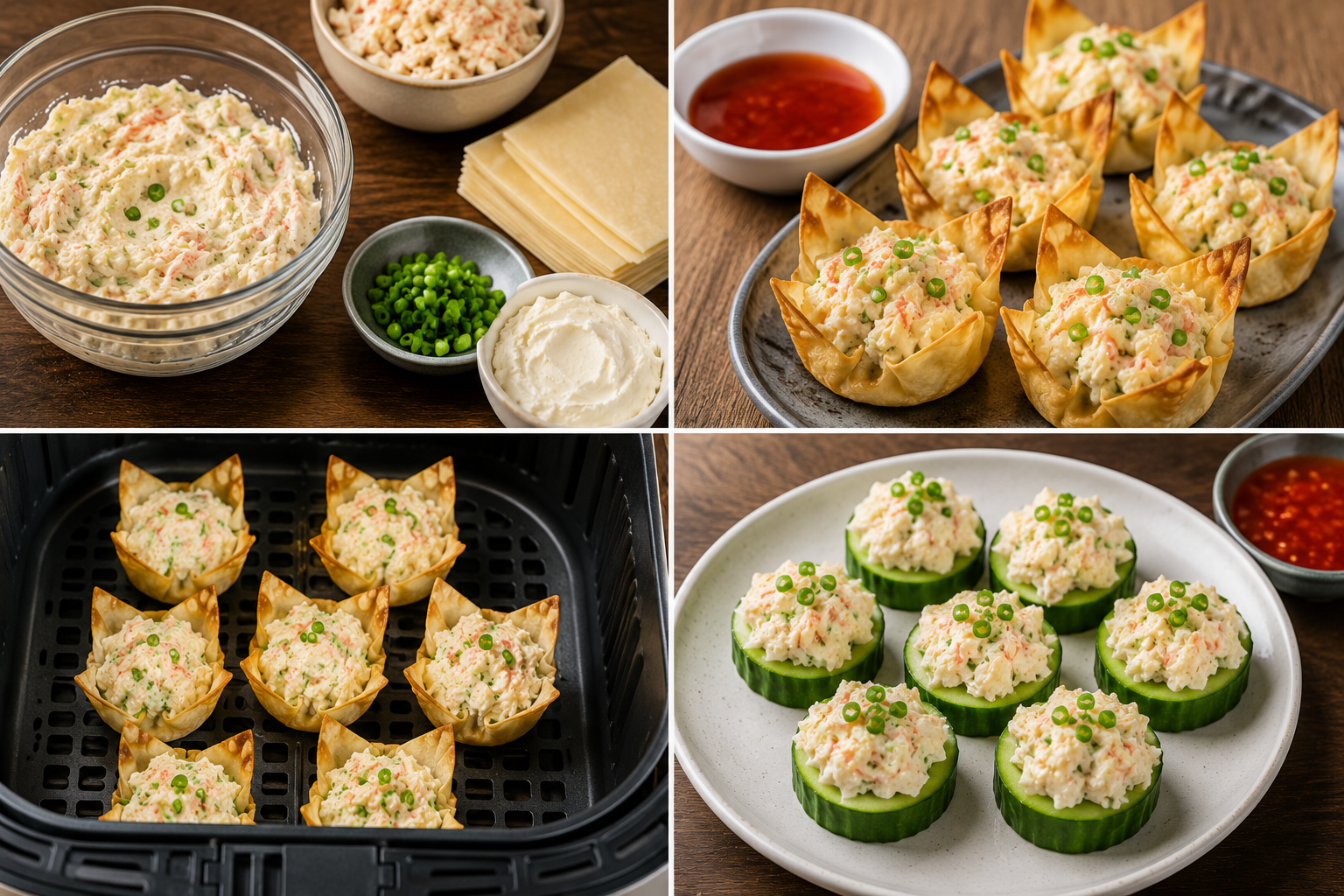
Ingredient Substitutions That Actually Work
Standard Ingredient |
Healthy Substitute |
Calorie Reduction |
| Cream cheese (full fat) | Whipped low-fat cream cheese or Neufchâtel | ~30% fewer calories |
| Imitation crab (surimi) | Real lump crab meat | Lower carbs, higher protein |
| Wonton wrappers (fried) | Baked wonton or cucumber rounds | Eliminates frying oil |
| Neutral frying oil | Air fryer with light olive oil spray | 60–70% less fat |
Air-Fryer Healthy Crab Rangoon Method
Ingredients (makes 20 pieces):
- 20 wonton wrappers
- 6 oz reduced-fat cream cheese (Neufchâtel)
- 4 oz real lump crab meat, picked and chopped
- 2 green onions, finely sliced
- 1 tsp low-sodium Worcestershire sauce
- ½ tsp garlic powder
- Olive oil spray
Method:
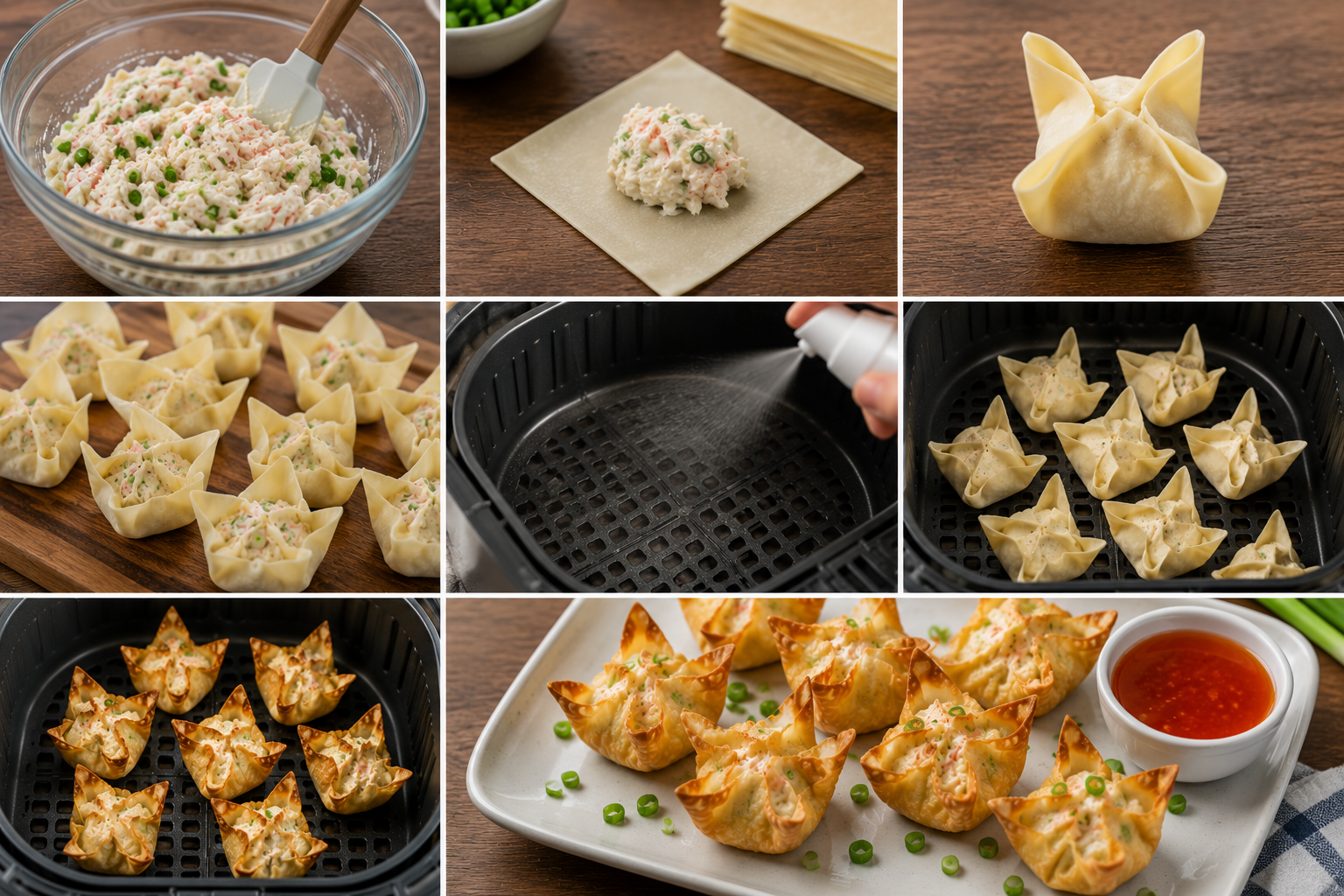
- Mix Neufchâtel, crab meat, green onions, Worcestershire, and garlic powder until combined.
- Fill and seal wontons as described in the standard recipe — 1 teaspoon of filling per wrapper.
- Lightly spray the air fryer basket with olive oil spray. Arrange wontons in a single layer without touching.
- Air fry at 375°F (190°C) for 7–9 minutes until golden and crisp, turning once at the halfway mark.
- Cool slightly before serving — the filling retains heat longer than the wrapper.
Nutrition per piece (air-fried, reduced-fat version):
- Calories: approximately 45–55 kcal
- Fat: 1.5–2.5 g
- Carbohydrates: 5–6 g
- Protein: 3–4 g
Compared to the restaurant-fried version, this is roughly 30–40% fewer calories with a meaningfully better protein-to-calorie ratio due to using real crab meat.
Crab Rangoon Across Different Brands and Restaurants
If you are tracking intake from specific sources, here is a working reference:
- Panda Express Cream Cheese Rangoon (1 piece): Approximately 190 calories for their larger, pastry-style version — noticeably higher than standard wonton rangoons because the wrapper is thicker and the piece is larger.
- Trader Joe’s Frozen Crab Rangoon: Around 60–70 calories per piece baked, slightly higher fried.
- Generic frozen store brands: Typically 60–80 calories per piece, fried per package instructions.
- Restaurant small wonton style: 55–75 calories per piece depending on size.
- Blue crab rangoon (upscale versions using blue crab): Calorie count similar, but protein is higher and carbohydrates from surimi starch are eliminated. The flavor profile is entirely different — notably sweeter and more delicate.
Tips for Eating Crab Rangoon More Mindfully
These are practical, not preachy:
- Account for the sauce. Sweet and sour sauce, duck sauce, and plum sauce add 30–50 calories and 7–12g of carbohydrates per tablespoon. A small ramekin of sauce can easily add 60–80 calories without you noticing. Chili sauce or hot mustard are lower-sugar alternatives.
- The filling-to-wrapper ratio matters. Smaller, restaurant-style wontons with generous filling have a better protein and fat ratio relative to carbohydrates than large, thin-shelled versions where most of the bite is wrapper.
- Make them smaller at home. Using 2.5-inch wonton wrappers instead of 3-inch reduces the carbohydrate content by roughly 20% per piece with no change to the filling. Small adjustments compound when you eat a full serving.
- Baked rangoons hold their filling better. Contrary to popular assumption, baked crab rangoon — particularly with a light egg wash — often stays sealed more reliably than fried, because there is no turbulent oil to crack seams. The texture is different but not inferior.
- Real crab makes the nutrition better and the flavor better simultaneously. This is one of the few situations where the healthier choice is also the tastier one. Surimi’s added starch and sugar are what push crab rangoon into “nutritional junk food” territory; real crab meat does not have that problem.
Frequently Asked Questions
What is the nutritional value of crab rangoon? Per piece: roughly 65–80 calories, 3.5–5g fat, 6–8g carbs, and 2–3g protein for a standard fried restaurant version. A 4-piece serving delivers approximately 280–320 calories.
How many calories are in 3 crab rangoons? Approximately 195–240 calories for three standard-sized fried pieces, depending on size and recipe.
How many calories are in 8 pieces of crab rangoon? Roughly 520–640 calories for eight restaurant-style fried pieces. At that portion, the fat content (28–40g) and sodium (680–880mg) also become significant considerations.
How many carbs are in 4 crab rangoons? Approximately 24–32 grams of total carbohydrates, primarily from the wonton wrappers and surimi filling.
Do crab rangoons have sugar? Yes, in small amounts. The wonton wrapper contains a trace amount of sugar. Imitation crab (surimi) contains added sugar as part of its processing. Four pieces typically contain 2–4 grams of sugar total.
Is crab high in carbs? Real crab meat has zero carbohydrates. The carbohydrate content in crab rangoon comes entirely from the wrapper and the surimi filling, not from actual crab.
How unhealthy is crab rangoon? It depends on portion and frequency. Eating 2–3 pieces as part of a balanced meal is not a meaningful nutritional concern for most people. Eating 8–10 pieces plus dipping sauce as a standalone snack multiple times per week is a different calculation — high in refined carbs, saturated fat, and sodium without meaningful protein or micronutrient return.
Is crab rangoon a carb? It contains significant carbohydrates from the wheat flour wonton wrapper, so yes — carbohydrate is the dominant macronutrient in the wrapper component. The filling itself (cream cheese and crab) is primarily fat and protein.
How much cholesterol is in crab rangoon? Approximately 15–20 mg per piece, or 60–80 mg per 4-piece serving. This is moderate but not excessive compared to many other restaurant appetizers.
Conclusion
Crab rangoon nutrition value lands in the “occasional indulgence” category for most people — calorie-dense relative to its protein return, moderate in carbohydrates, and meaningful in saturated fat, particularly from the cream cheese filling. That said, it is not the worst thing on the appetizer menu by any stretch, and the numbers become significantly better with simple adjustments: baking instead of frying, using Neufchâtel instead of full-fat cream cheese, and substituting real lump crab for surimi.
For specific dietary concerns — diabetes, low-carb eating, cholesterol management — the wonton wrapper and surimi are the two ingredients to address first. The wrapper drives the glycemic response; the surimi adds unnecessary starch and sugar. Modify those two variables and you have a dramatically different nutritional product that still tastes genuinely good.
Understanding what you eat does not mean avoiding everything you enjoy. It means knowing the actual numbers so you can make decisions that fit your goals — and with crab rangoon, a 2-piece portion at the start of a meal is a very different situation from half a restaurant order on its own.