5 Seafood Lunches That Pack 40g Protein — Without a Shake, Without the Fat
Top Seafood Lunch Recipes High Protein Low Fat 2026: The Complete Practical Guide

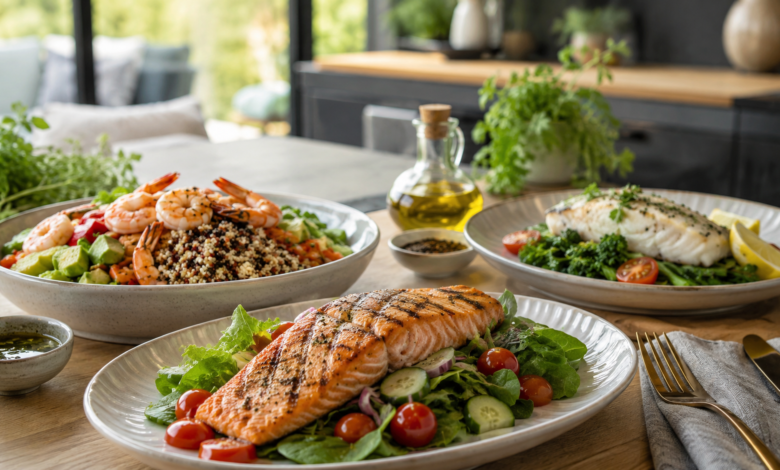
Lunch is where most high-protein eating plans quietly fall apart. Breakfast has eggs. Dinner has the time to cook a proper protein anchor. Lunch — especially on busy days — tends to default to whatever is fast, which usually means carb-heavy and protein-light. Seafood fixes this more efficiently than almost any other food category.
Which Seafood Is Highest in Protein?
Before building recipes, it’s worth anchoring the ingredient choices to actual protein density — because the rankings are not what most people assume.
Protein per 100g of cooked seafood (low fat varieties):
Seafood |
Protein (per 100g) |
Fat (per 100g) |
Calories |
| Canned tuna (light, in water) | 25–26g | 0.5–1g | ~110 kcal |
| Shrimp (cooked, no shell) | 24–25g | 0.8–1.2g | ~99 kcal |
| Cod (baked/steamed) | 22–23g | 0.7g | ~90 kcal |
| Canned salmon (in water) | 22–24g | 5–7g | ~140 kcal |
| Tilapia (baked) | 21–23g | 2g | ~96 kcal |
| Lobster (cooked, no shell) | 20–22g | 1.2g | ~97 kcal |
| Crab meat (cooked) | 19–21g | 1–1.5g | ~90 kcal |
| Scallops (pan-seared) | 17–20g | 0.8g | ~88 kcal |
| Mussels (steamed) | 18–20g | 2.5g | ~86 kcal |
| Sardines (canned in water) | 22–25g | 5–11g | ~150 kcal |
The fat distinction matters here. Shrimp, cod, tilapia, crab, scallops, and lobster are genuinely low-fat proteins — under 2g of fat per 100g. Fatty fish like salmon, sardines, and mackerel carry more fat (5–15g per 100g), but the fat is predominantly omega-3 polyunsaturated fatty acids rather than saturated fat. For weight loss and cardiovascular health, the type of fat in these species is nutritionally beneficial, not just a calorie concern. Including one or two fatty fish servings per week within a high-protein lunch plan adds EPA and DHA that the leaner shellfish varieties don’t provide in significant amounts.
What Seafood Dish Has the Most Protein?
The highest-protein seafood dish you can practically make for lunch isn’t a complex recipe — it’s a construction. The question is how to stack ingredients so that the combined protein across the whole meal reaches 35–50g without adding unnecessary fat or calories.
The protein stacking logic works like this:
A 150g serving of cooked shrimp delivers approximately 37g of protein at around 150 calories. Add one large egg (6g protein, 78 calories) and a half-cup of canned chickpeas (7g protein, 130 calories), and the total reaches 50g of protein in a single bowl under 360 calories.
How to Get 40g Protein at Lunch with Seafood
Reaching 40g of protein at lunch from seafood alone is achievable but requires a portion of at least 160–170g of a high-protein species (shrimp, tuna, cod). Most people eat portions of 100–120g, which delivers 22–28g of protein — good, but below the 35–40g threshold that most sport nutrition and general protein research identifies as the amount needed to maximally stimulate muscle protein synthesis in a single sitting.
Two practical ways to close the gap:
- Increase the seafood portion. A 200g serving of shrimp or tuna provides approximately 48–52g of protein. This is the simplest fix and works for most meal formats without changing the recipe structure.
- Pair with a secondary protein source. Greek yogurt, cottage cheese, eggs, edamame, lentils, chickpeas, or white beans all add 6–15g of protein per serving at minimal calorie cost. A 150g serving of canned tuna (37g protein) paired with ½ cup of cottage cheese (14g protein) produces a 51g protein lunch — and that combination takes three minutes to assemble.
The 40g protein target at lunch is specifically relevant for:
- People over 40, where the anabolic threshold for muscle protein synthesis rises (older adults may need 35–40g per meal rather than 25–30g to achieve the same muscle-building signal)
- Anyone in a calorie deficit trying to preserve lean mass
- Athletes or active individuals eating fewer total meals per day
- People replacing protein shakes with whole food alternatives
Recipe 1: High-Protein Shrimp and Quinoa Bowl
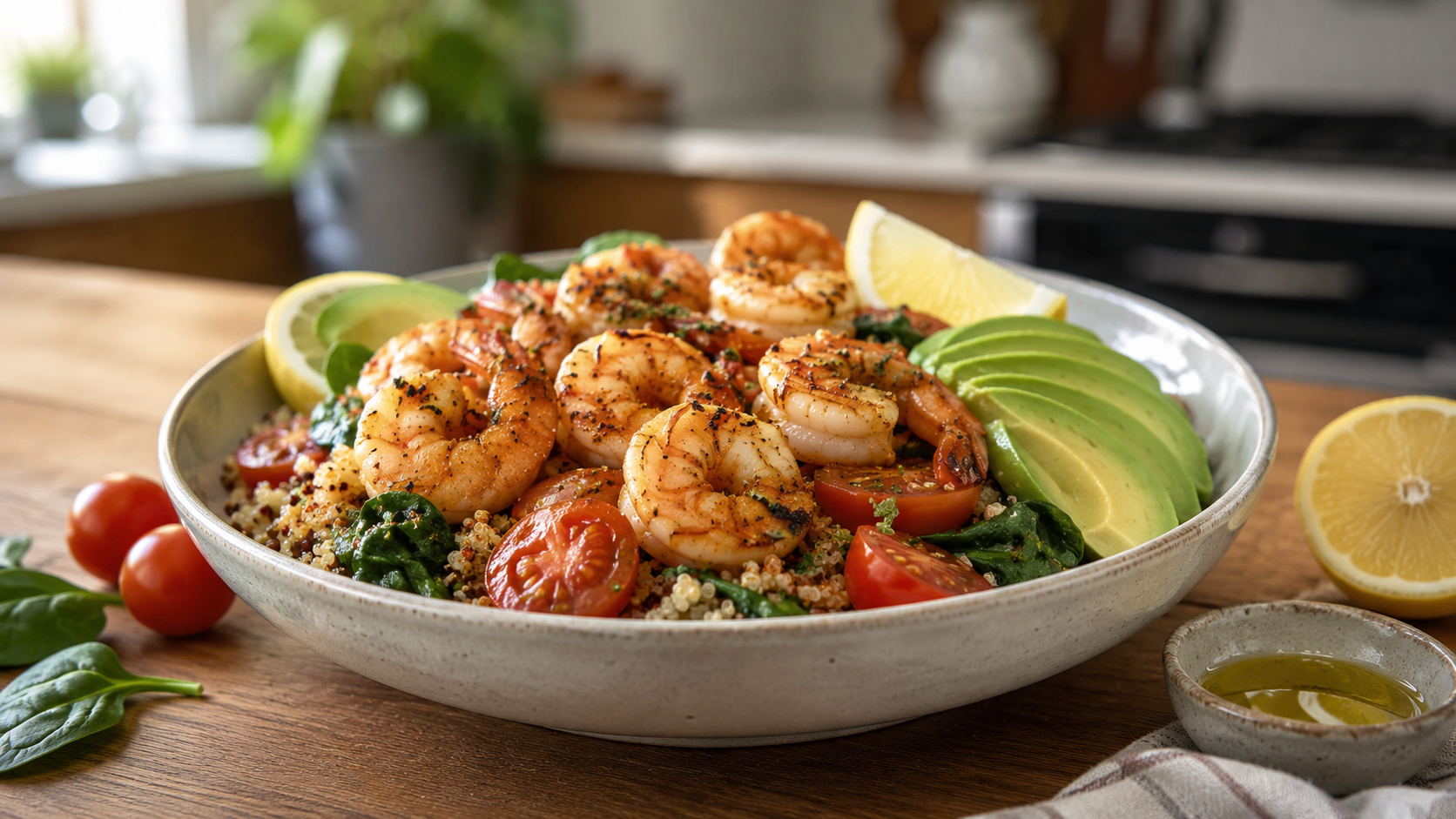
Protein per serving: ~42g | Calories: ~380 kcal | Fat: ~8g
This is the most versatile high-protein seafood lunch recipe in this guide — it works hot or cold, meal preps for 3 days, and the protein count is among the highest of any whole-food lunch you can build in under 20 minutes.
Ingredients (1 serving)
- 180g cooked shrimp, peeled and deveined (~45g protein)
- ¾ cup cooked quinoa (~6g protein, ~165 kcal)
- 1 cup baby spinach
- ½ cup cherry tomatoes, halved
- ¼ avocado, sliced (~60 kcal, healthy fat)
- 2 tbsp lemon juice
- 1 tsp olive oil
- 1 garlic clove, minced
- ½ tsp smoked paprika
- Salt, cracked black pepper
Step-by-Step Method
Step 1: If using frozen cooked shrimp, place in a colander and run cold water over them for 3–4 minutes until fully thawed. Pat dry with paper towels — surface moisture dilutes seasoning and prevents any browning.
Step 2: Heat olive oil in a non-stick skillet over medium-high heat. Add minced garlic, cook 30 seconds. Add shrimp in a single layer. Season with smoked paprika, salt, and pepper. Cook 60–90 seconds per side until pink edges appear and the surface begins to color slightly. Remove from heat — shrimp overcooks in seconds, and residual heat finishes the job.
Step 3: While shrimp cooks, build the bowl base: quinoa, baby spinach, cherry tomatoes. The warmth from the cooked quinoa will slightly wilt the spinach, which is desirable — it reduces volume and distributes flavor without losing nutrients.
Step 4: Place shrimp over the bowl. Add avocado slices. Drizzle with lemon juice. Adjust salt and pepper. Serve immediately or refrigerate for up to 2 days (keep avocado separate until serving).
Tips
- Don’t crowd the shrimp in the pan. A single layer ensures even heat contact. Two batches are better than one crowded pan where shrimp steam rather than sear.
- Quinoa can be batch-cooked Sunday and portioned for 4–5 weekday lunches — it holds refrigerated for 5 days without quality loss.
- For extra protein without extra fat, add 2 tbsp of hemp seeds over the finished bowl (~6g additional protein, minimal fat).
Calories Breakdown
Component |
Calories |
| 180g shrimp | ~178 kcal |
| ¾ cup cooked quinoa | ~165 kcal |
| Baby spinach + tomatoes | ~25 kcal |
| ¼ avocado | ~60 kcal |
| Olive oil (1 tsp) | ~40 kcal |
| Lemon, garlic, spices | ~5 kcal |
| Total | ~473 kcal |
Weight-loss version: Remove avocado and olive oil, replace with 2 tbsp Greek yogurt dressing (lemon + dill + yogurt). Saves ~100 calories, adds 3–4g protein. Total drops to ~370 kcal.
Recipe 2: High-Protein Tuna and White Bean Salad
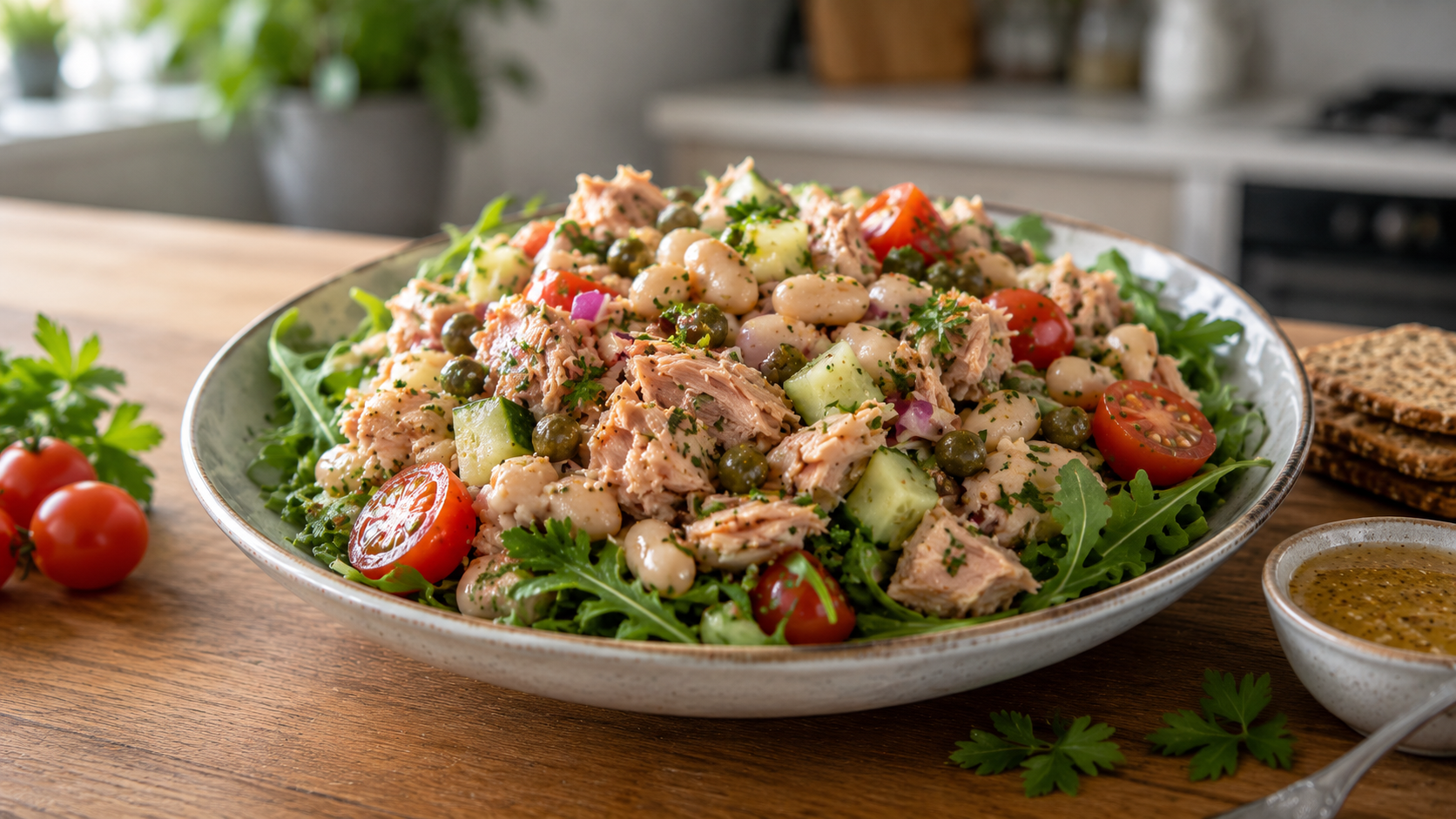
Protein per serving: ~46g | Calories: ~340 kcal | Fat: ~6g
This is the highest protein-to-prep-time ratio in this entire guide. Zero cooking required. Five minutes, one bowl, no heat. The white bean addition is the detail most tuna salad recipes miss — it doubles the fiber and adds 8g of plant protein that complements tuna’s amino acid profile.
Ingredients (1 serving)
- 185g canned light tuna in water, drained (~45g protein)
- ½ cup (85g) canned cannellini (white) beans, drained and rinsed (~8g protein)
- ½ cup cucumber, diced
- ¼ cup cherry tomatoes, halved
- 2 tbsp red onion, finely diced
- 1 tbsp capers
- 1 tbsp Dijon mustard
- 1.5 tbsp red wine vinegar
- 1 tsp olive oil
- Fresh flat-leaf parsley, chopped
- Salt and black pepper
Step-by-Step Method
Step 1: Drain tuna thoroughly — press the lid against the contents in the can to remove as much liquid as possible. Excess water dilutes the dressing and produces a soggy result.
Step 2: In a medium bowl, whisk together Dijon mustard, red wine vinegar, and olive oil until emulsified. Season with salt and pepper. This is a low-fat vinaigrette dressing — the mustard provides body and tang that compensates for the low fat content.
Step 3: Add drained tuna and white beans to the dressing. Toss gently — break the tuna into medium flakes rather than fine crumbles, which produces better texture in each bite.
Step 4: Add cucumber, tomatoes, red onion, and capers. Toss again lightly. Finish with fresh parsley and additional black pepper. Taste and adjust acid (more vinegar) or salt as needed.
Step 5: Serve immediately on a bed of rocket/arugula, stuffed into a whole wheat wrap, or over rye crackers for different textures without meaningfully changing the nutritional profile.
Tips
- Use canned light tuna (skipjack) rather than albacore for lower mercury exposure when eating tuna multiple times per week. Light tuna delivers equivalent protein with roughly 3× lower mercury concentration.
- The salad improves after 30 minutes of refrigeration as the flavors develop — make it before your workday begins and refrigerate until lunch.
- Rinse canned beans thoroughly — it removes approximately 40% of the sodium added during the canning process.
Calories Breakdown
Component |
Calories |
| 185g canned tuna (in water) | ~175 kcal |
| ½ cup white beans | ~100 kcal |
| Vegetables (cucumber, tomato, onion) | ~30 kcal |
| Dressing (mustard, vinegar, olive oil) | ~50 kcal |
| Capers, parsley | ~5 kcal |
| Total | ~360 kcal |
Weight-loss version: Skip the olive oil; double the Dijon and red wine vinegar for dressing. Saves ~40 calories. Total: ~320 kcal, 46g protein — an exceptional weight-loss lunch ratio.
Recipe 3: Baked Cod and Lentil Bowl
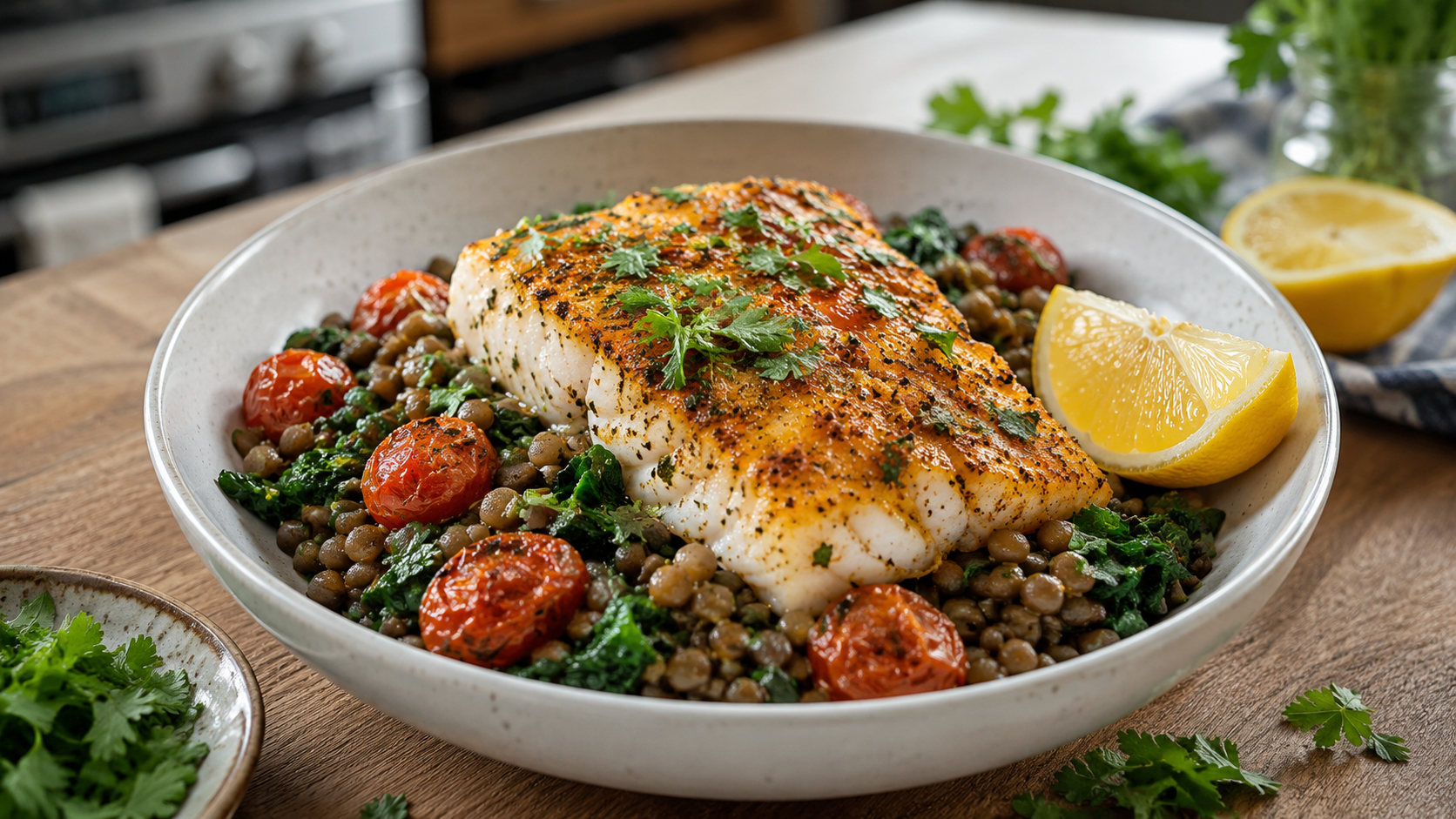
Protein per serving: ~44g | Calories: ~420 kcal | Fat: ~7g
Cod is the most underappreciated high-protein seafood for lunch. It has an exceptionally clean, mild flavor, holds its shape well after baking, and pairs with almost any flavor system. The lentil base makes this the highest-fiber recipe in this guide, which is significant for satiety — fiber extends fullness beyond what protein alone achieves.
Ingredients (1 serving)
- 200g cod fillet (~44g protein before lentils)
- ¾ cup cooked green or brown lentils (~13g protein, ~9g fiber)
- 1 cup baby kale or spinach
- ½ cup roasted cherry tomatoes (roast with 1 tsp olive oil, salt)
- 2 garlic cloves, minced
- 1 tsp cumin
- 1 tsp smoked paprika
- ½ tsp turmeric
- Juice of ½ lemon
- 1 tsp olive oil
- Salt and black pepper
- Fresh cilantro or parsley to finish
Step-by-Step Method
Step 1: Preheat oven to 200°C (400°F). Place cod on a parchment-lined baking tray. In a small bowl, mix olive oil, minced garlic, cumin, smoked paprika, turmeric, lemon juice, salt, and pepper into a paste. Spread evenly over the surface of the cod.
Step 2: On the same tray (or a separate one), place cherry tomatoes. Drizzle with a touch of olive oil and season lightly. Both the cod and tomatoes can roast simultaneously.
Step 3: Bake for 12–15 minutes. Cod is done when it flakes easily at the thickest point with a fork and is opaque throughout. Avoid pressing — the moisture in the fish is what makes the texture pleasant. Internal temperature target: 63°C (145°F).
Step 4: While cod bakes, warm the cooked lentils in a small saucepan with a splash of water, salt, cumin, and a small amount of lemon juice. Lentils should be heated through but not mushy — approximately 3–4 minutes over medium heat.
Step 5: Arrange baby kale in the bowl base. Add warm lentils. Place baked cod over the lentils. Add roasted tomatoes. Finish with fresh herbs and an extra squeeze of lemon.
Tips
- Lentils for this recipe are best cooked from dry (not canned) for flavor and texture. Batch-cook 2 cups of dry lentils on Sunday — they yield approximately 5 cups cooked and store refrigerated for 5 days, enough for 5 weekday bowls.
- Don’t overbake cod. It goes from perfect to dry quickly. Start checking at 12 minutes for smaller fillets.
- Turmeric adds anti-inflammatory curcumin compounds to this recipe — an ingredient decision that’s nutritionally motivated, not just aesthetic. Pair with black pepper (piperine) to increase curcumin bioavailability by up to 2000%.
Calories Breakdown
Component |
Calories |
| 200g baked cod | ~185 kcal |
| ¾ cup cooked lentils | ~170 kcal |
| Baby kale + roasted tomatoes | ~45 kcal |
| Olive oil (1 tsp) | ~40 kcal |
| Spices, lemon, garlic | ~10 kcal |
| Total | ~450 kcal |
Weight-loss version: Reduce cod to 160g and lentils to ½ cup. Replace olive oil with a light spray. Total: ~340 kcal, ~38g protein — still above the effective muscle-protein-synthesis threshold.
Recipe 4: Canned Salmon and Cottage Cheese Power Bowl
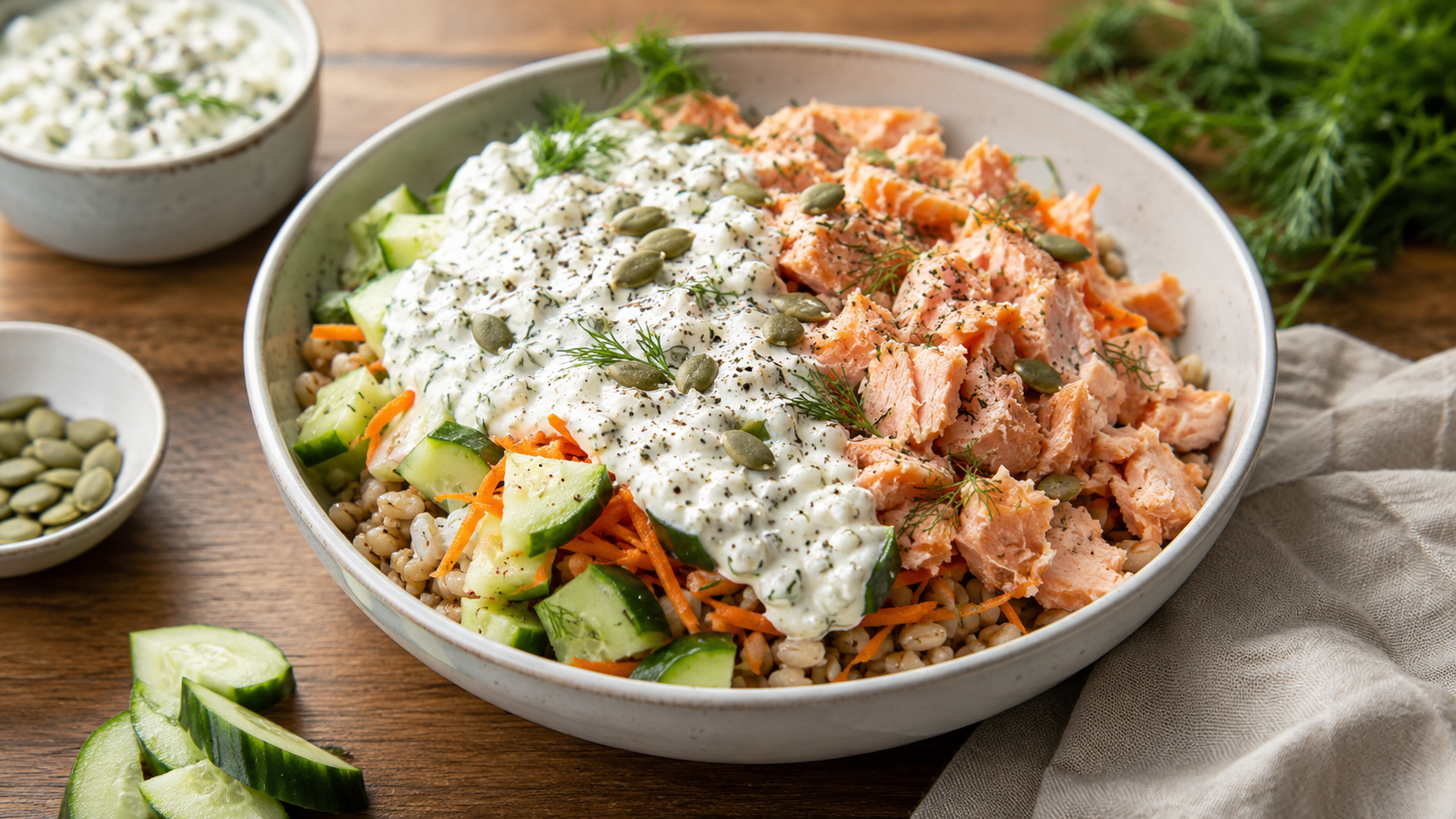
Protein per serving: ~48g | Calories: ~390 kcal | Fat: ~10g
This recipe uses two underutilized high-protein ingredients — canned salmon and low-fat cottage cheese — that most people don’t think to combine. The result is a bowl that delivers near-50g of protein at well under 400 calories, with omega-3s from the salmon that the shrimp and cod recipes don’t provide in the same concentration.
Ingredients (1 serving)
- 150g canned pink or red salmon in water, drained (~33g protein)
- ½ cup (113g) low-fat cottage cheese (~13g protein, ~90 kcal)
- ½ cup cooked farro or brown rice (~4g protein)
- ½ cup cucumber, diced
- ½ cup shredded carrots
- 1 tbsp apple cider vinegar
- 1 tsp Dijon mustard
- Fresh dill, chopped
- Salt, black pepper
- Optional: 1 tbsp pumpkin seeds (~3g additional protein)
Step-by-Step Method
Step 1: Drain salmon thoroughly. Remove any visible skin if preferred — the soft bones can be left in (they’re edible, calcium-rich, and nearly invisible once the salmon is flaked).
Step 2: In a small bowl, mix cottage cheese with Dijon mustard, apple cider vinegar, fresh dill, salt, and pepper. This functions as a creamy dressing with built-in protein rather than a fat-heavy sauce.
Step 3: Build the bowl: farro or rice as the base, cucumber and carrots over that, then flaked salmon. Spoon the cottage cheese dressing over the salmon and vegetables.
Step 4: Finish with pumpkin seeds if using, additional fresh dill, and cracked black pepper. Serve immediately or refrigerate — this holds well for 2 days with the dressing kept separately until serving.
Tips
- Red salmon (sockeye) has a stronger flavor and deeper color than pink salmon, and contains approximately 20–30% more omega-3 fatty acids. For omega-3 optimization, choose red; for a milder flavor, choose pink.
- Cottage cheese dressing becomes more fluid over time as the vinegar acidifies the proteins slightly. Make it fresh or store separately.
- Farro provides a better texture and higher protein content than white rice (6g protein per cooked cup vs. 4g for brown rice). It also has a nuttier flavor that pairs well with salmon and dill.
Calories Breakdown
Component |
Calories |
| 150g canned salmon | ~195 kcal |
| ½ cup cottage cheese | ~90 kcal |
| ½ cup farro (cooked) | ~90 kcal |
| Cucumber + carrots | ~30 kcal |
| Mustard, vinegar, dill | ~10 kcal |
| Pumpkin seeds (1 tbsp) | ~45 kcal |
| Total | ~460 kcal |
Weight-loss version: Remove farro entirely. Double the vegetables. Total: ~370 kcal, ~47g protein — same protein, fewer carbohydrates.
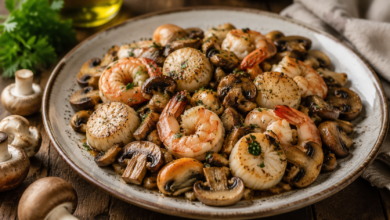
Recipe 5: Garlic Butter Scallop and Cauliflower Rice Bowl
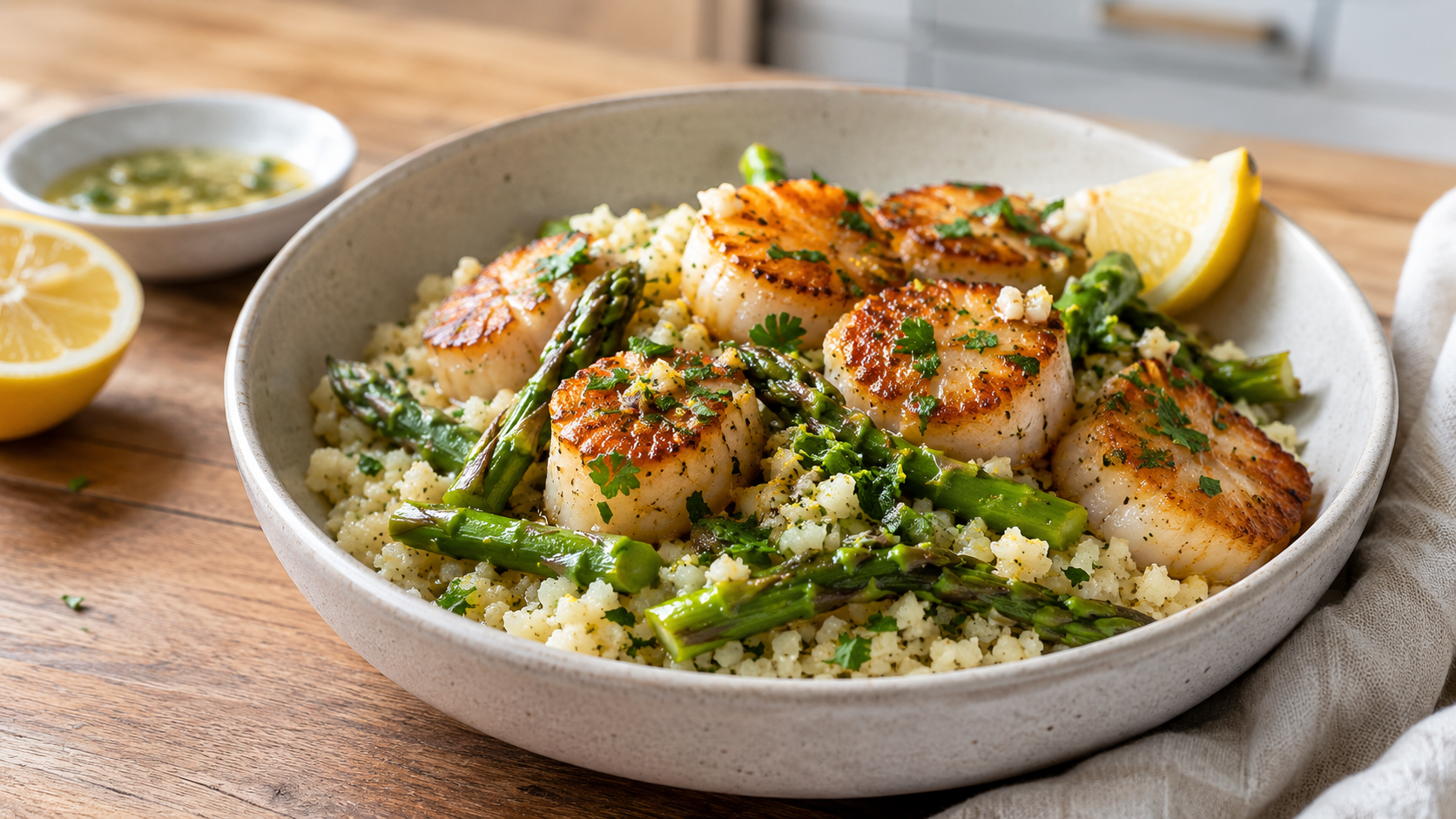
Protein per serving: ~35g | Calories: ~310 kcal | Fat: ~9g
Scallops are underused in high-protein lunch recipes — probably because they’re associated with restaurant fine dining rather than weekday eating. A bag of frozen sea scallops costs comparably to shrimp, takes 4 minutes to cook, and produces a restaurant-quality result when the technique is right. This bowl is the lowest-carbohydrate option in this guide and the most appropriate for ketogenic or low-carb eating patterns.
Ingredients (1 serving)
- 200g large sea scallops (~35–38g protein)
- 2 cups cauliflower rice (fresh or frozen)
- 1 cup asparagus, cut into 2-inch pieces
- 2 tbsp unsalted butter
- 3 garlic cloves, minced
- Juice of ½ lemon + zest
- Fresh parsley, chopped
- Salt and cracked black pepper
- 1 tbsp neutral oil (for searing)
Step-by-Step Method
Step 1 — Critical prep for scallops: Pat scallops completely dry with paper towels — multiple times if needed. Surface moisture is the enemy of a proper sear. Wet scallops steam rather than sear, producing a grey, soft exterior instead of the golden crust that defines this recipe. Season with salt and pepper just before cooking — not in advance, as salt draws out moisture.
Step 2: Heat neutral oil in a heavy skillet (cast iron preferred) over very high heat until the oil begins to shimmer and just barely smoke. Add scallops in a single layer without touching. Do not move them. Cook undisturbed for 90 seconds to 2 minutes until a golden-brown crust forms on the bottom.
Step 3: Flip each scallop once. Add 1 tbsp of butter to the pan. Tilt the pan slightly and spoon the foaming butter over the scallops continuously for 60–90 seconds. Remove scallops from the pan immediately — they continue cooking from residual heat.
Step 4: In the same pan, lower heat to medium. Add remaining butter, garlic, and asparagus. Sauté 3–4 minutes until asparagus is bright green and tender-crisp. Add lemon juice and zest, toss.
Step 5: While the asparagus cooks, heat cauliflower rice in a separate pan or microwave. Season with salt and pepper. Build the bowl: cauliflower rice base, asparagus, scallops on top. Spoon garlic butter from the pan over everything. Finish with fresh parsley.
Tips
- The single most important tip for scallops: dry them completely. This cannot be overstated. A paper towel pressed firmly on the scallop surface for 10 seconds before cooking makes the difference between a sear and a steam.
- High heat is non-negotiable. A warm pan produces a gradual exterior cook without the crust. The pan must be genuinely hot before the scallops touch the surface.
- Frozen scallops work well if thawed overnight in the refrigerator and dried thoroughly. Scallops labeled “dry-packed” or “chemical-free” are preferable — “wet-packed” scallops contain added water and sodium tripolyphosphate, which prevents proper browning.
Calories Breakdown
Component |
Calories |
| 200g sea scallops | ~175 kcal |
| 2 cups cauliflower rice | ~50 kcal |
| Asparagus (1 cup) | ~30 kcal |
| Butter (2 tbsp) | ~200 kcal |
| Garlic, lemon, parsley | ~15 kcal |
| Total | ~470 kcal |
Weight-loss version: Replace butter with 1 tsp olive oil + cooking spray. Saves approximately 150 calories. Total: ~320 kcal, ~35g protein — the lowest-calorie recipe in this guide with excellent protein density.
Seafood Lunch Recipes for Weight Loss: What Actually Works
The high-protein, low-fat seafood lunch formula is specifically well-aligned with weight loss for three interconnected reasons that go beyond simple calorie counting.
Protein’s thermic effect is higher than fat or carbohydrates. Approximately 20–30% of the calories in protein are burned during digestion itself — the thermic effect of food (TEF). A 400-calorie seafood lunch rich in protein generates 80–120 calories of heat during digestion, meaning the net caloric impact is closer to 280–320 calories. A 400-calorie carbohydrate-dominant lunch has a TEF of only 5–10%, generating 20–40 calories of heat. The protein advantage compounds over daily eating patterns.
Leucine content drives muscle preservation during a calorie deficit. Shrimp, cod, tuna, and scallops are all high in leucine — the branched-chain amino acid that most directly triggers muscle protein synthesis. Preserving muscle mass during weight loss maintains resting metabolic rate, which prevents the metabolic slowdown that accompanies rapid weight loss from low-protein diets.
Satiety duration extends further with seafood protein than with most alternatives. Protein digestion is slower than carbohydrate digestion, and casein-containing proteins (dairy pairings) slow this further. A lunch delivering 40g+ of protein from seafood plus a secondary dairy or legume protein maintains fullness signal for 4–5 hours in most people — significantly longer than a carbohydrate-dominated lunch at equivalent calories.
Frequently Asked Questions
Which seafood is highest in protein per 100g? Canned light tuna tops the list at 25–26g of protein per 100g, followed closely by shrimp at 24–25g, sardines at 22–25g, and cod at 22–23g. All of these are extremely low in fat (under 2g per 100g for the lean varieties), making them ideal for high-protein, low-fat lunch building.
What seafood dish has the most protein in a single serving? A 200g shrimp bowl paired with quinoa and edamame delivers 50–55g of protein in one meal. A tuna and white bean salad using a full 185g can of tuna with ½ cup of beans reaches 46–50g. These are among the most protein-dense whole-food lunches available across any food category.
How do you get 40g of protein at lunch from seafood? Two approaches: increase the seafood portion to 180–200g (which delivers 36–50g protein on its own from high-protein species like shrimp, tuna, or cod), or pair a standard 120–150g portion with a secondary protein source — cottage cheese, Greek yogurt, eggs, lentils, or chickpeas — to close the gap. Both strategies are used in the recipes in this article.
Is seafood better than chicken for a high-protein low-fat lunch? Nutritionally comparable in protein content, but seafood offers advantages in omega-3 fatty acid content (particularly fatty fish), iodine, selenium, and often lower calorie density for the same protein yield in lean shellfish varieties. Shrimp delivers 24–25g of protein per 100g at around 99 calories, which is slightly better protein efficiency than chicken breast (31g protein per 100g at 165 calories). The practical advantage of seafood for lunches is speed — many high-protein seafood options (canned tuna, smoked salmon, frozen cooked shrimp) require minimal to no cooking.
Are these recipes suitable for weight loss? All five recipes are designed with a calorie ceiling of 350–480 calories per serving and protein floors of 35–50g per serving. The weight-loss versions of each recipe bring total calories below 380 while maintaining protein above 35g — a macronutrient distribution consistently associated with fat loss with muscle preservation in the research literature.
Can I meal prep these seafood lunch recipes? Most of them, yes. The tuna and white bean salad, canned salmon bowl, and cod-lentil bowl all meal prep well for 2–3 days. The shrimp bowl can be prepped if the avocado is kept separate. Scallops are best cooked fresh — they don’t hold well refrigerated for more than 1 day without texture degradation. Quinoa, lentils, and farro should be batch-cooked and portioned to reduce daily prep time to under 5 minutes for most of these recipes.
What is a very high-protein lunch for someone who hates fish? Shrimp and crab are the mildest-flavored seafood options and are often preferred by people who dislike stronger fish flavors. Scallops are another mild option with a slightly sweet taste. Canned tuna in water mixed with Dijon mustard and lemon has a considerably milder flavor than many people expect, particularly in a bean salad format where the tuna is one component among several.
Conclusion
Seafood is the most practical high-protein, low-fat lunch food available — not because of marketing, but because of composition. Shrimp, cod, tuna, scallops, and canned salmon deliver 20–26g of protein per 100g at under 140 calories, with minimal saturated fat and a broad micronutrient profile that includes iodine, selenium, zinc, and B12. No other common protein source matches this combination of protein density, low fat content, and speed of preparation.
Reaching 40g of protein at lunch is not complicated with seafood as the anchor. The five recipes in this guide — the shrimp quinoa bowl, tuna and white bean salad, baked cod and lentil bowl, canned salmon cottage cheese bowl, and garlic butter scallop bowl cover the full range from zero-cook assembly to a 20-minute warm meal, all between 310–480 calories per serving with 35–50g of protein.