How To Cook Alaskan King Crab Legs — Every Method, Explained Properly
How To Cook Alaskan King Crab Legs

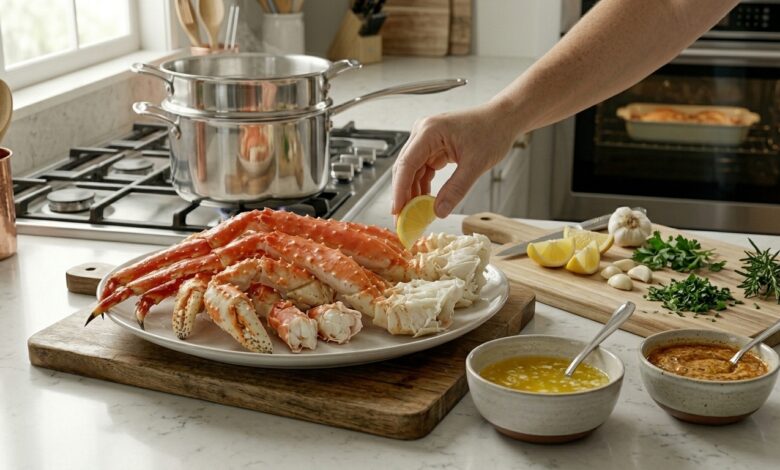
There’s a common misconception that cooking Alaskan king crab legs is a project reserved for restaurants or special-occasion kitchens. It isn’t. The actual challenge isn’t the cooking — it’s understanding what you’re working with before you start. Most people apply too much heat for too long because they’re treating pre-cooked frozen legs like raw seafood. That single misunderstanding is responsible for more rubbery, dry king crab than any other mistake.
Are Alaskan King Crab Legs Already Cooked?
Yes. Most Alaskan king crab legs sold in stores are already cooked before they are frozen.
Alaskan king crab is usually cooked shortly after being caught, then flash-frozen to preserve freshness, texture, and flavor. That means when you buy frozen king crab legs, you are usually reheating them, not cooking raw crab from scratch.
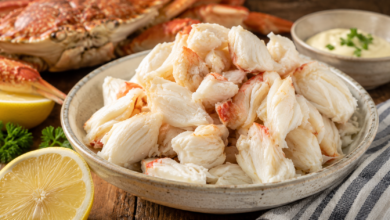
You can tell they are already cooked if the shells are bright red or orange-red and the meat is white and opaque. Raw king crab would look much darker, usually bluish-brown or purplish, and it is much harder to find in regular grocery stores.
How To Cook Frozen King Crab Legs — With Or Without Thawing
Thawing first (recommended when time allows): Place frozen legs in the refrigerator overnight — 8 to 12 hours. This slow thaw keeps the meat at a safe temperature throughout and results in more even reheating. Don’t rush thaw in hot water; it starts cooking the outer meat unevenly while the center stays cold.
Cooking frozen king crab legs without thawing: Fully achievable with any method, with one adjustment — add roughly 50% more time to each technique. Frozen legs straight into a boiling pot need 8–10 minutes instead of 5–6. Frozen legs in the oven need 25–30 minutes instead of 18–20.
Never microwave king crab legs from frozen. The uneven energy distribution of a microwave creates hot pockets that overcook sections of meat while others remain cold. It works for a quick reheat of already-thawed legs, but it’s unreliable from frozen.
How To Cook Alaskan King Crab Legs On The Stove — Boiling Method
Boiling is the fastest and most accessible method. It’s also the one most prone to waterlogging the meat if done carelessly.
Ingredients:
- 2 lbs Alaskan king crab legs
- Water to fill pot ¾ full
- 1 tbsp sea salt
- 1 lemon, halved
- 2 bay leaves (optional but add depth)
- 1 tsp black peppercorns
Method:
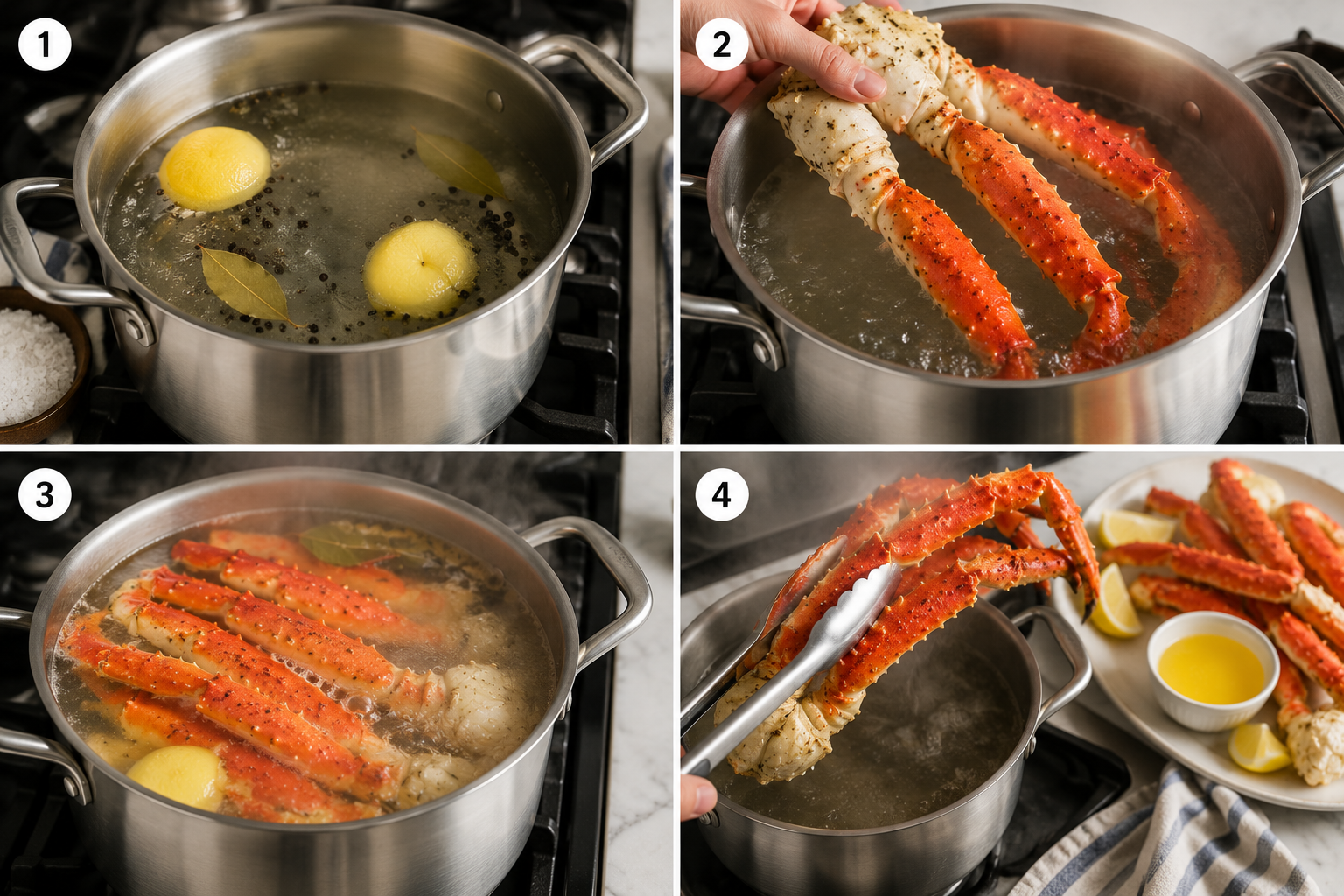
Step 1: Fill a large stockpot with water. Add salt, lemon halves (squeezed in), bay leaves, and peppercorns. Bring to a rolling boil.
Step 2: Add thawed king crab legs. If legs are too long for the pot, bend them at the joints — the shells are flexible at room temperature.
Step 3: Return to boil, then reduce to a steady simmer. Cook 5–6 minutes for thawed legs, 8–10 minutes for frozen. The legs are done when they’re heated through and the shell is bright orange-red (already the case if previously cooked, but the color deepens with heat).
Step 4: Remove with tongs. Serve immediately with melted butter and lemon.
How long to boil king crab legs: 5–6 minutes thawed, 8–10 minutes from frozen. Any longer and you’re diminishing the meat quality.
The seasoned water contributes only marginally to flavor since the shell limits absorption. The more meaningful flavor delivery is in the dipping sauce — garlic butter, clarified butter with herbs, or lemon aioli.
How To Steam King Crab Legs — The Better Method For Texture
Steaming is widely preferred over boiling by seafood professionals, and the reason is simple: the legs never touch water. Direct boiling draws some moisture out of the meat through osmosis over time. Steaming heats the legs through vapor without that exchange, keeping the natural juices inside the shell.
Equipment needed: Large pot with a steamer basket or rack insert. A pasta insert works. Alternatively, crumple aluminum foil into a loose ball at the bottom of the pot as a makeshift rack, with just enough water that the legs sit above the waterline.
Method:
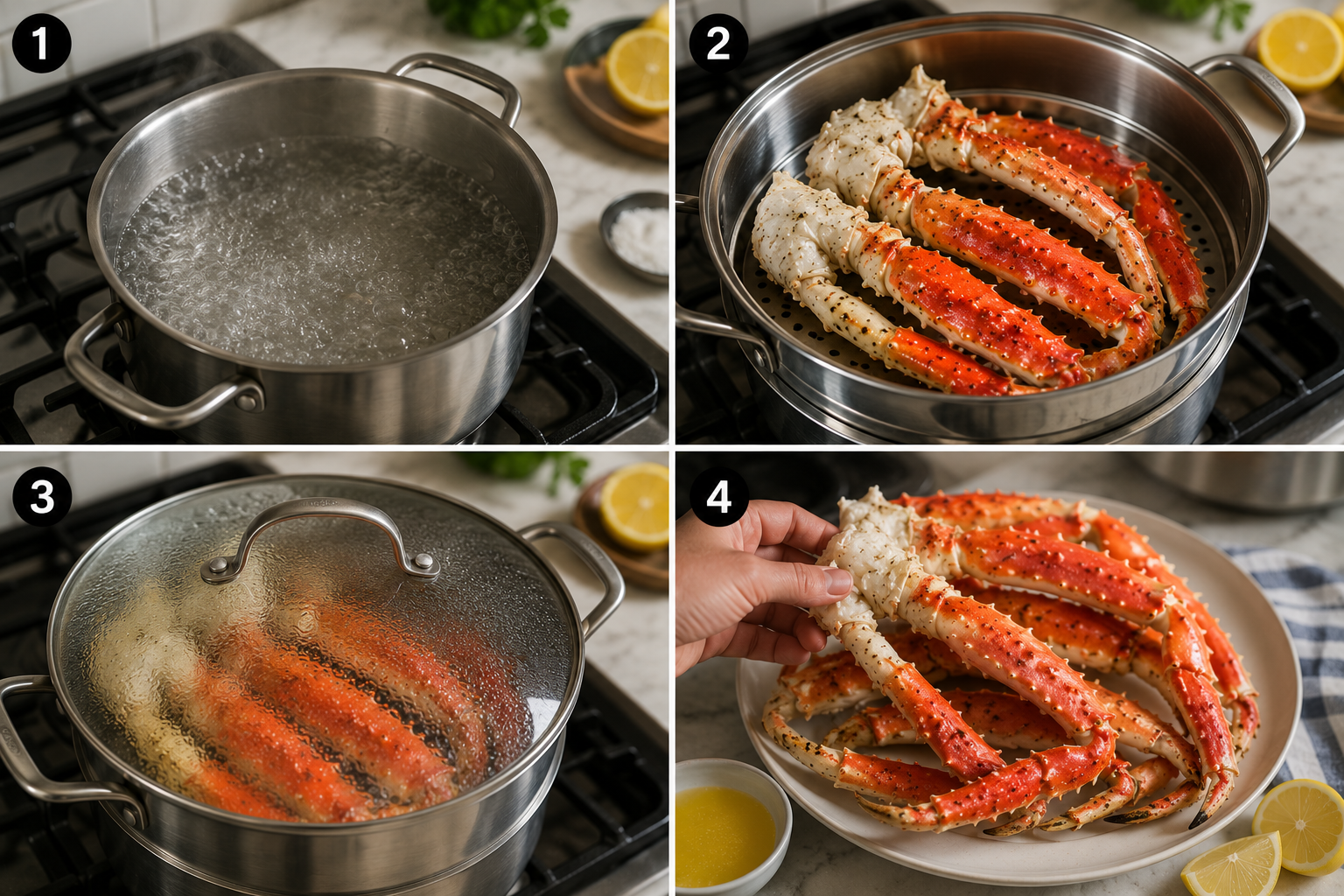
Step 1: Add 1–2 inches of water to the pot. Bring to a full boil.
Step 2: Arrange king crab legs over the steamer rack. Cover with a tight-fitting lid.
Step 3: Steam 6–8 minutes for thawed legs, 10–12 minutes from frozen.
Step 4: The legs are ready when they’re hot throughout and the meat pulls cleanly from the shell.
Is it better to boil or steam Alaska king crab legs? Steaming produces superior texture — the meat stays slightly firmer and more naturally sweet because it hasn’t been in contact with water. Boiling is faster and requires less precision. For a first-time cook: steam. For a weeknight situation where speed matters: boil.
How To Cook Alaskan King Crab Legs In The Oven
Oven cooking is the hands-off method and works particularly well when cooking a large batch for multiple people.
Method:
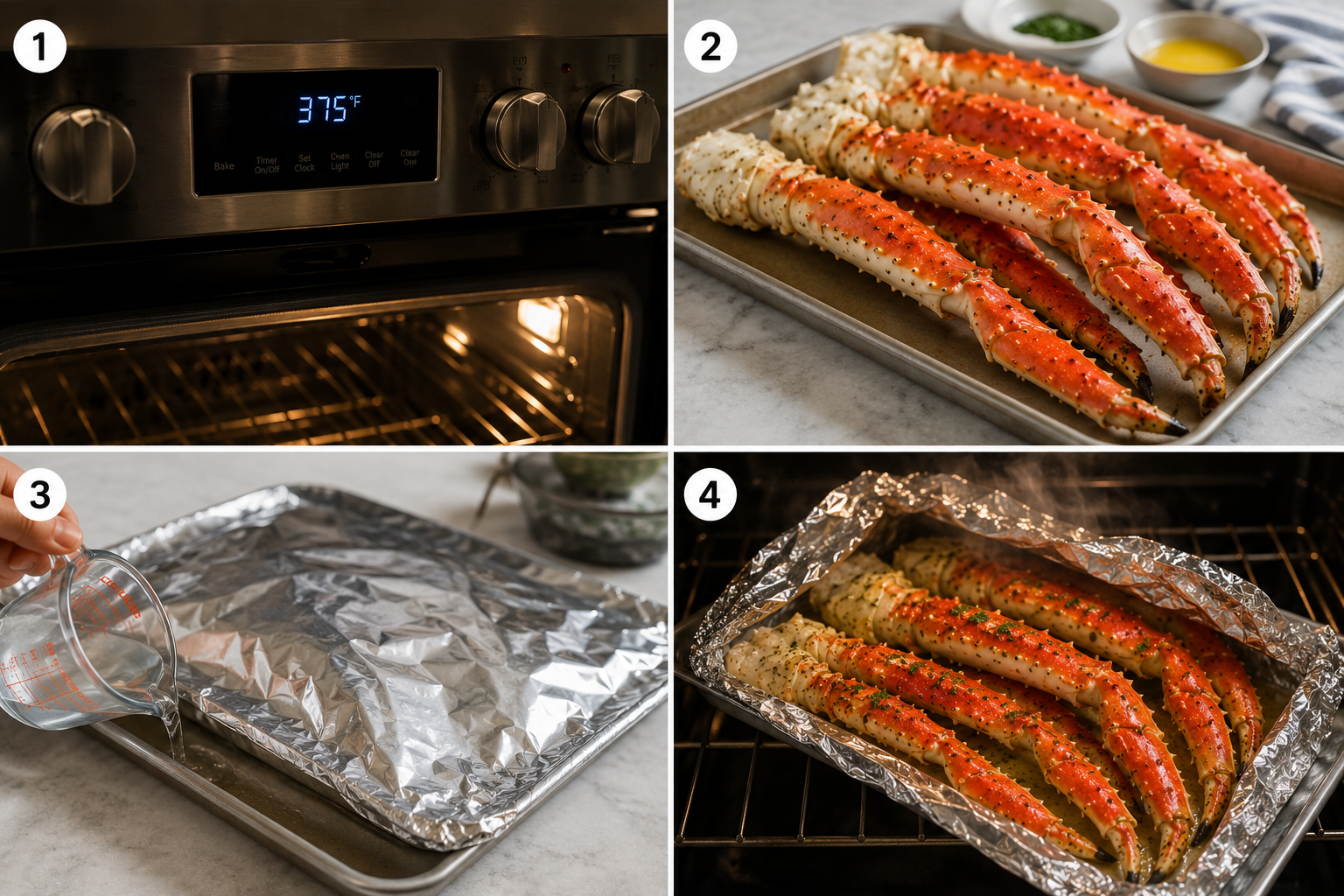
Step 1: Preheat oven to 375°F (190°C).
Step 2: Arrange king crab legs in a single layer on a rimmed baking sheet. If stacking is unavoidable, add 5 extra minutes to total cook time.
Step 3: Add ¼ cup of water to the baking sheet and cover tightly with aluminum foil. The water creates a steam environment inside the foil seal, preventing the meat from drying out.
Step 4: Bake 18–20 minutes for thawed legs. For frozen, extend to 25–30 minutes. Open the foil carefully — trapped steam will release suddenly.
Variation — garlic butter oven method: Before sealing with foil, spoon 2–3 tablespoons of garlic butter over the exposed joints and cracked shell sections. The butter bastes the meat through the natural openings as it melts. This version needs no dipping sauce — the flavor is already built in.
How To Cook Alaskan King Crab Legs On The Grill
Grilling king crab legs is underused and genuinely produces a different flavor profile — a subtle smokiness that no other method replicates.
Method:
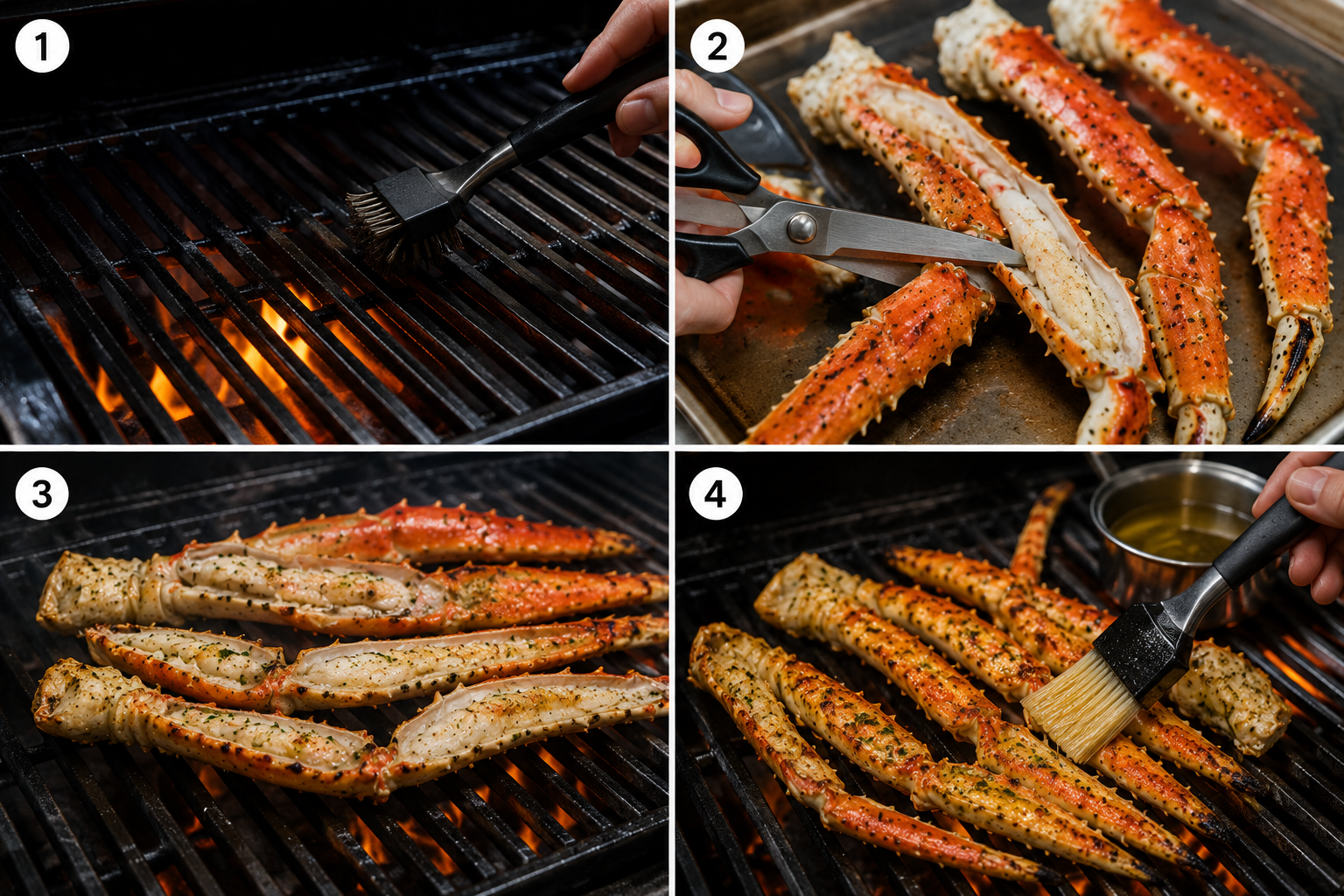
Step 1: Preheat grill to medium-high heat (around 375–400°F). Clean and oil the grates.
Step 2: If legs are thawed, place directly on the grate. For better flavor penetration, use kitchen shears or a sharp knife to cut the shell lengthwise before grilling — this exposes the meat to direct heat and smoke.
Step 3: Grill 4–5 minutes per side, turning once. Watch carefully — the shell chars quickly at high heat, which is fine, but excessive charring produces bitter flavor.
Step 4: Remove when the meat is hot and slightly golden at the exposed edges.
Grilling tip: Baste cut-side meat with garlic butter every 2 minutes during cooking. The butter chars slightly on the grill surface, creating a browned, slightly caramelized layer on the crab meat that’s hard to achieve any other way.
Grilled king crab legs pair well with corn on the cob, grilled asparagus, or a simple green salad — the smokiness doesn’t need competing flavors.
How To Cook King Crab Legs With Garlic Butter
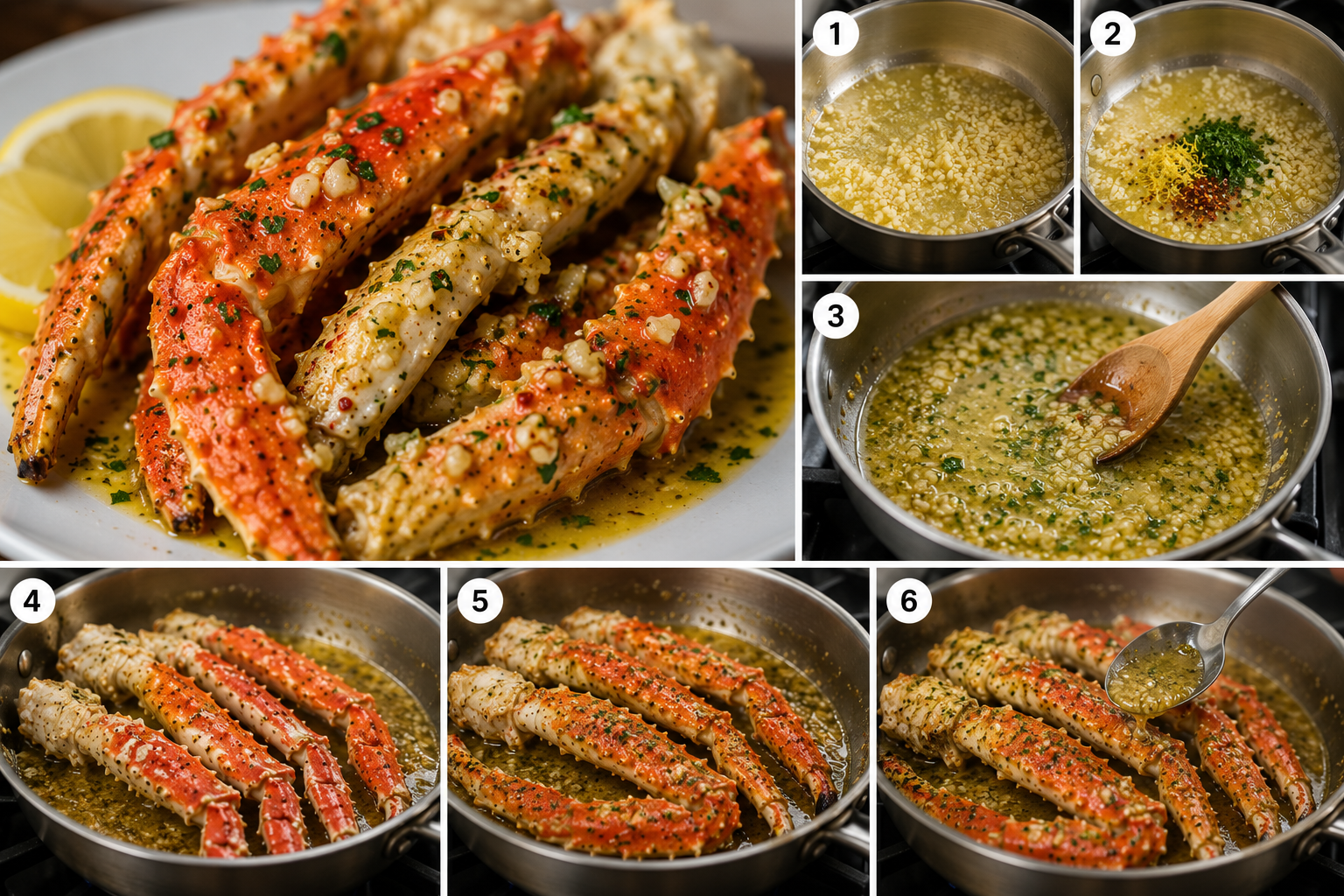
Garlic butter king crab legs can be executed via stovetop, oven, or grill — the butter preparation is the constant element regardless of method.
Garlic Butter Ingredients:
- 6 tbsp unsalted butter
- 4 cloves garlic, minced
- 1 tbsp fresh lemon juice
- 1 tsp lemon zest
- 1 tsp fresh parsley, finely chopped
- ¼ tsp red chili flakes (optional)
- Pinch of sea salt
Making the garlic butter: Melt butter over low heat. Add minced garlic and cook 2 minutes — low heat only; garlic burns at high temperature and turns bitter. Remove from heat, stir in lemon juice, zest, parsley, and chili flakes. This can be made ahead and refrigerated for up to 5 days.
Garlic butter stovetop method: In a wide skillet or wok, melt garlic butter over medium heat. Add thawed king crab legs directly into the butter. Toss every minute or so to coat. Cover and cook 5–7 minutes, turning occasionally, until legs are heated through and the butter has reduced slightly into a glaze.
This method concentrates the garlic butter flavor into the shell joints — every bite of meat carries the seasoning because it permeates through the openings in the shell during cooking.
Healthy King Crab Legs Recipe — Clean Preparation
King crab is already nutritionally lean. The issue is almost always in the preparation — specifically, the amount of butter used for dipping and cooking. A healthy approach doesn’t mean flavorless.
Healthy preparation swap:
Standard Version |
Healthy Swap |
| Pan in butter | Steamed, no added fat |
| Garlic butter dipping sauce | Olive oil, lemon, fresh herbs |
| Boiled in salted water | Steamed with citrus and aromatics |
| Served with drawn butter | Served with Greek yogurt herb dip |
Herb Yogurt Dipping Sauce (replaces drawn butter):
- 4 tbsp plain Greek yogurt
- 1 tsp lemon zest
- 1 tbsp fresh dill
- 1 clove garlic, minced
- Salt and pepper
This delivers comparable richness with a fraction of the saturated fat. The yogurt tang pairs better with delicate king crab meat than most people expect.
Complete healthy meal setup: Steam crab legs with water, fresh ginger slices, and lemon. Serve with steamed broccoli, brown rice, and the yogurt dip. Around 320–380 kcal per serving, high protein, low fat — one of the better complete seafood meals nutritionally.
King Crab Legs Nutrition And Calorie Breakdown
Per 3 oz (85g) cooked Alaskan king crab meat — shell removed:
Nutrient |
Amount |
| Calories | 82 kcal |
| Protein | 16.5g |
| Total Fat | 1.3g |
| Saturated Fat | 0.2g |
| Carbohydrates | 0g |
| Sodium | 836mg |
| Cholesterol | 45mg |
| Zinc | 6.5mg (59% DV) |
| Selenium | 36.4mcg (66% DV) |
| Vitamin B12 | 9.8mcg (408% DV) |
| Omega-3 (EPA + DHA) | ~430mg |
| Phosphorus | 238mg (19% DV) |
Are king crab legs healthy to eat? Yes, with specific caveats. The protein density per calorie is among the highest of any whole food — 16.5g protein for just 82 calories. The fat content is negligible. Omega-3 fatty acids support cardiovascular health. Vitamin B12 in crab is exceptionally high — a single 3 oz serving provides over four times the daily requirement, which matters for nerve function and red blood cell formation.
The one nutritional concern is sodium. The natural sodium content of king crab is high due to its marine environment, before any added seasoning. People monitoring sodium for blood pressure management should be aware that a typical king crab leg serving (around 6 oz of meat) delivers 1,400–1,700mg of sodium — a significant portion of the 2,300mg daily limit.
Is crab good for hypertension? The protein and omega-3 content support heart health, and the potassium in crab assists with blood pressure regulation. However, the sodium level works against those benefits for hypertensive individuals. If you have high blood pressure, king crab in moderation — steamed with no added salt and without salted butter — can fit into a cardiac-conscious diet. But it shouldn’t be a weekly staple without monitoring total daily sodium.
What Is The Best Method For Cooking King Crab Legs?
Ranked by result quality:
- Steaming — best texture retention, meat stays juicy, no waterlogging. Slightly more setup required.
- Garlic butter stovetop — best flavor delivery, the butter permeates through shell joints. Best for a smaller batch (2–4 legs).
- Oven baking (foil-wrapped) — most convenient for large batches, hands-off, consistent results. Less browning.
- Grilling — best flavor profile overall due to smoke, but requires attention and works better with split/cut legs.
- Boiling — fastest and most accessible, but the method most likely to dilute natural crab sweetness if overdone.
The “best” method depends on batch size and intended use. For pure flavor: grill with garlic butter. For a dinner party: oven bake. For weeknight ease: steam.
How To Eat King Crab Legs For Beginners
King crab shells are thick and segmented. Without a technique, eating them is frustrating. With the right approach, it takes about 30 seconds per leg.
Tools you’ll actually use:
- Kitchen shears (the most useful tool)
- Seafood cracker or nutcracker
- Small fork or skewer for extracting meat
Step-by-step for beginners:
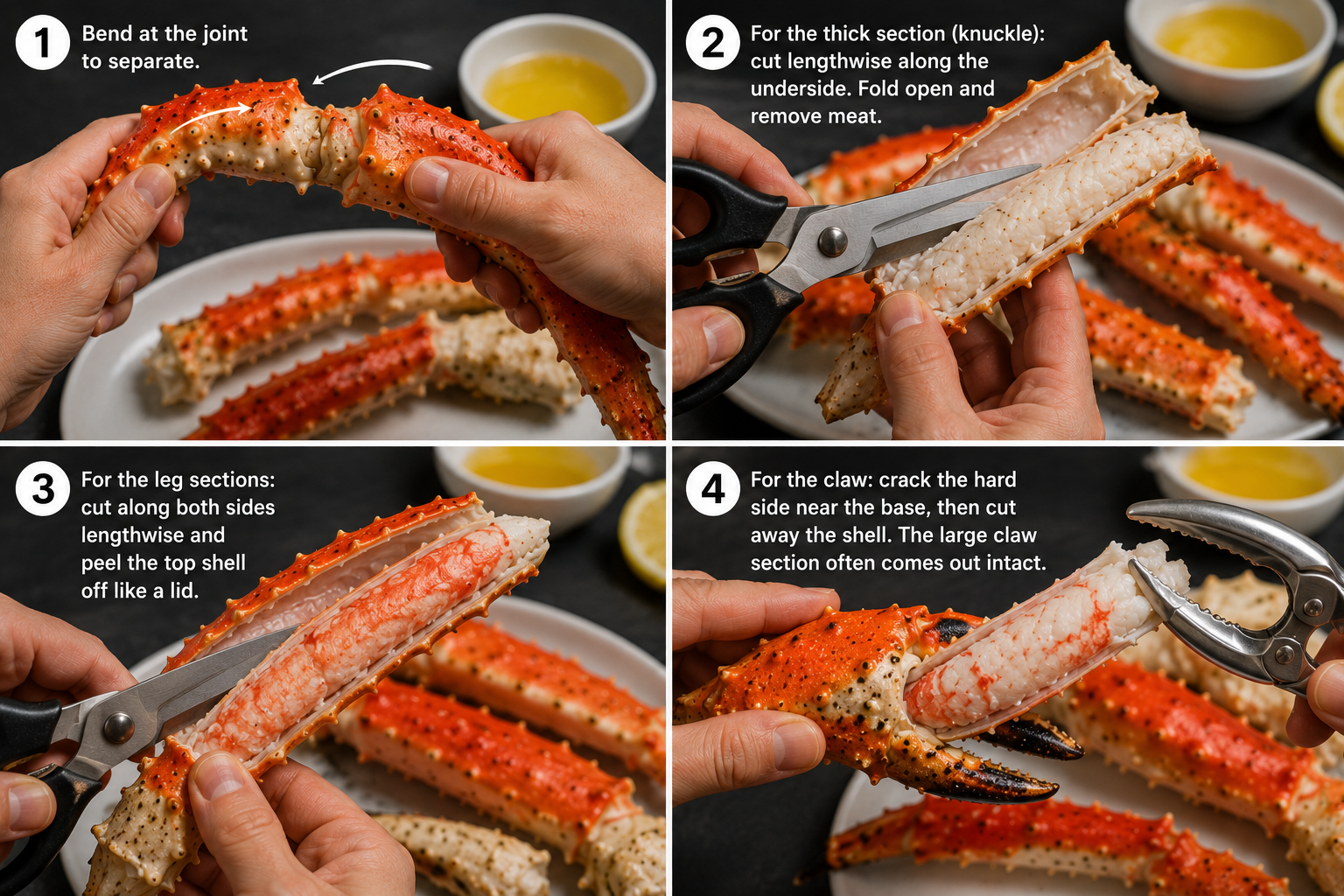
Step 1: Bend each leg at the joint to separate the sections. The joints are the flex point — apply firm downward pressure and they pop apart cleanly.
Step 2: For the thick section (knuckle): use kitchen shears to cut lengthwise along the underside of the shell (the softer, slightly lighter-colored side). Fold the shell open like a book. The meat slides out in one piece.
Step 3: For the leg sections: cut along both sides lengthwise and peel the top shell off like a lid.
Step 4: For the claw: crack the hard side with a seafood cracker near the base, then use shears to cut away the shell. The large claw section often comes out intact if cracked correctly.
What to avoid: Smashing the shell with a mallet. This works but fragments shell into the meat. Shears give cleaner results with less debris.
The meat near the joint (knuckle meat) is often overlooked — it’s fattier and more flavorful than the main leg sections. Don’t discard it.
Tips That Actually Improve The Result
Don’t rinse pre-cooked frozen legs under hot water to thaw. Hot water partially cooks the outer meat while the interior remains frozen. Cold water is fine, but refrigerator thawing is best.
Season the steam water, not just the dipping sauce. Adding lemon, bay leaf, and fresh herbs to the steaming water contributes subtle aromatic depth that carries through to the meat.
Rest after cooking — briefly. Just 2–3 minutes after removing from heat. The residual heat inside the shell continues cooking slightly. Resting prevents you from biting into meat that’s still uneven in temperature.
Cut before grilling. Splitting the shell lengthwise before grilling opens the meat to direct heat and smoke. This is the single change that makes grilled king crab dramatically better than just laying whole legs on the grate.
Use unsalted butter in garlic butter preparations. King crab is already naturally high in sodium. Salted butter compounds this. Using unsalted butter and adding a pinch of flaky sea salt at the end gives you control.
Don’t reheat more than once. King crab meat that has been cooked, cooled, and reheated once is fine. A second reheat cycle produces noticeably tougher, drier meat — at that point, use it cold in a crab salad rather than heating again.
Frequently Asked Questions
Are Alaskan king crab legs already cooked? Yes, in almost all commercial cases. They are cooked and flash-frozen at sea or at processing facilities. You are reheating them, not cooking from raw. This is why most recipes have relatively short cook times.
How long to boil king crab legs? 5–6 minutes for thawed legs from a rolling boil. 8–10 minutes from frozen. Beyond 10 minutes produces diminishing returns in texture.
Is it better to boil or steam Alaska king crab legs? Steaming produces better texture — the meat retains more moisture and natural sweetness. Boiling is faster and acceptable, but direct water contact draws some flavor out over time.
Can you cook king crab legs without thawing? Yes. Add 50% more time to any method. Use a thermometer to confirm the interior has reached 145°F (63°C) before serving.
What is the best method for cooking king crab legs? Steaming for pure texture. Garlic butter stovetop for flavor. Grilling for smoke and complexity. Oven baking for convenience with large portions.
Are king crab legs healthy to eat? Very high in protein, extremely low in fat, and rich in zinc, selenium, and vitamin B12. The primary concern is natural sodium content, which is elevated. Healthy for most people in moderation; monitored for those managing hypertension.
Is crab good for hypertension? The omega-3s and potassium support heart health, but the sodium content is significant. Steamed with no added salt is the best preparation for people managing blood pressure. Limit to occasional consumption rather than weekly.
How do you eat king crab legs for beginners? Use kitchen shears to cut the shell lengthwise, fold open, and slide the meat out. Bend at joints to separate sections first. A seafood cracker handles the thick claw sections.
How much king crab per person? As a main course: 1 to 1.5 lbs of whole legs per person. Around 40–45% of that weight is actual meat. As part of a larger seafood spread: 0.75 lbs per person is sufficient.
Can you reheat king crab legs? Yes — steam for 4–5 minutes, oven at 350°F wrapped in foil for 10–12 minutes, or microwave wrapped in a damp towel for 2 minutes. Avoid reheating more than once.
Conclusion
Cooking Alaskan king crab legs well comes down to one foundational fact: they’re already cooked. Your job is reheating, not cooking. Once that registers, the method becomes about flavor and convenience rather than food safety timers.
Steaming is the most reliable method for preserving texture. Garlic butter stovetop delivers the richest flavor. Grilling adds a dimension no other method replicates. And oven baking is the practical choice when you’re feeding more than two people.
Nutritionally, king crab is one of the more impressive whole-food protein sources available — lean, rich in B12, selenium, and zinc, with a meaningful omega-3 contribution. The sodium is real and worth noting, but it doesn’t disqualify king crab from a balanced diet. It just means being thoughtful about what else you’re eating alongside it.