Snow Crab Legs Recipe: How Long to Boil Frozen, Steam, Bake & Healthy Cooking Methods
Snow Crab Recipe: Every Cooking Method Explained

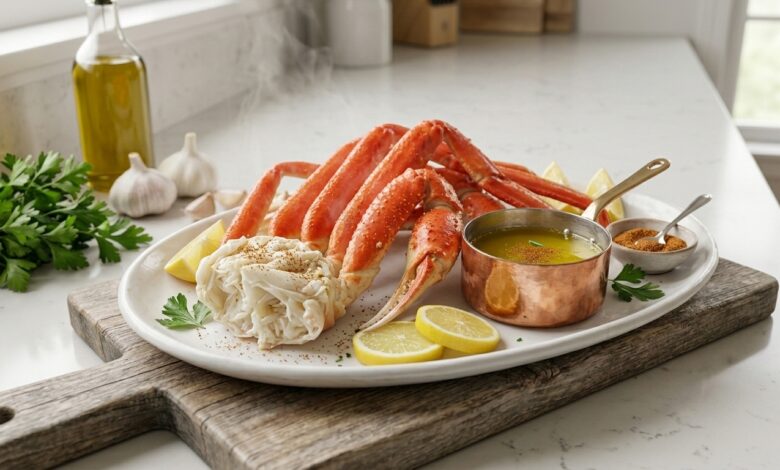
Snow crab legs have a reputation for being restaurant food — something you order at a seafood boil spot and never attempt at home. That reputation is undeserved. A good snow crab recipe at home is faster than driving to a restaurant, costs less per pound, and gives you control over seasoning that no kitchen can match when they are cooking 40 orders at once.
What You Need to Know Before You Start Cooking
Snow crab legs sold at virtually every grocery store and seafood market are already cooked. They are steamed and flash-frozen on the boat or at the processing facility shortly after harvest. This means you are not cooking raw seafood — you are reheating cooked meat inside a shell. That distinction changes everything about how you approach timing and temperature.
Overcooking is the primary mistake people make. The goal is internal temperature of 145°F (63°C) at the thickest point of the cluster, reached as gently and quickly as possible. Prolonged heat drives moisture out through the shell and leaves the meat dry and stringy instead of tender and sweet.
Thawed vs. frozen: You can cook snow crab legs straight from frozen — add roughly 5 additional minutes to any method. Thawing overnight in the refrigerator is the preferred approach when you have time. It produces more even heating and better texture. Never thaw at room temperature; the outer meat warms and starts to degrade before the inner sections thaw.
Simple Snow Crab Recipe: The Classic Old Bay Boil
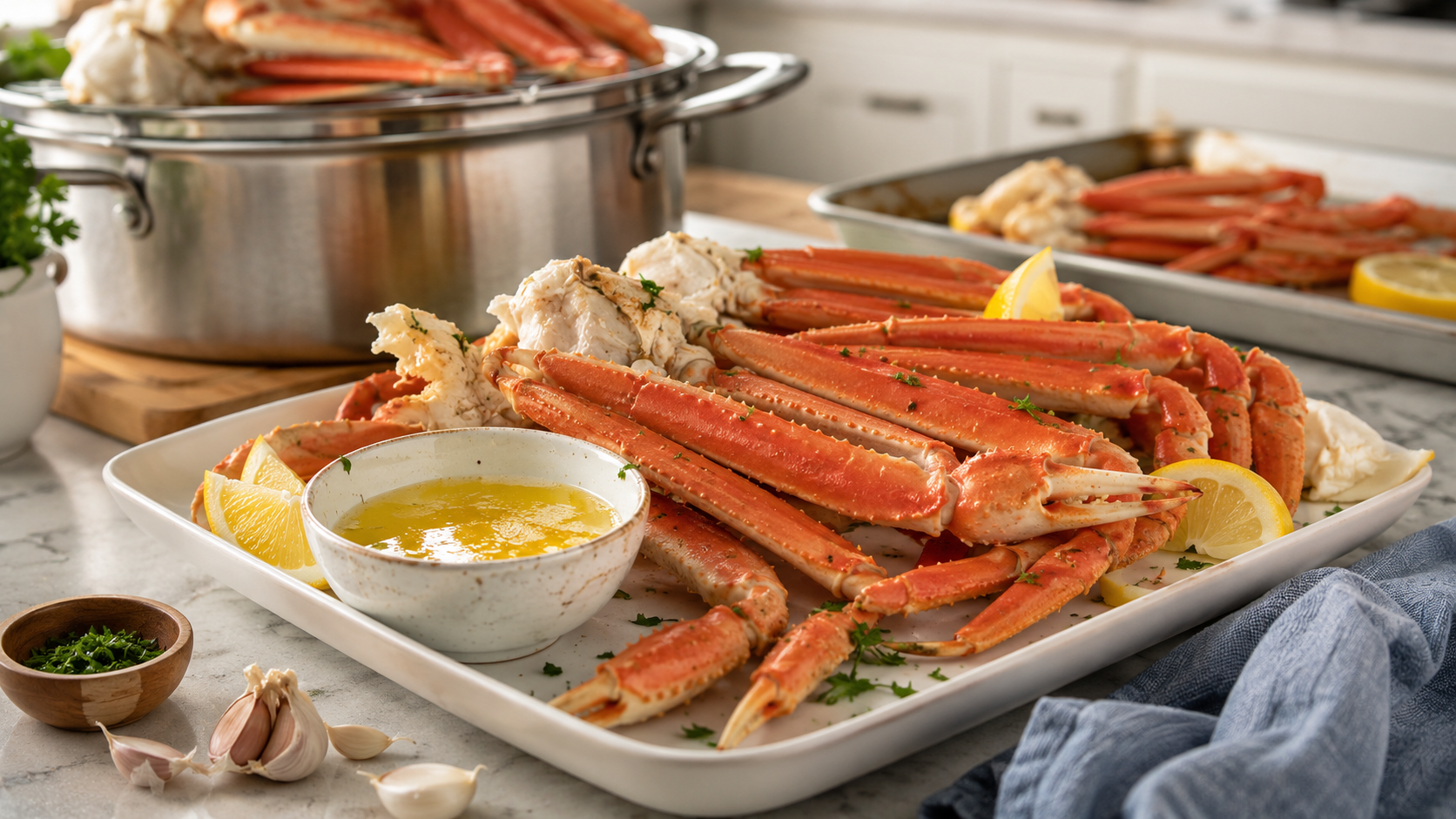
Boiling is the most forgiving method and the one most people are familiar with. The Old Bay version below is the benchmark — sweet, peppery, citrusy, and matched to the natural flavor of snow crab without overpowering it.
Ingredients (serves 2–3):
- 2 lbs snow crab leg clusters (thawed or frozen)
- 4 quarts water
- 3 tbsp Old Bay seasoning
- 1 lemon, halved
- 4 cloves garlic, smashed (not minced — smashed releases flavor without making the water cloudy)
- 1 tbsp kosher salt
- 1 tsp black peppercorns
- 2 bay leaves
- Optional: ½ cup beer (a light lager adds a subtle malty depth)
For serving:
- Clarified butter or drawn butter
- Lemon wedges
- Extra Old Bay on the side
Method:
- Fill a large stockpot with 4 quarts of water. Add Old Bay, salt, garlic, peppercorns, bay leaves, and squeeze both lemon halves into the water — drop the spent halves in as well.
- Bring to a full rolling boil over high heat. Do not add the crab until the water is fully boiling; putting crab into warm water causes uneven cooking.
- Add snow crab clusters using tongs. If legs are frozen, add them straight in — the water will briefly stop boiling, which is fine.
- Thawed crab: Return to boil and cook 4–6 minutes. Frozen crab: Cook 8–10 minutes after water returns to boil.
- Remove with tongs. The shell will be bright orange-red and will feel hot through tongs. Do not leave crab in the water after cooking — residual heat continues cooking the meat.
- Serve immediately with drawn butter and lemon.
Drawn butter method: Melt 1 stick (4 oz) unsalted butter over low heat. Skim the white foam from the surface. What remains is the clear, golden drawn butter — pure butterfat with no milk solids, which means it does not burn and does not interfere with the crab’s flavor.
Calories per serving (2 lbs divided by 2, no butter): approximately 200–240 kcal from the crab itself. Add 100 calories per tablespoon of drawn butter consumed.
Snow Crab Recipe Steam Method
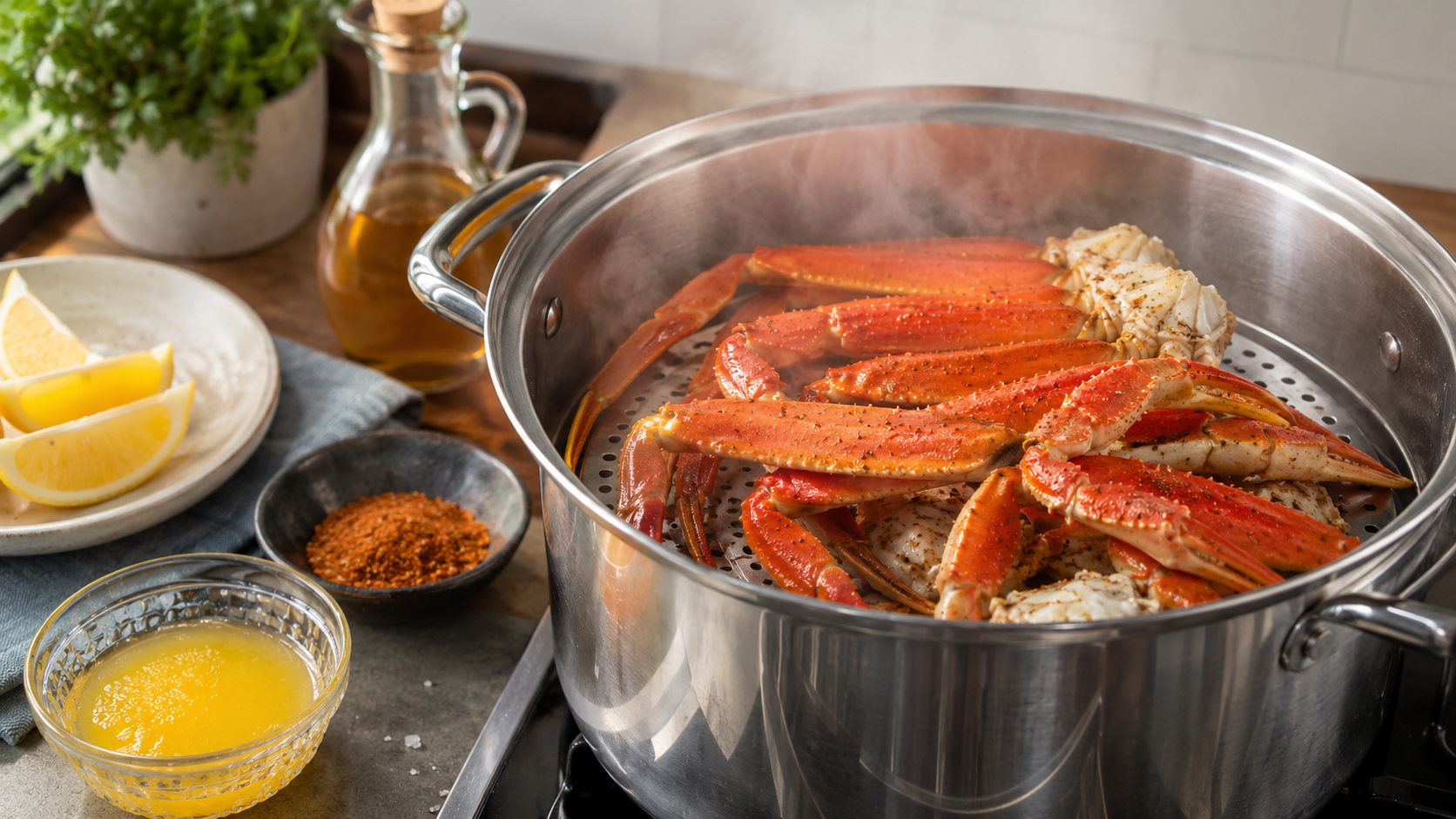
Steaming produces noticeably juicier meat than boiling because the legs are not submerged — no flavor washes out into the water. It is the preferred method among seafood cooks who want to taste the crab rather than the seasoning water.
Ingredients (serves 2):
- 2 lbs snow crab leg clusters
- 2 cups water
- 1 cup apple cider vinegar (the vinegar steams into the shell and brightens the flavor — this is the detail most home cooks skip)
- 2 tbsp Old Bay
- 1 tsp salt
Method:
- Place a steamer rack inside a large pot. Add water and vinegar beneath the rack — liquid should not touch the rack.
- Bring liquid to a boil over high heat. Add Old Bay and salt to the steaming liquid.
- Arrange crab clusters on the rack. If the pot is crowded, stack loosely — steam circulates better than water, so slight crowding is acceptable.
- Cover tightly and steam. Thawed: 5–7 minutes. Frozen: 10–12 minutes.
- Check for doneness — shells will be uniformly hot and the meat at the thickest cluster joint should register 145°F.
- Serve directly from the pot with butter and lemon.
Why vinegar? The acetic acid in apple cider vinegar penetrates the shell slightly during steaming and adds a faint brightness to the meat without sourness. Professional crab houses in Maryland and Virginia have used this technique for decades. White vinegar works too, but apple cider vinegar has a gentler, fruitier profile.
Snow Crab Recipe Oven Method: Baked with Garlic Butter
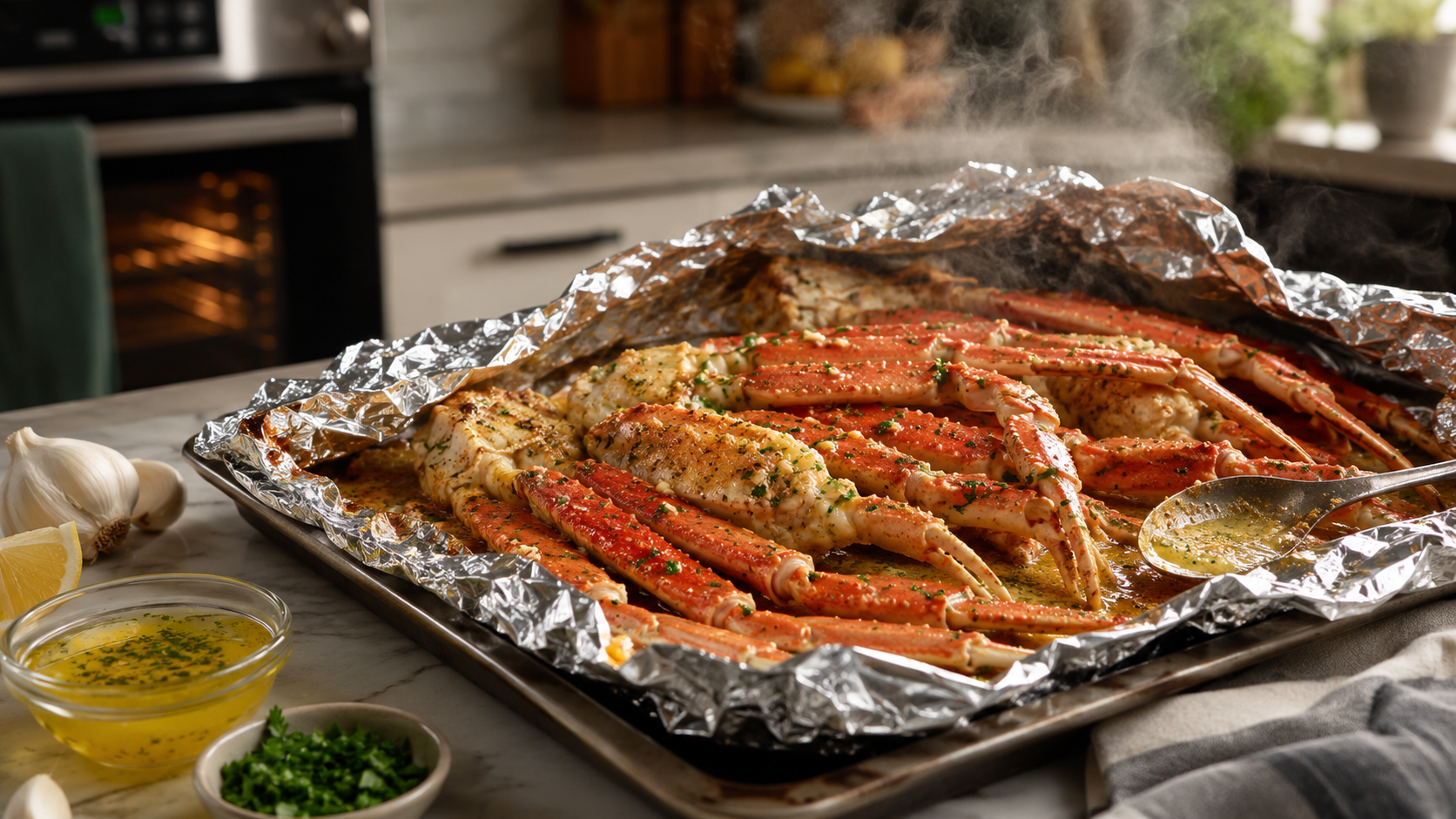
Oven-baked snow crab delivers a different result than boiling or steaming — the butter caramelizes against the shell, and the enclosed heat keeps moisture locked inside the foil. This is the method to use when you want the flavor of restaurant crab legs with a buttery, herb-forward profile.
Ingredients (serves 2–3):
- 2 lbs snow crab leg clusters, thawed
- 4 tbsp unsalted butter, melted
- 4 cloves garlic, finely minced
- 1 tbsp fresh parsley, chopped
- 1 tsp lemon zest
- ½ tsp smoked paprika
- ¼ tsp cayenne pepper (optional)
- Salt and pepper to taste
- Heavy-duty aluminum foil
Method:
- Preheat oven to 375°F (190°C).
- Mix melted butter with garlic, parsley, lemon zest, paprika, and cayenne in a small bowl.
- Lay a large sheet of heavy-duty foil on a baking sheet. Arrange crab clusters in a single layer on the foil. Drizzle garlic butter mixture generously over the legs, getting into the joints and crevices where the meat is thickest.
- Fold the foil up and over the legs, crimping the edges tightly to form a sealed packet. This traps steam inside and prevents the meat from drying out.
- Bake 15–18 minutes for thawed, 22–25 minutes for frozen.
- Carefully open the foil packet — hot steam releases quickly. Serve directly from the foil with the cooking juices spooned over the top.
The foil packet technique is the single biggest variable in oven-cooked crab. Leaving the legs uncovered or loosely covered causes moisture evaporation and dry, tough meat. A tight seal produces juicy, butter-soaked legs that stay hot at the table longer than any other method.
Frozen Snow Crab Recipe: How Long to Boil Frozen Snow Crab Legs on the Stove
This is the most searched practical question about snow crab, so it deserves a direct answer with specifics:
From fully frozen in boiling, seasoned water:
- Small clusters (under 1 lb each): 8 minutes after water returns to boil
- Medium clusters (1–1.5 lb each): 10 minutes after water returns to boil
- Large clusters (over 1.5 lb): 12 minutes after water returns to boil
Signs of doneness from frozen:
- Shell is uniformly bright orange-red throughout (gray or dark spots indicate undercooked sections)
- The meat pulls away from the shell slightly at cut ends
- The thickest joint registers 145°F with an instant-read thermometer
One important point: When you add frozen crab legs to boiling water, the pot will stop boiling temporarily. Start your timing only after the water returns to a full boil — not from when you added the crab. This is where most timing errors happen.
Ways to Cook Snow Crab: Grilling for a Char-Kissed Finish
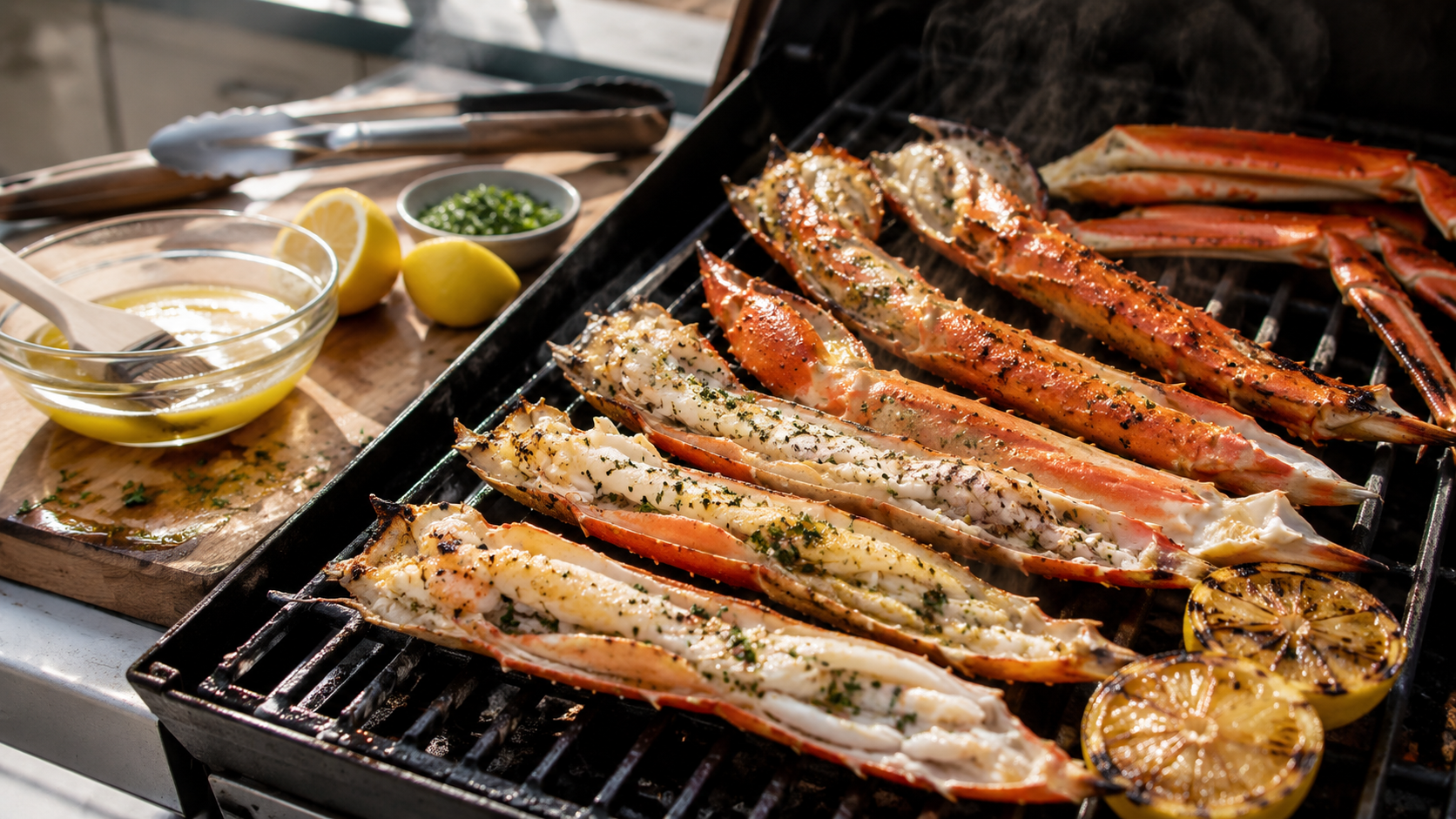
Grilling is underused for snow crab and produces a result that no other method replicates — a light char on the shell that transfers a faint smokiness to the meat, combined with the natural sweetness of the crab. It works best with thawed legs split down the center so the meat is exposed to direct heat.
Method:
- Thaw crab legs completely. Using kitchen shears, cut along the top of the shell lengthwise to expose the meat — do not cut all the way through.
- Brush exposed meat with garlic butter or olive oil with lemon and herbs.
- Grill over medium-high heat, meat-side down, for 3–4 minutes. Flip and grill shell-side down for another 3–4 minutes.
- Serve immediately — grilled crab cools quickly.
The split-and-grill technique is also the easiest way to eat snow crab. Pre-splitting the shell before cooking means no cracking at the table, and the meat lifts out in one clean piece.
Snow Crab Nutrition: Calories, Protein, and Health Value
Snow crab is one of the leanest and most nutrient-dense seafood options available. Here is the breakdown for 3 oz (85g) of cooked snow crab meat, without butter or seasoning:
Nutrient |
Amount per 3 oz |
| Calories | 90–98 kcal |
| Protein | 17–19 g |
| Total Fat | 1–1.5 g |
| Saturated Fat | 0.1–0.2 g |
| Carbohydrates | 0 g |
| Sodium | 540–590 mg |
| Cholesterol | 55–60 mg |
| Omega-3 fatty acids | 400–500 mg |
Key Micronutrients in Snow Crab
- Vitamin B12: One 3 oz serving provides approximately 400–450% of daily recommended intake. B12 supports neurological function, red blood cell production, and DNA synthesis — and snow crab is one of the richest natural sources outside of liver.
- Zinc: 5–6 mg per serving, critical for immune defense, wound healing, and testosterone regulation.
- Selenium: Around 40–45 mcg per serving — a potent antioxidant that supports thyroid function and protects cells from oxidative damage.
- Phosphorus and magnesium: Both present in meaningful amounts for bone density and muscle function.
- Copper: Snow crab is notably high in copper, supporting iron absorption and connective tissue formation.
Snow crab’s sodium content (540–590 mg per 3 oz of plain meat) is its most notable nutritional caveat. This is naturally occurring sodium from the seawater environment, not added salt. People on strict low-sodium diets should account for this, and the boiling water seasoning — if heavily salted — can add further sodium absorbed through the shell joints.
Healthy Snow Crab Recipe: Steamed with Herb Citrus Sauce
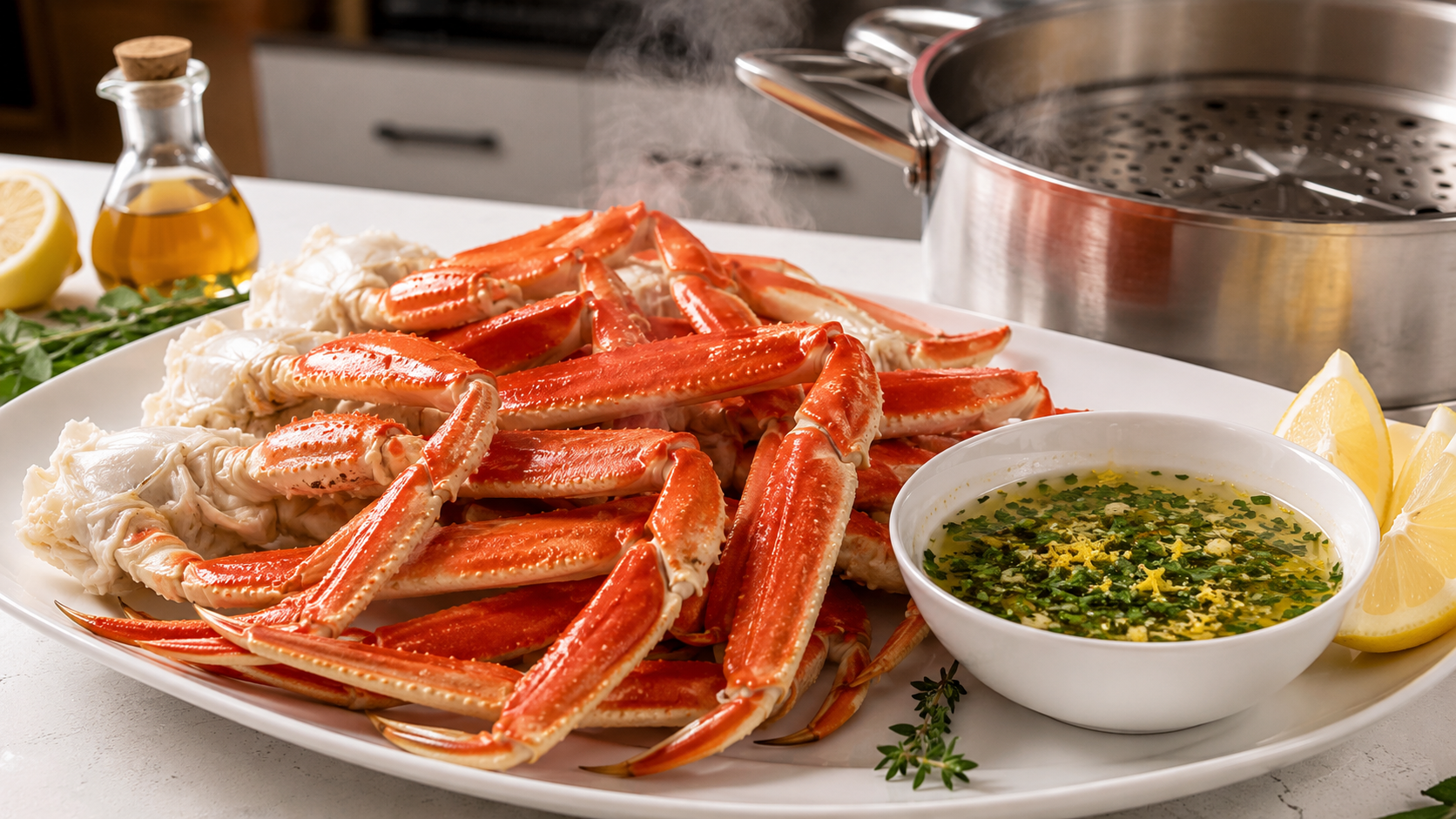
For a preparation that maximizes the nutritional profile without adding saturated fat from butter:
Ingredients (serves 2):
- 2 lbs snow crab clusters, thawed
- Steaming liquid: water + apple cider vinegar (as described above)
Herb Citrus Dipping Sauce (replaces drawn butter):
- 3 tbsp extra-virgin olive oil
- 2 tbsp fresh lemon juice
- 1 tbsp fresh flat-leaf parsley, finely chopped
- 1 tsp fresh chives, sliced
- ½ tsp lemon zest
- ¼ tsp garlic powder
- Pinch of sea salt and black pepper
Method:
- Steam crab as described in the steam method above.
- Whisk all sauce ingredients together. Let sit 5 minutes before serving so the herbs bloom in the oil.
- Serve crab alongside the herb citrus sauce for dipping.
Nutrition comparison per serving:
With Drawn Butter (2 tbsp) |
With Herb Citrus Sauce (1 tbsp) |
|
| Calories added | +200 kcal | +60 kcal |
| Saturated Fat added | +14 g | +1 g |
| Flavor profile | Rich, buttery | Bright, fresh, herbal |
The olive oil sauce is not a compromise. The citrus and herbs genuinely enhance snow crab’s sweetness in a different direction than butter — lighter, more acidic, and cleaner on the palate. For people managing cholesterol, cardiovascular risk, or caloric intake, this swap is practical rather than punishing.
Tips for Getting the Best Results from Snow Crab
- Do not waste the boiling liquid. The liquid from boiling or steaming snow crab — especially with Old Bay, garlic, and lemon — is essentially a light seafood stock. Strain and freeze it. It is excellent as a base for clam chowder, seafood risotto, or shrimp bisque.
- Shell cracking technique matters. Snow crab shells are thinner and softer than king crab. A crab cracker works, but kitchen shears are faster and cleaner. Cut along the flat side of each leg section and peel back the shell — the meat slides out intact rather than in fragments.
- The smell test before you cook. Thawed snow crab should smell clean and faintly oceanic — slightly sweet, like cold seawater. A sour smell, ammonia, or any off-odor means the crab has deteriorated. Do not cook or eat it.
- Season the butter, not just the water. Most recipes focus entirely on the boiling water seasoning. The butter you serve alongside deserves equal attention. A small amount of Old Bay, lemon zest, and a pinch of cayenne stirred into warm drawn butter transforms the dipping experience.
- Do not reheat leftovers in the microwave. Microwave reheating creates uneven hot spots and steam pressure inside the shell — the result is rubbery, overcooked meat. Reheat leftover snow crab in a steamer for 3–4 minutes or in a 325°F oven in a covered foil packet with a splash of water for 8–10 minutes.
- Serving temperature is part of the dish. Snow crab cools quickly. Warm the plates before serving, work in small batches if cooking for a crowd, and have the dipping sauce hot. A lukewarm crab leg with cold butter is a noticeably diminished experience.
Frequently Asked Questions
How long do you boil frozen snow crab legs on the stove? After adding frozen legs to fully boiling water, cook for 8–12 minutes depending on cluster size. Start timing only when the water returns to a full boil after adding the crab, not from when you added them.
Can you cook snow crab legs without thawing them? Yes. Add 4–5 extra minutes to any method. The results are slightly less even than cooking from thawed, but perfectly acceptable for boiling and steaming.
What is the best snow crab recipe for beginners? The Old Bay boil is the most forgiving — wide timing window, no special equipment, easy to scale. Steaming produces better flavor once you have made it once and understand the timing.
How do you know when snow crab is done? The shell should be uniformly bright orange-red with no gray areas. Internal temperature at the thickest joint should reach 145°F. The meat at cut ends should appear opaque and white, not translucent.
What seasoning goes best with snow crab? Old Bay is the classic and for good reason — its blend of celery salt, paprika, and pepper complements crab’s natural sweetness without masking it. Cajun seasoning is a bolder alternative. Lemon, garlic, and butter work in any method and format.
Is snow crab healthy? Very. Snow crab is extremely lean (under 100 calories per 3 oz), high in protein (17–19g per serving), and delivers exceptional amounts of vitamin B12, zinc, and selenium. The naturally occurring sodium is the primary nutritional consideration for people on restricted sodium diets.
How many calories are in snow crab legs? Approximately 90–98 calories per 3 oz of plain cooked meat. A 1 lb cluster yields roughly 4–5 oz of edible meat, so approximately 120–165 calories from the crab itself before any butter or seasoning.
Can you eat snow crab on a diet? Snow crab is one of the best proteins available for caloric restriction because of its extremely low fat content and high protein per calorie ratio. The main variable is what you serve it with — drawn butter adds approximately 100 calories per tablespoon.
What is the difference between snow crab and king crab? Snow crab is smaller, has thinner shells, and has a slightly sweeter, more delicate flavor than king crab. King crab legs are meatier per leg and carry a more robust, ocean-forward taste. Snow crab is significantly more affordable and widely available. Both are pre-cooked before sale.
Conclusion
Snow crab is one of those ingredients that rewards simplicity. Every method covered here — boiling, steaming, oven baking, grilling — works well when you respect the single most important rule: the crab is already cooked, and your only job is to heat it through without drying it out.
Boiling with Old Bay delivers the classic, communal seafood boil experience. Steaming preserves more of the crab’s natural sweetness. The oven with garlic butter is the method that most closely replicates restaurant-quality results at home. Grilling, for those who have tried it, produces something genuinely different — a light char on the shell that carries into the meat and makes the sweetness pop.
From a nutritional standpoint, snow crab is a standout protein — lean, rich in B12, zinc, and selenium, and completely free of carbohydrates. The butter and seasoning you add around it are the variables that shape the health profile of the final dish. The herb citrus sauce is a practical alternative that does not feel like a compromise once you have tried it.