Cooked Crab Legs In The Fridge: Exact Shelf Life, Storage Rules & Spoilage Signs

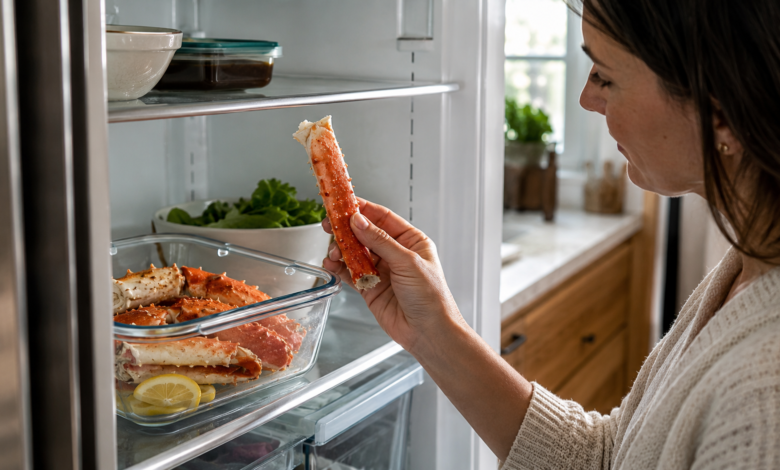
Crab legs are one of those foods where the margin between “perfectly fine” and “quietly dangerous” is thinner than most people realize. You pulled them out of the steamer, everyone ate their fill, and now a generous portion sits in the refrigerator. The question isn’t just how long they last — it’s whether you actually know what “gone bad” looks like before it goes wrong.
The short answer: cooked crab legs stay safe in the refrigerator for 3 to 5 days when stored correctly. But the storage method, the shell status, and whether they were previously frozen all change that window more than most food safety guides acknowledge.
How Long Will Cooked Crab Legs Last In The Fridge
The 3–5 Day Rule — And Why It’s Not Always That Simple
The USDA and FDA both place cooked shellfish, including crab, in the 3–5 day refrigerator window. That applies to crab legs stored at or below 40°F (4°C). What the standard guidance often glosses over is that this window starts counting from the moment the crab was cooked — not from when you put it in the fridge.
If you bought “fresh cooked” crab from a seafood counter and it sat in their display case for a day before you picked it up, your at-home clock is already ticking. In practice, most home-cooked crab legs used within 2–3 days have the best flavor and texture, even if they’re technically safe on day 5.
Crab in the shell holds up slightly better than shelled crab meat because the shell acts as a partial barrier against oxidation and moisture loss. That said, the shell also traps heat more readily, so cooling time after cooking matters.
Cooked Crab In Shell — Does The Shell Help Or Hurt Fridge Life?
This comes up often: does leaving the shell on extend refrigerator storage? Marginally, yes. The shell slows surface drying and limits direct air exposure to the meat. However, it also makes it harder to spot early signs of spoilage on the meat itself.
If you’re planning to store crab legs for 3–4 days, leaving them in the shell is fine. If you’re keeping them longer and plan to use the meat in a dish, shelling them, placing the meat in an airtight container, and covering with a very small amount of water or seafood stock keeps the texture more stable.
Cooked crab stored in the shell: 3–5 days Cooked crab meat (removed from shell): 3 days, after which texture degrades noticeably
How Long Can Crab Legs Stay In The Fridge After Thawing
Pre-cooked frozen crab legs are common, and the thawing step adds a layer of confusion. The safest rule: once thawed in the refrigerator, cooked crab legs should be consumed within 24–48 hours.
Thawing at room temperature or under cold running water significantly shortens this window. If you thawed crab legs using the cold-water method and they’ve been sitting in the fridge afterward, treat them as day-1 of a 24-hour clock, not a 3-day clock.
Never refreeze thawed crab legs unless you cook them into a new dish first (like a crab bisque or stuffed pasta). Refreezing degrades both texture and food safety margins.
Can You Eat Cooked Crab After 5 Days?
No, it is better not to eat cooked crab after 5 days in the fridge. Even if it looks normal, cooked crab after 5 days is outside the safest leftover window.
This is where many articles become too soft. They say “check the smell” and leave the decision open. That is not strong advice for seafood. Some spoilage is obvious, but some harmful bacteria do not always create a dramatic smell, color change, or slimy texture.
You should be even more careful if the crab is for:
- children
- older adults
- pregnant people
- anyone with a weakened immune system
- anyone recovering from illness
FDA notes that pregnant women, children, older adults, and people with weakened immune systems are at greater risk for serious foodborne illness.
How Long Can Uncooked Crab Legs Stay In The Fridge
Raw crab legs are considerably more time-sensitive than cooked. Live or raw crab should be cooked within 24 hours of purchase. Raw frozen crab legs that have been thawed hold up for about 1–2 days in the refrigerator before quality drops sharply.
The distinction matters because raw crab carries a higher bacterial load — particularly Vibrio vulnificus in warm-water species — that multiplies rapidly even at refrigerator temperatures over time. If you’re unsure whether raw crab is still good, smell is your best indicator, but texture (mushy flesh, slimy shell surface) is often more reliable.
Why Cooked Crab Legs Spoil Faster Than People Expect
Crab spoils quickly because it has moist meat, delicate protein, and natural seafood enzymes. The shell can also hold liquid from steaming, boiling, or seafood boil seasoning.
Another issue is the temperature danger zone. Bacteria grow quickly between 40°F and 140°F, and cooked seafood should not be left out too long after serving. FoodSafety.gov says perishable seafood should not remain out of the refrigerator for more than 2 hours, or 1 hour above 90°F / 32°C.
This matters at crab boils, buffets, family dinners, and restaurant takeout. If crab legs sat on the table for 3 hours before going into the fridge, they should not get a fresh 3–4 day storage window.
Simple Steamed Crab Legs Recipe
Ingredients (Serves 2)
- 2 lbs crab legs (snow crab or king crab)
- 4 cups water
- 2 tbsp Old Bay seasoning or seafood spice blend
- 2 tbsp unsalted butter
- 2 cloves garlic, minced
- 1 lemon, halved
- Fresh parsley (optional garnish)
Step-By-Step Method

Step 1: Fill a large pot with 4 cups of water. Add Old Bay seasoning. Bring to a rolling boil.
Step 2: If crab legs are frozen (pre-cooked and frozen), they only need to be heated through — about 4–5 minutes in the steamer basket. Fresh raw crab legs need 8–10 minutes.
Step 3: While crab steams, melt butter in a small saucepan. Add garlic and sauté 1–2 minutes until fragrant. Squeeze half a lemon into the butter. Set aside.
Step 4: Remove crab legs with tongs. Serve immediately with garlic butter and lemon wedges.
The key mistake most people make: overcooking. Pre-cooked frozen crab legs only need to reach serving temperature — excessive heat turns the meat rubbery and accelerates moisture loss that will shorten fridge storage life.
Healthy Crab Legs Recipe Variation
For a lighter preparation, skip the butter and use this instead:
- 1 tbsp extra virgin olive oil
- 1 tsp lemon zest
- 1 tbsp fresh dill or parsley
- Pinch of chili flakes
- Salt and pepper
Steam the same way. Drizzle with olive oil mixture after plating. This version works well cold — which also makes leftover storage and repurposing easier.
Crab Legs Nutrition And Calorie Breakdown
Per 3 oz (85g) of cooked king crab meat:
| Nutrient | Amount |
| Calories | 82 kcal |
| Protein | 16.5g |
| Total Fat | 1.3g |
| Saturated Fat | 0.1g |
| Carbohydrates | 0g |
| Sodium | 911mg |
| Cholesterol | 45mg |
| Omega-3 fatty acids | 400–500mg |
| Zinc | 6.5mg (59% DV) |
| Selenium | 37mcg (67% DV) |
Crab is genuinely one of the leaner high-protein seafood options available. The sodium content is naturally higher due to the marine environment — not added salt — but this is worth watching for people managing blood pressure.
The omega-3 profile in crab supports cardiovascular and cognitive health. Selenium, often overlooked, plays a role in thyroid function and antioxidant enzyme activity. Zinc from crab is in the heme-adjacent bioavailable form that the body absorbs more readily than plant-based zinc sources.
Butter adds approximately 100–150 kcal per tablespoon — the crab itself is lean, but preparation method determines whether this is a diet-friendly meal or a calorie-dense one.
How To Store Cooked Crab Legs Properly
Store cooked crab legs as soon as they cool slightly. Do not leave them on the counter until bedtime.
First, let steam escape for a few minutes. Then place the crab legs in a shallow airtight container or wrap them tightly in foil and put them inside a sealed bag. If the crab is very wet, lightly pat the shell dry before storing.
Do not store crab legs submerged in seafood boil liquid. The liquid may seem flavorful, but it carries salt, spices, butter, garlic, and food particles. That can make the crab smell stronger and lose texture faster.
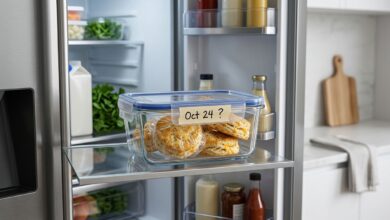
Put the container in the coldest part of the fridge, not in the door. Label the container with the date. This small step prevents the classic “Was this from Monday or Tuesday?” problem.
Best Way To Freeze Cooked Crab Legs
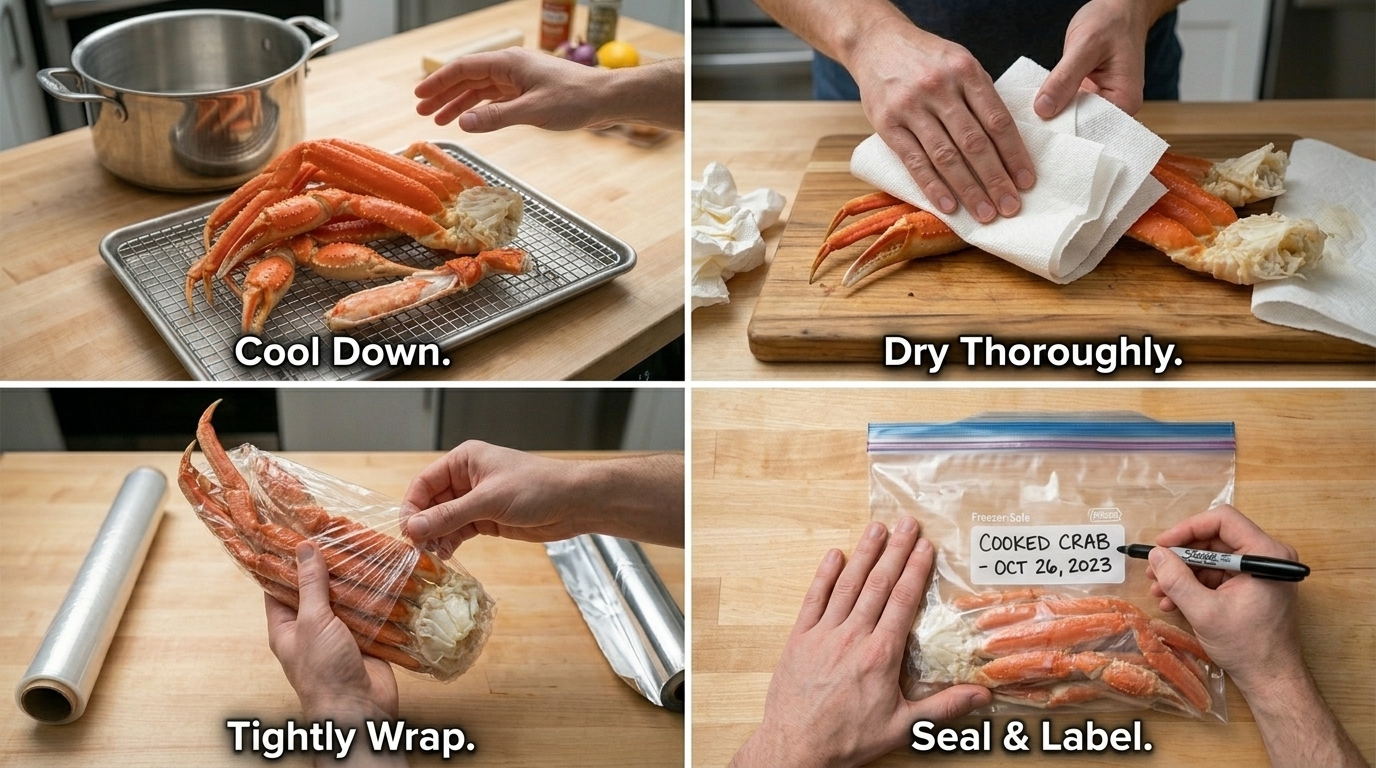
Freeze cooked crab legs if you know you will not eat them within 2 days. Do not wait until day 4 and then freeze them. Freezing late preserves old seafood; it does not reset freshness.
For freezing:
- Let the crab cool.
- Pat away extra surface moisture.
- Wrap tightly in plastic wrap or foil.
- Place inside a freezer-safe bag.
- Remove extra air.
- Label with the date.
For best quality, use frozen cooked crab legs within 2 to 3 months. They may remain safe longer if continuously frozen, but the texture becomes drier and more fibrous.
How To Reheat Cooked Crab Legs Without Ruining Them
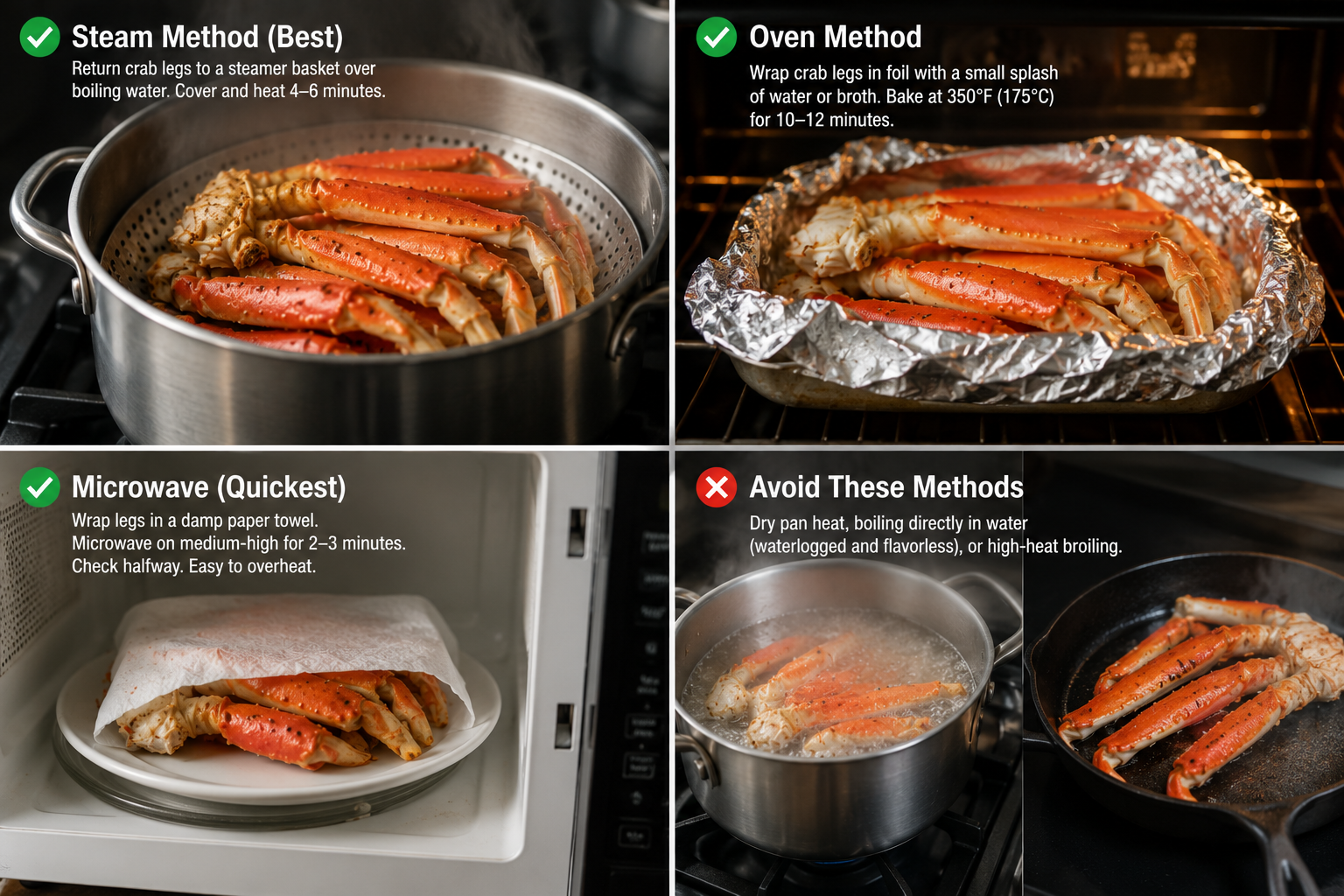
Reheating is where most leftover crab goes wrong. The meat dries out, tightens, and loses the delicate sweetness that makes crab worth eating. Three methods work well:
Steam Method (Best): Return crab legs to a steamer basket over boiling water. Cover and heat 4–6 minutes. This preserves moisture best.
Oven Method: Wrap crab legs in aluminum foil with a small splash of water or broth. Bake at 350°F (175°C) for 10–12 minutes. The foil creates a mini steam environment.
Microwave (Quickest but Riskiest): Wrap legs in a damp paper towel. Microwave on medium-high for 2–3 minutes. Check halfway. Easy to overheat.
Avoid: Dry pan heat, boiling directly in water (waterlogged and flavorless), or high-heat broiling.
How To Tell If Cooked Crab Has Gone Bad
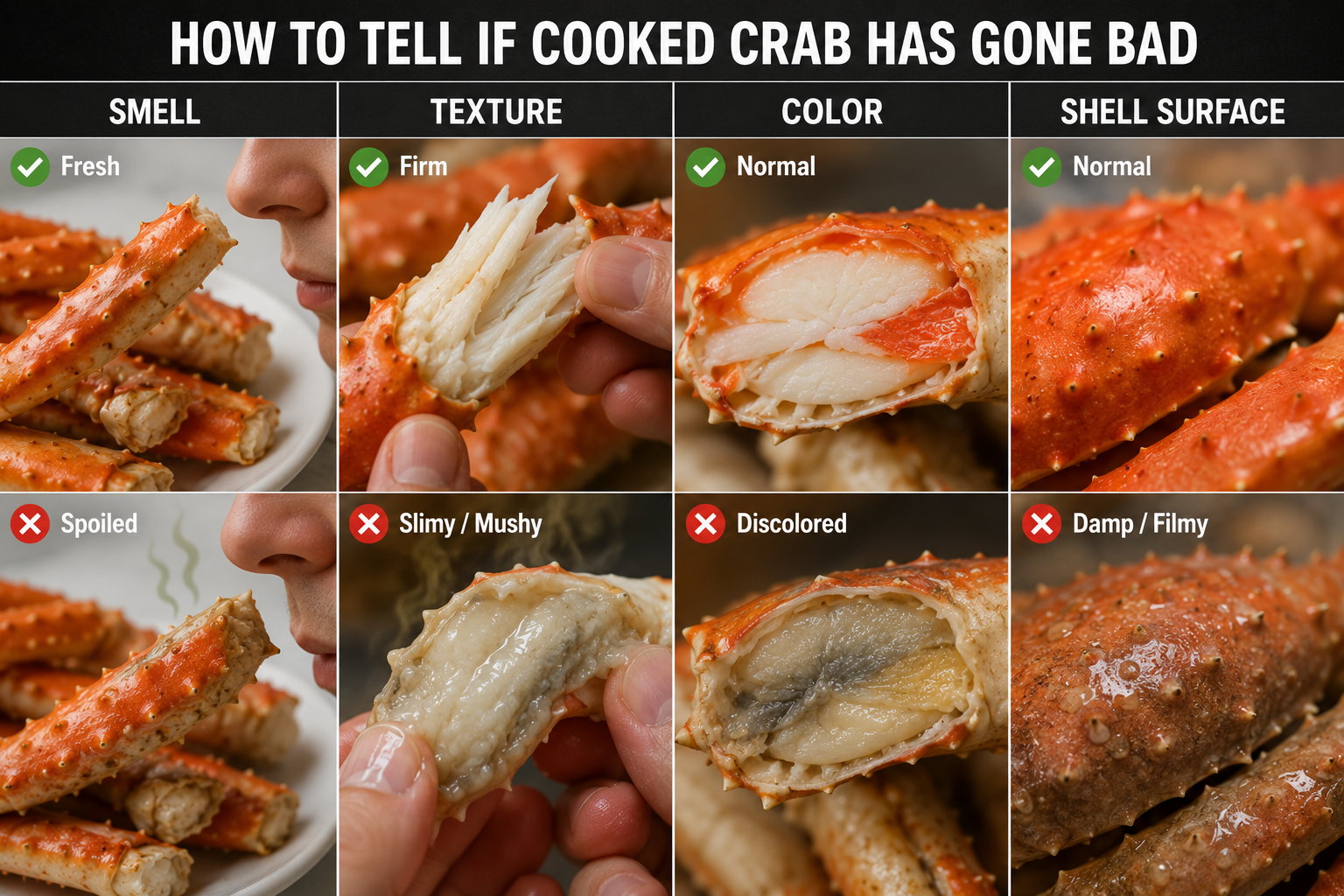
Trusting crab that’s been in the fridge too long isn’t a risk worth taking. Here are the actual signs to look for — not just the generic “if in doubt, throw it out”:
Smell: Fresh cooked crab smells oceanic and slightly sweet. Spoiled crab has a sharp, ammonia-like, or sulfuric odor. If it smells like a chemical or like it’s actively fermenting, it’s gone.
Texture: Meat should be firm and slightly springy. Slimy, mushy, or unusually sticky texture on the surface of the meat or shell signals bacterial breakdown — even if the smell seems okay.
Color: Cooked crab meat is white with reddish-orange tinges. Gray, yellowish, or black discoloration on the meat itself (not the shell exterior) is a spoilage sign.
Shell surface: A film or unusual dampness on the outside of the shell, especially with any color change, is a red flag.
Can you eat cooked crab after 5 days? Only if it was stored correctly at or below 40°F and you are confident in that storage chain. At day 5, you’re at the absolute edge of the recommended window. If there’s any doubt — wrong temperature, power outage, improperly sealed container — do not eat it. Food poisoning from shellfish moves fast and hits harder than most foodborne illnesses.
Storage Tips To Maximize Refrigerator Life
These aren’t generic tips — they make a real difference:
Use shallow containers. Crab legs in a deep pile trap residual heat longer, which accelerates bacterial growth in the center of the pile before the fridge fully cools them.
Don’t seal too tightly while still warm. Let crab cool to near room temperature (no longer than 2 hours total out of refrigeration) before sealing. Sealing hot traps steam, raises container temperature, and creates condensation that softens shell and meat.
Refrigerate at the right zone. The coldest part of most refrigerators is the back of the lowest shelf, not the door. Store crab there, not in a side door compartment.
Label with the cook date. This sounds obvious, but when crab goes into a container in the back of the fridge, “3 days ago” becomes an estimate by day 4.
Cooked crab freezes well. If you know you won’t eat it within 3 days, freeze it instead. Vacuum-sealed frozen crab legs stay good for 6–9 months. Standard freezer bags work for up to 3 months with decent quality retention.
Frequently Asked Questions
How long will cooked crab last in the fridge? 3 to 5 days when properly stored in an airtight container at 40°F or below. The quality is best within the first 3 days.
How long will cooked crab legs stay good in the refrigerator? Up to 5 days, same as other cooked crab. King crab, snow crab, and Dungeness all follow the same window. Shell-on storage provides marginally better texture retention.
How long is cooked crab good for in shell? 3–5 days in the fridge. The shell provides slight protection against drying out but doesn’t meaningfully extend the food safety timeline.
How long can crab legs stay in the fridge after thawing? Once thawed in the refrigerator, use within 24–48 hours. This is shorter than the standard cooked shellfish window because the thawing process stresses the meat further.
How long can uncooked crab legs stay in the fridge? Raw frozen crab legs that have been thawed: 1–2 days. Live or fresh raw crab: cook within 24 hours.
Can you eat cooked crab after 5 days? It’s at the outer edge of food safety guidelines. If stored perfectly and shows no signs of spoilage, it may technically be safe — but crab is high-risk shellfish. If you’re immunocompromised, pregnant, elderly, or feeding children, 3 days is a safer limit.
How do you know if cooked crab is spoiled? Ammonia or sulfur smell, slimy or mushy texture on the meat, gray or black discoloration of the meat, or unusual surface film on the shell. Any one of these is sufficient reason to discard.
Can you freeze leftover cooked crab legs? Yes. Vacuum-sealed, they last 6–9 months in the freezer. Standard zip-lock freezer bags work for up to 3 months. Freeze before the 3-day mark for best results.
Conclusion
Cooked crab legs last 3 to 5 days in the refrigerator — but that window only holds if the storage conditions actually meet the standard. Temperature, container, timing from cook to cool, and whether the crab was previously frozen all affect where in that range your specific batch falls.
When in doubt, smell and texture tell you more than the date. Crab spoils with a distinctly chemical, ammonia-forward odor that’s unmistakable once you’ve encountered it — and the texture shift happens before the smell fully develops in many cases.
If you’re storing more than you’ll realistically eat in 2–3 days, freezing is a smarter call than pushing the 5-day limit. Properly frozen crab legs reheat well and lose very little of their character if frozen promptly.