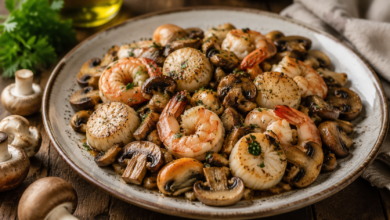
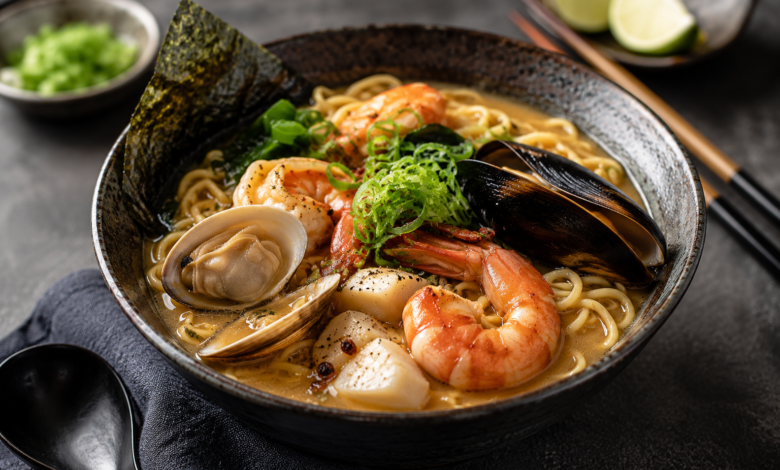
Seafood ramen sits in an odd spot in ramen culture. Ask a ramen purist in Japan, and many will tell you seafood-forward bowls are less common in the classic tonkotsu and shoyu traditions, which lean heavily on pork and chicken bones for their broth base. Yet seafood ramen has carved out its own lane — built on dashi, shrimp, scallops, and shellfish stock — and it has become one of the most searched ramen variations outside Japan, particularly in coastal regions and among people building seafood boil-style bowls at home.
Does Ramen Have Seafood? Understanding the Tradition
Seafood’s Actual Role in Classic Ramen
Most foundational ramen styles — tonkotsu (pork bone), shoyu (soy-based), and miso — are not built around seafood as the primary protein. However, seafood plays a significant supporting role in nearly every regional ramen tradition through dashi, the foundational Japanese stock made from kombu (kelp) and dried bonito flakes. Even a pork-based tonkotsu broth frequently gets a secondary seafood depth from a dashi base layered underneath it.
Standalone seafood ramen, where shrimp, scallops, squid, or fish are the headline protein rather than a background note, is most associated with coastal Japanese regions and with shio (salt-based) ramen styles, which have a lighter, cleaner broth that does not compete with delicate seafood flavor the way a heavier tonkotsu base would.
Seafood Ramen Name: What It’s Actually Called
In Japan, seafood-forward ramen is often labeled kaisen ramen (海鮮ラーメン), with “kaisen” specifically meaning seafood or marine products. You will also see it labeled as ebi ramen (shrimp-focused) or specific regional names tied to a particular coastal area’s signature broth. Outside Japan, “seafood ramen” has become a catch-all term that does not distinguish between these more specific traditional names, which is part of why recipe content online varies so much in approach.
Two Distinct Versions: Traditional Kaisen Ramen vs. Seafood Boil Ramen
Why This Distinction Matters
This is the detail most ramen content skips entirely, and it explains a lot of search confusion around terms like “seafood boil ramen.” There are genuinely two different dishes being searched under similar terms:
- Traditional kaisen-style seafood ramen — built on a dashi or shio base, topped with lightly cooked shrimp, scallops, and sometimes fish cake (narutomaki), aiming for a clean, oceanic broth flavor.
- Seafood boil ramen — a newer fusion trend, especially popular in the U.S., that takes the bold, Cajun or Old Bay-seasoned flavor profile of a Southern seafood boil and applies it to ramen noodles, often with crab legs, shrimp, corn, and sausage piled directly into a spicy, butter-rich broth.
Both are legitimate, but they are built on entirely different flavor logic — one prioritizes subtlety and dashi depth, the other prioritizes bold, well-seasoned richness closer to a gumbo or low country boil reimagined with ramen noodles instead of rice or bread. Recipe instructions for one will not translate well to the other.
Ingredients for Traditional Seafood Ramen (Kaisen Style)
What You Need (Serves 2)
- 2 portions fresh or dried ramen noodles
- 4 cups dashi stock (kombu and bonito-based, store-bought or homemade)
- 2 tbsp soy sauce (for a shoyu-leaning version) or 1 tbsp miso paste (for a milder shio-leaning version, adjusted to taste)
- 8 medium shrimp, peeled and deveined
- 6 large scallops
- 4 oz squid, cleaned and sliced into rings (optional)
- 2 soft-boiled eggs, halved
- 2 sheets nori (dried seaweed)
- 1 sheet narutomaki (fish cake), sliced, if available
- 2 green onions, thinly sliced
- 1 tsp sesame oil
- Chili oil or rayu, optional, for serving
Step-by-Step Method: Traditional Seafood Ramen
Building the Broth and Toppings
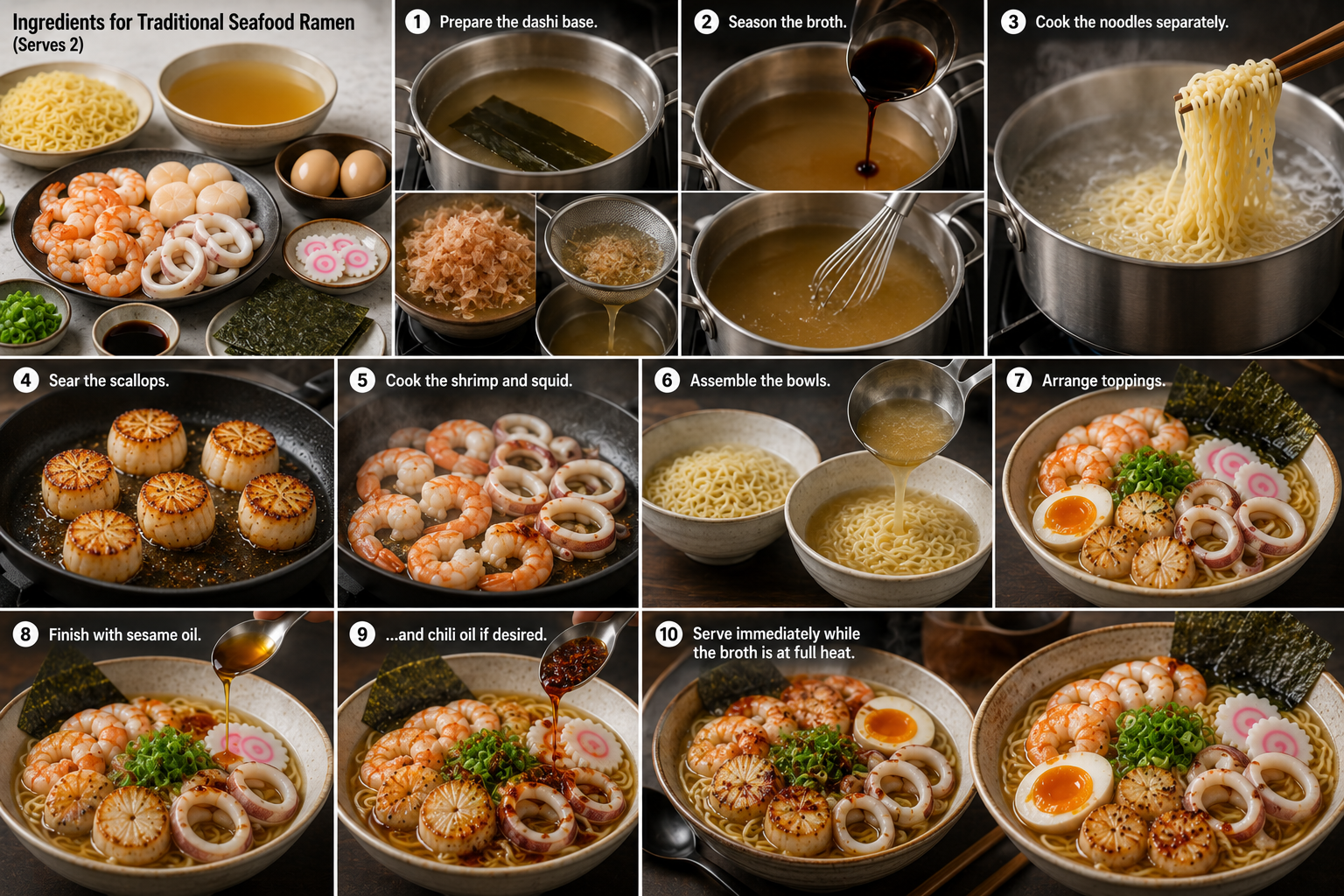
- Prepare the dashi base. If making dashi from scratch, soak kombu in cold water for 20–30 minutes, then heat gently until just below boiling. Remove the kombu, add bonito flakes, let steep 2–3 minutes, then strain. Store-bought dashi powder dissolved in hot water works as a reliable shortcut.
- Season the broth. Stir in soy sauce for a shoyu-style broth, or whisk in miso paste for a richer, slightly sweeter shio-style base. Taste and adjust — the broth should taste balanced on its own, since the noodles and toppings will not add much additional salt.
- Cook the noodles separately. Boil ramen noodles according to package instructions in a separate pot of unsalted water. Drain well; do not rinse, as this removes the starchy coating that helps broth cling to the noodles.
- Sear the scallops. Pat scallops completely dry. Sear in a hot, lightly oiled pan for 90 seconds per side until golden, without moving them during searing — this is what builds the caramelized crust.
- Cook the shrimp and squid. In the same pan, quickly sauté shrimp until just pink, about 2 minutes per side. If using squid, cook briefly — no more than 60–90 seconds, since squid turns rubbery fast with extended heat.
- Assemble the bowls. Divide noodles between two bowls. Ladle hot broth over the noodles.
- Arrange toppings. Top with seared scallops, shrimp, squid, halved soft-boiled egg, sliced narutomaki, nori, and green onion.
- Finish. Drizzle with sesame oil and chili oil if desired. Serve immediately while the broth is at full heat.
Calories per bowl (traditional kaisen-style): approximately 480–540 kcal, depending on noodle portion and broth richness.
How to Make Seafood Boil Ramen
Ingredients (Serves 2–3)
- 2–3 portions ramen noodles
- 4 cups seafood or chicken stock
- 2 tbsp butter
- 3 cloves garlic, minced
- 1 tbsp Old Bay or Cajun seasoning
- ½ cup heavy cream (optional, for a richer broth)
- 1 lb snow crab legs, pre-cooked, split
- ½ lb shrimp, shell-on or peeled
- 1 ear corn, cut into thirds
- 2 small red potatoes, halved and pre-boiled until just tender
- 1 lemon, halved
- Fresh parsley, chopped, for garnish
Method
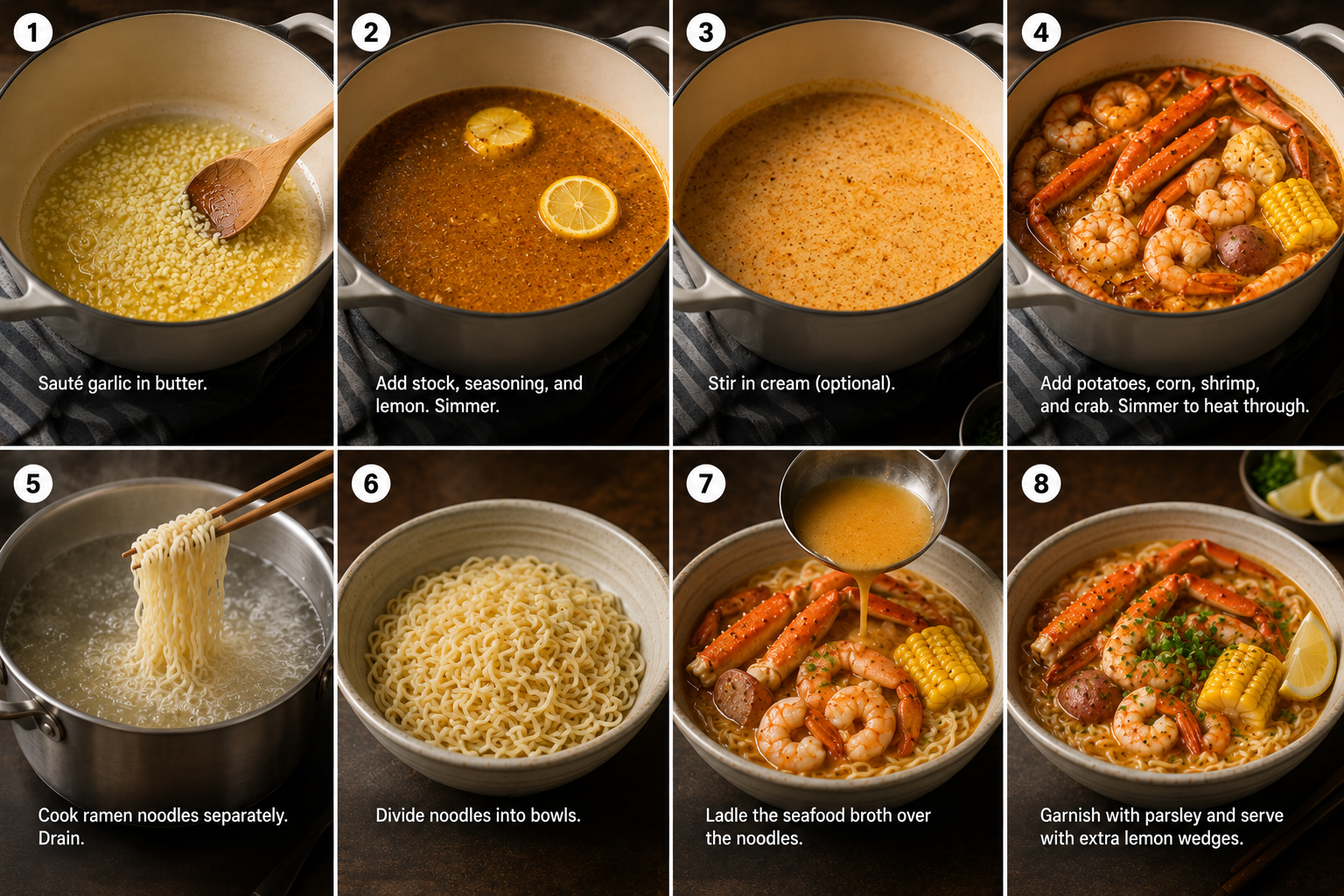
- Build the seasoned broth. Melt butter in a large pot over medium heat. Add garlic and sauté 30–45 seconds until fragrant.
- Add stock and seasoning. Pour in stock and stir in Old Bay or Cajun seasoning. Squeeze in lemon juice from both halves and drop the spent halves into the pot. Simmer 5 minutes to let the seasoning bloom into the broth.
- Add cream if using. Stir in heavy cream for a richer, slightly less brothy result closer to a chowder-style base.
- Cook the seafood and vegetables. Add pre-boiled potatoes and corn to warm through, about 3 minutes. Add shrimp and cook until just pink, roughly 2–3 minutes. Add the pre-cooked crab legs last, just to heat through — they do not need additional cooking time.
- Cook the noodles separately. Boil ramen noodles in plain water according to package directions. Drain.
- Assemble. Divide noodles into bowls. Ladle the seasoned seafood broth over the top, distributing crab, shrimp, corn, and potatoes evenly between bowls.
- Finish. Garnish with chopped parsley and extra lemon wedges on the side.
Calories per bowl (seafood boil ramen, with cream): approximately 650–720 kcal, driven primarily by the butter, cream, and larger seafood portion compared to the traditional style.
Instant Seafood Ramen: Upgrading a Packet Without Much Effort
How to Cook Seafood Ramen from an Instant Package
Instant seafood-flavored ramen packets exist and are widely available, but the flavor packet alone rarely delivers genuine seafood depth. A few additions transform a basic instant packet noticeably:
- Cook the noodles in the packet’s broth as directed, but reduce the water by about 20% for a more concentrated flavor.
- Add a teaspoon of fish sauce or a small amount of dashi powder directly into the broth — this reinforces the seafood notes that instant seasoning packets tend to underdeliver.
- Crack an egg directly into the simmering broth in the final minute of cooking for added richness and protein.
- Add quick-cooking shrimp, frozen and pre-peeled, directly into the broth for the last 2–3 minutes of cooking. They cook through quickly from the residual heat of the simmering broth.
- Finish with sliced green onion and a small drizzle of sesame oil, which most instant packets do not include but which meaningfully rounds out the final flavor.
Calories per upgraded instant bowl: approximately 320–380 kcal with the added egg and shrimp, compared to roughly 190–220 kcal for the plain instant packet alone.
Tips for Better Seafood Ramen at Home
- Never boil seafood directly in the serving broth for too long. Searing scallops and shrimp separately, then adding them to the broth at the end, prevents the broth from becoming cloudy and prevents the seafood from overcooking in residual simmering heat.
- Keep noodles and broth separate until the moment of serving. Pre-soaking noodles in broth causes them to absorb too much liquid and turn mushy by the time the bowl reaches the table. Assemble each bowl individually, right before eating.
- Build dashi-based broths in advance. Dashi develops better depth when made a day ahead and refrigerated, allowing the kombu and bonito flavors to settle and round out, similar to how many soups taste better the next day.
- Match broth richness to the seafood used. Delicate seafood like scallops and white fish gets lost in a heavy, butter-and-cream seafood boil-style broth. Save the bold, Cajun-seasoned style for heartier shellfish like crab and shrimp, which can stand up to the stronger seasoning.
- Salt the noodle water lightly, season the broth more assertively. This mirrors classic ramen-making logic — the noodles should taste clean on their own, with the broth carrying the bulk of the dish’s seasoning.
Seafood Ramen Nutrition: Calories and What Drives Them
Approximate Nutrition Per Bowl (Traditional Kaisen Style)
Nutrient |
Amount |
| Calories | 480–540 kcal |
| Protein | 28–34 g |
| Total Fat | 12–16 g |
| Carbohydrates | 55–62 g |
| Sodium | 1,100–1,400 mg |
Why Seafood Ramen’s Calorie Count Varies So Widely
The biggest variable is broth style, not the seafood itself. A dashi or shio-based bowl stays relatively light, since the broth carries minimal added fat. A seafood boil-style bowl with butter and cream can push total calories up by 150–200 kcal per serving compared to the traditional version, almost entirely from the added dairy fat rather than the seafood or noodles.
Sodium is consistently high across both styles, driven by soy sauce, miso, dashi, or seasoning blends like Old Bay — a consideration worth flagging for anyone managing sodium intake, similar to other seafood-forward dishes.
Healthy Version: Lighter Seafood Ramen Recipe
Ingredient Swaps
Standard |
Healthier Swap |
| Regular ramen noodles | Whole wheat ramen or shirataki (konjac) noodles |
| Butter-based broth | Dashi or light vegetable stock base |
| Heavy cream | Skip entirely, or use a small amount of unsweetened oat milk |
| Soy sauce (full amount) | Low-sodium soy sauce, reduced by half |
| Soft-boiled egg + seafood | Keep — both are nutrient-dense and worth retaining |
Method (Lighter Version)
- Build a light dashi or vegetable-based broth, seasoned with low-sodium soy sauce and a small amount of miso for depth.
- Cook whole wheat ramen noodles or substitute shirataki noodles for a lower-carbohydrate option.
- Sear shrimp and scallops in a minimal amount of oil rather than butter.
- Skip cream entirely; if a creamier texture is desired, a small spoonful of plain Greek yogurt stirred in at the end (off heat, to prevent curdling) adds body without much added fat.
- Top with a soft-boiled egg, nori, and green onion as usual — these contribute meaningful nutrition without significant calories.
Calories per bowl (lighter version): approximately 340–390 kcal, with a notably reduced sodium and fat profile compared to either traditional or seafood boil-style bowls.
Frequently Asked Questions
Does ramen have seafood? Most foundational ramen styles use pork or chicken-based broths, but seafood plays a major supporting role through dashi stock in nearly all ramen traditions. Standalone seafood ramen, where shrimp, scallops, or fish are the main protein, is its own distinct style, often called kaisen ramen in Japan.
What is seafood ramen called? In Japan, it is commonly called kaisen ramen, with “kaisen” meaning seafood or marine products. Regional and shrimp-specific variations have their own names as well.
How do you cook seafood ramen? Build a dashi or seasoned broth base, cook noodles separately in plain water, sear delicate seafood like shrimp and scallops separately to avoid overcooking, then assemble the bowl by combining broth, noodles, and seafood toppings just before serving.
What is seafood boil ramen? A fusion dish that applies the bold, Cajun or Old Bay-seasoned flavor of a Southern seafood boil to ramen noodles, typically featuring crab legs, shrimp, corn, and potatoes in a butter-rich broth, distinct from traditional dashi-based seafood ramen.
Is instant seafood ramen good? Instant seafood-flavored packets provide a basic starting point but often lack genuine seafood depth. Adding a small amount of dashi powder, fresh shrimp, or an egg significantly improves the result without much added effort.
Is seafood ramen healthy? It depends heavily on the broth style. A traditional dashi-based bowl is relatively lean and protein-rich. A seafood boil-style bowl with butter and cream carries meaningfully more calories and fat. Both styles tend to run high in sodium.
Can you make seafood ramen without dashi? Yes. A light seafood or chicken stock can substitute, though the result will lack some of dashi’s specific umami depth. Adding a small amount of fish sauce or a piece of kombu to a basic stock helps approximate that missing flavor layer.
Conclusion
Seafood ramen is not one dish — it is at least two distinct culinary traditions wearing the same name, and understanding that distinction is the difference between a recipe that works and one that falls flat. The traditional kaisen-style bowl rewards a light hand: clean dashi, gently seared scallops and shrimp, and a broth built to highlight rather than mask the seafood. The seafood boil-style bowl rewards the opposite instinct — bold seasoning, butter, and hearty shellfish that can stand up to a more assertive broth.
Either direction works well at home once you separate the noodle cooking from the broth assembly and avoid overcooking delicate seafood directly in simmering liquid. From a nutrition standpoint, the seafood and protein toppings are rarely the issue — broth richness and sodium are the two variables actually worth managing, and both are easy to adjust without losing what makes seafood ramen worth making in the first place.