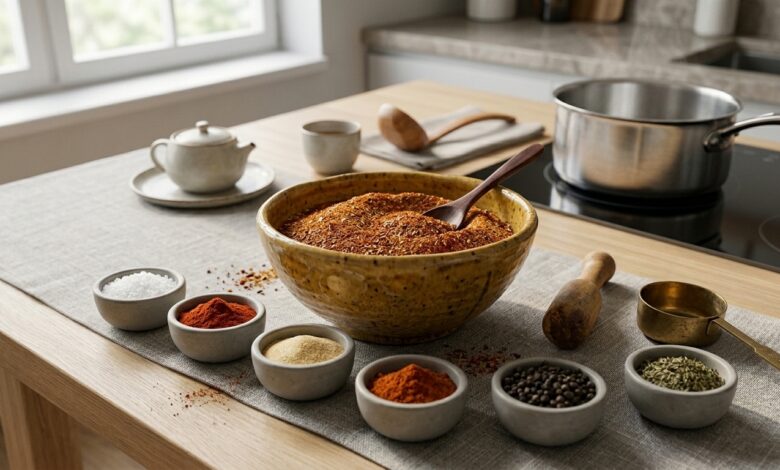
A seafood boil lives or dies on the seasoning. You can have the freshest shrimp, the best snow crab legs, perfectly cooked corn and potatoes — and still end up with a bland pot if the seasoning blend is wrong. Most people assume good seafood boil seasoning is just about dumping in enough Old Bay until the water turns orange. That gets you partway there, but it misses the layering that separates a forgettable boil from one people remember.
What Is Seafood Boil Seasoning, Exactly?
The Core Purpose of a Boil Seasoning Blend
Seafood boil seasoning is not a single spice — it is a blend designed to do two jobs at once: flavor the cooking liquid so it penetrates the shells and meat during boiling, and coat the finished seafood, corn, and potatoes once everything is drained. A good blend balances salt, heat, acidity, and aromatic spice so no single note overwhelms the natural sweetness of the shellfish.
Old Bay vs. Cajun: The Two Dominant Styles
Old Bay-style seasoning leans on celery salt, paprika, mustard, black pepper, and a blend of warm spices like cloves and allspice. It is milder, slightly sweet, and built around the Chesapeake Bay tradition of steaming crabs and shrimp.
Cajun-style seasoning is built around cayenne, garlic powder, onion powder, paprika, and a heavier hand with black and white pepper. It runs hotter and more savory, with less of the warm-spice sweetness found in Old Bay blends. Louisiana crawfish and shrimp boils typically use this style, often boosted further with whole cayenne pods, garlic heads, and lemons added directly to the pot.
Neither style is objectively better — the right choice depends on what flavor profile you are building toward and how much heat your group can handle.
How to Make Seafood Boil Seasoning from Scratch
Ingredients for a Homemade Old Bay-Style Blend
- 2 tbsp celery salt
- 2 tbsp paprika
- 1 tbsp dry mustard powder
- 1 tbsp black pepper
- 1 tsp ground bay leaf (or 2–3 whole bay leaves, crushed fine)
- ½ tsp ground cloves
- ½ tsp ground allspice
- ½ tsp ground cardamom
- ½ tsp ground ginger
- ¼ tsp cinnamon
- ¼ tsp cayenne pepper
Mix all ingredients thoroughly in a small bowl and store in an airtight container. This blend stays fresh for 3–4 months at room temperature, though the cloves, allspice, and ginger lose potency faster than the paprika and celery salt — give it a sniff test before relying on an old batch for a big boil.
Ingredients for a Homemade Cajun-Style Blend
- 3 tbsp paprika
- 2 tbsp garlic powder
- 2 tbsp onion powder
- 1 tbsp cayenne pepper (adjust up or down based on heat tolerance)
- 1 tbsp black pepper
- 1 tbsp dried oregano
- 1 tbsp dried thyme
- 2 tsp salt
- 1 tsp white pepper
This blend runs noticeably spicier and more herbaceous than Old Bay-style mixes. The oregano and thyme are the detail many home cooks skip, and they are what give Cajun seasoning its distinct savory backbone rather than just heat for heat’s sake.
Step-by-Step Method: How to Season a Seafood Boil Correctly
Building Flavor in Three Layers
The biggest mistake people make is treating seasoning as a single step — dump it in the water and move on. A properly seasoned boil layers flavor at three separate points.
Layer 1: The boiling liquid itself
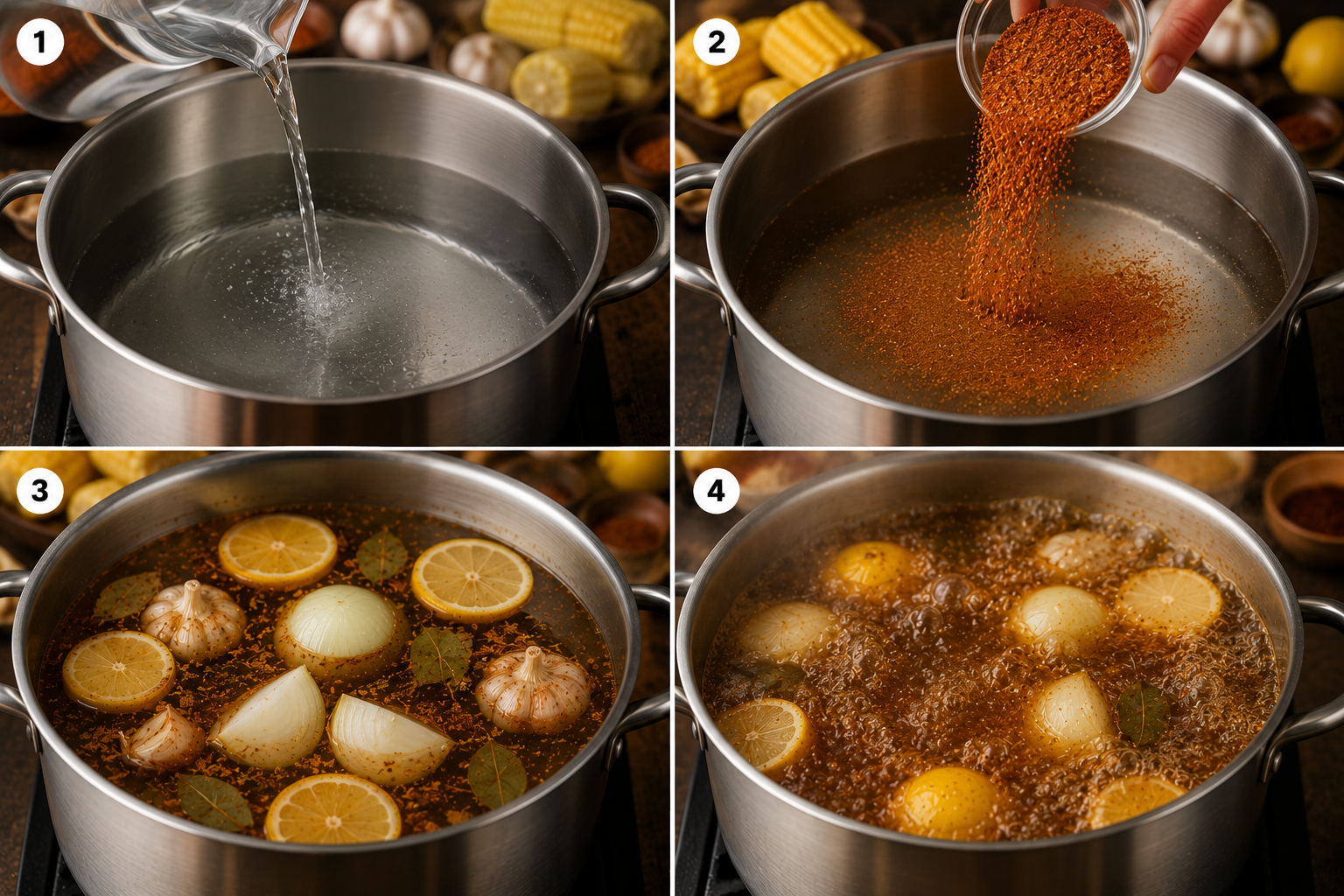
- Fill your pot with enough water to fully submerge whatever you are cooking, leaving a few inches of headroom.
- Add your seasoning blend directly to the water — roughly 2–3 tablespoons per gallon of water as a starting point, adjusted based on how concentrated your blend is.
- Add whole aromatics alongside the powder blend: halved lemons, smashed garlic cloves, a quartered onion, and bay leaves if not already in your seasoning mix.
- Bring to a full rolling boil before adding anything else. This step matters because the seasoning needs time to infuse the water before the seafood goes in — adding seafood to unseasoned or under-boiled water means it cooks in plain water for the first few minutes.
Layer 2: Sequenced cooking by ingredient
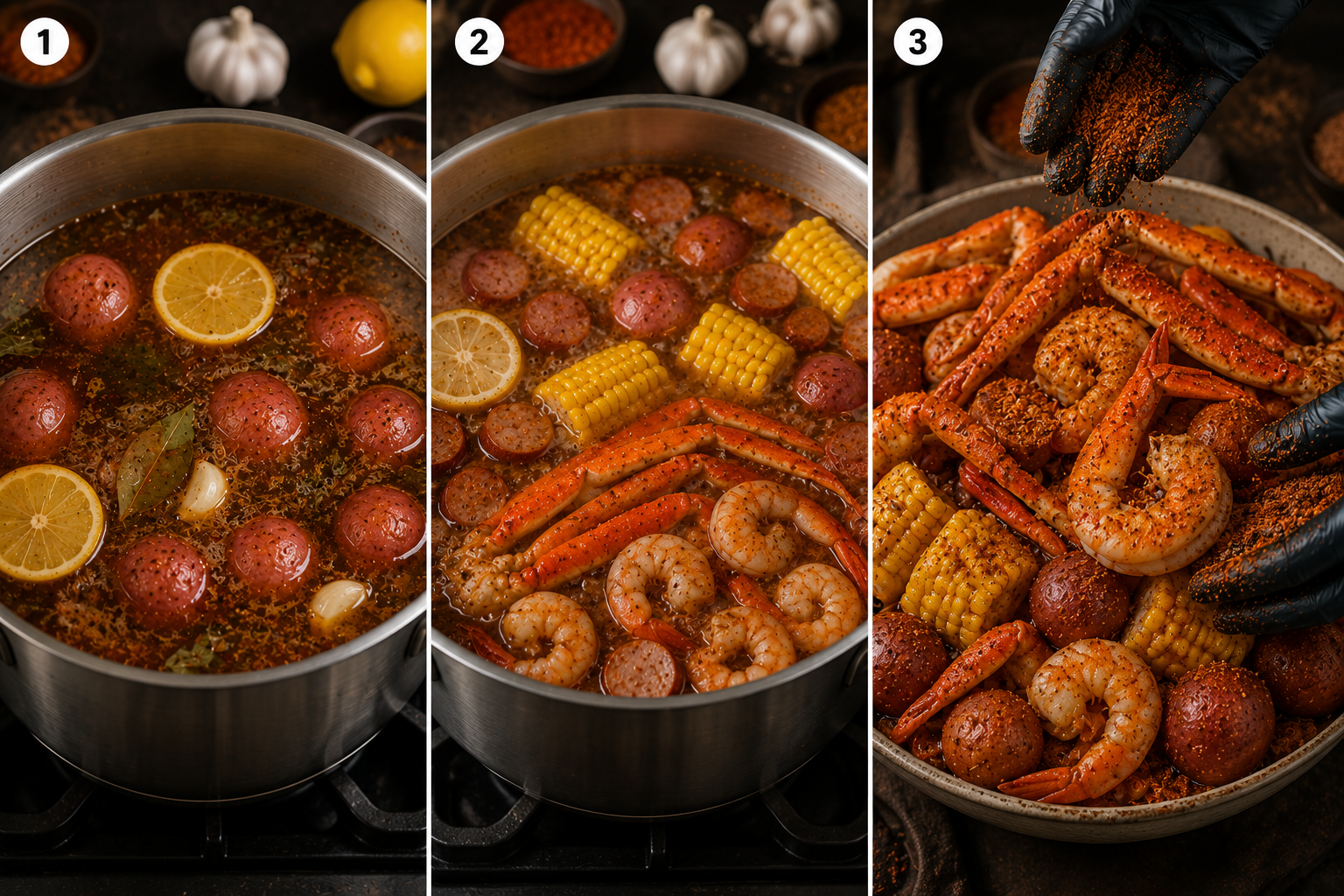
- Add potatoes first — they take the longest, generally 10–12 minutes depending on size.
- Add corn and sausage (if using) about 5–6 minutes before the potatoes finish.
- Add shellfish last — shrimp, crab, crawfish, or mussels need the shortest cooking time and overcook quickly. Shrimp typically need just 3–4 minutes; snow crab legs need 6–8 minutes if already cooked and frozen.
Layer 3: The post-boil toss
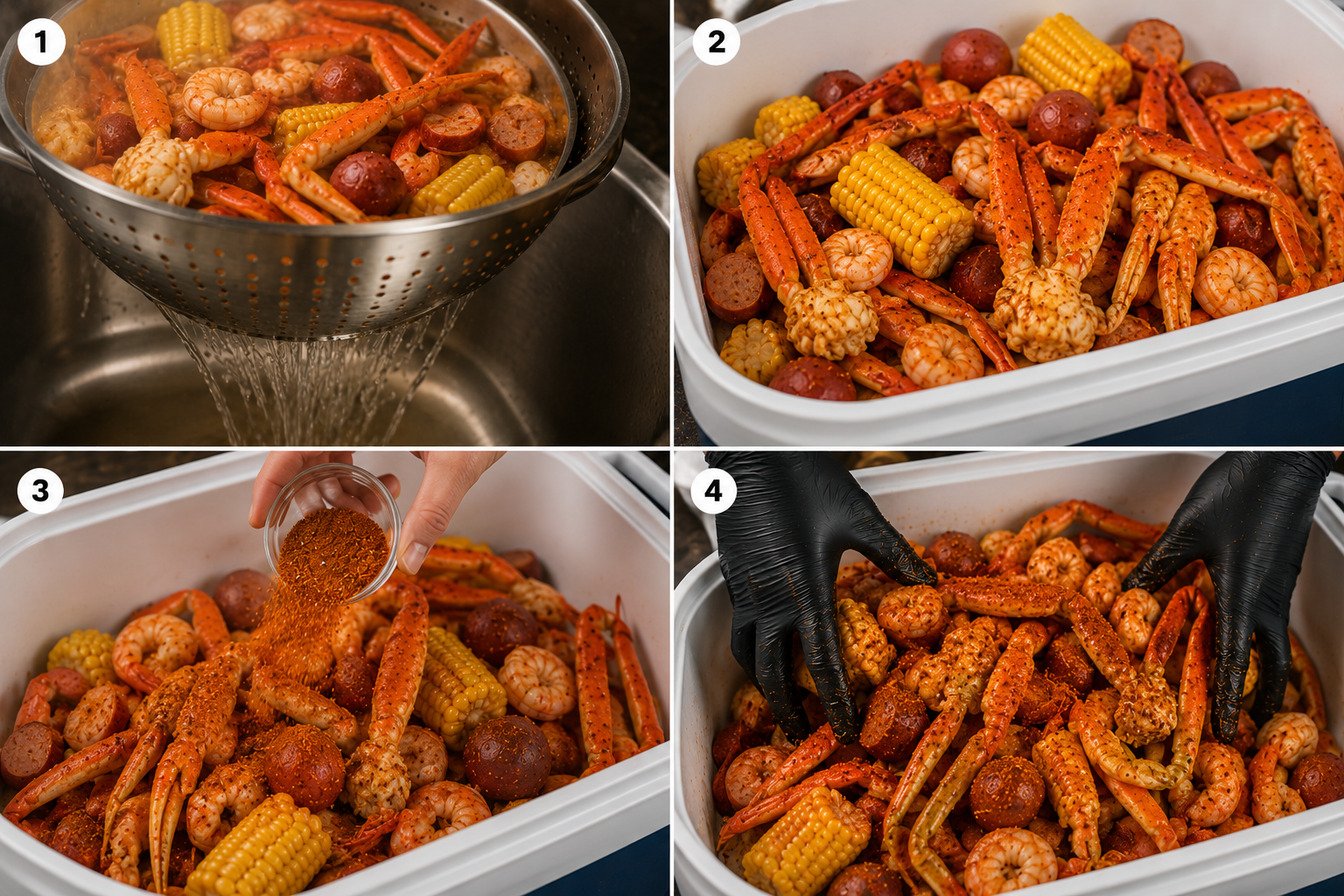
- Drain everything thoroughly — do not let it sit in the seasoned water after cooking, since residual heat continues cooking the seafood and can make it tough.
- Transfer to a large bowl or cooler. Sprinkle an additional 1–2 tablespoons of dry seasoning blend directly over the hot, drained ingredients and toss well.
- This final dry-seasoning step is what most home cooks skip, and it is the single biggest difference between a boil that tastes seasoned only on the surface versus one that tastes seasoned throughout. The residual heat and moisture on the shells help the dry seasoning stick and penetrate slightly further before serving.
How Much Old Bay Seasoning for a Seafood Boil
As a working ratio: use 2–3 tablespoons of Old Bay per gallon of boiling water for the cooking liquid, then an additional 1–2 tablespoons sprinkled directly over the drained seafood. For a typical boil serving 4–6 people (roughly 3–4 gallons of water), that works out to 6–10 tablespoons total across both stages. Adjust upward if you prefer a more assertive Old Bay flavor — this seasoning tolerates a heavier hand better than most spice blends because the salt and warm spices balance each other rather than competing.
Tips for Better Seafood Boil Seasoning Results
- Toast whole spices before grinding, if making seasoning from scratch. Lightly toasting cloves, allspice berries, and bay leaves in a dry pan for 60–90 seconds before grinding intensifies their aromatic oils. This step is almost never mentioned in seafood boil content, but it noticeably deepens the warm-spice notes in a homemade Old Bay-style blend.
- Add citrus directly to the pot, not just as a garnish. Lemon halves boiled in the seasoning water release oils from the rind that plain lemon juice squeezed at the table cannot replicate. Reserve a few fresh wedges for serving, but put at least two halves into the boiling liquid itself.
- Beer changes the seasoning’s behavior, not just the flavor. A light lager added to the boiling liquid (about 1 can per gallon of water) slightly lowers the boiling point and adds a subtle malty sweetness that rounds out spicy Cajun blends particularly well.
- Salt separately from your spice blend. Many pre-made seasoning blends already contain significant sodium. Taste your boiling liquid before adding extra plain salt — over-salting is the most common seasoning mistake, and it cannot be corrected once the seafood has absorbed it.
- Reserve some boiling liquid as a dipping broth. Strain a cup or two of the finished, seasoned water and serve it on the side as a dip for bread or for dunking shellfish. This is a low-country boil tradition that most chain-restaurant seafood boils skip entirely, and it gives guests a way to add extra flavor without oversalting the seafood itself.
Nutrition Considerations: Calories and Sodium in Seafood Boil Seasoning
Seasoning’s Caloric Impact Is Minimal — Sodium Is the Real Variable
Dry spice blends themselves carry almost no calories — 2 tablespoons of a typical Old Bay or Cajun blend runs roughly 10–15 calories total, negligible in the context of a full meal. The real nutritional consideration is sodium, not calories.
Seasoning Amount |
Approximate Sodium |
| 1 tbsp commercial Old Bay | 1,100–1,250 mg |
| 1 tbsp homemade Old Bay-style (no added salt) | 400–500 mg |
| 1 tbsp commercial Cajun blend | 700–900 mg |
| 1 tbsp homemade Cajun-style (reduced salt) | 350–450 mg |
Commercial seasoning blends are typically far higher in sodium than homemade versions, largely because celery salt and added table salt are major components by weight. For a full seafood boil using 6–10 tablespoons of commercial seasoning across the cooking liquid and post-boil toss, sodium intake from seasoning alone can climb into the multi-gram range — before accounting for the seafood’s own naturally occurring sodium.
Healthy Version: Lower-Sodium Seafood Boil Seasoning Recipe
Ingredients (No Added Salt Base)
- 2 tbsp paprika
- 1 tbsp garlic powder
- 1 tbsp onion powder
- 1 tsp black pepper
- 1 tsp dry mustard powder
- ½ tsp ground bay leaf
- ½ tsp cayenne pepper (adjust to taste)
- ½ tsp dried thyme
- ¼ tsp ground allspice
- ¼ tsp celery seed (not celery salt — this swap alone removes a major sodium source)
Method
- Combine all ingredients in a bowl, mixing thoroughly. Because there is no added salt, this blend relies entirely on the natural flavor of the spices themselves, which means measuring accurately matters more than with a salt-heavy commercial blend.
- Use the same 2–3 tablespoon per gallon ratio for the boiling liquid.
- Add fresh lemon, garlic cloves, and onion to the pot as aromatics — these reinforce flavor without contributing sodium.
- Season to taste with a small amount of salt added separately and intentionally, rather than relying on the blend to carry all the sodium. This puts you in control of the exact amount rather than guessing based on a commercial product’s formulation.
Sodium per tablespoon of this blend: approximately 5–10 mg, compared to 700–1,250 mg for commercial versions. The dramatic difference comes almost entirely from swapping celery salt for celery seed and removing added table salt from the base recipe.
This version is not bland — the cayenne, mustard powder, and toasted bay leaf still deliver real heat and depth. It simply puts the sodium decision in your hands rather than baking it into the blend itself.
Frequently Asked Questions
What seasoning is best for a seafood boil? Old Bay-style seasoning works well for a milder, slightly sweet flavor profile suited to shrimp and crab. Cajun-style seasoning suits crawfish boils and anyone who prefers more heat and a savory, herb-forward profile. Neither is universally “better” — it depends on personal preference and the seafood being cooked.
How much Old Bay seasoning should I use for a seafood boil? Roughly 2–3 tablespoons per gallon of boiling water, plus an additional 1–2 tablespoons sprinkled over the drained seafood after cooking. Adjust upward for a more pronounced flavor.
Can I use Cajun seasoning instead of Old Bay for a seafood boil? Yes, they are interchangeable as a base seasoning, though the resulting flavor profile differs significantly. Cajun seasoning brings more heat and herbaceous depth, while Old Bay brings warmer, sweeter spice notes.
How do I make seafood boil seasoning from scratch? Combine paprika, celery salt or celery seed, black pepper, mustard powder, bay leaf, and warm spices like allspice and cloves for an Old Bay-style blend. For a Cajun-style version, lean on paprika, garlic powder, onion powder, cayenne, oregano, and thyme. Specific ratios are outlined in the recipes above.
Is seafood boil seasoning high in sodium? Commercial blends generally are, often running 700–1,250 mg of sodium per tablespoon due to celery salt and added table salt. Homemade versions using celery seed instead of celery salt and no added salt can reduce sodium by more than 90% while keeping comparable flavor.
What goes into a traditional seafood boil besides seasoning? Most boils include a combination of shrimp, crab legs, crawfish, or mussels, along with corn on the cob, red or baby potatoes, and often smoked sausage. The seasoning blend ties all the components together in both the cooking liquid and the post-boil toss.
Does seafood boil seasoning add many calories? No. Dry spice blends are calorically negligible — typically 10–15 calories for 2 tablespoons. The calorie content of a seafood boil comes from the seafood, potatoes, corn, sausage, and any butter served alongside, not from the seasoning itself.
Conclusion
Seafood boil seasoning is less about which brand or blend you reach for and more about how you use it. The water needs to be properly seasoned before anything goes in, the seafood needs to go in last and come out before it overcooks, and a final dry-seasoning toss after draining is what actually makes the flavor stick rather than just flavoring the cooking liquid. Whether you lean toward an Old Bay-style profile or a spicier Cajun blend, the layering technique matters more than the specific spice ratio.
Sodium is the real nutritional factor to watch, not calories — and that is almost entirely within your control once you know that celery salt and added table salt are doing most of the heavy lifting in commercial blends. A homemade version built around celery seed instead of celery salt, with salt added separately and intentionally, delivers the same boldness without surrendering control over how much sodium ends up on the plate. Build your seasoning in layers, season the water and the finished seafood separately, and the rest of the boil mostly takes care of itself.