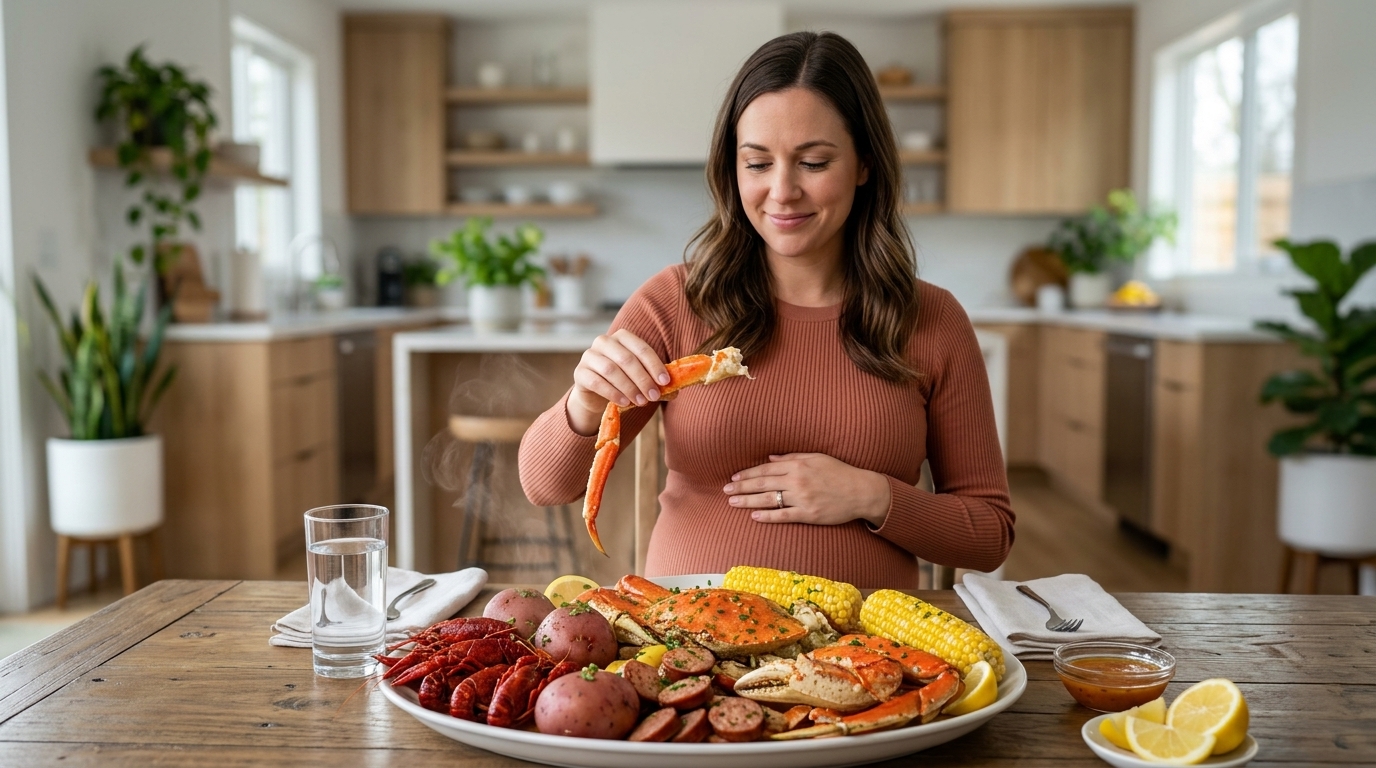
Can You Eat Seafood Boil While Pregnant — Everything You Need to Know
The question of whether you can eat seafood boil while pregnant has a more nuanced answer than most pregnancy food guides suggest. The instinct many people follow is blanket avoidance — “if it’s seafood, skip it while pregnant” — but this approach is both factually incorrect and potentially harmful in the opposite direction from what’s intended.
The FDA and the American College of Obstetricians and Gynecologists (ACOG) are clear: pregnant women should eat 8–12 ounces of low-mercury seafood per week. Not “can eat.” Should eat. The omega-3 fatty acids, DHA, protein, iodine, and choline in seafood support fetal brain development, spinal cord formation, and cognitive outcomes in ways that no supplement has been shown to fully replicate. Avoiding seafood entirely during pregnancy creates its own nutritional risk.
A seafood boil — made with shrimp, crawfish, crab, clams, or lobster, boiled at high heat and served piping hot — is absolutely safe during pregnancy when prepared correctly. The safety conditions are specific and non-negotiable, and this guide covers all of them.
The Contrarian Truth — Why Avoiding Seafood Entirely During Pregnancy Is a Risk, Not a Precaution
For decades, the dominant messaging around pregnancy and seafood focused on mercury restriction. Avoid large predatory fish. Limit tuna. Be cautious with seafood in general. This message was understandable but created a collateral problem: many pregnant women began avoiding all seafood.
A 2017 joint FDA and EPA advisory revision acknowledged this directly — the updated guidance moved away from restriction-only messaging and added a minimum recommendation for the first time. FDA and ACOG now both advise pregnant individuals to eat 2–3 servings of low-mercury seafood per week, explicitly noting that eating less fish than recommended may deprive children of important developmental nutrients.
A landmark 2007 study published in The Lancet by Hibbeln et al. — following nearly 12,000 pregnant women and their children — found that children born to mothers who consumed fewer than 340 grams of seafood per week during pregnancy were more likely to have suboptimal verbal IQ, fine motor skills, prosocial behavior, and communication development through age 8. The risk of not eating sufficient seafood was measurably greater than the risk of low-level mercury exposure from recommended amounts of low-mercury fish.
A PMC-published analysis from Johns Hopkins researchers went further, citing FAO and WHO assessments concluding that optimal fish consumption during pregnancy can increase a child’s IQ by 3 to 5 points. A seafood boil made with low-mercury shellfish — consumed within weekly guidelines — is not a risk to manage around. It’s a nutritional opportunity.
What a Seafood Boil Contains — And What to Watch For
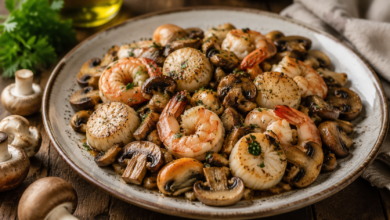
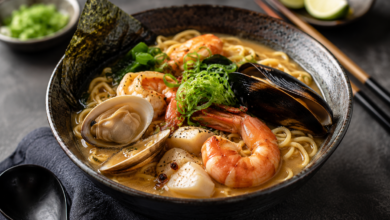
A traditional seafood boil typically includes a combination of shrimp, crawfish (crayfish), crab legs, clams, mussels, lobster tail, corn, potatoes, and sausage — all cooked together in seasoned boiling water. The seasoning is usually Cajun-style or Old Bay-based with salt, bay leaves, lemon, garlic, and varying levels of cayenne.
From a pregnancy safety standpoint, each component needs to be evaluated individually:
Shrimp: FDA “Best Choices” category — lowest mercury level among common seafood options. Safe to eat 2–3 servings weekly during pregnancy. The most pregnancy-friendly protein in any seafood boil.
Crawfish (crayfish): Also in FDA’s “Best Choices” category. Freshwater crustacean with very low mercury content. Safe during pregnancy when fully cooked.
Crab (snow crab, blue crab, Dungeness): FDA “Best Choices.” Low mercury, fully safe at 2–3 servings per week. King crab falls in the same category. Imitation crab (kani) is cooked surimi — also safe during pregnancy.
Clams and mussels: FDA “Best Choices.” Low mercury. Must be fully cooked — shells must open during boiling. Any clam or mussel that remains closed after cooking should be discarded, as the shell closure indicates the organism was already dead before cooking and may harbor harmful bacteria.
Lobster: FDA “Best Choices.” Lobster tail is low in mercury and safe during pregnancy. Ensure the meat is fully opaque and white — no translucent sections — before serving.
Sausage (andouille or kielbasa): Common in Cajun-style boils. Must be fully cooked through with no pink at the center. Processed smoked sausage should be heated to steaming — listeria can be present in cold processed meats.
Items to exclude from your boil during pregnancy:
- King mackerel, shark, swordfish, tilefish: High mercury — FDA “Avoid” category for pregnant women. These are not typical boil ingredients but occasionally appear in specialty seafood platters.
- Raw or undercooked oysters: Even in a boil setting, live oysters may be added late and not fully cooked. Oysters must reach 145°F throughout — serving at the table with a quick boil is insufficient.
- Smoked fish or cold-smoked salmon as an add-in: These may harbor Listeria unless they are shelf-stable or thoroughly reheated to steaming.
The Non-Negotiable Safety Rules — Temperature and Doneness
The primary safety risk in a seafood boil during pregnancy is not mercury — it’s undercooked seafood and the pathogens it can carry.
Why this matters more during pregnancy: Immune system changes in pregnant women place them, their unborn children, and their newborns at increased risk of foodborne illness. These illnesses can be worse during pregnancy and may lead to miscarriage or premature delivery. Some foodborne illnesses, such as Listeria and Toxoplasma gondii, can infect the fetus even if the mother does not feel sick.
The key pathogens in undercooked seafood:
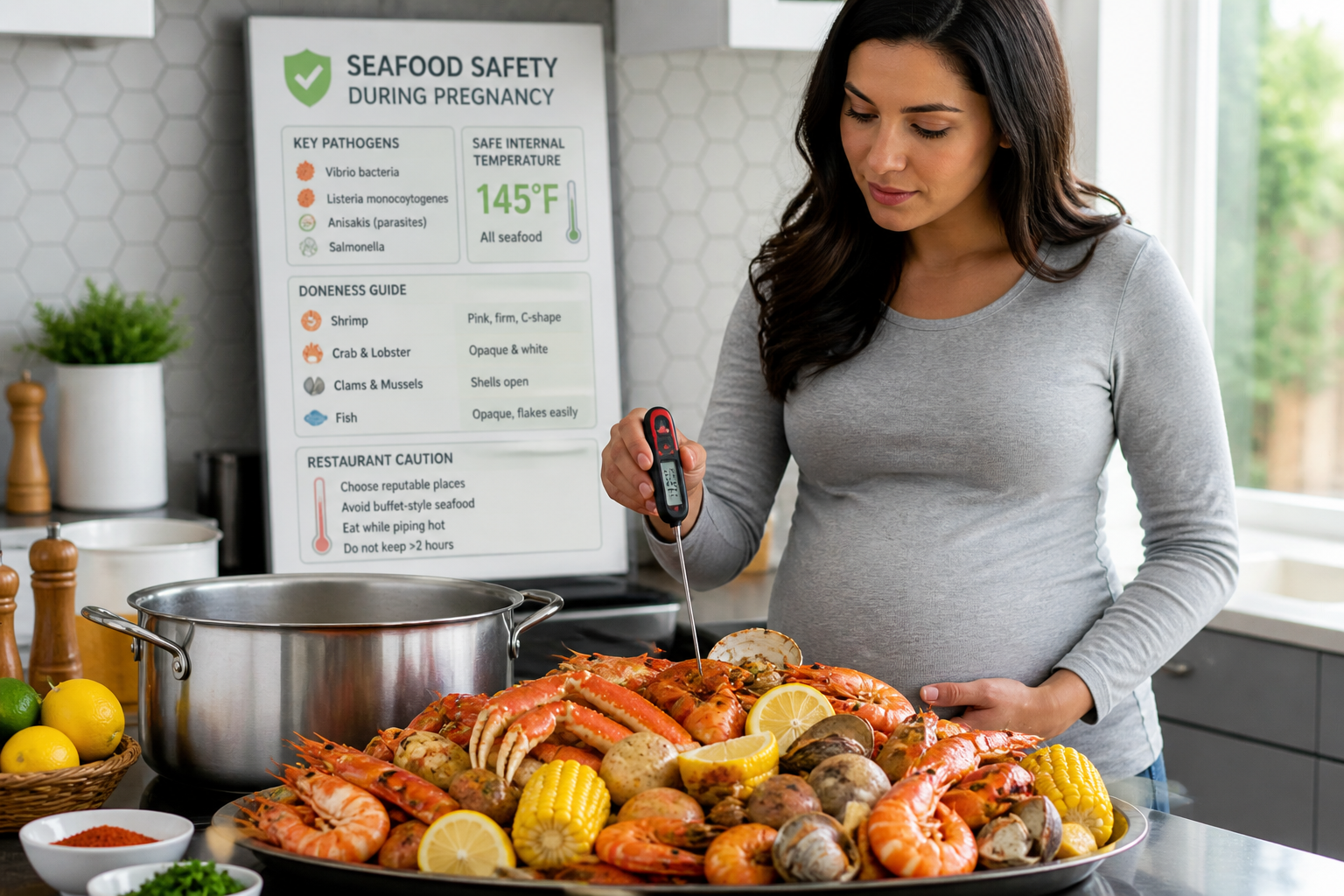
Vibrio bacteria: Found naturally in coastal waters and concentrated in shellfish, particularly oysters, clams, and mussels. Vibrio vulnificus infections are rare but can be severe — causing septicemia, wound infections, and gastrointestinal illness. High heat destroys Vibrio. All shellfish must reach an internal temperature of 145°F to eliminate this risk.
Listeria monocytogenes: The pathogen of greatest concern in pregnancy. Listeria can grow at refrigerator temperatures and is present in smoked seafood, ready-to-eat fish, and inadequately cooked shellfish. For pregnant women, Listeria infection can cause miscarriage, stillbirth, premature delivery, or severe newborn illness even when the mother experiences only mild flu-like symptoms. A well-executed, high-heat seafood boil eliminates Listeria — the problem arises when cooked seafood cools significantly before eating or is partially reheated.
Anisakis (parasites): Found in raw or undercooked fish — sushi, ceviche, and undercooked fish dishes. A fully boiled seafood preparation reaches temperatures that kill Anisakis larvae throughout. This is not a concern in properly executed boils.
Salmonella: Can contaminate shrimp and shellfish through cross-contamination during handling. High-heat boiling eliminates it. The risk comes from handling raw seafood and then touching ready-to-eat items without washing hands.
The 145°F rule: All seafood in a boil must reach an internal temperature of 145°F (63°C). Practical indicators of proper doneness:
- Shrimp: Pink throughout, firm texture, curled into a C-shape. Shrimp curled into a tight O-shape are overcooked. Shrimp that are still translucent or gray-blue are undercooked.
- Crab and lobster: Flesh fully opaque and white, no translucent sections near the shell.
- Clams and mussels: Shells have opened fully. Discard any that remain closed.
- Fish (if included): Opaque throughout and flakes easily when pressed with a fork.
The restaurant caution: Restaurant seafood boils can be safe if you choose reputable establishments with good food safety practices. Avoid buffet-style seafood that may have been sitting at room temperature. The FDA guidance is explicit: perishable seafood should not remain in the temperature danger zone (40–140°F) for more than 2 hours total. A seafood boil that has sat at a table for 90 minutes before service and then remained while everyone ate has likely exceeded safe holding time for the latter portions. Freshly served, piping hot, from a pot directly to the table is the safe scenario.
Mercury — The Real Numbers and What They Mean for Seafood Boils
Mercury is the concern most people attach to seafood in pregnancy, and it deserves clear, evidence-based treatment rather than generalized alarm.
Methylmercury is the form of mercury that accumulates in fish tissue through the food chain. Large predatory fish eat smaller fish that have absorbed mercury from water and sediment, concentrating it through a process called bioaccumulation. This is why king mackerel, swordfish, shark, and tilefish carry high mercury loads — they sit at the top of the marine food chain. Shellfish, shrimp, and small crustaceans sit much lower on the food chain and accumulate significantly less mercury.
FDA mercury classification for common seafood boil ingredients:
Seafood |
FDA Category |
Safe Frequency in Pregnancy |
| Shrimp | Best Choices | 2–3 servings/week |
| Crawfish | Best Choices | 2–3 servings/week |
| Crab (all types) | Best Choices | 2–3 servings/week |
| Clams | Best Choices | 2–3 servings/week |
| Mussels | Best Choices | 2–3 servings/week |
| Lobster (spiny/northern) | Best Choices | 2–3 servings/week |
| Salmon | Best Choices | 2–3 servings/week |
| Catfish | Best Choices | 2–3 servings/week |
| King mackerel | Avoid | Do not eat during pregnancy |
| Shark | Avoid | Do not eat during pregnancy |
| Swordfish | Avoid | Do not eat during pregnancy |
| Tilefish (Gulf of Mexico) | Avoid | Do not eat during pregnancy |
A standard seafood boil built around shrimp, crawfish, crab, clams, and lobster falls entirely within the FDA’s “Best Choices” category. The mercury concern that surrounds seafood in general does not apply to these specific proteins at recommended serving sizes.
One serving = 4 ounces (palm of the hand). The FDA recommends 2–3 servings per week, totaling 8–12 ounces — which is roughly 2–3 typical restaurant-sized portions of shellfish spread across the week.
The cumulative exposure principle: Mercury accumulates in the body over time. Eating one large seafood boil with exclusively low-mercury shellfish is not a mercury event. The concern arises with regular, repeated consumption of high-mercury species. For low-mercury shellfish, even generous servings within weekly guidelines pose no documented mercury risk to fetal development.
Cajun Seasoning and Spice — What’s Safe, What to Watch
Most seafood boils are seasoned aggressively — Cajun spice blends, Old Bay, cayenne, garlic, onion, bay leaves, lemon, and varying amounts of chili. The question of whether spicy food is safe during pregnancy comes up consistently.
The spice safety answer: Spicy food is generally safe during pregnancy and won’t harm your baby. The capsaicin in spicy foods doesn’t cross the placenta or affect fetal development in any documented way. The concern is practical rather than medical: many pregnant women experience increased heartburn, acid reflux, and gastrointestinal discomfort that Cajun seasoning can worsen. If you’re prone to pregnancy-related heartburn, ask for milder seasoning or prepare the boil at home where you control the heat level.
Sodium awareness: Commercial Cajun boil seasoning blends, particularly concentrated packets like Zatarain’s or Louisiana Crawfish Boil, are high in sodium. Corn and potatoes in the boil absorb a significant amount of this salt during cooking. Pregnant women managing blood pressure or swelling (edema) should be conscious of total sodium intake from a seafood boil — asking for less salt in the boil water, or preparing at home with controlled seasoning, addresses this directly.
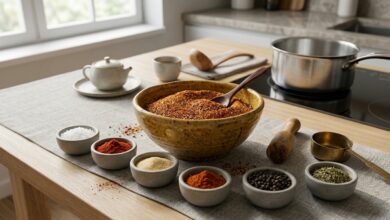
Safe seasoning check: Standard Cajun boil spices — paprika, cayenne, garlic powder, onion powder, bay leaves, thyme, oregano, celery seed — are all safe during pregnancy in cooking amounts. Herbal concentrates, high-dose herbal supplements, or botanicals added to boost flavor (some specialty boil recipes include unusual additions) should be discussed with your OB-GYN before consumption.
Crab boil juice: The seasoned liquid itself — if ladled over the food at serving — carries the full sodium and spice load of the recipe. For pregnancy, pouring liberally from the boil pot is worth moderating, even if the seafood itself is fine.
Building a Pregnancy-Safe Seafood Boil at Home
The safest version is one you make yourself — full control over ingredient quality, cooking time, and temperature verification.
Pregnancy-optimized seafood boil recipe (serves 2–3):
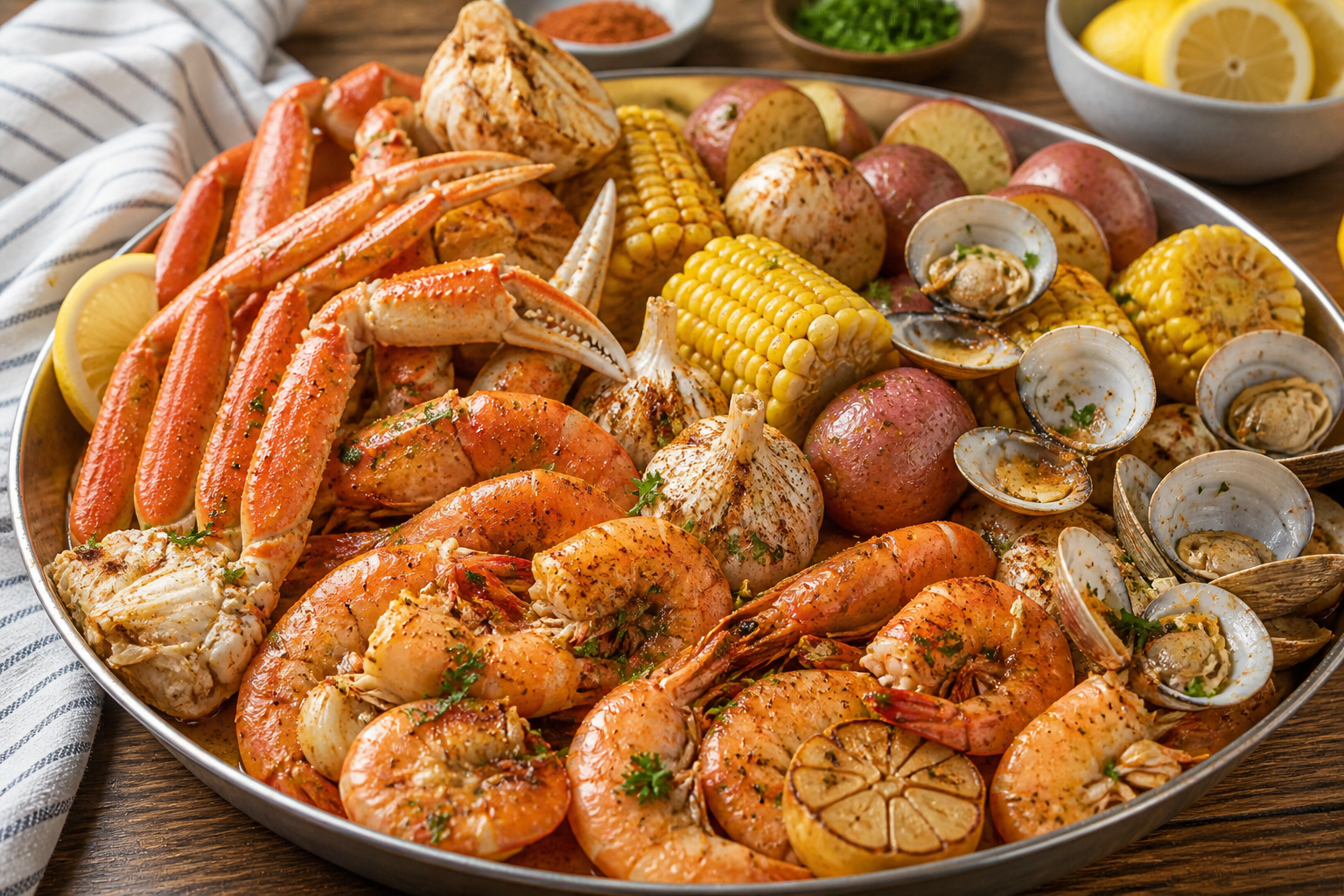
Proteins (choose from FDA Best Choices):
- 500g large shrimp, shell-on (deveined)
- 300g snow crab legs
- 200g clams or mussels (scrubbed, debearded)
Produce:
- 4 medium Yukon Gold potatoes, halved
- 2 ears corn, halved
- 1 whole head garlic, halved crosswise
- 2 lemons, halved
Broth and seasoning:
- 4 litres water
- 2 tablespoons Old Bay seasoning (reduced-sodium version available)
- 1 tablespoon smoked paprika
- 1 teaspoon garlic powder
- 2 bay leaves
- 1 tablespoon apple cider vinegar (brightens the broth)
- Salt to taste — use less than standard recipes call for
Method:
- Bring water to a full rolling boil with all spices, garlic, lemon, and bay leaves. Boil this aromatic base for 10 minutes to infuse flavor into the liquid.
- Add potatoes. Boil 10 minutes until almost tender when pierced with a fork.
- Add corn. Boil 5 minutes.
- Add crab legs if using. Boil 5 minutes.
- Add clams or mussels. Boil 4–5 minutes until all shells have opened. Discard any that remain closed.
- Add shrimp last. Boil 3–4 minutes until pink, firm, and curled into a C-shape.
- Verify doneness visually — all shellfish should look fully opaque. Use an instant-read thermometer if uncertain: seafood should read at least 145°F at the thickest point.
- Drain and serve immediately. Do not leave on the table for more than 30–40 minutes.
At-home vs. restaurant: When in doubt, preparing seafood boil at home gives you full control over freshness and cooking temperatures. At a restaurant, eating the seafood while it’s still steaming hot (not after it’s been sitting for 20 minutes) is the practical safety measure.
Nutrition — What a Seafood Boil Delivers to You and Your Baby
A well-constructed seafood boil is one of the most nutritionally complete single-pot meals available during pregnancy. Each component contributes something specific to maternal and fetal health.
Key nutrients per typical serving (6 oz mixed shellfish, cooked):
Nutrient |
Amount |
Pregnancy Benefit |
| Protein | 30–40g | Fetal tissue growth, maternal blood volume expansion |
| DHA (omega-3) | 200–600mg | Fetal brain and retinal development |
| Iodine | ~75–100mcg | Fetal thyroid and cognitive development |
| Zinc | ~4–6mg | ~40–55% DV — immune function, cell division |
| Selenium | ~40–60mcg | Antioxidant protection, thyroid function |
| Vitamin B12 | ~3–5mcg | 125–200% DV — nervous system, red blood cell production |
| Iron | ~2–3mg | Supports expanded maternal blood volume |
| Choline | ~80–120mg | Fetal spinal cord and brain development |
| Sodium | 400–800mg+ | Varies significantly with seasoning — monitor total intake |
DHA is the nutrient that matters most in this context. The FDA, EPA, WHO, and ACOG all emphasize DHA specifically because it accumulates in fetal brain and retinal tissue throughout pregnancy — with the highest accumulation rates in the third trimester. A 6-ounce serving of shrimp, crab, and clams together provides a meaningful contribution toward the 200–300mg daily DHA minimum that health organizations suggest for pregnant individuals.
Choline is the underappreciated nutrient in shellfish. Clams, shrimp, and crab all contain choline at levels that contribute significantly toward the 450mg daily target for pregnant women. Choline supports fetal spinal cord development and is involved in epigenetic programming of the developing brain — it’s the nutrient most clinicians don’t mention but several research teams have identified as critically important in the first and second trimesters.
Iodine from shellfish is particularly valuable because iodine deficiency during pregnancy is associated with reduced fetal intelligence and impaired thyroid function in the newborn. Many prenatal vitamins do not include sufficient iodine. Shellfish is one of the most reliable dietary sources outside of dairy and iodized salt.
Frequently Asked Questions — Seafood Boil During Pregnancy
Q: Can I eat shrimp from a seafood boil while pregnant? Yes. Shrimp is on the FDA’s “Best Choices” list — the lowest mercury category — and is explicitly recommended as safe for 2–3 servings per week during pregnancy. It must be fully cooked (pink, firm, opaque) and served hot.
Q: Is crawfish safe to eat during pregnancy? Yes. Crawfish (crayfish) is a freshwater crustacean with very low mercury content. It falls in the FDA’s “Best Choices” category. Fully cooked crawfish from a properly executed boil is safe during pregnancy within weekly seafood guidelines.
Q: What if the seafood boil is really spicy — is that safe? Spicy food does not harm fetal development. Capsaicin does not cross the placenta. However, pregnancy often intensifies heartburn and acid reflux — heavily spiced Cajun boil can worsen these symptoms significantly in some women. Reduce cayenne or request mild seasoning if you’re experiencing digestive discomfort.
Q: Can I eat crab legs at a seafood boil restaurant while pregnant? Yes, if they are served piping hot and freshly cooked. Crab is FDA “Best Choices.” The restaurant caution is: eat while the food is still very hot, and avoid buffet-style or pre-cooked crab that has been sitting at temperature. Always confirm it has been fully reheated before eating.
Q: Are mussels and clams safe during pregnancy? Yes, when fully cooked. Both are FDA “Best Choices.” The specific doneness indicator for bivalves is that their shells must open completely during cooking. Discard any clam or mussel that does not open — a closed shell after boiling indicates the organism was dead before cooking and may harbor harmful bacteria.
Q: Is it safe to eat a seafood boil from a restaurant while pregnant? It can be, with caveats. Choose reputable restaurants with good food safety practices. Eat the seafood while it’s still steaming hot. Avoid buffet or sit-and-wait formats where the seafood has been at room temperature for an extended time. When in doubt, prepare the boil at home where you control every variable.
Q: How much seafood boil can I eat per week while pregnant? The FDA recommends 8–12 ounces (2–3 servings, each about the size of your palm) of low-mercury seafood per week. A single restaurant-sized seafood boil with shrimp, crab, and crawfish might contain 8–12 ounces of shellfish — meaning one hearty boil essentially meets your weekly seafood recommendation. Don’t feel you need to have more seafood that week if you’ve had a full boil.
Q: Can leftover seafood boil be safely reheated and eaten while pregnant? With caution. Reheat thoroughly until steaming hot (165°F for leftovers containing cooked protein) before eating. Leftover shellfish should be refrigerated within 2 hours of cooking and consumed within 1–2 days. Do not eat leftover seafood that was left at room temperature for more than 2 hours — discard it.
Conclusion — Yes, You Can Eat Seafood Boil While Pregnant — With These Conditions
The answer to whether you can eat seafood boil while pregnant is yes — with specific, clear conditions that make it safe and genuinely beneficial.
Use low-mercury shellfish: shrimp, crawfish, crab, clams, mussels, and lobster. Cook everything to an internal temperature of 145°F with clear visual doneness indicators — pink shrimp, open clam shells, opaque crab and lobster flesh. Eat the boil while it’s still hot. Discard any shellfish that doesn’t open or looks underdone. Stay within the FDA’s 8–12 ounce weekly guideline. Be mindful of sodium if you’re managing blood pressure or edema.
Nutritionally, a seafood boil made with low-mercury shellfish is one of the richest single meals you can eat during pregnancy — delivering DHA for brain development, iodine for thyroid function, B12 for the nervous system, choline for spinal cord formation, and complete protein for fetal tissue growth. The scientific evidence from PMC, The Lancet, and the FDA itself is consistent: eating insufficient seafood during pregnancy carries documented developmental risk. A properly prepared seafood boil is not a risk to manage around — it’s a meal to enjoy with confidence.
Always discuss specific dietary questions with your OB-GYN or midwife, particularly if you have any pre-existing health conditions, blood pressure concerns, or allergies that affect how you navigate seafood choices during pregnancy.