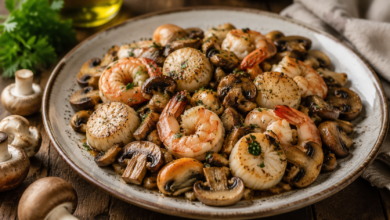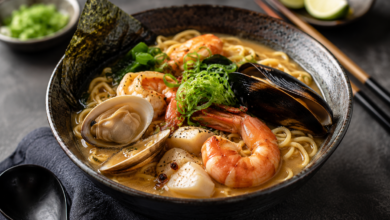
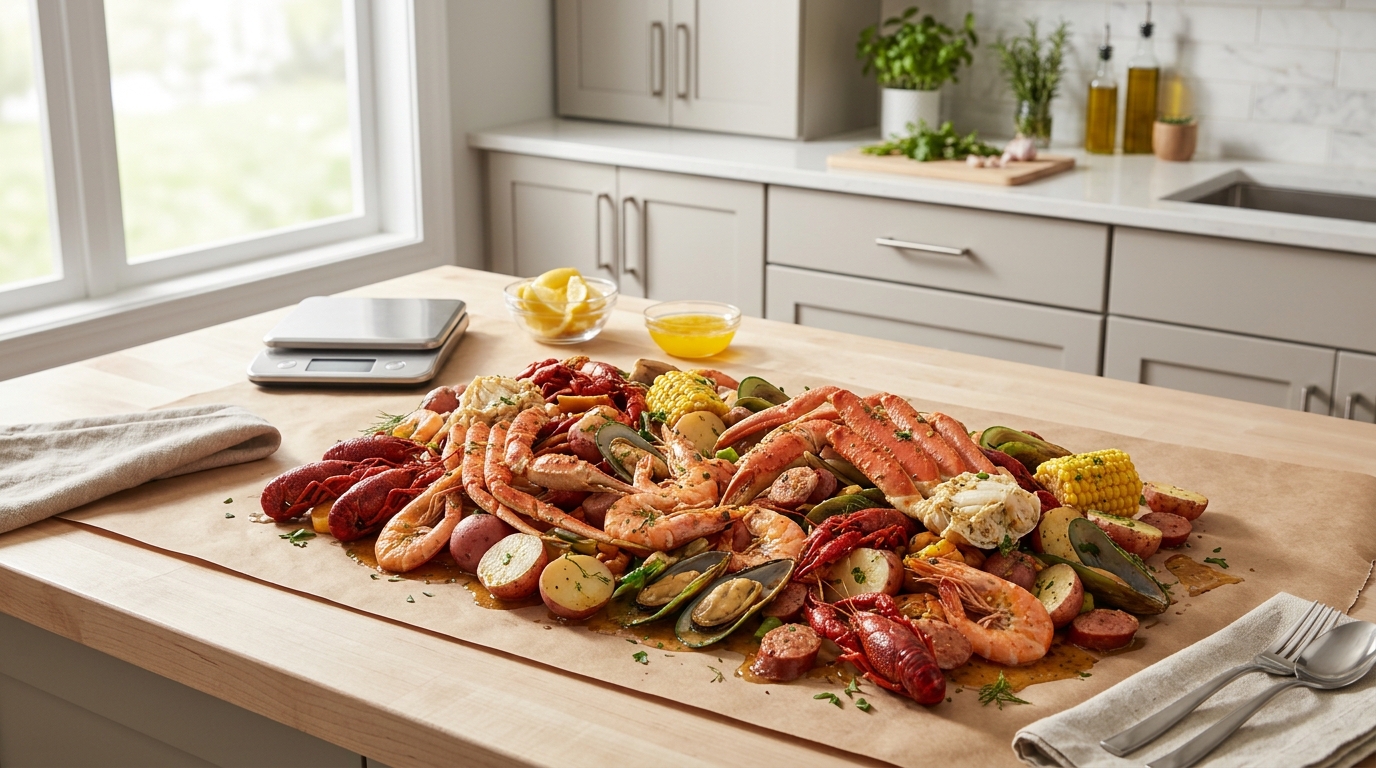
Seafood boil calories can be surprisingly low or surprisingly high depending on what lands in the pot and what gets poured over it afterward. A tray built around shrimp, crab, clams, corn, and potatoes is very different from a restaurant-style seafood boil bag soaked in garlic butter, Cajun oil, sausage fat, and extra dipping sauce.
That is why one seafood boil may sit around 450–650 calories per serving, while another can easily pass 1,200 calories before drinks, bread, or dessert are counted. The seafood itself is rarely the biggest problem. Shrimp, crab, lobster, mussels, and clams are generally lean protein sources. The real calorie jump usually comes from butter sauce, smoked sausage, potatoes, corn, and large restaurant portions.
This guide breaks seafood boil calories in a practical way: ingredient by ingredient, plate by plate, and goal by goal. It also explains how to enjoy a seafood boil without turning it into a calorie bomb.
How Many Calories Are In A Seafood Boil?
A seafood boil usually ranges from 350 to 1,500+ calories per serving, depending on the size, sauce, and ingredients.
A light homemade seafood boil with shrimp, crab, corn, potatoes, lemon, and seasoning may be around 350–600 calories. A standard seafood boil plate with shrimp, crab legs, sausage, potatoes, corn, and butter sauce usually lands closer to 650–950 calories. A restaurant seafood boil bag with extra garlic butter, sausage, eggs, and large portions can go above 1,000–1,500 calories.
The confusing part is serving size. Many restaurant seafood boil bags are sold as one order, but nutritionally they may contain two or more servings. A full bag with 1 pound of seafood, several potatoes, corn, sausage, and sauce should not always be counted as one meal unless you actually eat the whole thing yourself.
Here is a simple way to think about it:
Seafood Boil Type |
Estimated Calories |
| Light shrimp boil, little butter | 350–500 |
| Shrimp and crab with corn and potatoes | 550–800 |
| Standard Cajun seafood boil with sausage | 700–1,000 |
| Butter-heavy restaurant seafood boil | 1,000–1,500+ |
| Large boil bag with extra sauce | 1,500+ |
The calorie range is wide because seafood boils are built in layers. The same shrimp and crab plate can change dramatically when you add sausage, eggs, extra potatoes, and a half cup of butter sauce.
Seafood Boil Calories By Ingredient
The easiest way to estimate seafood boil calories is to break the plate into parts. Seafood, starches, sausage, and sauce all behave differently.
Ingredient |
Common Serving |
Estimated Calories |
| Cooked shrimp | 4 oz | 110–140 |
| Crab meat | 4 oz edible meat | 90–130 |
| Lobster meat | 4 oz | 100–130 |
| Crawfish tail meat | 4 oz | 80–120 |
| Mussels | 4 oz meat | 90–120 |
| Clams | 4 oz meat | 100–140 |
| Corn on the cob | 1 medium ear | 80–120 |
| Small potatoes | 2 small | 180–240 |
| Smoked sausage | 2 oz | 180–250 |
| Butter | 1 tablespoon | About 100 |
| Garlic butter sauce | 2 tablespoons | 180–250 |
| Boiled egg | 1 large | 70–80 |
These are realistic working estimates, not exact lab numbers. The final count depends on brand, cooking method, sauce amount, and edible portion size.
One detail people often miss: shell-on seafood weighs more than the meat you actually eat. A half pound of crab legs does not mean a half pound of crab meat. The shell makes the order look large, but the edible portion is much smaller.
Shrimp is easier to count because the edible yield is higher. Crab and lobster are trickier because shells add weight. Crawfish boils are even harder because a big pile of crawfish may only produce a modest amount of tail meat.
The sauce is the hidden variable. One tablespoon of plain butter is about 100 calories. If a seafood boil comes coated in butter, oil, and seasoning, the sauce can add more calories than the seafood itself.
Why Shellfish Is Usually The Lowest-Calorie Part
The shellfish in a seafood boil is usually the leanest part of the meal. Shrimp, crab, lobster, clams, scallops, oysters, and mussels are protein-rich foods with relatively low fat compared with sausage or butter-heavy sauces.
Cooked shrimp is commonly listed around 119 calories per 100g, with most of those calories coming from protein. Cooked crab is also lean, with nutrition references often showing about 98–115 calories per 100g, depending on the crab type and data source.
This is the first contrarian point: a seafood boil is not automatically a “heavy” meal because it contains seafood. The meal becomes heavy when the lean seafood is surrounded by sausage, potatoes, corn, butter, oil, and dipping sauce.
Shellfish also brings useful nutrients. Depending on the seafood, you may get protein, vitamin B12, selenium, zinc, iodine, copper, phosphorus, and omega-3 fatty acids. The FDA also notes that fish can be part of a healthy eating pattern and may support heart health.
So if someone wants a lighter seafood boil, the smartest move is not to remove the seafood. It is usually better to reduce the butter sauce, limit sausage, and control starchy sides.
The Real Calorie Drivers: Butter, Sausage, And Starchy Sides
The biggest calorie driver in a seafood boil is often butter sauce. One tablespoon of butter is about 100 calories. Many seafood boil recipes use far more than one tablespoon, especially garlic butter Cajun sauce poured over the full tray.
A small drizzle may add 100–200 calories. A restaurant-style sauce coating can add 400–700 calories or more if the portion is large. This is why two seafood boils with the same shrimp and crab can have completely different calorie totals.
Sausage is the next major factor. Smoked sausage adds flavor, saltiness, and fat, but it also adds calories quickly. A modest 2-ounce portion can add roughly 180–250 calories. Larger slices throughout the tray can push the meal much higher.
Potatoes and corn are not unhealthy. They are simply energy-dense compared with plain shellfish. Potatoes add filling carbohydrates, potassium, and comfort. Corn adds sweetness, fiber, and texture. But if you eat several potatoes, two corn cobs, and butter on top, the calories stack.
The mistake is blaming the seafood. In most seafood boils, shrimp and crab are doing the nutritional heavy lifting, while butter and sausage are doing the calorie lifting.
Seafood Boil Nutrition Facts: Calories, Protein, Carbs, Fat, And Sodium
A seafood boil has a mixed nutrition profile. It can be high in protein, moderate to high in carbohydrates, and high in sodium depending on seasoning and sausage.
Protein mainly comes from shrimp, crab, crawfish, lobster, clams, mussels, and fish if included. This is one of the strongest nutritional points of a seafood boil. Protein helps with fullness and makes the meal more satisfying.
Carbohydrates come mostly from potatoes and corn. These are not “bad carbs.” They are whole-food starches. The issue is portion size, especially if the boil already contains sausage and butter.
Fat usually comes from butter, oil, and sausage. Plain shellfish is not very fatty. Garlic butter sauce changes that quickly.
Sodium is the nutrient to watch. Cajun seasoning, Old Bay-style seasoning, seafood broth, sausage, salted butter, and restaurant sauces can all be salty. The American Heart Association recommends no more than 2,300mg sodium per day, with an ideal limit of 1,500mg per day for most adults, especially those watching blood pressure.
This does not mean seafood boils are off-limits. It means the seasoning and sauce deserve attention. A homemade boil gives you much better control over sodium than most restaurant boil bags.
Sample Calorie Breakdown For A Standard Seafood Boil Plate
Here is a realistic example of a standard seafood boil plate:
Food |
Portion |
Estimated Calories |
| Shrimp | ½ lb cooked | 220–280 |
| Crab legs | ½ lb shell-on | 120–180 edible meat estimate |
| Corn | 1 ear | 90–120 |
| Potatoes | 2 small | 180–240 |
| Sausage | 2 oz | 180–250 |
| Garlic butter sauce | 2 tbsp | 180–250 |
Estimated total: around 970–1,320 calories, depending on crab yield, sausage brand, and sauce amount.
Now remove the sausage and reduce butter sauce to 1 tablespoon:
Change |
Calorie Reduction |
| Remove 2 oz sausage | -180 to -250 |
| Reduce butter sauce by 1 tbsp | -90 to -125 |
That same plate can drop closer to 650–900 calories without removing the seafood.
This is why seafood boil calories should be calculated by ingredients, not by guessing. A “healthy” seafood boil can become high-calorie with sauce. A “big-looking” crab boil can be moderate if much of the weight is shell and the sauce is controlled.
Restaurant Seafood Boil Calories Vs Homemade Seafood Boil
Restaurant seafood boils are usually higher in calories than homemade versions for three reasons: larger portions, richer sauce, and more sodium.
A restaurant seafood boil bag often includes a sauce base made with butter, oil, seasoning blends, garlic, and sometimes sugar. The seafood and sides sit inside the sauce, so even if you do not drink the sauce, it coats every bite.
Restaurants also use generous portions because seafood boils are sold as an experience. A bag may include shrimp, crab, sausage, corn, potatoes, boiled eggs, and extra sauce. It feels like one order, but nutritionally it may be closer to two meals.
Homemade seafood boils are easier to control. You can use more shrimp and crab, less sausage, measured butter, extra lemon, and seasoning without too much salt. You can also serve sauce on the side instead of coating the entire pot.
For calorie control, sauce-on-the-side is one of the most practical changes. It keeps the flavor but lets you decide how much fat lands on your plate.
Calories In Popular Seafood Boil Styles
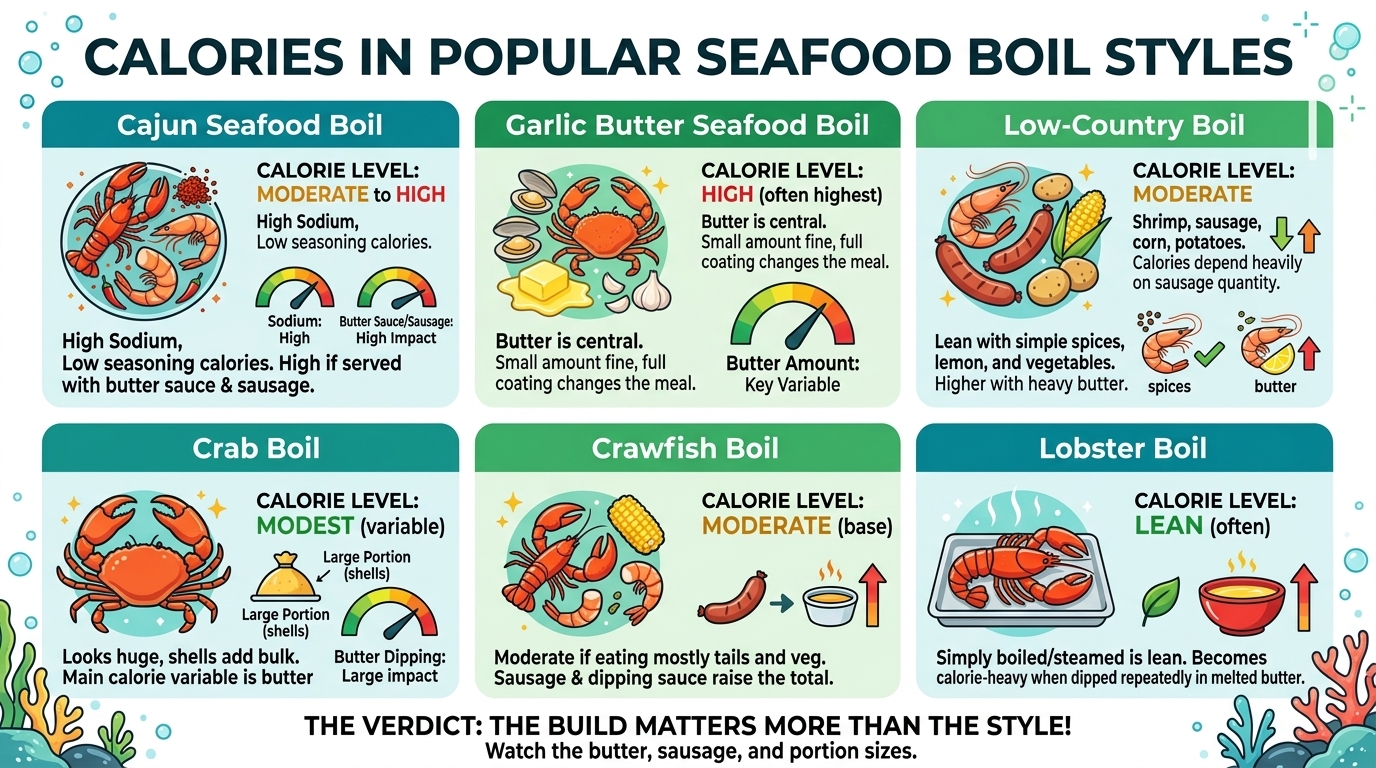
Different seafood boil styles have different calorie patterns.
Cajun seafood boil is often the highest in sodium and can be high in calories if served with butter sauce and sausage. The seasoning itself does not add many calories, but the sauce does.
Garlic butter seafood boil can be one of the highest-calorie versions because butter is central to the flavor. A small amount is fine. A full coating changes the meal.
Low-country boil usually includes shrimp, sausage, corn, and potatoes. The calories depend heavily on sausage quantity.
Shrimp boil can be fairly lean if it uses shrimp, corn, potatoes, lemon, and spice without heavy butter.
Crab boil may look huge but can be moderate because shells add bulk. Butter dipping sauce is the main calorie variable.
Crawfish boil can be moderate if you are eating mostly crawfish tails, corn, and potatoes. Sausage and dipping sauce raise the total.
Lobster boil is usually lean if the lobster is simply boiled or steamed. It becomes calorie-heavy when dipped repeatedly in melted butter.
The style matters, but the build matters more. A shrimp boil with a cup of butter sauce is not lighter than a crab boil with lemon and seasoning.
How To Make A Lower-Calorie Seafood Boil Without Making It Blend
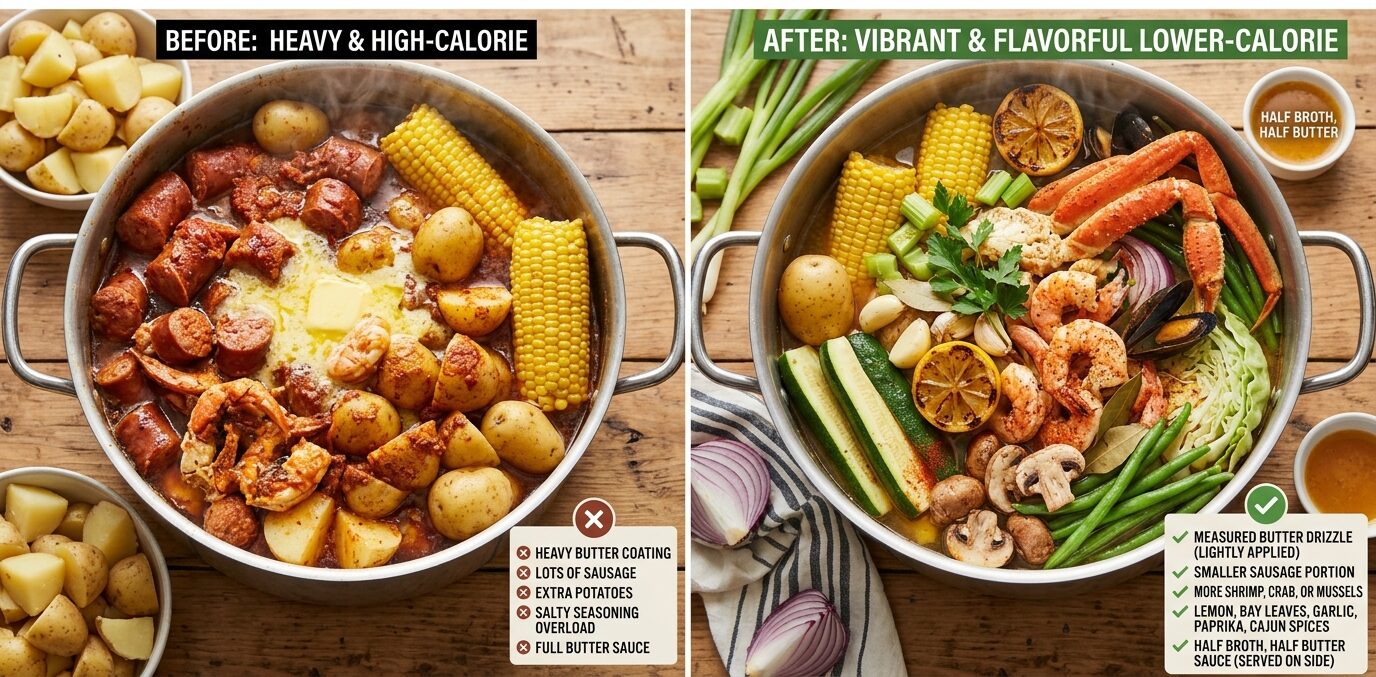
A lower-calorie seafood boil does not need to taste plain. The trick is to build flavor from aromatics, acid, spices, and cooking liquid, not only butter.
Use these practical changes:
Instead Of |
Use |
| Heavy butter coating | Measured butter drizzle |
| Lots of sausage | Smaller sausage portion |
| Extra potatoes | More shrimp, crab, or mussels |
| Salty seasoning overload | Lemon, bay leaves, garlic, paprika |
| Sauce mixed into everything | Sauce served on the side |
| Full butter sauce | Half broth, half butter |
Add garlic, lemon halves, bay leaves, smoked paprika, black pepper, parsley, onion, celery, and Cajun spices to the boil water. These ingredients add aroma without adding many calories.
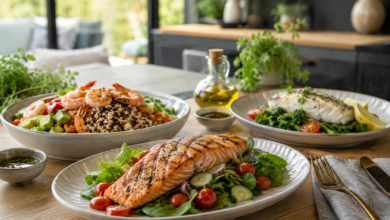
Keep the seafood generous. Reduce the extras instead. A plate with shrimp, crab, mussels, corn, one potato, and 1 tablespoon of butter can taste satisfying without becoming excessive.
If you want more volume, add vegetables like zucchini, mushrooms, green beans, or cabbage wedges. They absorb seasoning well and add bulk with fewer calories than extra potatoes or sausage.
Is Seafood Boil Good For Weight Loss?
Seafood boil can fit into a weight loss diet, but it depends on the build.
A seafood boil based on shrimp, crab, mussels, clams, potatoes, corn, lemon, and modest butter can be high in protein and satisfying. That can help control hunger. But a seafood boil loaded with sausage, butter sauce, extra potatoes, and dipping butter can become too calorie-dense for many weight loss plans.
The best approach is not to avoid seafood boil. It is to adjust the plate:
Goal |
Best Choice |
| Lower calories | More shellfish, less butter |
| More fullness | Keep potatoes, reduce sauce |
| Lower fat | Skip sausage or use less |
| Lower sodium | Use reduced-sodium seasoning |
| More protein | Add shrimp, crab, or mussels |
A seafood boil can be a good meal for weight loss when the protein stays high and the sauce stays measured.
Is Seafood Boil Healthy? Nutrition Benefits And Concerns
Seafood boil can be healthy, but not every version is balanced.
The benefits are clear. Seafood provides lean protein and important nutrients. Shrimp, crab, mussels, clams, crawfish, and lobster can contribute B12, selenium, iodine, zinc, and other minerals. Fish and seafood also fit into healthy eating patterns, and fish intake is recommended in federal guidance because it can provide nutrients that support health.
The concerns are also real. Seafood boils can be high in sodium, especially restaurant versions. Sausage adds saturated fat and sodium. Butter sauce adds calories quickly. Shared seafood boil trays can also encourage overeating because there is no clear serving boundary.
For most healthy adults, seafood boil can be part of a balanced diet. For people with high blood pressure, kidney concerns, heart disease, or sodium-sensitive conditions, the seasoning and sausage need more caution.
The healthiest version is usually homemade: lean seafood, reasonable starch portions, low-sodium seasoning, lemon, garlic, herbs, and measured butter.
Seafood Boil Calories For Different Diet Goals
For weight loss, keep seafood high, use one starch portion, limit sausage, and measure butter.
For muscle gain, increase shrimp, crab, lobster, or mussels. Keep potatoes and corn for carbs. Add butter only if you need more calories.
For low-carb eating, skip or reduce potatoes and corn. Focus on shrimp, crab, lobster, clams, mussels, and butter in moderation.
For low-sodium eating, use unsalted butter, fresh garlic, lemon, smoked paprika, herbs, and reduced-sodium seasoning. Limit sausage.
For pregnancy-safe eating, choose low-mercury seafood and ensure everything is fully cooked. FDA advice says people who are pregnant or breastfeeding should eat 8–12 ounces per week of a variety of fish from lower-mercury choices.
For heart-conscious eating, lean toward shrimp, crab, mussels, clams, corn, potatoes, lemon, herbs, and less butter. Watch sodium closely.
Common Calorie Counting Mistakes With Seafood Boils
The first mistake is counting shell weight as meat. Crab legs, lobster tails, and crawfish include shell, so the edible calories are lower than the total weight suggests.
The second mistake is ignoring sauce. Garlic butter sauce may be the highest-calorie item on the plate.
The third mistake is forgetting sausage. A few slices can add hundreds of calories.
The fourth mistake is treating one restaurant bag as one serving. Many boil bags are large enough for two meals.
The fifth mistake is assuming seafood always means low calorie. Fried seafood, butter-coated seafood, and sausage-heavy boils are different from plain steamed shellfish.
The sixth mistake is not counting add-ons: boiled eggs, extra corn, rice, bread, dipping butter, and sweet drinks.
A good calorie estimate should include the seafood, starches, sausage, sauce, and extras.
Quick Reference Table: Seafood Boil Calories By Portion
Portion Type |
What It Usually Includes |
Estimated Calories |
| Light homemade plate | Shrimp, crab, corn, one potato, light sauce | 400–650 |
| Standard plate | Seafood, corn, potatoes, sausage, butter | 700–1,000 |
| Restaurant boil bag | Large seafood portion, sides, heavy sauce | 1,000–1,500+ |
| Butter-heavy version | Extra garlic butter, sausage, eggs | 1,300–1,800+ |
| Lower-calorie version | Shellfish, lemon, herbs, measured butter | 350–600 |
Frequently Asked Questions
How Many Calories Are In A Seafood Boil?
Most seafood boils range from 500 to 1,500+ calories per serving. A light homemade version may be closer to 400–600 calories, while a restaurant boil with butter sauce and sausage can be much higher.
How Many Calories Are In A Shrimp Seafood Boil?
A shrimp seafood boil with corn, potatoes, and light butter is often around 500–800 calories. Adding sausage and heavy garlic butter sauce can push it above 1,000 calories.
How Many Calories Are In A Crab And Shrimp Boil?
A crab and shrimp boil usually ranges from 600–1,000 calories depending on the amount of edible crab meat, shrimp, potatoes, corn, sausage, and butter sauce.
Is Seafood Boil High In Calories?
It can be, but it is not always high in calories. The seafood itself is usually lean. Butter sauce, sausage, potatoes, corn, and large portions make it high-calorie.
Is Seafood Boil Good For Weight Loss?
Yes, it can fit a weight loss plan if you focus on shrimp, crab, clams, mussels, or lobster and limit butter sauce, sausage, and extra starches.
What Is The Lowest-Calorie Seafood In A Boil?
Shrimp, crab, crawfish, mussels, clams, and lobster are all relatively lean choices. The exact calories vary by portion and preparation.
How Many Calories Are In Seafood Boil Sauce?
Seafood boil sauce can range from 100 calories to 700+ calories, depending on how much butter or oil is used. One tablespoon of butter alone is about 100 calories.
Does Cajun Seasoning Add Calories?
Cajun seasoning adds very few calories, but it can add a lot of sodium. The calories usually come from butter, oil, and sausage, not the dry spice blend.
Are Potatoes And Corn In A Seafood Boil Unhealthy?
No. Potatoes and corn are not unhealthy, but they add carbohydrates and calories. Portion size matters, especially if the boil already includes sausage and butter sauce.
How Can I Make Seafood Boil Healthier?
Use more shellfish, less sausage, measured butter, reduced-sodium seasoning, lemon, garlic, herbs, and broth. Serve sauce on the side instead of coating everything.
Is Seafood Boil High In Sodium?
It can be high in sodium because of Cajun seasoning, Old Bay-style blends, sausage, salted butter, and restaurant sauces. Homemade versions are easier to control.
How Much Protein Is In A Seafood Boil?
A seafood boil can be high in protein. Shrimp, crab, lobster, mussels, clams, and crawfish all contribute protein. A seafood-heavy plate can easily provide 30–60g protein, depending on portion size.
Conclusion
Seafood boil calories depend less on the seafood and more on the extras. Shrimp, crab, lobster, clams, mussels, and crawfish are generally lean protein sources. The calories climb when you add heavy garlic butter sauce, sausage, large potato portions, corn, eggs, and restaurant-style seasoning bags.
For a lighter seafood boil, keep the shellfish generous, measure the butter, reduce sausage, control potatoes and corn, and use lemon, garlic, herbs, paprika, and Cajun spices for flavor. The best version is not bland. It is simply built with better balance.