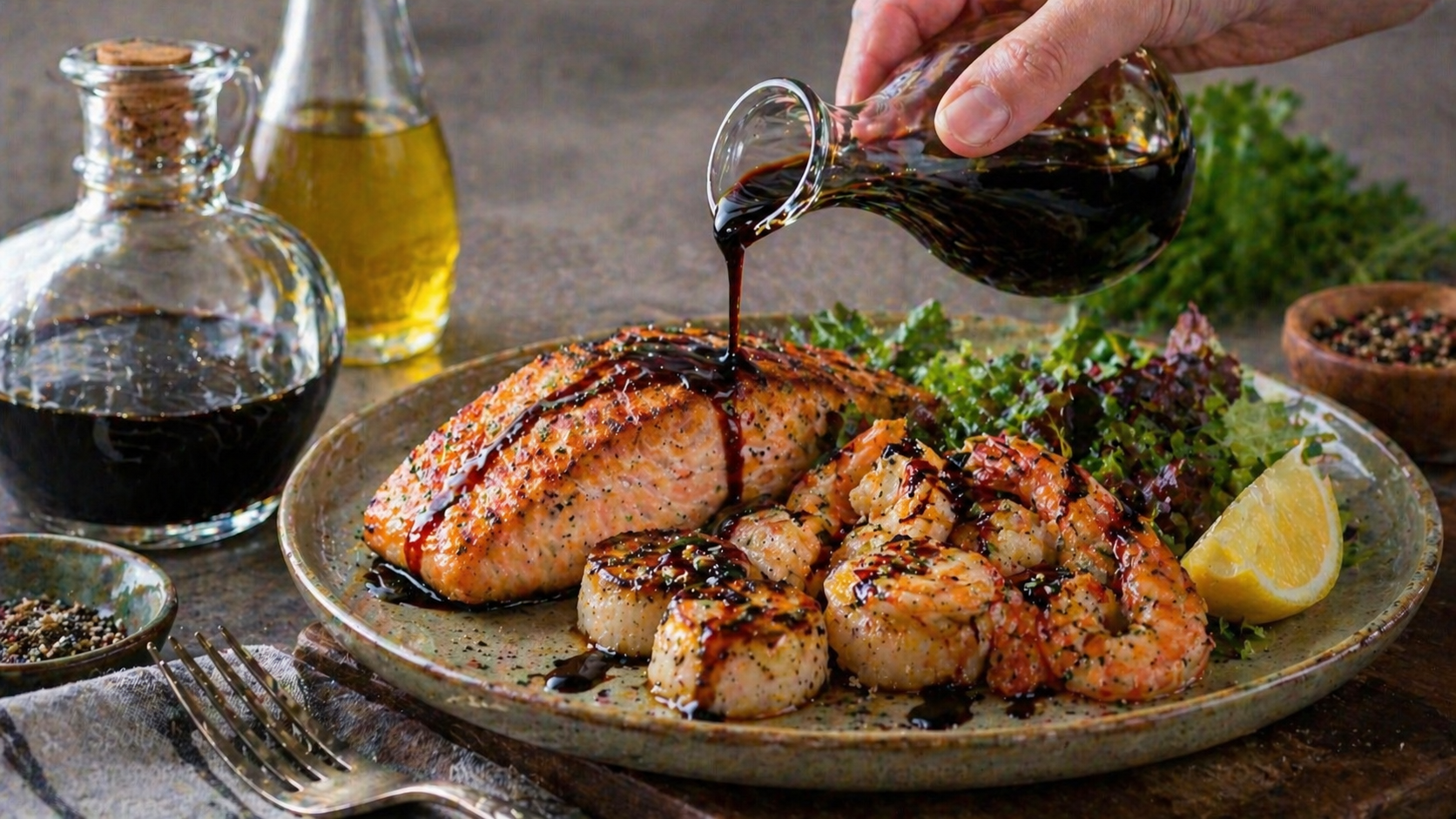
What Is Balsamic Vinegar and How to Use It in Seafood Recipes — Everything From Origin to Ocean
Balsamic vinegar and seafood is one of those pairings that divides cooks. Some consider it an obvious combination — sweet acidity against briny, fatty fish is a classic flavor axis. Others avoid it, worried the vinegar will overpower the delicate character of scallops or shrimp. Both reactions miss the point: the version of balsamic vinegar that overwhelms seafood and the version that elevates it are effectively different products. Knowing which one to reach for, and how to use it, is the entire practical question.
This guide covers what balsamic vinegar actually is (the chemistry, history, and grade system most buyers don’t understand), how acid behaves on seafood proteins, and five practical recipes across salmon, shrimp, scallops, tuna, and calamari — each built around a different technique for working balsamic vinegar into seafood without losing what makes the fish worth eating.
What Is Balsamic Vinegar?
Balsamic vinegar is not a standard vinegar that happens to taste sweet. It’s a cooked, fermented, and aged grape must condiment with a production history that predates the Renaissance — the earliest documented reference is a gift of a small barrel given to Holy Roman Emperor Henry III as he passed through northern Italy in 1046.
The name comes from the Italian balsamico, meaning balsamic or restorative. For centuries before it reached kitchen counters, the product was stored in the attics of Modenese nobility, used medicinally for everything from digestive complaints to sore throats, and given as a diplomatic gift or dowry item. The Este family, who ruled Modena from 1288 to 1796, maintained extensive vinegar cellars (acetaie) specifically for this purpose.
What it’s made from: Traditional balsamic vinegar is produced from cooked grape must (freshly pressed juice) from specific grape varieties — primarily Trebbiano and Lambrusco — grown only in the provinces of Modena and Reggio Emilia in Emilia-Romagna, northern Italy. The must is cooked down at atmospheric pressure in open containers, reducing its volume and concentrating its sugars. It then undergoes a three-stage process: sugar-to-ethanol conversion by yeast, ethanol-to-acetic-acid conversion by acetic acid bacteria, and extended aging in a series of wooden barrels (called a batteria) made from different woods — oak, chestnut, cherry, mulberry, ash, and juniper — each imparting different aromatic compounds to the liquid over time.
Only two locations produce balsamic vinegar protected by legal status: Modena and neighbouring Reggio Emilia. The product must age for a minimum of 12 years to qualify as traditional, and at least 25 years to earn the extravecchio (extra-old) designation.
The Three Grades — And Why They Matter for Cooking
This is where most buyers get confused, and where most cooking mistakes originate. There are three legally recognized categories of balsamic vinegar, and they’re not interchangeable in the kitchen.
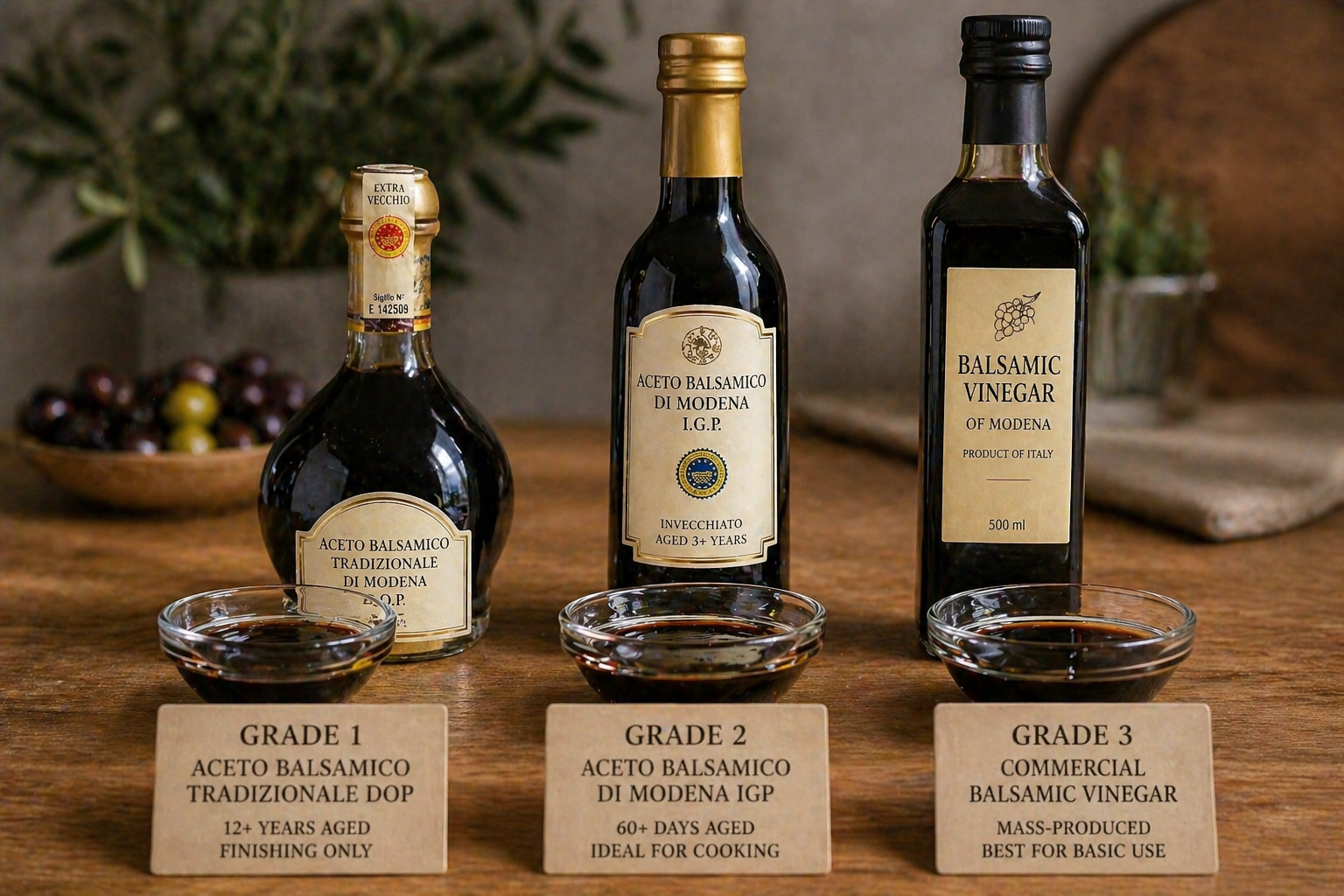
Grade 1 — Aceto Balsamico Tradizionale DOP (Traditional, Protected Designation of Origin)
The highest grade. Made exclusively from cooked grape must with zero additives — no wine vinegar, no caramel, no thickeners, no sugar. It must age for a minimum of 12 years (Affinato) or 25 years (Extravecchio) in a batteria. After aging, an official tasting panel evaluates each batch before bottling. Sold only in a designated 100ml bottle designed by Giorgetto Giugiaro (for Modena) or an inverted tulip bottle (for Reggio Emilia). Price: $80–$200+ per 100ml.
What it tastes like: Syrupy, intensely complex, deeply sweet with a layered acidity that doesn’t read as sharp at all. The wood aging contributes vanillin, lactones, and phenolic compounds from the different barrel types.
How it should be used in cooking: It shouldn’t be cooked. Ever. True Tradizionale is a finishing condiment — a few drops on a dish right before serving. It is not a marinade ingredient, not a pan sauce component, and not something you reduce further. Using 25-year Tradizionale in a glaze is a culinary mistake equivalent to cooking with first-growth Bordeaux.
Grade 2 — Aceto Balsamico di Modena IGP (Protected Geographical Indication)
This is the mid-range category and the most practical for cooking. The minimum maturation time is 60 days, counted from the moment in which the raw materials, mixed in the right proportions, are sent to processing. If aged over three years it earns the invecchiato (aged) label; over five years, Riserva.
Ingredients can include grape must (20–90%) and wine vinegar (10–80%), with up to 2% caramel for color. Reading the tag can provide useful information on the ingredients used and the processing methods. Quality varies significantly within this category — a good IGP with high grape must percentage and 3+ years of aging is an excellent cooking vinegar; a low-grade IGP with mostly wine vinegar and caramel is closer to the commercial grade below.
Price range: €6–€50. For seafood cooking, aim for mid-range IGP ($15–$25) with grape must listed as the first or primary ingredient.
Grade 3 — Commercial Grade (Supermarket Balsamic)
Mass-produced balsamic vinegar often contains wine vinegar as the primary ingredient, with added caramel color, sugar, and thickeners like cornstarch or xanthan gum. These products are not regulated by DOP or IGP standards. They cost $3–$8 per bottle.
Check the ingredient list: if wine vinegar appears before grape must, you have a commercial grade. For marinades, stocks, and long-cooked applications where balsamic is one of many flavors, commercial grade is workable. For glazes and finishing — where the vinegar’s character is central to the dish — it will taste harsh and one-dimensional.
Quick selection rule for seafood cooking:
- Glaze finishing (drizzle before serving): IGP Riserva or Tradizionale DOP
- Pan sauce and reductions: mid-range IGP
- Marinades and long-cooked dishes: commercial grade or lower IGP
How Balsamic Vinegar Behaves on Seafood — The Chemistry
Understanding what acid does to fish proteins changes how you cook with balsamic vinegar around seafood.
The acid-protein interaction: Acetic acid (the primary acid in balsamic vinegar) denatures fish proteins through a process similar to what lemon juice does in ceviche — it unfolds protein structures and causes them to firm and whiten without heat. This is why over-marinating can cause seafood to become mushy due to acidity. The acid doesn’t just sit on the surface; it actively breaks down the delicate protein matrix of fish and shellfish.
Practical implication: Balsamic marinades for seafood must be brief — 15–30 minutes maximum for most fish, and even shorter for delicate items like scallops and shrimp. With chicken, beef, and pork you can get away with 24 hours but with fish, only a few hours are needed or it can become a mushy texture.
Sugar as a moderating factor: Unlike straight wine vinegar, balsamic’s natural sugars buffer its acidity and reduce the speed of protein denaturation. This is why balsamic glazes work well on fish where straight red wine vinegar would be too harsh — the sugars slow the acid’s effect and caramelize on the surface during cooking, creating the Maillard-adjacent browning that makes glazed salmon visually appealing.
Heat concentration: When balsamic vinegar reduces in a pan, its acetic acid partially volatilizes — the sharper notes cook off, leaving behind the sweeter, more complex compounds. This is why a balsamic reduction tastes significantly mellower than balsamic vinegar straight from the bottle. For seafood glazes, this reduction step is often the key to avoiding that sharp vinegary quality that puts some people off.
The olive oil rule: Olive oil should always be the dominant ingredient in any balsamic seafood marinade, and marinating times should remain short — especially for shrimp and scallops. Olive oil coats the protein surface and slows acid penetration, protecting the texture while still allowing flavor transfer.
Recipe 1 — Balsamic Glazed Salmon (Pan-Sear + Oven Finish)
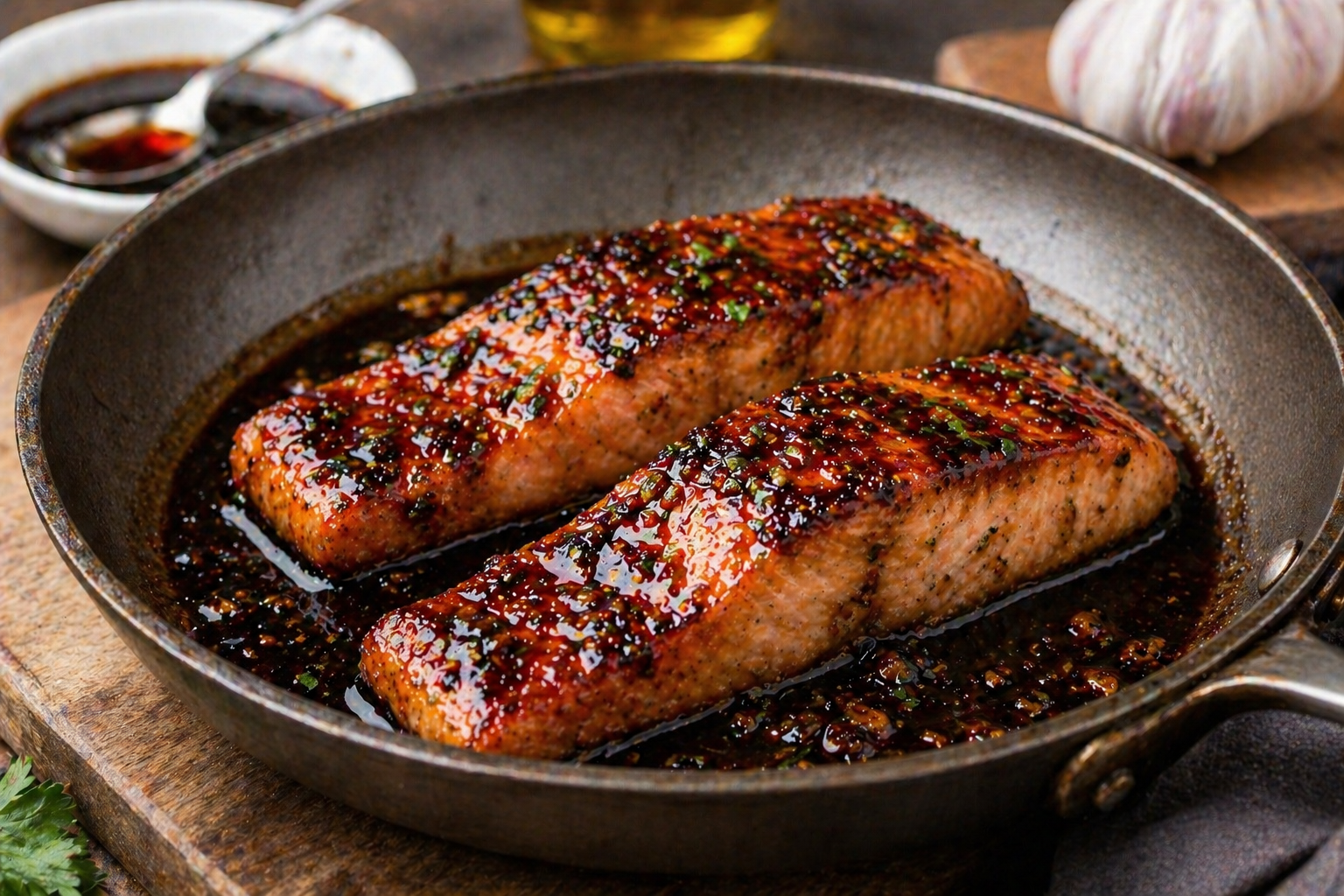
This is the most practical and widely adaptable balsamic seafood recipe. The pan-sear develops the crust; the oven finish cooks evenly; the glaze applied in the final minutes caramelizes without burning.
Ingredients (serves 2):
- 2 salmon fillets (170–200g each), skin on or off
- 4 tablespoons IGP balsamic vinegar
- 1 tablespoon pure maple syrup or honey
- 1 teaspoon Dijon mustard
- 2 cloves garlic, minced
- Salt and black pepper
- 1 tablespoon olive oil
Method:
- Whisk together balsamic, maple syrup, mustard, and garlic in a small saucepan. Simmer over medium-low heat 4–5 minutes until slightly thickened. Remove from heat.
- Pat salmon dry with paper towels. Season with salt and pepper.
- Heat olive oil in an oven-safe skillet over medium-high heat. Sear salmon skin-side up for 3 minutes without moving. Flip.
- Brush glaze generously over the top surface. Transfer to a 400°F oven for 6–8 minutes until internal temperature reaches 125–130°F for medium.
- Rest 2 minutes. Drizzle remaining warm glaze over the top before serving.
The balsamic and maple combination creates deep caramelization on the fish surface without the harshness of uncooked balsamic. The Dijon emulsifies the glaze and adds depth that disappears into the background behind the balsamic-maple sweetness.
Recipe 2 — Balsamic Butter Shrimp (10-Minute Pan Method)
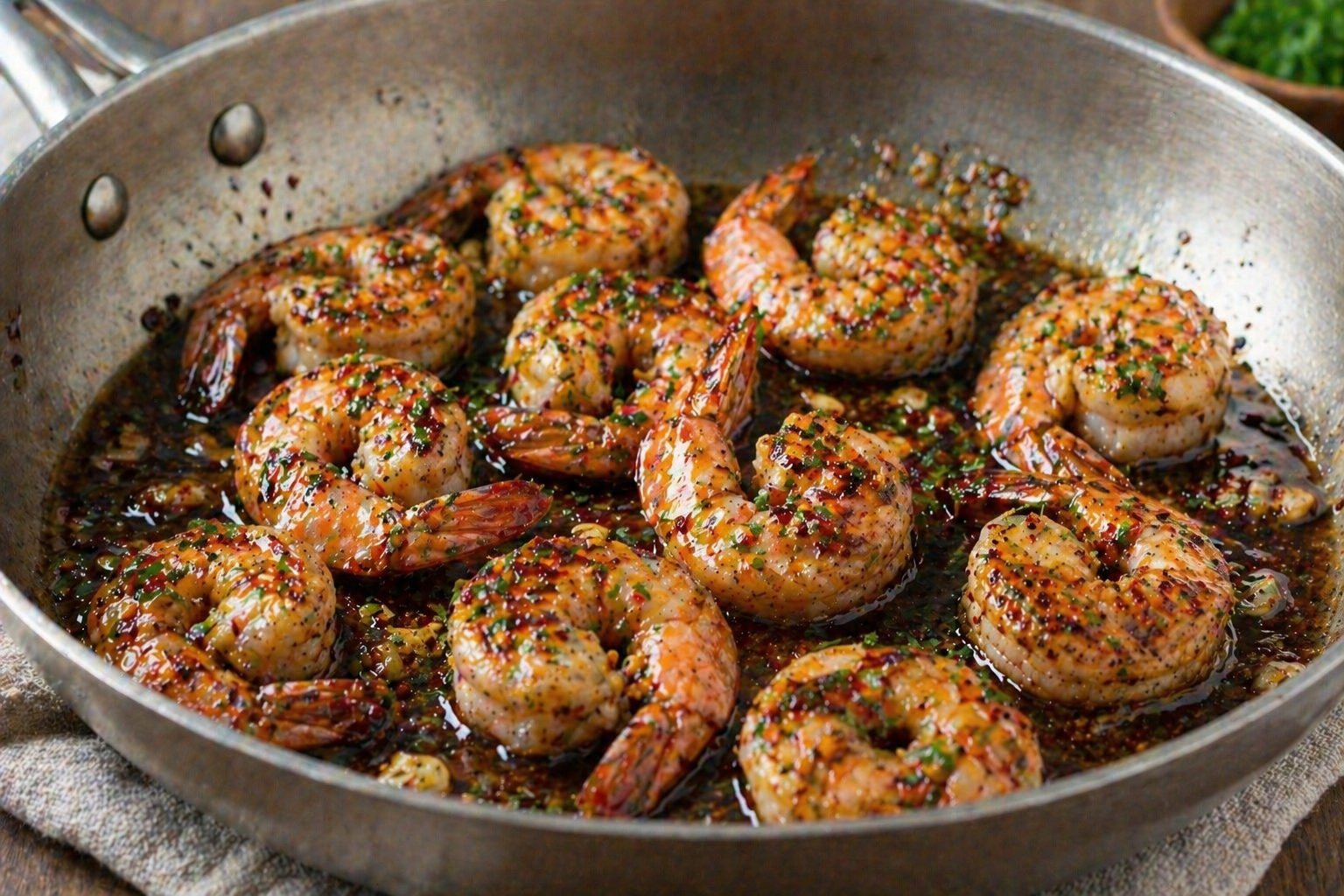
Tender shrimp tossed in a butter and balsamic sauce is so simple and flavorful it deserves a regular spot in your recipe rotation. The key is adding balsamic off-heat at the very end — you’re warming it into the butter sauce, not cooking it down from the beginning.
Ingredients (serves 2–3):
- 400g large shrimp, peeled and deveined (tails on or off)
- 3 tablespoons unsalted butter
- 2 tablespoons IGP balsamic vinegar
- 2 garlic cloves, thinly sliced
- ½ teaspoon red pepper flakes
- Salt and fresh parsley to finish
Method:
- Pat shrimp completely dry. Season with salt.
- Melt 2 tablespoons butter in a wide skillet over high heat. Add shrimp in a single layer. Sear undisturbed 90 seconds per side until pink and lightly charred at the edges. Work in batches — crowding produces steamed, not seared shrimp.
- Remove shrimp to a plate. Reduce heat to medium. Add remaining butter and garlic to the pan. Cook 1 minute until garlic is fragrant and lightly golden.
- Remove from heat entirely. Add balsamic vinegar and swirl to combine — the residual heat incorporates it into the butter without cooking off the complex flavor compounds you want in the sauce.
- Return shrimp to pan, toss briefly to coat, and plate immediately. Finish with red pepper flakes and chopped flat-leaf parsley.
Do not return this pan to heat after adding the balsamic. The combination of butter fat and balsamic sugars will scorch at high temperature and turn bitter — the off-heat incorporation is what makes this dish work.
Recipe 3 — Soy-Balsamic Seared Scallops
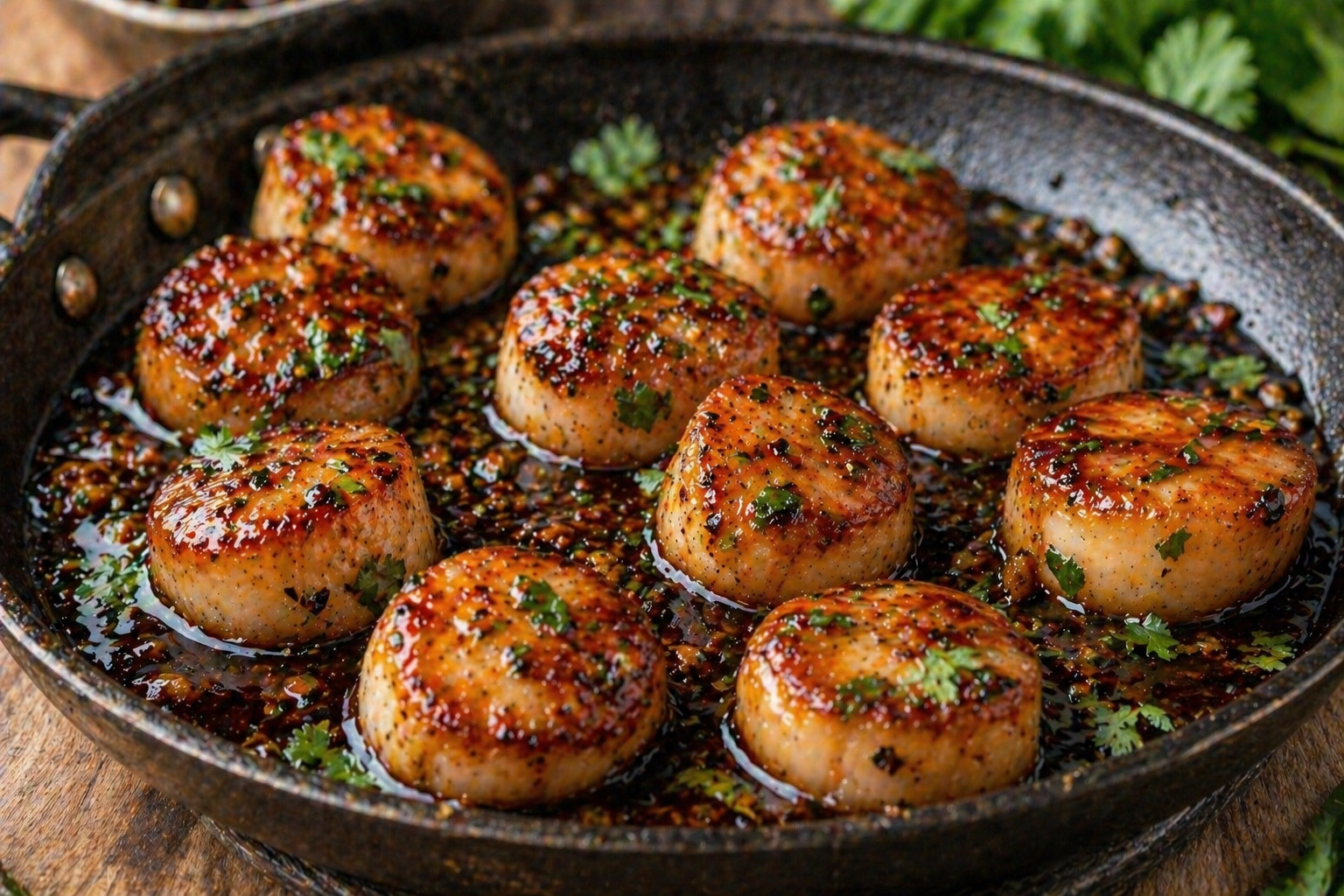
Scallops are the most demanding protein in this guide from a technique standpoint. They have a very narrow window between undercooked (translucent, soft center) and overcooked (rubbery, shrunken). The balsamic-soy glaze adds to the complexity — it must be added after the sear, not before, or the sugars will burn before the scallops cook through.
Ingredients (serves 2):
- 400g large sea scallops (10–12 pieces), side muscle removed
- 3 tablespoons balsamic vinegar
- 1 tablespoon soy sauce
- 1 teaspoon sesame oil
- 1 garlic clove, minced
- 1 teaspoon cornstarch dissolved in 1 tablespoon water
- 1 tablespoon neutral oil (avocado or grapeseed)
- Black pepper and cilantro to finish
Method:
- Whisk together balsamic, soy sauce, sesame oil, garlic, and cornstarch slurry. Set aside.
- Pat scallops completely dry — this is extremely important to ensure the scallops are dry to get a good sear on them. Season with black pepper only (the soy sauce provides all the salt).
- Heat neutral oil in a cast iron or stainless skillet over very high heat until smoking. Add scallops flat-side down, spaced 2 inches apart. Do not touch for 2 full minutes.
- Flip — the seared side should be deep golden brown. Cook 1–2 more minutes.
- Reduce heat to medium. Pour glaze mixture into the pan around the scallops. Let it bubble and thicken for 60–90 seconds, swirling the pan to coat. Remove immediately.
The cornstarch in the glaze controls thickening speed, preventing the balsamic from reducing too aggressively and burning during the short window between adding the glaze and removing the pan.
Recipe 4 — Balsamic-Marinated Blackened Tuna Steaks
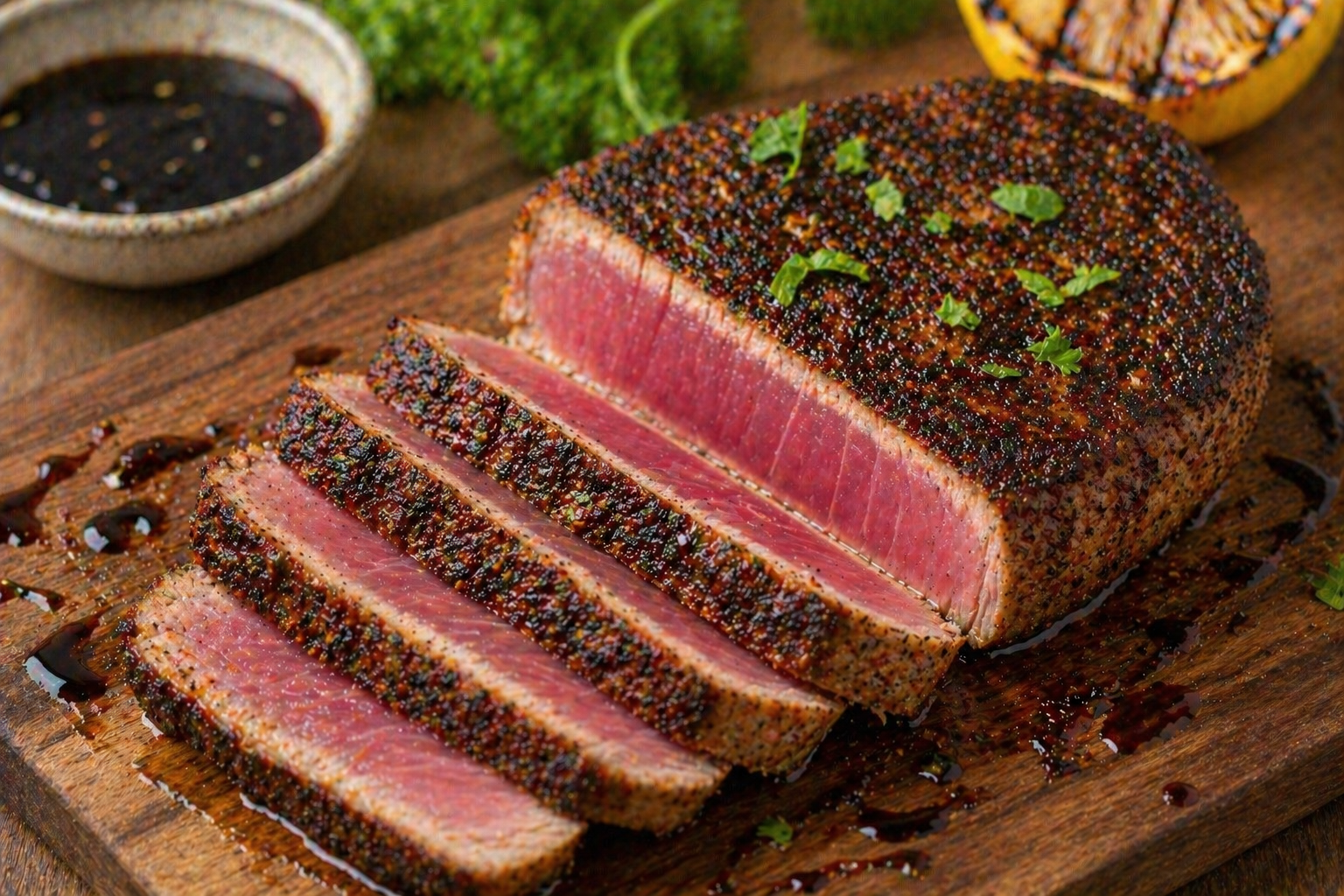
Tuna is the firmest, fattiest fish in this guide and the one that can tolerate a longer marinade time (up to 2 hours) and high-heat cooking without falling apart. The blackening spice crust and balsamic marinade together create a dish where the sweet acid of the vinegar cuts through the char crust on each bite.
Ingredients (serves 2):
- 2 tuna steaks (200g each, 1-inch thick)
- 3 tablespoons balsamic vinegar (commercial or lower IGP — the spice crust will dominate)
- 2 tablespoons olive oil
- 1 tablespoon soy sauce
- Blackening spice mix: 1 tsp smoked paprika, ½ tsp cumin, ½ tsp garlic powder, ¼ tsp cayenne, ½ tsp black pepper, ½ tsp dried oregano
- Salt
Method:
- Combine balsamic, olive oil, and soy sauce. Marinate tuna steaks in a sealed bag for 30–60 minutes refrigerated. Do not exceed 90 minutes — even tuna begins to texture-change with prolonged acid contact.
- Remove tuna, pat dry completely. Combine blackening spice mix and press firmly onto all surfaces of the tuna.
- Heat a cast iron skillet over maximum heat until it begins to smoke. Add a thin film of oil. Sear tuna 90 seconds per side for a rare-to-medium-rare center (the safest and most flavorful result for fresh tuna). For medium, 2 minutes per side.
- Rest 2 minutes. Slice against the grain and serve immediately. A light drizzle of good IGP balsamic over the cut surface at service reinforces the marinade flavor without additional cooking.
Recipe 5 — Calamari and Scallops With Balsamic-Grape Juice Reduction
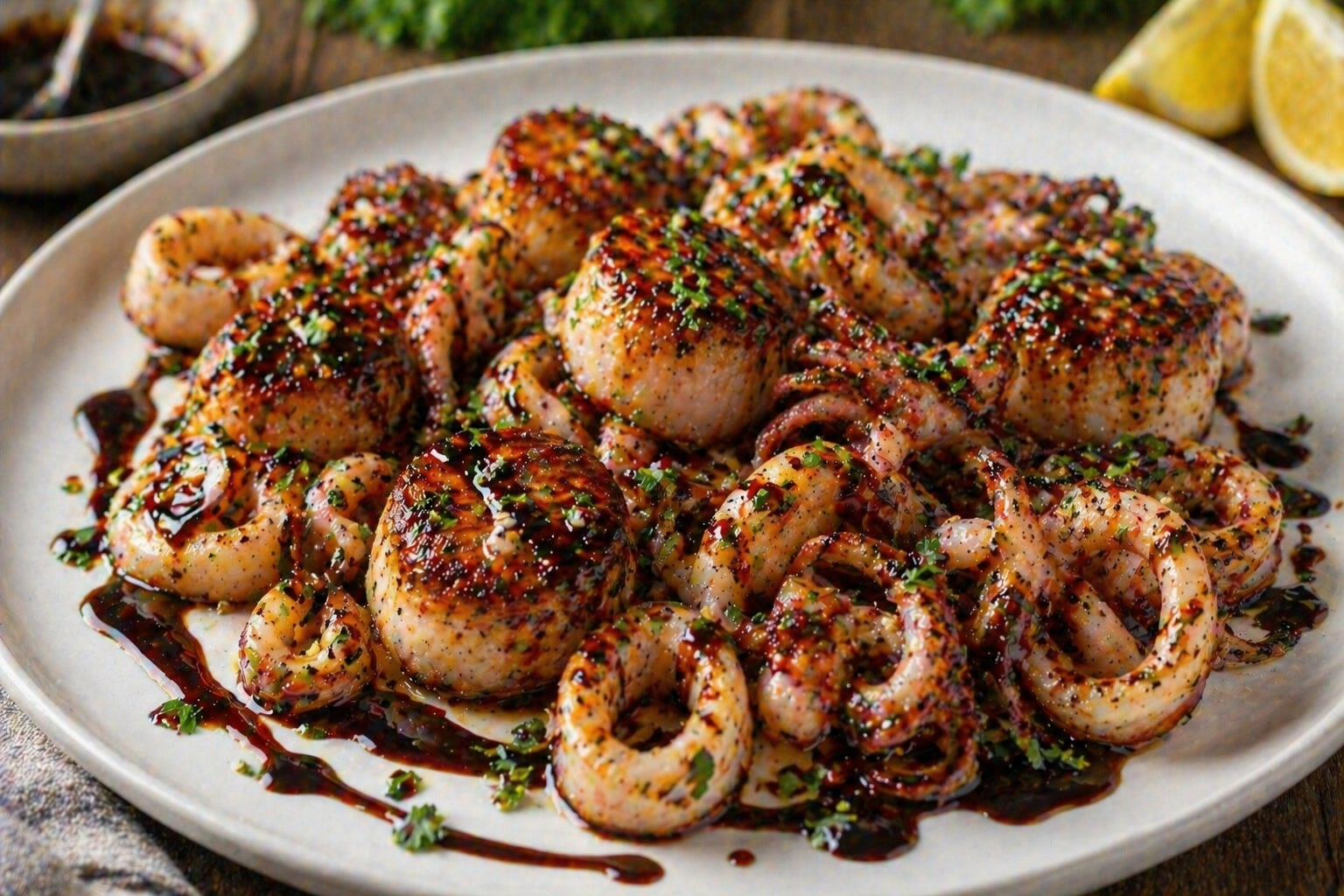
This is the most restaurant-influenced recipe in the guide. Golden-brown calamari and scallops drizzled with balsamic glaze are a crowd-pleasing appetizer or hors d’oeuvre. The grape juice reduction adds a fruity depth that a straight balsamic reduction lacks, and it’s worth the extra step.
Ingredients (serves 3–4 as a starter):
- 300g cleaned calamari rings and tentacles, patted dry
- 200g sea scallops
- Reduction: ½ cup IGP balsamic vinegar + ¼ cup unsweetened grape juice; simmer together until reduced by half and coats a spoon (approximately 15 minutes on low heat)
- Olive oil, garlic, salt, fresh lemon, flat-leaf parsley
Method:
- Make the reduction first and set aside to cool slightly. It will thicken further as it cools.
- Heat olive oil in a wide pan over high heat. Sear calamari in a single layer — 2 minutes, stirring once. Do not overcook; calamari becomes rubbery after 3 minutes. Remove.
- In the same pan, add a thin film of fresh oil and sear scallops as in Recipe 3 above.
- Plate calamari and scallops together. Drizzle the balsamic-grape reduction over everything. Finish with fresh lemon juice squeezed at the table and torn parsley.
The grape juice reduction stays slightly thinner than a straight balsamic reduction, making it easier to drizzle without the heaviness that pure balsamic glaze can leave on lighter seafood.
Balsamic Vinegar Nutrition — What You’re Adding to Each Dish
Balsamic vinegar contributes negligible macronutrients — the amounts used per serving are small. What it does contribute is meaningful from a flavor-chemistry and functional-food standpoint.
Per 1 tablespoon (15ml) of standard IGP balsamic vinegar:
Nutrient |
Amount |
| Calories | ~14 kcal |
| Carbohydrates | 2.7g |
| Sugars | 2.4g |
| Total Fat | 0g |
| Protein | 0g |
| Sodium | ~4mg |
| Acetic acid | Present (~4–6% total acidity) |
| Polyphenols | Present (from grape must and wood aging) |
The polyphenol angle: Traditional and aged balsamic vinegars contain measurable amounts of polyphenolic compounds — primarily resveratrol and quercetin derivatives from the Trebbiano and Lambrusco grapes used in production. These compounds carry antioxidant properties. Research published in Food Chemistry has found that the polyphenol content increases with age in Tradizionale-grade balsamic, meaning longer-aged varieties offer more of these bioactive compounds per serving. However, the quantities used in cooking (1–3 tablespoons per dish) are small enough that balsamic is better characterized as a flavor enhancer than a significant nutritional contributor.
Acetic acid and blood glucose: Several peer-reviewed studies, including a 2004 study in the European Journal of Clinical Nutrition, found that acetic acid (the primary acid in all vinegars) can reduce post-meal blood glucose rises when consumed with a meal. A tablespoon of balsamic vinegar on a salad before a carbohydrate-rich meal showed a modest but measurable effect on glycemic response. This is a consistent finding across multiple vinegar types — not unique to balsamic — but worth noting for people managing blood sugar through dietary means.
Sodium and hypertension: Balsamic vinegar is naturally very low in sodium (approximately 4mg per tablespoon), making it one of the few flavor-intensifying condiments that doesn’t add meaningful sodium load to a dish. For people managing blood pressure who want to reduce soy sauce use in seafood marinades, replacing part of the soy sauce component with balsamic vinegar maintains flavor depth while significantly reducing sodium.
Frequently Asked Questions About Balsamic Vinegar in Seafood Recipes
Q: What type of balsamic vinegar is best for seafood? For glazes, reductions, and finishing: mid-range IGP ($15–$25, with grape must as primary ingredient). For marinades and long-cooked applications: commercial grade is adequate. Never use 12-year or 25-year Tradizionale DOP in cooking — it belongs on finished dishes as a condiment only.
Q: How long can I marinate seafood in balsamic vinegar? Maximum 15–30 minutes for delicate seafood (shrimp, scallops, white fish). Up to 2 hours for fatty, firm fish like salmon and tuna. Beyond these limits, acetic acid begins denaturing proteins, causing mushy texture. Always marinate in the refrigerator — never at room temperature.
Q: Can I use balsamic vinegar in a glaze for shrimp? Yes — add balsamic off-heat after cooking the shrimp, whisked into butter. Cooking balsamic directly in the pan with shrimp at high heat causes the sugars to burn before the shrimp finishes. The off-heat incorporation method gives a clean, glossy sauce without bitterness.
Q: Why does my balsamic glaze taste bitter on fish? The sugars in balsamic vinegar burn quickly at high heat, especially in a dry pan with no oil buffer. To prevent this: reduce your heat before adding balsamic, add it after the protein is mostly cooked, always include a fat component (butter or olive oil) in the pan, and don’t cook the glaze beyond 2–3 minutes at medium heat.
Q: Is white balsamic vinegar better for seafood than dark? White balsamic vinegar (aceto balsamico bianco) is made from white grape must processed at lower temperatures to preserve its color. It has a milder, lighter flavor and a cleaner appearance — it won’t stain white fish or cause the dark glazed look of regular balsamic. For delicate white fish like sea bass, halibut, or sole where you want mild sweet acidity without dark color, white balsamic is the better choice. For salmon, tuna, and shellfish where a caramelized appearance is desirable, use standard dark balsamic.
Q: What is a balsamic reduction and how is it different from regular balsamic vinegar? A balsamic reduction is balsamic vinegar simmered until it reduces in volume by roughly half, concentrating the sugars and mellowing the acidity. The result is thicker, sweeter, less sharp, and more suitable for drizzling on cooked food. Commercial balsamic glazes are typically pre-made reductions with added thickeners. A homemade reduction from a good IGP balsamic tastes significantly better — simmer on low heat for 12–15 minutes, watching carefully because the sugars burn quickly once most of the liquid has evaporated.
Q: Can balsamic vinegar be used with lobster or crab? Yes, but carefully. Lobster and crab have delicate, sweet flesh that balsamic can overpower. Use it as a light finishing drizzle (a few drops of Tradizionale or good IGP Riserva) rather than a marinade or cooking component. Butter-based balsamic sauces — balsamic stirred into warm brown butter off-heat — work well with lobster by providing acidity without overwhelming the natural sweetness of the shellfish.
Conclusion — The Right Balsamic Makes All the Difference
The question of what balsamic vinegar is and how to use balsamic vinegar in seafood recipes resolves into one core principle: match the grade to the cooking method, and manage the timing of acid exposure. Traditional DOP is a finishing condiment, not a cooking ingredient. Mid-range IGP handles glazes, pan sauces, and brief reductions where heat moderates the vinegar’s sharpness. Commercial grade belongs in marinades and long-cooked preparations where it’s one of many flavor components.
For seafood specifically, the acid management question dominates everything else. Brief marination times, off-heat incorporation into butter sauces, and glaze application near the end of cooking are the three techniques that prevent the balsamic from doing what it does to protein when given too much time or too much heat — turning a beautiful piece of salmon or a perfectly seared scallop into something mushy or bitter.
From a nutritional standpoint, balsamic vinegar adds almost no calories or sodium while contributing polyphenols from grape aging and acetic acid that modestly supports post-meal glycemic response. It’s among the most flavor-efficient condiments you can use in seafood cooking — a tablespoon of good IGP balsamic transforms a dish in a way that requires much larger quantities of most other seasonings to replicate.
Invest in one bottle of mid-range IGP balsamic for cooking and one bottle of Riserva or Tradizionale DOP for finishing. The difference between those two applications — and knowing which situation calls for which — is what separates confident balsamic cooking from guesswork.