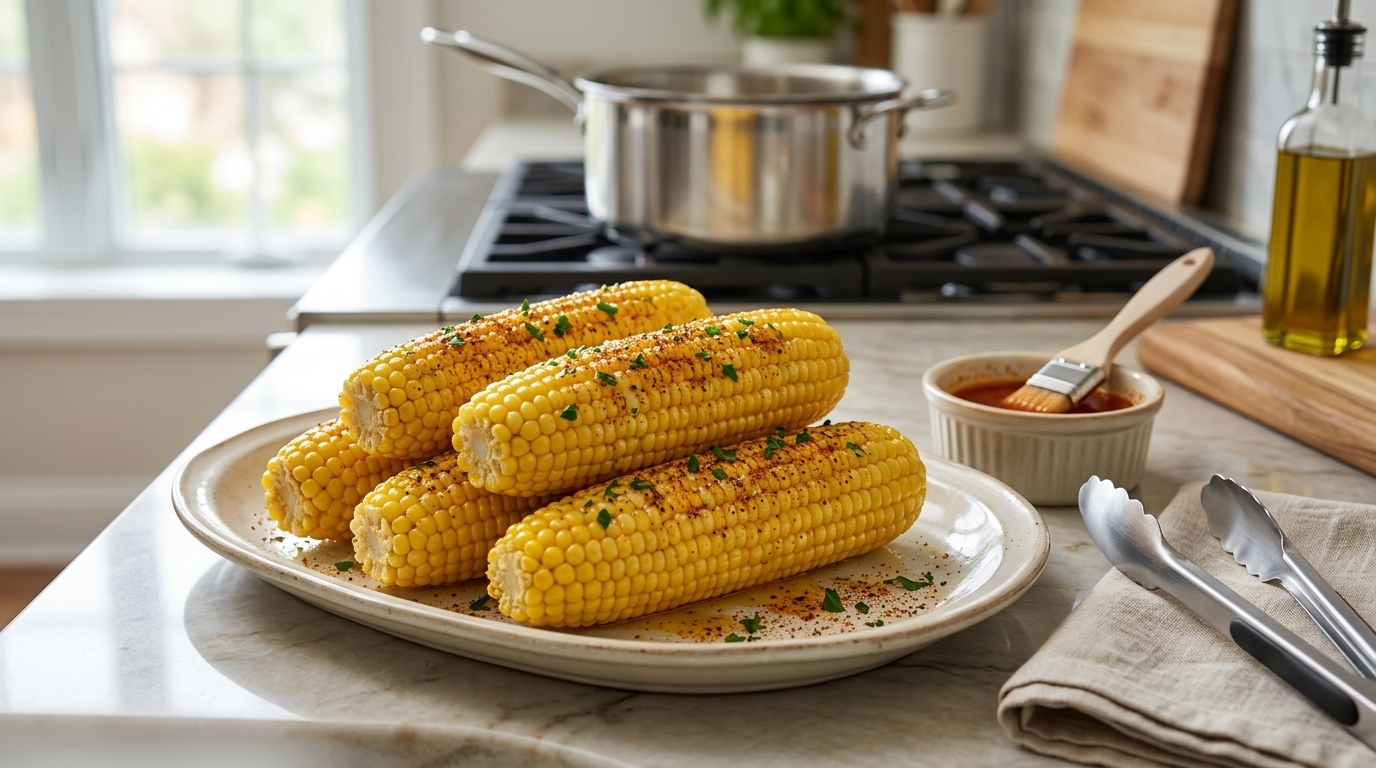
How to Cook Frozen Corn on the Cob Just Like Red Lobster Style — The Full Practitioner’s Guide
Walk into any Red Lobster and the corn on the cob arriving at your table isn’t doing anything complicated — but it’s doing everything right. The kernels are plump and sweet, the butter is genuinely coating every row, and that Old Bay seasoning sitting on top hits the Chesapeake Bay flavor note that the restaurant has built its entire identity around. The whole thing takes about 10 minutes to execute, and yet most attempts to recreate it at home fall short because people miss the one or two small details that separate good corn from restaurant corn.
This guide answers how to cook frozen corn on the cob just like Red Lobster style from every practical angle — the three-ingredient formula behind the Chesapeake Corn copycat, five cooking methods for frozen cobs with exact timings, the compound butter technique that makes the difference, the nutrition profile of the corn itself, and a full FAQ.
One clarifying note upfront: Red Lobster’s Chesapeake Corn on the Cob is listed as a seasonal item using fresh corn during summer months. The frozen method replicates the result with the same seasoning system — and in many households, frozen corn is actually the more reliable starting point because it’s harvested and frozen at peak sweetness rather than sitting in transit for days.
What Makes Red Lobster Corn on the Cob Taste the Way It Does
The signature is three ingredients: sweet corn, unsalted butter, and Old Bay seasoning. That’s the complete formula behind Red Lobster’s Chesapeake Corn on the Cob — a dish that succeeds because it celebrates the natural sweetness of corn while enhancing it with the complex spice blend that defines Chesapeake Bay cuisine.
Old Bay seasoning is the non-negotiable element. Developed in 1939 by German immigrant Gustav Brunn in Baltimore, Maryland, Old Bay’s blend includes celery salt, paprika, black pepper, red pepper flakes, and a proprietary combination of herbs and spices that gives it a distinctive savory-spicy-coastal flavor. The celery salt is what registers as “seafood seasoning” to most palates — it’s the note that makes something taste like the coast without any actual seafood being present. McCormick owns the brand and the formula remains proprietary, but the core character of celery salt + paprika is the flavor axis you’re working with.
Why unsalted butter specifically: Red Lobster uses butter as both a flavor carrier and a binding agent for the seasoning. Unsalted is standard because Old Bay’s celery salt component carries the full salt load the dish needs. Using salted butter pushes it over the edge into oversalted territory. The butter should be genuinely melted — not softened, not partially melted — so it flows into every groove between the kernels before the seasoning is applied on top.
The application order matters: Butter first, then Old Bay. Sprinkling Old Bay directly onto dry corn gives you patchy coverage and doesn’t allow the fat-soluble flavor compounds in the paprika and pepper to bloom. Butter carries those compounds to the entire kernel surface and holds them in place as the corn cools slightly.
Why Frozen Corn Works as Well as Fresh — The Science Behind Flash-Freezing
Here’s the contrarian take most corn guides miss: fresh corn from a grocery store is often nutritionally and flavor-wise inferior to frozen, depending on the season and supply chain.
Sweet corn begins converting its sugars to starch from the moment it’s picked. Within 24 hours at room temperature, a significant portion of the sugars that give corn its natural sweetness have already converted. Grocery store “fresh” corn, depending on the distribution chain, can be 2–5 days post-harvest by the time it reaches your kitchen.
Flash-freezing, used by all major frozen corn producers, occurs within hours of harvest — typically at the processing facility adjacent to the fields. The corn is blanched briefly (2–3 minutes in boiling water or steam), then frozen at temperatures of -40°F or below. The blanching step deactivates enzymes that would otherwise continue degrading quality, and the rapid freeze locks the sugar-to-starch ratio at its peak. The result is frozen corn that nutritionally and flavor-wise is very close to freshly harvested corn from the same field.
Frozen corn is very similar nutritionally to fresh corn, while canned corn may contain added sodium. For the Red Lobster-style preparation, frozen corn on the cob is a completely legitimate and often superior starting point compared to grocery store fresh corn outside of July–September harvest season.
The one frozen corn issue to check for: Freezer burn. Check corn for freezer burn before using. Discard if it looks white and shriveled. Freezer-burned corn has lost its surface moisture into the surrounding frost, leaving dry, chalky kernels that no amount of butter and seasoning will fix. A properly stored frozen cob should look uniformly bright yellow, not spotted or icy-patched.
The Core Red Lobster-Style Recipe — Three Ingredients, Perfect Execution
Ingredients (serves 4):
- 4 frozen corn cobs (do not thaw)
- 4 tablespoons unsalted butter
- 1–2 teaspoons Old Bay seasoning (adjust to taste)
- Optional: fresh flat-leaf parsley, chopped, for garnish
The method (boil):
- Fill a large pot with enough water to fully submerge the cobs. Bring to a rolling boil over high heat.
- Using tongs, add frozen corn cobs directly from the freezer — do not thaw. Boil for 5–7 minutes. The corn should be tender when pierced with a fork. Remove with tongs, drain, and serve immediately.
- While corn cooks, melt butter completely in a small saucepan or microwave — it should be fully liquid, not just softened.
- Transfer hot corn to a serving dish or individual plates. Immediately drizzle melted butter generously over each cob, rotating to coat all sides.
- Sprinkle Old Bay seasoning over the buttered corn. The seasoning should land on wet butter and adhere — if the butter has already soaked in, drizzle a second light layer of butter before seasoning.
- Garnish with parsley if using. Serve within 2 minutes — corn that sits loses heat rapidly and the butter begins to congeal.
The detail most people miss: Corn that sits in the cooking water after it’s done gets waterlogged and dilutes its own sweetness. Pull it exactly at the 5–7 minute mark and move directly to plating. The corn will continue to steam slightly from its own retained heat — don’t leave it in the pot on a turned-off burner.
The milk-water upgrade: Add 1 cup of milk to boiling water (when you add your ears of corn) to bring out the natural sweetness of the corn. This is a professional home-cook technique — the milk sugars interact with the corn’s own natural sugars during the final minutes of cooking, producing a noticeably sweeter, creamier corn. It doesn’t make the corn taste like milk. Add the milk after the water reaches a rolling boil to prevent scorching on the pot bottom.
Five Cooking Methods for Frozen Corn — Timed and Tested
The Red Lobster seasoning system applies to any cooking method. What changes is texture, time, and surface character of the finished corn.
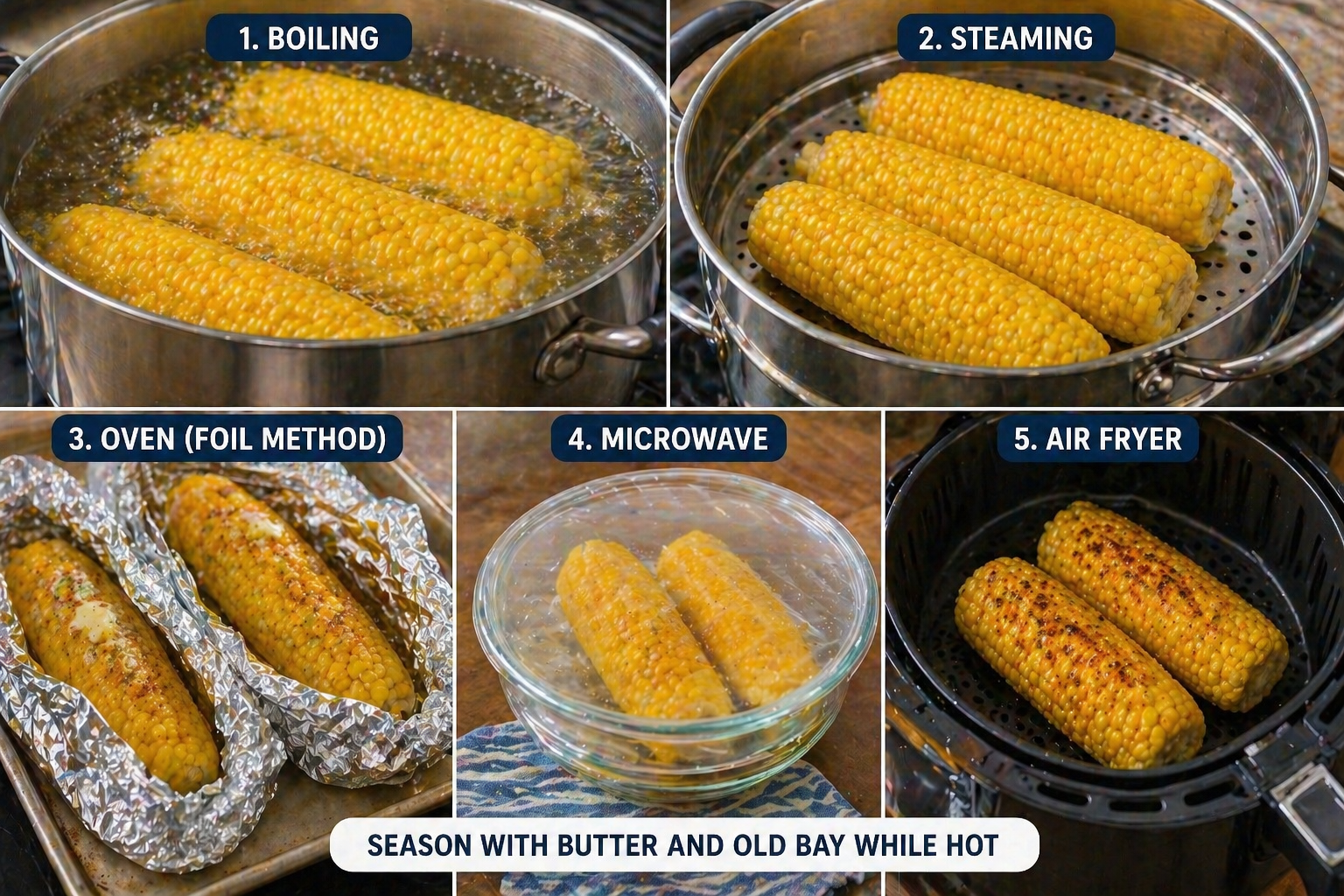
Method 1 — Boiling (Classic, Most Consistent)
The standard method and the most forgiving for frozen corn. Fill a large pot with water, bring to a full rolling boil, add corn directly from frozen, cook 5–7 minutes uncovered, remove with tongs. Salt in the cooking water is optional — Old Bay will provide all the salt at serving.
Best for: restaurants, feeding a group, the most tender, juicy kernel texture. Drawback: dilutes a small amount of natural sweetness into the water.
Method 2 — Steaming (Sweetness Preservation)
Bring 1–2 inches of water to a boil in a steamer pot. Place the frozen cobs in the steamer basket. Cover with a lid and steam for 6–8 minutes. Steamed corn is subtly sweet and has a clean, fresh flavor. It pairs well with simple toppings like butter and Old Bay. Because the kernels don’t sit in water, steaming preserves a higher concentration of water-soluble nutrients and natural sweetness than boiling.
Best for: quality-focused cooking, smaller batches, maximum flavor from the corn itself. Drawback: requires a steamer basket; slightly longer than boiling.
Method 3 — Oven (Hands-Off, Foil Method)
Preheat oven to 400 degrees F. Wrap individual ears of corn in foil and place on a baking sheet. Bake for 20-25 minutes, turning halfway, until heated through.
Add butter and a pinch of Old Bay inside the foil before sealing — the seasoning infuses directly into the corn during cooking rather than being applied afterward. This produces a different textural result: slightly more tender and deeply flavored from the steam that builds inside the foil packet. Be careful when removing foil — it will release a burst of hot steam.
Best for: batch cooking, meal prep, infusing butter and seasoning directly into the corn. Drawback: longest cook time; no surface caramelization.
Method 4 — Microwave (Fastest, Single Serving)
Place frozen corn in a microwave-safe dish. Add about ½ inch of water to the bottom. Cover tightly with a microwave-safe lid or plastic wrap. Cook on high for about 5–7 minutes. Check — remove one kernel to see if it’s hot on the inside. If not, continue cooking, checking every minute.
Alternatively: place corn in a sealed zip-lock bag with 1 tablespoon water, 1 tablespoon butter, and a pinch of Old Bay. Microwave for 9 minutes. The sealed bag traps steam and bastes the corn in butter and seasoning simultaneously. Let the bag rest 1 minute before carefully opening — it will be extremely hot inside.
Best for: one or two cobs, weeknight speed, minimal cleanup. Drawback: uneven heating in some microwaves; check carefully before serving.
Method 5 — Air Fryer (Crisp Exterior, Modern Method)
Lightly coat frozen corn with oil or butter. Place in the air fryer basket. Cook at 375°F (190°C) for 12–15 minutes, flipping halfway through. The air fryer gives frozen corn a roasted effect — slightly caramelized at the kernel tips, with a firmer texture than boiled corn.
Apply Old Bay after air frying, while the corn is still hot and just-buttered. The slight surface caramelization from the air fryer actually holds Old Bay better than soft, wet boiled corn.
Best for: those who enjoy slight texture contrast, smaller batches, no boiling water management. Drawback: can dry out if overcooked; longer than boiling.
Cooking method comparison at a glance:
Method |
Time (from frozen) |
Texture Result |
Best For |
| Boiling | 5–7 min | Juicy, tender | Groups, classic flavor |
| Steaming | 6–8 min | Sweet, clean | Maximum sweetness |
| Oven (foil) | 20–25 min | Tender, infused | Batch cooking |
| Microwave | 5–9 min | Soft, quick | 1–2 servings |
| Air fryer | 12–15 min | Lightly crisped | Texture contrast |
The Compound Butter Upgrade — Beyond Basic Melted Butter
Red Lobster uses melted unsalted butter with Old Bay at service. If you want to take the home version one level further, a compound butter — butter with seasonings mixed in and re-set — produces more consistent, professional coverage and a richer flavor at every bite.
Red Lobster-Style Chesapeake Compound Butter:
- 4 tablespoons (56g) unsalted butter, softened to room temperature
- 1 teaspoon Old Bay seasoning
- ½ teaspoon fresh lemon zest
- 1 teaspoon finely chopped fresh parsley
- Pinch of garlic powder (optional)
Combine all ingredients with a fork until fully incorporated. Roll in plastic wrap into a log shape and refrigerate for 30 minutes until firm. Slice into rounds and place directly on hot corn — the butter melts from the heat of the cooked corn, distributing evenly across the surface without pooling.
Why compound butter beats poured butter for corn: Poured melted butter runs off rounded corn surfaces unevenly — it pools in the serving dish rather than coating the corn. Compound butter applied as a slice melts slowly and clings to the kernel texture. The distribution is noticeably more consistent.
Flavor variations on the Red Lobster butter theme:
- Cajun version: Replace Old Bay with Cajun seasoning + a squeeze of lime juice. Works exceptionally well with the boiling method.
- Garlic-herb version: Swap Old Bay for roasted garlic paste + fresh thyme. More subtle than Old Bay; better for serving alongside delicate seafood.
- Spicy Chesapeake version: Standard Old Bay + ¼ teaspoon cayenne + 1 teaspoon hot sauce whisked into the butter before applying. Amplifies the heat dimension that Old Bay already suggests.
Avoiding the Two Most Common Frozen Corn Mistakes
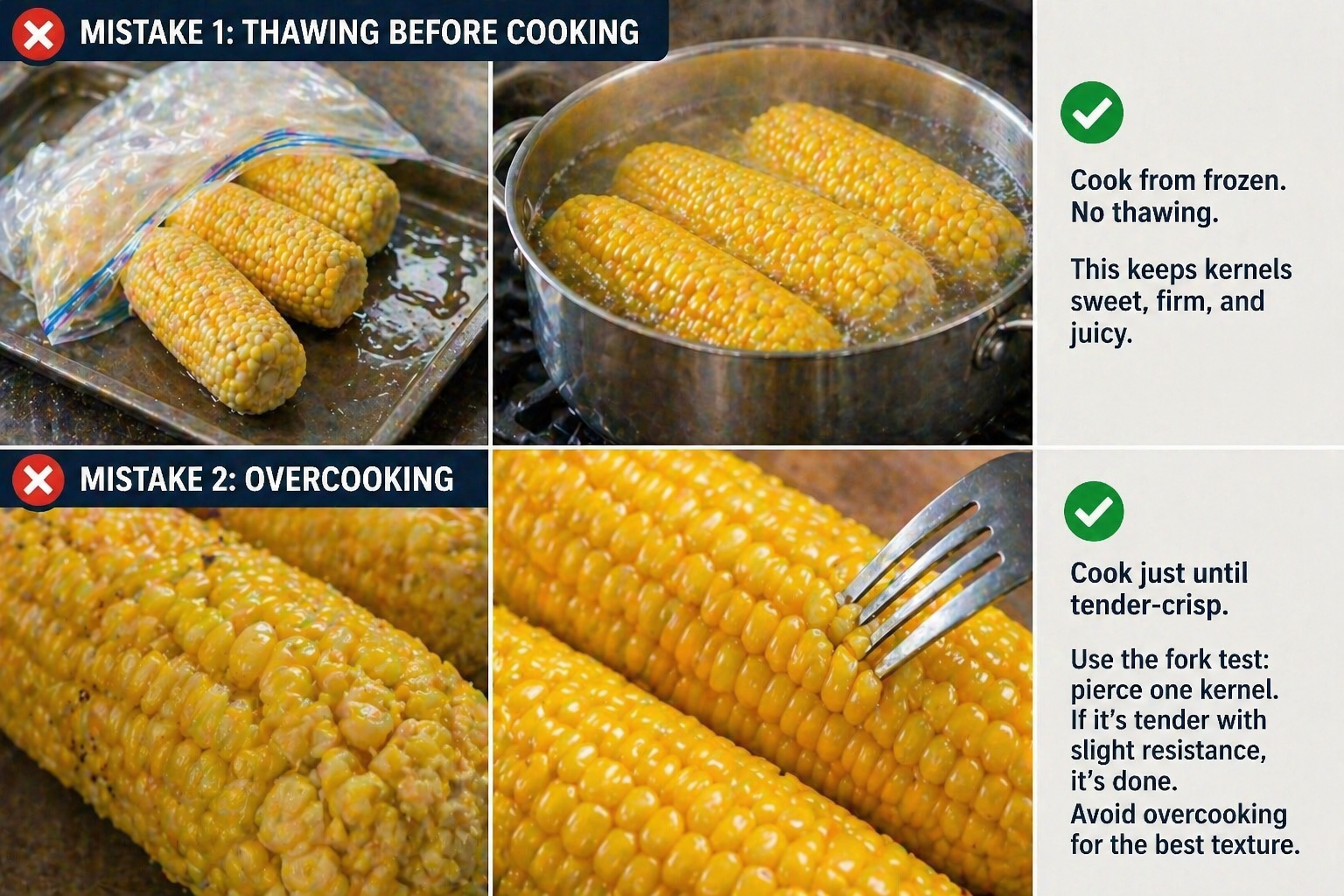
Mistake 1: Thawing before cooking
Thawing can lead to soggy, waterlogged kernels — especially if the corn sits too long. All methods above are tested and timed for corn going directly from frozen to the cooking method. Thawing changes the moisture balance of the kernels and makes it significantly harder to predict doneness accurately. The extra 2–3 minutes of cook time for frozen corn is a small price for better texture control.
Mistake 2: Overcooking
Mushy corn is almost always overcooked corn. Frozen corn’s blanching step before freezing means it’s partially cooked before you start. Five minutes at a rolling boil is generally sufficient. Seven minutes is the outer limit for tender-firm texture. Beyond that, the pectin holding the kernel structure together begins to break down and the corn becomes soft throughout — not the sweet crunch that makes corn on the cob satisfying.
The fork test is reliable: pierce a kernel with a fork tip. If it slides in without resistance and the kernel feels soft, the corn is done. If there’s firm pushback at the center, give it 1 more minute. Don’t pierce multiple kernels across the cob — water enters each puncture point and the kernels nearest the cob cook faster than the exterior ones.
Nutrition — What a Red Lobster-Style Corn Cob Actually Delivers
Plain corn on the cob is one of the more nutritionally complete vegetables available — frequently mischaracterized as “just carbs” when it delivers a meaningful range of vitamins, minerals, and fiber.
Per one medium ear of cooked sweet corn (approximately 90g, plain, USDA data):
Per one medium ear of cooked sweet corn (approximately 90g, plain, USDA data):
Nutrient |
Amount |
Notes |
| Calories | 77–90 kcal | Before butter/seasoning |
| Carbohydrates | 17–19g | Primarily starch and natural sugars |
| Protein | 3g | ~10% DV |
| Total Fat | 1g | Minimal before toppings |
| Dietary Fiber | 2–2.4g | Supports digestion |
| Vitamin C | ~6mg | ~7% DV |
| Folate (B9) | ~19mcg | Cell growth support |
| Niacin (B3) | ~1.6mg | 11% DV |
| Potassium | ~243mg | ~7% DV |
| Magnesium | ~26mg | ~6% DV |
| Lutein + Zeaxanthin | ~200mcg | Eye health antioxidants |
With 1 tablespoon butter and Old Bay seasoning (per cob):
- Add approximately 100 calories and 11g fat (from butter)
- Old Bay adds minimal calories; sodium from Old Bay and celery salt base: approximately 250–400mg per teaspoon depending on application
Key nutrition points:
Corn is also naturally gluten-free and low in calories and fat. Sweet corn sometimes gets a bad rap for being unhealthy or all carbs and sugar — which are myths. Many people don’t realize that corn has protein and fiber — about three grams or 10% of your daily value in one-half cup.
Lutein and zeaxanthin are the two carotenoids in corn that most nutrition discussions overlook. These plant pigments accumulate in the retina and protect against age-related macular degeneration. Yellow sweet corn supplies 2.4 grams of dietary fiber and is a moderate source of B vitamins niacin and pantothenic acid.
The glycemic index question: The fiber in corn also helps slow digestion and absorption of carbohydrates, which is why it’s considered a low glycemic food. Corn may taste sweet, but it’s relatively low in sugar — one ear only has about five to six grams per the USDA. For people managing blood sugar, corn on the cob with butter (which adds fat to further slow glucose absorption) is a reasonable side dish in appropriate portions.
Frozen vs. fresh nutrition: Fresh corn on the cob retains slightly more vitamin C and natural sweetness compared to frozen or canned corn. However, frozen corn is very similar nutritionally. For practical purposes — especially when fresh corn is out of season — frozen delivers essentially equivalent nutritional value.
Frequently Asked Questions About Cooking Frozen Corn on the Cob Red Lobster Style
Q: Do I need to thaw frozen corn before cooking it Red Lobster style? No — cook directly from frozen in all methods. Thawing produces waterlogged, softer kernels that don’t achieve the plump, juicy texture of the restaurant version. Add 2–3 minutes to your cook time compared to fresh corn.
Q: What exactly is in Old Bay seasoning? Old Bay’s full formula is proprietary, but the primary components are celery salt, paprika, black pepper, red pepper, and a blend of herbs and spices. The celery salt is the dominant note that gives it the Chesapeake Bay coastal flavor profile. Use genuine Old Bay — generic seafood seasonings don’t replicate the specific flavor balance.
Q: Can I use salted butter instead of unsalted? You can, but the result will be noticeably saltier since Old Bay’s celery salt already carries the salt load the dish needs. If you only have salted butter, reduce the Old Bay by about a third to compensate.
Q: How do I prevent the butter from running off the corn? Apply butter while the corn is still very hot, rotate the cob to distribute evenly, and serve immediately on a plate with a lip. Using compound butter (mixed and chilled) rather than poured melted butter dramatically improves adherence — a slice of compound butter placed on hot corn melts slowly and clings to the kernels better than liquid butter.
Q: What’s the best method for cooking multiple cobs at once? Boiling is the most scalable — a large stock pot can handle 6–8 cobs simultaneously. The oven foil method also scales well for large batches, though it requires more prep. The air fryer and microwave are limited to 2–4 cobs depending on appliance size.
Q: Can I add sugar to the boiling water to make the corn sweeter? Yes — add a tablespoon of sugar to enhance natural sweetness. This is a common technique in American corn boiling. It does not make the corn taste candy-sweet; it amplifies the corn’s own natural sweetness. Skip it if your frozen corn is already a sweet variety (most grocery store frozen corn is sweet corn).
Q: How long does cooked corn on the cob last in the fridge? Cover and store your corn in the refrigerator for up to 4 days. Reheat in the microwave (1–2 minutes wrapped in a damp paper towel) or briefly in a 350°F oven wrapped in foil. Do not refreeze cooked corn — the texture becomes mushy on thawing.
Q: What other seasonings work for the Red Lobster-style corn? Old Bay is the authentic choice. Cajun seasoning is the most popular alternative — it’s spicier and more garlic-forward. Smoked paprika + garlic salt is a simpler approximation. Lemon pepper + butter creates a citrus-bright variation that pairs particularly well with fish dishes. All of these can be used in compound butter form or applied directly to melted butter on hot corn.
Conclusion — Three Ingredients, Five Methods, One Perfect Result
Cooking frozen corn on the cob just like Red Lobster style resolves to the same three-ingredient principle every time: sweet corn, unsalted butter, and Old Bay seasoning, applied in that order while the corn is still hot enough to melt the butter and activate the spice blend.
The cooking method is secondary to the seasoning system. Boiling produces the most consistent result for groups. Steaming preserves the most natural sweetness. The air fryer adds a textural dimension that the others don’t. The oven foil method is the best for hands-off batch cooking. The microwave is the fastest for single servings. Every method, finished with the same Chesapeake compound butter and properly applied Old Bay, produces a corn that holds up to any restaurant version.
From a nutrition standpoint, a corn cob with butter and Old Bay is a genuinely well-balanced side dish — fiber, B vitamins, potassium, lutein, and zeaxanthin from the corn itself; some fat and flavor from the butter; the distinct coastal seasoning from Old Bay that makes this combination so memorable alongside seafood. Keep the butter to one tablespoon per cob and the Old Bay measured rather than free-poured, and the calorie and sodium load stays in a very reasonable range even for regular weeknight cooking.
The only thing left is to not overcook it