Lobster Lover’s Duo Red Lobster: The 2026 Guide to the Dish, the Recipe, and the Two Lobsters Behind It
Lobster Lover's Duo Red Lobster: The Complete 2026 Guide

Most people who order the Lobster Lover’s Duo at Red Lobster do so without realizing they’re eating two biologically distinct species of lobster — one from cold North Atlantic waters and one from the warm Caribbean that taste and behave completely differently when cooked. That difference is not a marketing detail. It fundamentally changes how each tail should be handled, what sides work best, and how to replicate the experience at home without losing what makes the pairing interesting in the first place.
What Is the Lobster Lover’s Duo at Red Lobster in 2026
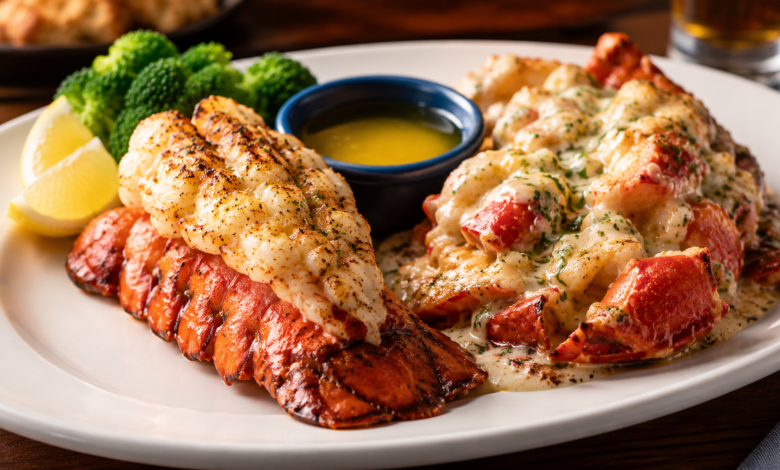
The Red Lobster Lobster Lover’s Duo is a seafood dish featuring a Maine lobster tail and a Caribbean rock lobster tail, both roasted to perfection. It’s served with two sides of your choice, making it a hearty and satisfying meal.
The price sits at $40.99 with approximately 600 calories before side dish additions — making it one of the leaner premium seafood plates on the Red Lobster menu when ordered with sensible sides.
The dish’s core appeal is the side-by-side comparison of two very different lobster experiences: one cold-water, one warm-water, both on the same plate. People who’ve only eaten one type of lobster their entire lives often find the contrast genuinely surprising. The Maine tail is delicate and sweet; the Caribbean tail is firmer, more mineral-forward, and holds up differently to roasting. Together, they cover more of the lobster flavor spectrum than either tail does alone.
Caribbean Rock Lobster at Red Lobster: What It Is and Why It’s on the Plate
The Caribbean rock lobster is the element of this dish most people know least about, and it’s also the one that most shapes the eating experience.
In addition to being called rock lobster and spiny lobster, they are also listed as Caribbean spiny lobster, Florida lobster, and langosta espinosa. The variety used at Red Lobster is Panulirus argus, the species most commonly caught throughout Florida waters and the Caribbean, and the most abundantly available spiny lobster in the American seafood supply chain.
Caribbean lobsters, or spiny lobsters, don’t have claws, so the meat you get comes only from the tail. It is a firmer meat, which can sometimes be a bit chewy. The flavor is generally milder with a subtle, mineral note. Many people enjoy Caribbean lobster grilled or marinated with spices — it gets infused with bold flavors particularly well, which is why you find Caribbean lobster in tropical and island-style cuisines.
This is the critical technical point about the Caribbean tail: its firm, dense muscle fiber holds up to high-heat roasting and absorbs buttery seasoning in a way that Maine tail meat doesn’t, because the fat-soluble flavor compounds penetrate the coarser grain more readily. The firmer texture works beautifully with spicy, flavourful preparations. The meat won’t fall apart under robust seasonings and holds its own against garlic, chilli, and butter-heavy sauces.
Maine Lobster Tail vs. Caribbean Rock Lobster: The Flavor and Texture Reality
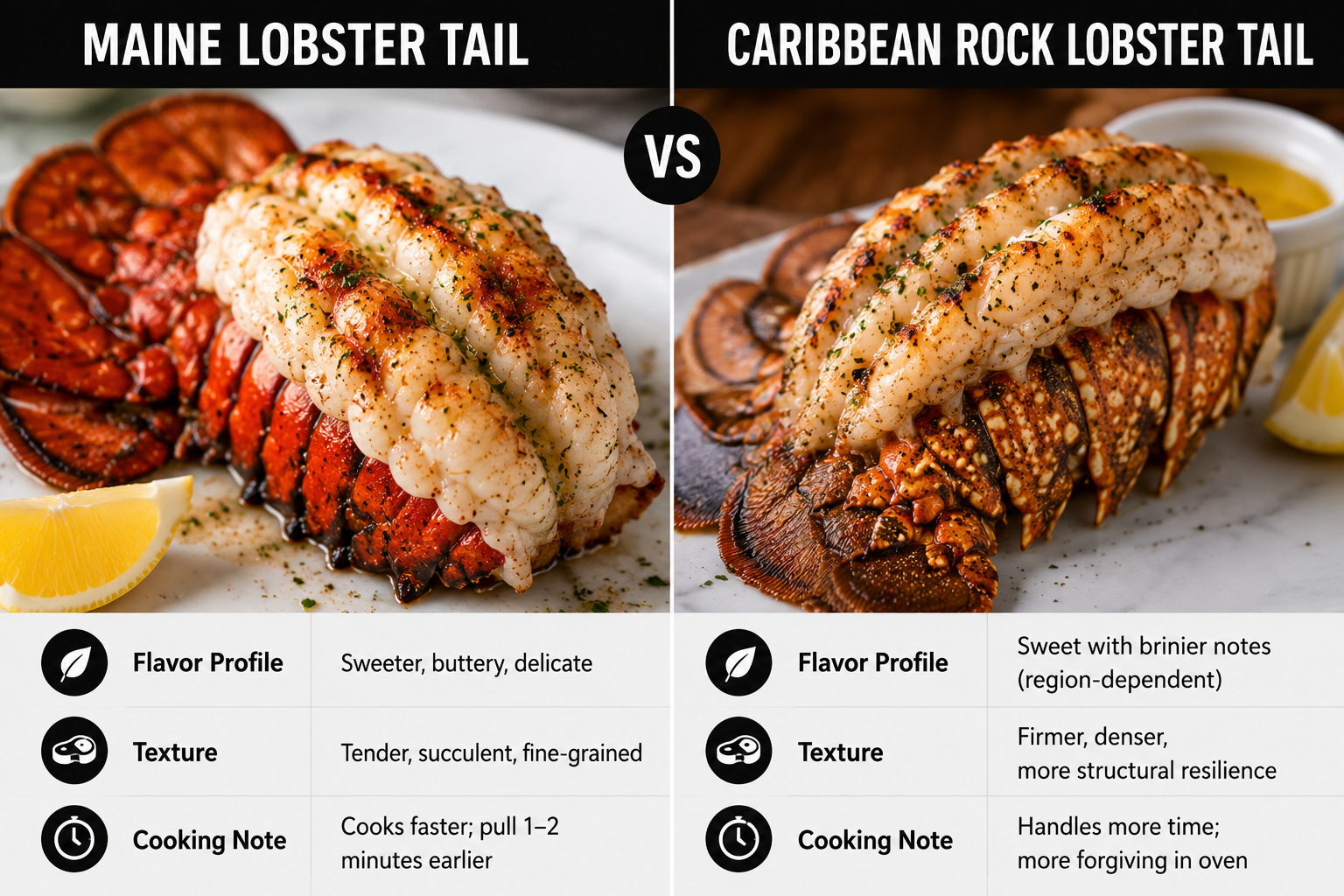
Understanding these two tails side by side is worth the detour because it changes how you eat the dish and how you’d cook it at home.
Maine lobster meat is often described as sweeter, more tender, and succulent, with a delicate, buttery flavor. Whether steamed, boiled, or grilled, Maine lobster retains its delicious flavor. The cold North Atlantic waters where Maine lobsters develop — temperatures regularly below 10°C — slow their growth significantly and produce muscle tissue that is finer-grained, higher in moisture, and richer in the natural sugars that read as sweetness when cooked.
Rock lobster meat is a bit firmer than Maine lobster, which makes fine-textured Maine lobster ideal for delicate recipes. The taste depends on where it comes from — Mediterranean spinies are brinier, Caribbean spinies are sweeter, and California spinies have the best of both worlds.
For the purpose of the Lobster Lover’s Duo, the two tails are typically roasted together under similar conditions, but they don’t behave identically in the oven. The Maine tail cooks slightly faster and becomes dry if pushed past medium doneness; the Caribbean tail has more structural resilience and can handle a few extra minutes without losing its texture. When making this at home, pull the Maine tail 1–2 minutes earlier than the Caribbean if they’re similar in size.
Lobster Lover’s Duo Red Lobster Ingredients
To replicate the Lobster Lover’s Duo at home with accuracy, you’ll need the following. The dish at Red Lobster is intentionally simple — it’s a protein-forward plate where the seafood quality does the heavy lifting.
For the lobster tails:
- 1 Maine lobster tail (6–8 oz, split down the middle lengthwise)
- 1 Caribbean rock lobster tail (6–8 oz, split or butterflied)
- 3 tbsp unsalted butter, melted
- 2 garlic cloves, finely minced or pressed
- ½ tsp smoked paprika
- ¼ tsp Old Bay seasoning
- Salt and cracked black pepper
- Lemon wedges for serving
For the drawn butter dipping sauce (served alongside):
- 4 tbsp unsalted butter
- 1 small garlic clove, minced
- Pinch of sea salt
- Fresh parsley, finely chopped
- Optional: squeeze of lemon
Suggested sides (matching Red Lobster’s available options):
- Mashed potatoes (butter and cream style)
- Seasoned broccoli (steamed, with light garlic butter)
- Wild rice pilaf
- Garden side salad with balsamic
The ingredient list is intentionally spare. Lobster tails, particularly at this quality tier, require restraint in seasoning — the goal is to support the natural flavor of each tail without competing with it.
Step-by-Step Recipe Method
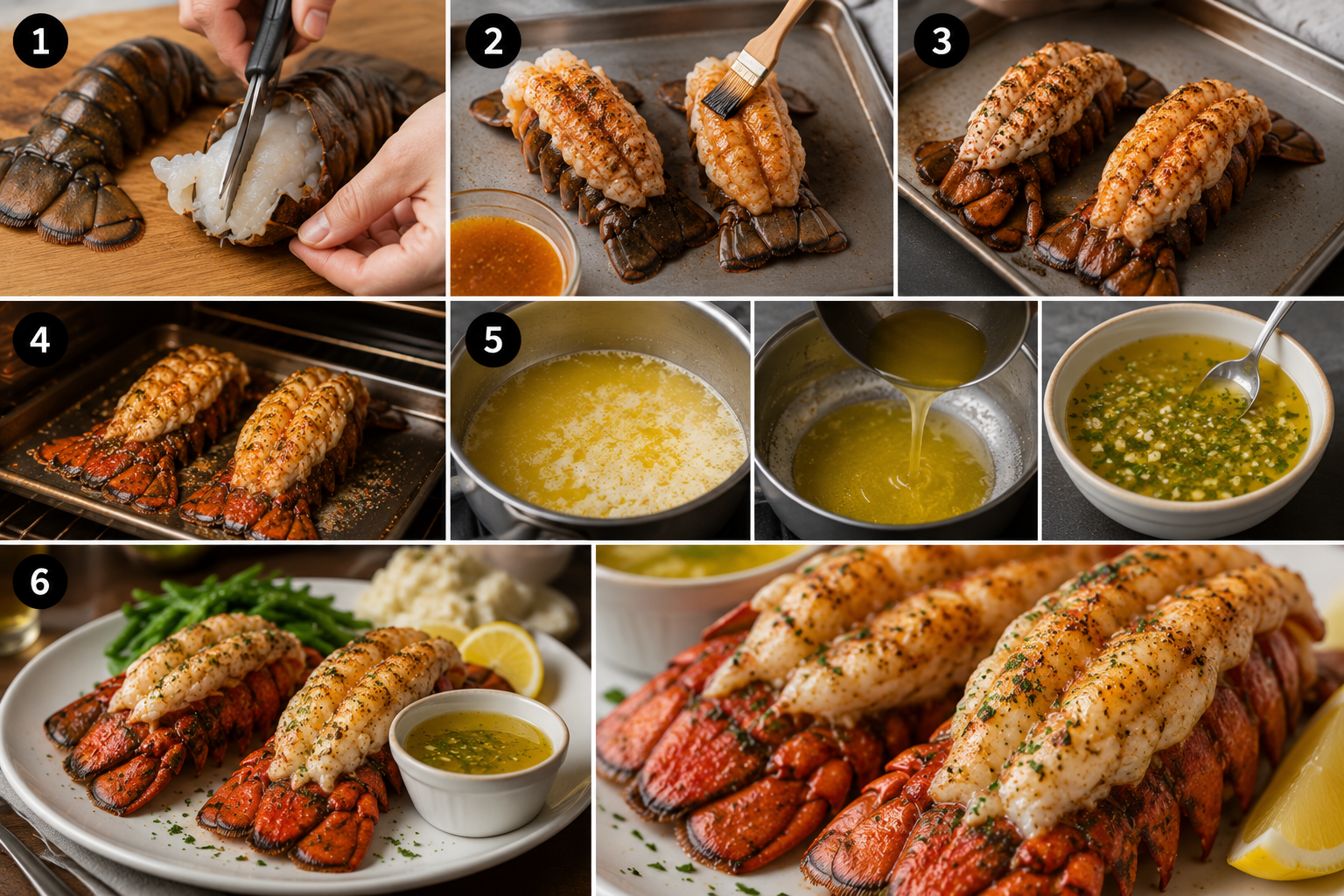
This method mirrors Red Lobster’s roasting approach and produces results that genuinely compare to the restaurant experience. Total active time: 20 minutes. Total cook time: 12–16 minutes.
Step 1 — Prepare the tails: Thaw lobster tails completely in the refrigerator overnight if frozen. Using sharp kitchen scissors, cut along the top of the shell from the open end to just before the fan tail. Gently pull the shell apart and lift the raw lobster meat up and out of the shell, resting it on top (butterfly cut). This exposes the meat to direct heat, encouraging browning, and allows the seasoned butter to penetrate.
Step 2 — Season: Combine melted butter, minced garlic, smoked paprika, Old Bay, salt, and cracked black pepper in a small bowl. Brush this mixture generously over the exposed meat of both tails. Reserve some for basting mid-cook.
Step 3 — Preheat: Preheat your oven to 200°C (400°F). Place the prepared tails on a lined baking tray, meat side up. Both tails should be at room temperature before they go into the oven — cold meat from the refrigerator significantly increases the risk of uneven cooking.
Step 4 — Roast: Roast for 10–14 minutes, depending on size. A reliable internal temperature target is 63°C (145°F) at the thickest part of the meat. The meat should be opaque throughout and begin to pull slightly from the shell at the edges. Baste with remaining seasoned butter at the 7-minute mark.
Important timing note: The Maine tail will typically reach temperature 1–2 minutes before the Caribbean tail of equivalent weight. Begin checking the Maine tail at 9 minutes. The Caribbean tail’s firmer structure means it can tolerate 1–2 extra minutes without the texture deteriorating.
Step 5 — Make the drawn butter: While the tails are roasting, melt butter in a small saucepan over low heat until the milk solids separate and sink to the bottom. Pour off the clarified golden butter above, leaving the white solids behind — this is your drawn butter. Add garlic and a pinch of salt, stir gently. Finish with a squeeze of lemon and fresh parsley. Serve warm in a small bowl alongside the tails.
Step 6 — Rest and plate: Allow both tails to rest for 2 minutes after coming out of the oven. Plate with lemon wedges and your prepared sides. Serve the drawn butter in a separate small ramekin rather than poured over the meat — this lets each diner control the richness and keeps the tail from becoming heavy.
Tips for Getting the Best Result
On sourcing: Fresh lobster tails are ideal, but high-quality frozen tails from a reputable supplier produce genuinely good results at significantly lower cost. Thaw slowly in the refrigerator — never in warm water, which partially cooks the outer meat and creates uneven texture. If you can source live Maine lobster and separate the tail yourself, the freshness difference is noticeable.
On the butterfly cut: Some people skip butterflying and cook the tail inside the shell. This steams rather than roasts the meat, which produces a different — wetter, less caramelized — result. For a dish designed around roasting, the butterfly cut is not optional if you want the right outcome.
On temperature: Lobster overcooks faster than almost any other protein. The difference between perfect (63°C internal) and overdone (70°C internal) is as little as 90 seconds. An instant-read thermometer removes the guesswork entirely and is worth using.
On the drawn butter: Many home cooks use melted butter directly, which works but isn’t quite the same. Drawn butter (clarified butter) has a cleaner, more concentrated dairy flavor because the water content and milk solids have been removed. The result is a richer, silkier dipping medium that clings to lobster meat more evenly.
On side selection: The two sides that pair best with this dish without competing with the lobster are steamed or lightly buttered broccoli (the slight bitterness contrasts the richness well) and mashed potato (neutral, starchy base that extends the meal without adding competing flavors). Avoid heavily seasoned or sweet sides — the lobster flavor is the point.
On the Caribbean tail’s texture: If the Caribbean tail comes out slightly firmer or chewier than expected, it’s not a cooking error — it’s a species characteristic. Slicing it into medallions rather than eating in large bites improves the eating experience significantly. The firmer grain cuts cleanly and the flavor comes through better in smaller portions.
Calories in the Lobster Lover’s Duo at Red Lobster
The Red Lobster Lobster Lover’s Duo sits at approximately 600 calories per serving before side dishes are added. This figure covers the two roasted lobster tails and the fixed condiments including drawn butter, but excludes the two sides of choice.
Side calorie additions to factor in:
Side Choice |
Approximate Calories Added |
| Mashed potatoes | ~240 kcal |
| Seasoned broccoli (steamed) | ~70 kcal |
| Wild rice pilaf | ~200 kcal |
| Garden salad (with dressing) | ~110–180 kcal |
| Baked potato (plain) | ~160 kcal |
| French fries | ~330 kcal |
A complete meal with the two lobster tails, drawn butter, and two sides (mashed potato + broccoli) totals approximately 910 calories — a substantial but not extreme dinner by full-service restaurant standards.
Homemade version calorie estimate (per serving, 2 tails):
Component |
Approximate Calories |
| 1 Maine lobster tail (6oz cooked meat) | ~140 kcal |
| 1 Caribbean rock lobster tail (6oz cooked meat) | ~145 kcal |
| 2.5 tbsp butter (seasoning + basting) | ~255 kcal |
| Garlic, paprika, seasoning | ~15 kcal |
| Drawn butter (1 tbsp) | ~102 kcal |
| Total (tails + dipping butter) | ~657 kcal |
The dominant calorie source in this dish is not the lobster — both tails together contribute around 285 calories of lean protein. Butter, in the seasoning and in the drawn butter dipping sauce, accounts for the majority of the remaining calories. Adjusting butter usage is the single most effective lever for reducing the calorie load.
Nutrition Profile of the Lobster Lover’s Duo
Both Maine and Caribbean lobster tails are nutritionally lean for a restaurant entrée of this price point. Per 100g of cooked lobster meat — the approximate yield from one standard tail — the profile is:
- Protein: 20–22g (high-quality, complete amino acid profile)
- Fat: 1–2g (predominantly unsaturated)
- Calories: 90–100 kcal
- Omega-3 fatty acids: ~0.2–0.4g (EPA + DHA combined)
- Zinc: approximately 3–4mg per 100g (meaningful contribution to the daily requirement)
- Selenium: ~35–40mcg per 100g (exceeds the daily recommended intake in a single serving)
- Vitamin B12: ~2–3mcg (covers most adults’ daily requirement)
- Iodine: a significant source; shellfish are among the most concentrated dietary iodine contributors
Selenium is the standout micronutrient in lobster. A single tail provides most adults with their full daily selenium requirement, which supports thyroid hormone metabolism, antioxidant enzyme activity, and immune function. This is not a benefit that most lobster-focused food coverage bothers to mention — but it’s clinically real.
The main nutritional consideration in the restaurant version is sodium. The drawn butter, basting sauce, and Old Bay seasoning collectively push sodium significantly higher than plain lobster would suggest. If sodium management is a concern, ask for butter on the side at the restaurant, or control it precisely when cooking at home by using unsalted butter and limiting seasoning blends.
Healthy Version of the Lobster Lover’s Duo
The dish is already nutritionally favorable at its core — the two lobster tails are lean protein with minimal saturated fat. The adjustments for a lighter preparation are straightforward and don’t compromise what makes the dish worth making.
Reduce butter, increase citrus: Cut the basting butter to 1 tablespoon total and replace the flavor contribution with more lemon zest, fresh garlic, and herbs (thyme, parsley, tarragon). The brightness of the citrus and herb combination carries the tails through roasting without relying on fat for flavor.
Switch from drawn butter to a lemon herb dip: Instead of drawn butter for dipping, prepare a sauce of Greek yogurt (2%), lemon juice, fresh dill, and a small amount of Dijon mustard. Per tablespoon, this delivers roughly 15 calories versus 100+ for drawn butter, with added protein from the yogurt.
Choose steamed sides over starchy: Steamed broccoli, a side salad with vinaigrette, or steamed asparagus bring the full meal under 500 calories with the lighter butter preparation. These sides also provide fiber and micronutrients that the lobster tails don’t.
Estimated lighter version total (2 tails + sides):
Component |
Calories |
| 2 lobster tails (roasted, minimal butter) | ~310 kcal |
| Herb-lemon dip (2 tbsp Greek yogurt base) | ~30 kcal |
| Steamed broccoli | ~55 kcal |
| Side salad with 1 tbsp light vinaigrette | ~80 kcal |
| Total | ~475 kcal |
At 475 calories, this version delivers approximately 45–50g of complete protein from the two tails — one of the better protein-to-calorie ratios available in a satisfying seafood meal.
Frequently Asked Questions
What is the Lobster Lover’s Duo at Red Lobster? It’s a dual-tail entrée featuring one Maine lobster tail and one Caribbean rock lobster tail, both roasted and served with your choice of two sides and drawn butter. Priced at $40.99 with approximately 600 calories before sides, it’s one of the more nutritionally balanced premium items on the menu.
What is the difference between the Maine and Caribbean lobster tails in this dish? Maine lobster offers sweet, tender, buttery meat from cold North Atlantic waters. Caribbean lobsters have a firmer and slightly chewier texture. Since they lack large claws, most of the edible meat comes from the tail, with a mild, slightly briny flavor, making them a popular choice for grilled or roasted preparations. Eating both in one sitting is genuinely instructive — the contrast is more pronounced than most people expect.
How many calories are in the Lobster Lover’s Duo at Red Lobster? The base dish — two roasted tails with drawn butter — is approximately 600 calories. Adding mashed potatoes and broccoli as sides brings a full meal to roughly 910 calories. A lighter side selection (steamed vegetables + garden salad) keeps the full meal around 780 calories.
Can I make the Lobster Lover’s Duo at home? Yes, and the home version can be made in about 30 minutes total. The key steps are butterflying both tails, basting with seasoned garlic butter, roasting at 200°C for 12–14 minutes, and making drawn butter separately. The main challenge is sourcing Caribbean rock lobster tails — they’re available at most seafood counters and online suppliers, often frozen.
Is the Lobster Lover’s Duo a healthy dish? The lobster tails themselves are lean, high-protein, and rich in selenium, B12, and zinc. The calorie load in the restaurant version comes primarily from drawn butter and seasoning. Ordered with steamed vegetable sides rather than mashed potato or fries, and with butter on the side, it’s one of the more nutritionally sound entrées at Red Lobster.
Is the Lobster Lover’s Duo available year-round in 2026? The Lobster Lover’s Duo is often featured during Red Lobster’s special events like Lobsterfest, but availability may vary by location and season. In 2026, it appears on the broader menu as a year-round item in many locations, though checking with your specific restaurant is advisable since supply and seasonal promotions can affect availability.
Is the Caribbean rock lobster lower quality than Maine lobster? Not lower quality — different. When comparing only the flavor and texture of the tail meat, rock lobster is much firmer, grainier, and brinier. Maine lobster is more delicate in both flavor and texture, with a sweet, clean flavor. Which is preferable depends on what you’re pairing it with and how it’s cooked. The Caribbean tail handles bold seasoning and high heat better; the Maine tail is more expressive in simple preparations with minimal intervention.
Does the Lobster Lover’s Duo contain allergens? Allergens include shellfish and butter (contains milk). Naturally gluten-free when served without breaded sides or gluten-containing sauces. Safe for gluten-free diets if paired with steamed vegetables or baked potatoes.
Conclusion
The Lobster Lover’s Duo at Red Lobster is a better dish than it’s often given credit for in food media — not because of complexity, but because of the genuine contrast between two biologically different lobster species that most diners have never directly compared. Understanding why the Maine tail tastes the way it does (cold water, slow growth, fine-grained muscle tissue) and why the Caribbean tail behaves differently in the oven (warmer water, denser fiber, higher seasoning absorption) makes the eating experience more intentional and the home cooking version significantly easier to execute well.
At around 600 calories for the base dish, it’s also one of the leaner indulgences at a full-service seafood chain. The lobster tails themselves are lean protein with exceptional selenium and B12 content — the calorie density sits in the drawn butter and sides, both of which are easily adjusted at the restaurant or fully controlled at home.