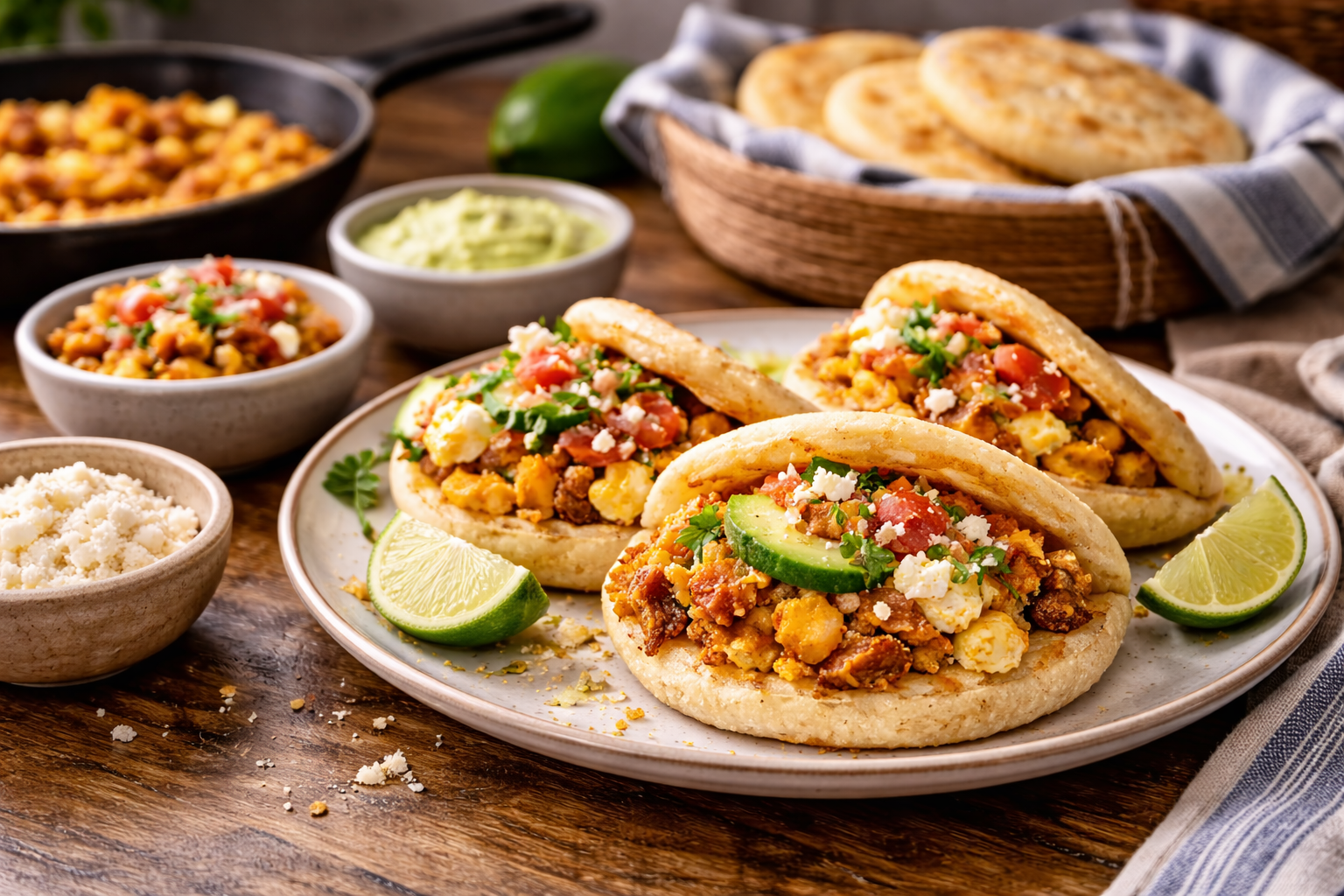
How Do You Make Gorditas for Breakfast Recipe — Everything From Dough to Table
If you’ve only ever heard “gordita” in the context of fast food, the homemade version will genuinely surprise you. Real gorditas — the kind made in Mexican kitchens from central and northern Mexico — are thick corn masa pockets cooked on a dry comal until they puff, then split and packed with whatever breakfast filling you have on hand. The result is something between a stuffed tortilla and a flatbread sandwich, with a soft interior, lightly crisped exterior, and a pocket that holds together even when generously filled.
This guide answers how do you make gorditas for breakfast recipe step by step — from mixing the masa dough correctly to the three breakfast fillings that work best, the cooking method that gets you the puff without deep frying, and the nutritional picture so you can build a balanced morning plate around them.
One thing to settle upfront: the word gordita means “little fat one” in Spanish — a description of the thick, puffed shape, not a commentary on the eater. The name has been used affectionately in Mexican culture for centuries, long before fast-food chains borrowed it for their own purposes.
What Gorditas Actually Are — And How They Differ From Tortillas and Arepas
Gorditas are made from masa harina — nixtamalized corn flour, the same base ingredient as corn tortillas — but shaped roughly twice as thick. That extra thickness is what creates the internal air pocket during cooking. When the dough hits a hot comal or skillet, steam builds inside, causing the gordita to puff and separate into two layers. That gap becomes the pocket you fill.
Corn tortillas are too thin to puff meaningfully. Sopes are masa-based too but stay flat and open-faced. Pupusas (El Salvadoran) and arepas (Colombian/Venezuelan) look similar and are all masa-family dishes, but gorditas have the distinct internal pocket that sets them apart — more like a pita in function than the others.
There are also gorditas de harina — flour-based gorditas from northern Mexico, particularly Durango and Chihuahua — which use wheat flour, sometimes milk, and are sweeter and softer. Those are a different recipe entirely and are often served with jam or cajeta rather than savory breakfast fillings. This guide covers the traditional gorditas de maíz (corn gorditas), which are what most breakfast recipes call for.
Ingredients for the Masa Dough — What Each One Does
The foundation of any gordita breakfast recipe is the dough. Getting this right takes priority over everything else.
Base recipe (makes 6–8 breakfast gorditas):
- 2 cups masa harina — Maseca is the most widely available brand; Masienda is preferred by many experienced cooks for its non-GMO, single-origin corn character. Do not substitute regular cornmeal or corn flour — neither is nixtamalized, and the dough won’t hold together.
- 1½ to 1¾ cups warm water — Start with less and add gradually. Cold water makes the dough stiff and crumbly. Warm water hydrates the masa quickly and evenly.
- 1 teaspoon fine salt — Masa dough without salt tastes flat; with it, the corn flavor comes through clearly.
- 1 tablespoon neutral oil or lard (optional but recommended) — Lard is traditional and produces a notably supple dough. Vegetable oil, canola, or shortening all work and yield a slightly softer finished texture than dry masa alone.
- ½ teaspoon baking powder (optional) — Some cooks add it for a slightly fluffier interior. It’s not universal, but it does help with puffing, especially at altitude or when the skillet heat isn’t perfectly controlled.
The ratio of masa to water is the most critical variable in the recipe. Too dry and the dough cracks at the edges when flattened — those cracks prevent the pocket from forming. Too wet and the dough sticks, spreads too thin, and doesn’t hold its shape on the comal.
The Play-Doh test: Properly hydrated masa dough should feel like firm Play-Doh — it holds together cleanly when pressed, doesn’t stick to your hands, and doesn’t crumble at the edges when you form a ball. This is the single most reliable indicator of correct hydration.
How Do You Make Gorditas for Breakfast Recipe — The Dough Method
Step 1 — Mix and hydrate
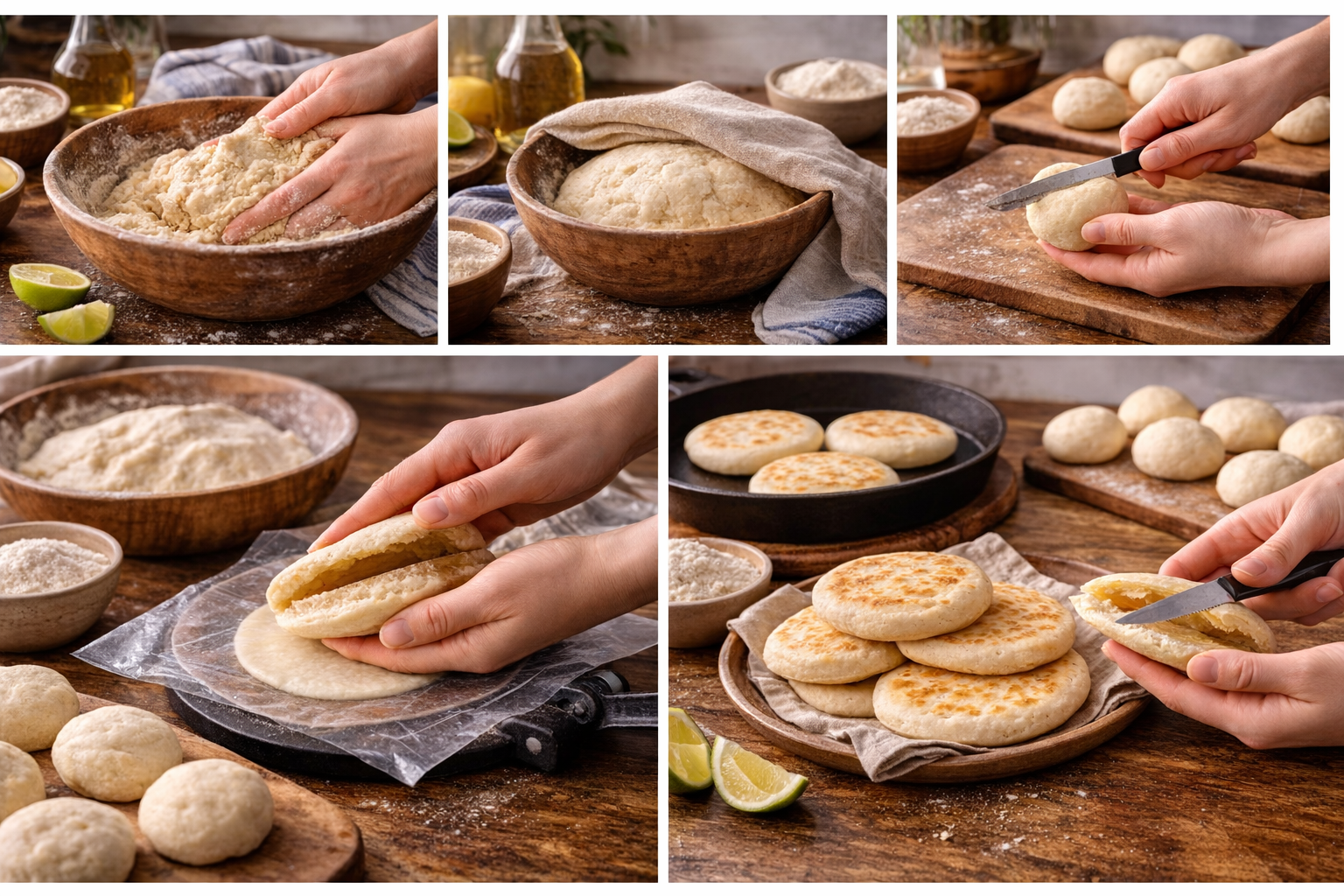
Combine masa harina and salt in a large bowl. Add oil if using. Pour warm water in gradually while mixing with your hand or a wooden spoon. Once the dough begins to come together, switch to kneading by hand. Work it for 1–2 full minutes to ensure the water is evenly absorbed throughout.
Step 2 — Rest the dough
Cover the bowl with a damp kitchen towel or plastic wrap and let it rest for 5–10 minutes. This rest period is often skipped but shouldn’t be — it allows the masa to fully hydrate and become more pliable. Dough that hasn’t rested tends to crack when flattened.
Step 3 — Shape the gorditas
Divide the dough into 6–8 equal portions, roughly the size of a golf ball or slightly larger (about 80–90g each). Roll each into a smooth ball, then flatten between your palms into a disc approximately 4–5 inches in diameter and ¼ inch thick — noticeably thicker than a corn tortilla but thinner than a hockey puck.
For more uniform results, press between two sheets of plastic cut from a zip-lock bag using a tortilla press or the flat bottom of a heavy skillet. Do not press too thin — if the dough is tortilla-thin, it won’t puff.
If the edges crack as you flatten, your dough is slightly dry. Wet your palms and smooth the edges by pressing with damp fingers.
Step 4 — Cook on a dry comal or skillet
Heat a cast iron skillet, comal, or heavy non-stick pan over medium-high heat. No oil at this stage — dry cooking is what creates the lightly toasted exterior crust and helps the steam build internally for the puff.
Place gorditas on the hot surface. Let them cook undisturbed for 3–4 minutes per side. You’re looking for light brown spots to develop and the edges to look set. Avoid pressing down with a spatula — that defeats the pressure needed for puffing.
After the first flip, watch the top surface. The gordita should begin to show a slight dome or visible bubbling. This is the internal steam building. If it doesn’t puff after 3 minutes on the second side, press gently on the edges with a folded towel — this redirects the steam to the center.
Step 5 — Create the pocket
Remove gorditas from the heat and let cool just enough to handle safely — 60 to 90 seconds. While still warm, use a small sharp knife or butter knife to cut a slit along one curved edge. Work the knife carefully to open the interior pocket without cutting all the way through. The two layers should separate cleanly if the gordita puffed correctly.
If the gordita didn’t puff and there’s no internal separation, you can still slice it open like a bun — the texture will be denser but the filling still works.
The Three Best Breakfast Fillings for Gorditas
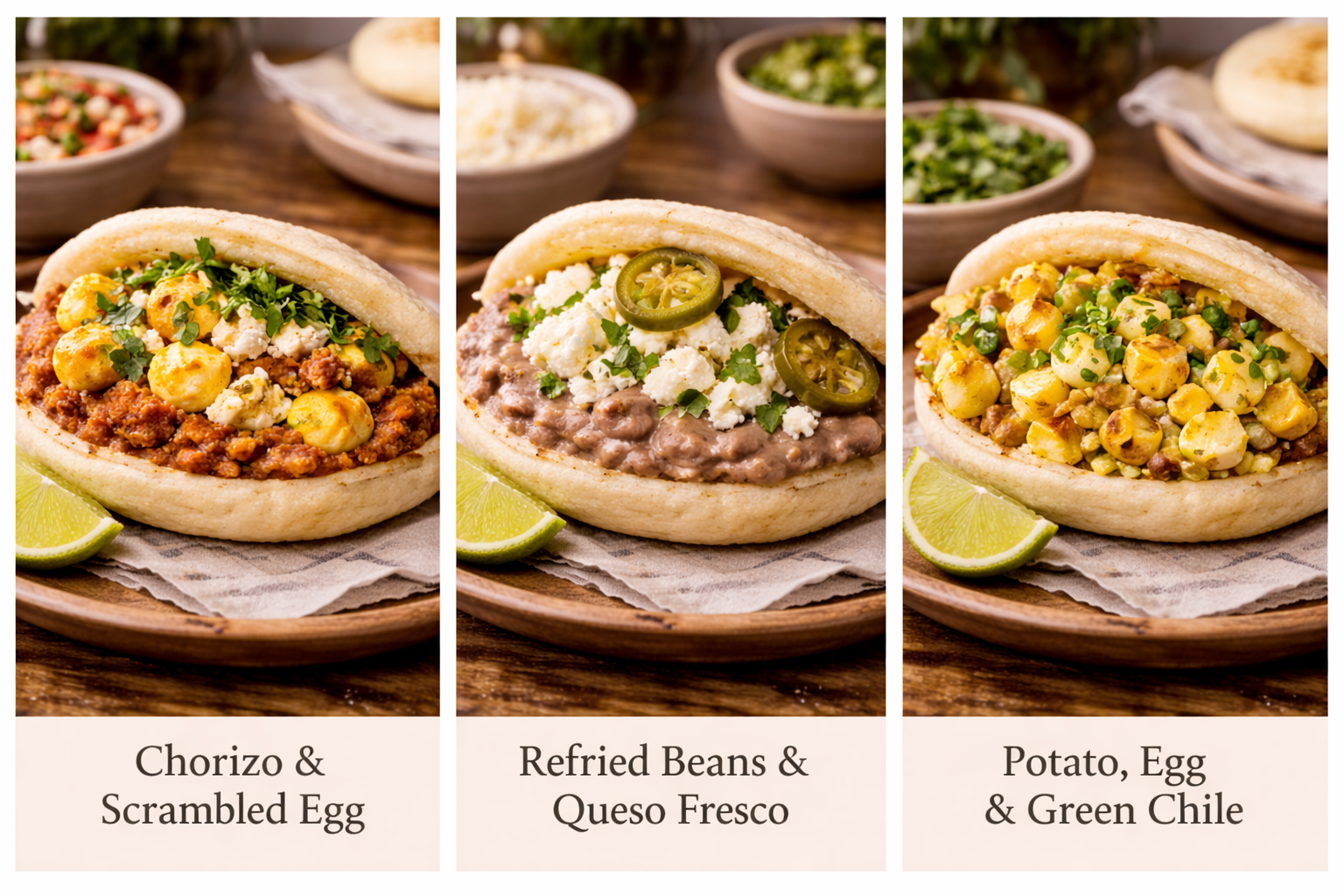
Filling 1 — Chorizo and Scrambled Egg (the classic)
This is the most traditional breakfast gordita filling across central Mexico. Mexican chorizo is a fresh, unsmoked sausage that crumbles when cooked and doesn’t need to be handled like a link sausage.
- Remove chorizo from casing and brown in a dry skillet over medium-high heat, breaking it apart as it cooks, about 5–6 minutes until no pink remains and the fat has rendered.
- Drain excess fat by tipping the skillet or using a slotted spoon. This step matters — too much chorizo fat makes the gordita soggy quickly.
- Beat 4 eggs with salt and pepper and scramble them in the remaining fat from the chorizo. Fold together with the cooked chorizo.
- Fill each gordita with 2–3 tablespoons of the mixture. Top with crumbled Cotija cheese or shredded Oaxacan cheese, a spoonful of salsa verde, and fresh cilantro.
Filling 2 — Refried Beans and Queso Fresco (fastest, vegetarian)
This is the most practical option when breakfast time is tight and it’s also the base filling in many Mexican households before any meat gets added.
- Warm canned or homemade refried beans in a small saucepan with a tablespoon of water to loosen them. They should be spreadable but not runny.
- Spoon a generous tablespoon into each warm gordita pocket. Add crumbled queso fresco and a few slices of pickled jalapeño.
- Optional: a thin smear of avocado or a drizzle of hot sauce.
This combination provides dietary fiber, plant-based protein, and calcium in a filling that takes under 5 minutes to prepare.
Filling 3 — Potato, Egg, and Green Chile (the hearty option)
This filling is common in northern Mexico and in Mexican-American border cooking. It works well for weekend mornings when a more substantial breakfast is the goal.
- Dice 2 medium Yukon Gold potatoes into small cubes and boil until just tender, about 8 minutes. Drain well.
- In a skillet, sauté half a white onion and 2 cloves of minced garlic in a tablespoon of oil until softened. Add diced roasted green chiles (fresh Hatch or canned Anaheim work well). Add the cooked potatoes and cook together for 3–4 minutes until lightly browned.
- Scramble 3 eggs directly into the pan and stir everything together.
- Season with cumin, salt, and pepper. Fill gorditas and top with shredded Monterey Jack or a spoonful of salsa roja.
Gorditas de Maíz vs. Gorditas de Harina — Which One for Breakfast
This is a genuine regional distinction that most recipe guides collapse into one recipe, and it causes confusion.
Gorditas de maíz (corn gorditas) are the savory variety — naturally gluten-free, with a distinct corn flavor from the nixtamalized masa, and structurally firm enough to hold heavy fillings like chorizo, eggs, and beans without falling apart. These are the breakfast standard in central Mexico.
Gorditas de harina (flour gorditas) are made with all-purpose wheat flour, sometimes with milk added for tenderness. They’re softer, slightly sweet, and more common in northern states like Durango, Sinaloa, and Chihuahua. They’re also traditionally served with sweet fillings — piloncillo, cajeta, or jam — making them more of a sweet breakfast option, comparable to a pancake or biscuit in function.
The two recipes are not interchangeable. If you make gorditas de maíz dough and try to stuff it with jam, the corn flavor overwhelms. If you make gorditas de harina dough and try to fill it with chorizo and eggs, the softer texture doesn’t hold up to a heavy wet filling.
For a savory breakfast gordita recipe with eggs, beans, or meat — you want gorditas de maíz.
Griddled vs. Fried Gorditas — The Practical Difference
Both methods are traditional and both produce a good result. The difference is texture and time.
Griddled (comal method): The dough cooks in its own steam on a dry surface. The exterior develops a light, toasted crust while the inside stays soft. This is the faster, lower-fat method and what most home cooks use for breakfast because the comal can run multiple gorditas at once with no oil management.
Pan-fried (shallow or deep fry): After the initial comal cook, the gorditas go into hot oil (350–375°F) for 1–2 minutes per side. This produces a crispier, darker exterior and a more visibly puffed shape. The interior becomes slightly denser due to the oil contact. This method is more common as street food and in restaurant settings.
For a breakfast recipe at home, the comal method is recommended. It’s faster, produces a consistent result, and doesn’t require monitoring oil temperature while simultaneously cooking eggs and filling.
If you want the fried version without deep frying, the air fryer works well: brush gorditas lightly with oil and cook at 375°F for 4–5 minutes per side after the initial comal cook.
Nutrition Profile — What You’re Actually Eating
Understanding the nutritional picture of a breakfast gordita helps you build a balanced plate around it, especially when feeding a family with different dietary needs.
Per plain gordita (1 piece, ~80g, comal-cooked, USDA-referenced data):
Nutrient |
Amount |
| Calories | ~200 kcal |
| Carbohydrates | 27g |
| Protein | 5–6g |
| Total Fat | 5–7g |
| Dietary Fiber | 2.7g |
| Calcium | ~67mg (7% DV) |
| Iron | 1.3mg (7–16% DV) |
| Sodium | ~200mg (9% DV) |
Key nutrition notes:
Masa harina and nixtamalization: The corn in masa harina has been soaked in an alkaline lime solution (nixtamalization), a traditional process that significantly improves the bioavailability of niacin (vitamin B3) and adds calcium from the lime water. Without nixtamalization, corn-based diets historically led to niacin deficiency. Masa harina is nutritionally superior to plain cornmeal specifically because of this process.
Gluten-free base: Pure masa harina gorditas are naturally gluten-free, making them accessible to people with celiac disease or gluten sensitivity — as long as fillings and cross-contamination are managed carefully.
Filling impact on total nutrition: The gordita itself is a neutral carrier. A bean and queso fresco filling adds fiber, plant protein, and calcium. A chorizo and egg filling contributes more protein and fat but also more sodium and saturated fat. For those watching sodium, griddled bean and vegetable fillings keep a complete breakfast gordita in a reasonable nutritional range.
Fiber contribution: At 2.7g of dietary fiber per gordita, two gorditas at breakfast contribute roughly 15–20% of the daily fiber target. Paired with a serving of beans or vegetables, a gordita breakfast can be genuinely fiber-dense by Mexican cooking standards.
Make-Ahead, Storage, and Reheating
Gorditas are one of the most practical make-ahead breakfast items in Mexican home cooking precisely because the shells and fillings store separately.
Uncooked dough: Wrap tightly in plastic wrap and refrigerate up to 24 hours. Bring to room temperature for 10 minutes before shaping and cooking.
Cooked, unfilled gordita shells:
- Refrigerator: up to 7 days in an airtight container
- Freezer: up to 3–4 months. Freeze in a single layer first on a baking sheet, then transfer to a zip-lock bag with parchment between layers.
Do not freeze stuffed gorditas — moisture from the filling causes the masa to soften and crumble on thawing, making the pocket impossible to maintain.
Reheating cooked shells:
- Cast iron or comal: 1–2 minutes per side over medium heat. This restores the exterior crispness.
- Oven: 350°F for 8–10 minutes wrapped in foil.
- Avoid microwaving if texture matters — the shell becomes soft and loses the lightly crisp exterior that makes gorditas satisfying.
Conclusion — A Breakfast Worth Making From Scratch
Homemade gorditas for breakfast are less complicated than they appear on paper. The masa dough takes 5 minutes to mix and 10 minutes to rest. The comal cooking takes about 8 minutes per batch. The filling — whether chorizo and egg, refried beans, or potato and green chile — runs parallel on a second burner and is ready by the time the gorditas are cooked and pocketed.
What you get for that 30 minutes is a genuinely filling, nutritionally substantial breakfast built on nixtamalized corn — a grain preparation with better mineral bioavailability than most commercial breakfast alternatives. The fiber from the masa and beans, the protein from eggs or chorizo, and the calcium from the lime-processed corn all contribute to a morning plate that holds through the day.
Once you’ve made the dough twice, the hydration becomes intuitive. Once you’ve gotten the puffing right, the pocket forms reliably every time. This is a recipe that improves quickly with repetition and stays in regular rotation once it does.