
Introduction
If you’ve ever searched for Red Lobster crab legs, you’re probably wondering whether they’re worth the price, how they taste, and what to expect when ordering them. Crab legs are one of the most talked-about menu items at Red Lobster, especially during seasonal promotions.
This guide breaks everything down in simple terms—from taste and pricing to nutrition and expert tips—so you can make an informed decision before your next visit.
What Kind of Crab Legs Does Red Lobster Serve?
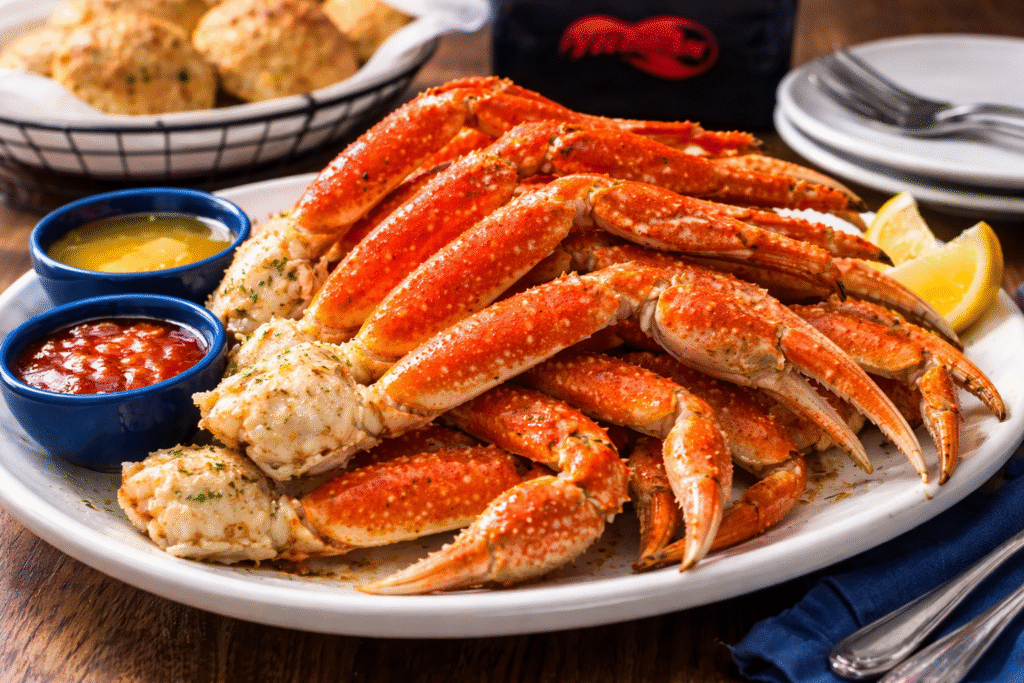
Red Lobster mainly serves snow crab legs, not king crab. This is an important distinction because the experience is slightly different.
- Snow crab legs: thinner shells, mildly sweet flavor, easier to crack
- King crab legs: thicker, meatier, richer taste (usually more expensive and not standard at Red Lobster)
Snow crab is popular in restaurants because it offers a good balance of taste, portion size, and affordability. According to seafood sourcing practices commonly used across major chains, most crab legs are flash-frozen shortly after being caught, which helps preserve freshness.
How Red Lobster Prepares Their Crab Legs
At Red Lobster, crab legs are typically steamed, not boiled. This method helps maintain the natural flavor and prevents the meat from becoming too watery.
They are served with:
- Melted butter (often clarified for smoother texture)
- Lemon wedges for added freshness
From a dining experience perspective, steaming keeps the meat tender and slightly firm, which is ideal for snow crab. Many regular diners note that the flavor is mild, so the butter plays a big role in enhancing taste.
How Much Do Red Lobster Crab Legs Cost?
Prices can vary depending on location, but here’s a general idea:
- Single serving: moderate price range
- Combo meals (with shrimp, lobster tail, or steak): higher but better value
- Seasonal deals (like Endless Crab promotions): more cost-effective for frequent eaters
A useful tip is to check for limited-time offers, as these promotions can significantly reduce the cost per portion.
Are Red Lobster Crab Legs Worth It?
Whether they’re worth it depends on what you’re looking for.
They’re a good choice if:
- You want a reliable, consistent seafood experience
- You prefer convenience over sourcing and cooking crab yourself
- You enjoy mild, slightly sweet seafood flavors
They may not be ideal if:
- You’re expecting large, thick king crab portions
- You’re comparing them to premium seafood restaurants
From a practical standpoint, Red Lobster offers predictable quality, which is why many people choose it over local spots when they want a safe, familiar option.
Best Meal Combinations with Crab Legs
Crab legs are often paired with other menu items to create a more satisfying meal.
Popular combinations include:
- Crab legs + shrimp (for variety in texture)
- Crab legs + lobster tail (for a richer seafood experience)
- Crab legs + steak (surf and turf option)
Sides like biscuits, rice, or vegetables help balance the meal. If you’re ordering for value, combo platters often give more variety for a slightly higher price.
How to Eat Crab Legs (Beginner-Friendly Tips)
If it’s your first time, crab legs can feel a bit intimidating, but it’s simple once you know the basics.
- Use the cracker tool to break the shell gently
- Pull the meat out in one piece if possible
- Dip lightly in butter instead of soaking it
- Use a fork for smaller sections
A helpful tip: avoid over-cracking the shell, as it can mix small shell fragments with the meat.
Nutritional Value of Crab Legs
Crab legs are generally considered a lean protein source, but preparation matters.
Basic nutritional highlights:
- High in protein
- Low in fat (without butter)
- Contains important nutrients like vitamin B12, zinc, and selenium
However, there are a few things to watch:
- Butter increases calories and fat quickly
- Sodium levels can be high, especially in restaurant meals
Health-focused diners often ask for less butter or use it sparingly to keep the meal balanced.
Red Lobster vs. Other Options
When comparing Red Lobster crab legs to other choices:
Vs. local seafood restaurants
- Red Lobster: consistent quality
- Local spots: sometimes fresher, sometimes inconsistent
Vs. cooking at home
- Red Lobster: convenient, no preparation needed
- Home cooking: potentially cheaper, but requires effort and sourcing
Each option has its place, depending on your priorities—whether it’s convenience, cost, or freshness.
Expert Tips for a Better Experience
A few simple strategies can improve your meal:
- Visit during less busy hours for better service
- Ask for extra lemon or butter if needed
- Look for seasonal promotions before ordering
- Combine items instead of ordering crab legs alone for better value
Regular diners often find that timing and menu choices make a noticeable difference in overall satisfaction.
Frequently Asked Questions
Are Red Lobster crab legs available year-round?
They are usually available, but promotions like endless crab are seasonal.
Can you order crab legs for takeout?
Yes, though the experience is better when eaten fresh at the restaurant.
How many crab legs come in a serving?
It varies by location and meal type, but typically includes several clusters.
Do they serve king crab legs?
Not regularly—snow crab is the standard offering.
Conclusion
Red Lobster crab legs offer a dependable and accessible way to enjoy seafood without the complexity of cooking it yourself. While they may not match high-end seafood restaurants in richness or portion size, they provide consistent quality, especially when paired with the right sides or deals.
For first-time diners or casual seafood lovers, they’re a solid option. If you go in with realistic expectations and use a few insider tips, the experience can be both enjoyable and worthwhile.