
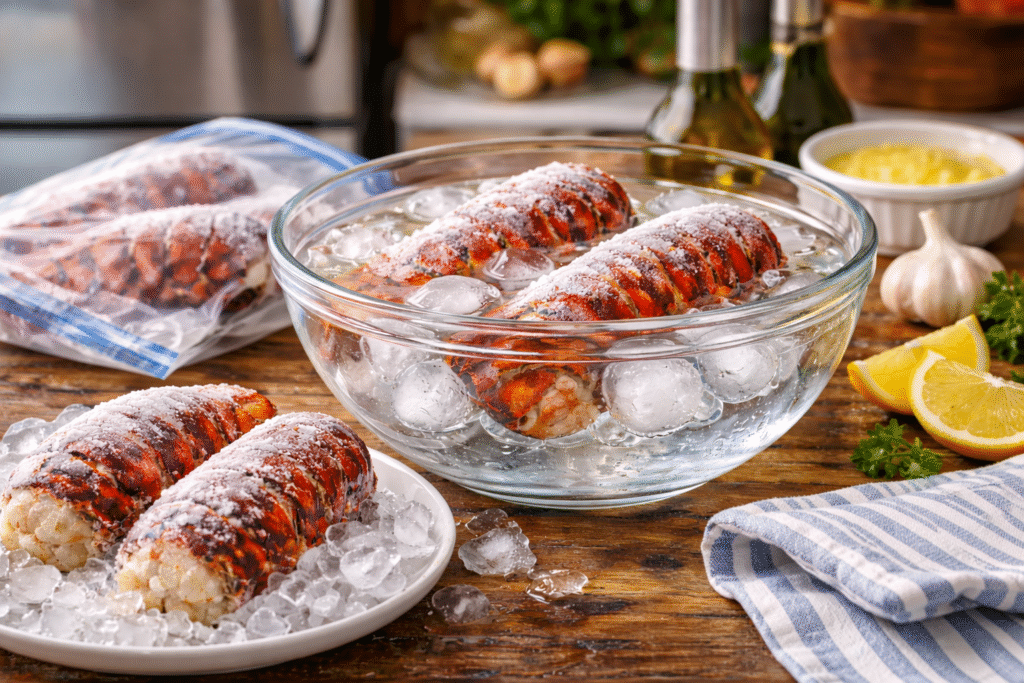
Defrosting frozen lobster tails correctly makes a noticeable difference in both flavor and safety. Lobster meat is delicate, and the way you thaw it affects its texture, moisture, and cooking results. This guide explains simple, evidence-based methods recommended by culinary professionals and food-safety organizations. Whether you want to know how to defrost frozen lobster tails quickly, thaw them overnight, or prepare them from frozen, the steps below will help you handle them safely and confidently.
Why Safe Defrosting Matters
When frozen lobster tails warm too slowly or too quickly, the quality can change. If they sit at room temperature, bacteria can multiply. If they thaw unevenly, the outer layer may start cooking before the center softens. Learning how to defrost a frozen lobster tail properly helps maintain:
- Even cooking
- A tender texture
- A mild, fresh flavor
- Low food-safety risk
This is the same principle used in most seafood safety guidelines.
The Best Method: Thawing Lobster Tails in the Refrigerator
If you want the safest and most consistent results, thaw the tails in the refrigerator. This cold, controlled environment limits bacterial growth and keeps the meat firm.
How to thaw lobster tails in the fridge
- Place the frozen tails in a shallow dish.
- Cover loosely to keep them clean.
- Leave them in the refrigerator for 8 to 12 hours, depending on size.
- Before cooking, pat the tails dry.
If you’re wondering how to defrost frozen lobster tails overnight, this is the recommended method. It is slow, but it protects both safety and quality.
Why this method is effective
- It keeps the lobster below 4°C (40°F)
- It prevents the meat from absorbing excess water
- It reduces the chance of uneven thawing
- It matches common food-safety recommendations
Faster Option: Cold Water Thawing
If you need to know how to defrost frozen lobster tails quickly in water, the cold-water method is the next best choice. It works faster but still keeps the meat at a safe temperature.
How to do it
- Keep the lobster tails sealed in a leak-proof bag.
- Place the bag in a bowl of cold water.
- Change the water every 20 to 25 minutes.
- Most tails thaw in 45 to 60 minutes.
This process ensures water stays cold enough to prevent bacterial growth while softening the meat evenly. It is also the safest answer to how to defrost frozen lobster tails in water.
How long to thaw lobster tails in cold water
Most medium tails take under an hour. Larger tails may take slightly longer.
Microwave Thawing (Use Only If Necessary)
Some people search for how to defrost frozen lobster tails in microwave, but this method should be used with caution. Microwaves heat unevenly, which may partially cook the edges while the center stays icy.
If you choose this method:
- Use short defrost cycles
- Rotate the tails frequently
- Stop as soon as the ice loosens
Microwave thawing can affect texture, so it’s best used only when no other method is possible.
How Long Does It Take to Defrost Frozen Lobster Tails?
People often ask how long to defrost frozen lobster tail because the answer depends on weight and thawing method.
Refrigerator (best quality)
- 4–6 oz: 6–8 hours
- 7–9 oz: 8–12 hours
- 10–16 oz: 12–18 hours
Cold water (faster)
- Most tails: 45–60 minutes
If you plan ahead, use the fridge method. If you need speed, cold water works safely when done correctly.
Can You Defrost Lobster Tails at Room Temperature?
A common question is can you defrost lobster tails at room temperature?
The answer is no.
Thawing seafood on the counter increases the risk of bacterial growth, especially in the outer layers. Even if the center is still frozen, the surface may already be in an unsafe temperature range.
For safety, always choose cold water or refrigeration.
Cooking Frozen Lobster Tails Without Thawing
Sometimes you may need to know how to cook frozen lobster tails or how to cook frozen lobster tail without thawing.
The good news: you can cook them frozen using these methods:
- Steaming
- Boiling
- Baking
- Broiling (with caution)
Tips:
- Add a few extra minutes to the cook time
- Avoid pan-searing frozen tails
- Keep heat steady to prevent tough spots
Thawing is ideal, but cooking from frozen is acceptable for these methods.
How to Tell When the Lobster Tails Are Fully Thawed
Your lobster tails are ready to cook when:
- The shell bends easily
- The meat is soft and no longer icy
- The center feels evenly chilled but not frozen
- There is no off-odor
These signs help ensure even cooking and better flavor.
Food-Safety Tips for Thawing Lobster Tails
These guidelines follow widely accepted seafood-safety principles:
- Keep seafood cold at all times
- Avoid thawing in direct heat or sunlight
- Do not thaw seafood on the counter
- Do not refreeze thawed lobster
- Cook thawed tails within 24 hours
These simple steps help lower the risk of bacterial growth while maintaining quality.
Preparing the Thawed Lobster Tails for Cooking
After using your preferred method—whether the fridge, cold water, or a quick thaw—the tails only need light preparation before cooking your favorite lobster tail recipe.
Steps:
• Rinse briefly under cold water
• Remove small shell fragments
• Butterfly if needed for grilling or baking
• Dry thoroughly
• Season before cooking
The meat cooks better when it’s dry and evenly softened.
Conclusion
Knowing how to defrost frozen lobster tails safely helps you cook them with confidence. The refrigerator method offers the best texture, while cold water works when you need a faster option. Avoid thawing at room temperature, and only use microwaves when absolutely necessary. Following these simple steps helps preserve the natural sweetness and tenderness that lobster is known for